How to calculate the advertising price of Shanghai Metro? Clear explanation once for lightboxes, chartered cars, and glass stickers at entrances and exits
2026-03-30Tianci MediaViews:120
Highlights
The advertising prices of Shanghai subway vary from tens of thousands to millions, depending on the media format, station level, and advertising period. This article provides a detailed explanation of the latest pricing and pit avoidance guidelines for lightboxes, inner cars, and glass stickers at entrances and exits. Tianci Media is a professional subway advertising platform. Consult now for exclusive solutions!
I want to advertise on the Shanghai subway, but after asking around, some advertise for tens of thousands, while others advertise for millions - what is the reasonable price for advertising on the Shanghai subway
This is the soul test that every novice will encounter when entering subway advertising. As one of the cities with the longest subway mileage in the world, Shanghai's subway has an average daily passenger flow of over 10 million people, covering from financial elites in Lujiazui to young white-collar workers in Xujiahui, from tourists in People's Square to technology professionals in Zhangjiang. But its price system is also as complex as a maze: for the same lightbox, the People's Square station may be more than 10 times higher than the suburban station; Similarly, for in-house chartering, the production cost may be higher than the media fee.
This article will start from the core logic of price composition, combined with the latest government procurement transaction data from 2025 to 2026, to help you thoroughly understand the price truth of Shanghai subway advertising, so that you can understand the quotation and calculate the cost-effectiveness on your first inquiry.
1、 The Core Value and Price Logic of Shanghai Metro Advertising
Before discussing the price, understand why it is worth it. The advantages of Shanghai subway advertising are:
Massive and stable passenger flow: millions of daily passenger flow, providing an unparalleled exposure foundation.
Accurate route positioning: Different routes carry passengers with different characteristics - Line 2 runs through the business core of Puxi Pudong, while Line 1 connects the railway station and the commercial district, achieving efficient customer selection.
Compulsory reach in enclosed environments: Passengers have a longer average stay time inside the station or carriage, resulting in a higher advertising reach rate.
Price composition formula: Total cost=Media publishing fee+Production and installation fee+Creative design fee+Taxes. The media publishing fee is the core, which is determined by four dimensions: "media form+line station level+publishing cycle+procurement quantity".
2、 Price reference for mainstream media formats
2.1 Advertising on entrance and exit glass
Form features: Covering glass doors at subway entrances and exits, with a size of no less than 25 square meters per door, it is a necessary contact point for passenger flow entering and exiting the station.
Real transaction case: Postal Savings Bank of China purchased glass advertisements at the entrances and exits of Shanghai Metro Line 1-18 in September 2025, requiring no less than 15 different station entrances and exits (including 10 transfer stations for 2 or more lines), and continuously placed them for 3 months, with a transaction price of 1.19 million yuan (including tax). During the contract service period, conduct weekly inspections and provide advertising monitoring reports.
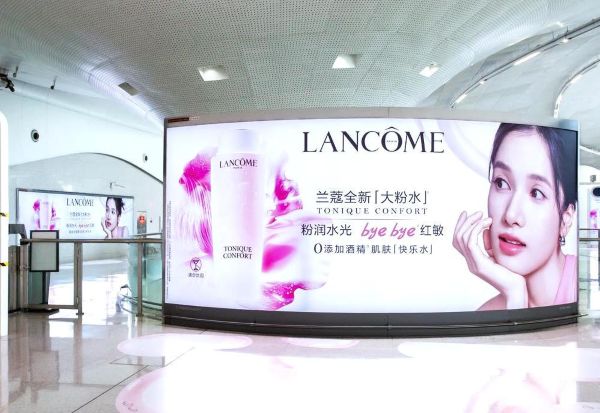
2.2 Brand Zone+LED Electronic Screen Combination
Form features: The brand zone is located on the concourse level of the core site, and is complemented by LED electronic screens to form a three-dimensional exposure.
Real transaction case: Jintan Maoshan Tourist Resort in Jiangsu Province launched an advertisement for the Shanghai Metro in June 2025, including the brand zone A of Xujiahui Station on Line 1 (from June 20th to July 10th) and the 110 inch electronic screen of the platform LED broadcast network (15 seconds/100 times/day, from June 20th to July 3rd), with a total advertising period of 21 days and a transaction price of 656000 yuan. The media shall provide a report for publication within 3 days after publication, a report for publication within 3 days after publication, and a third-party CTR report.
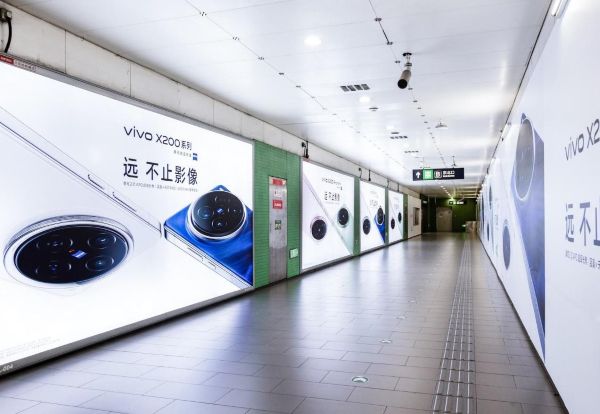
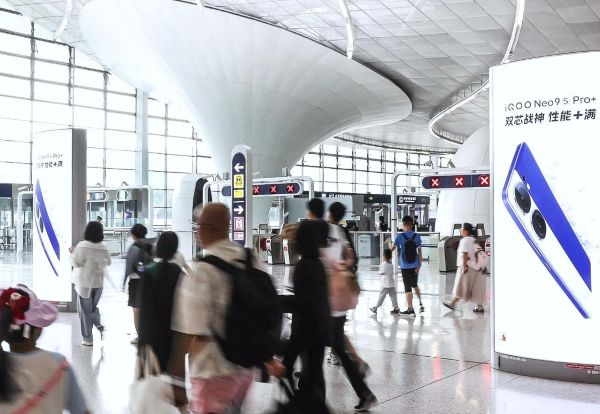
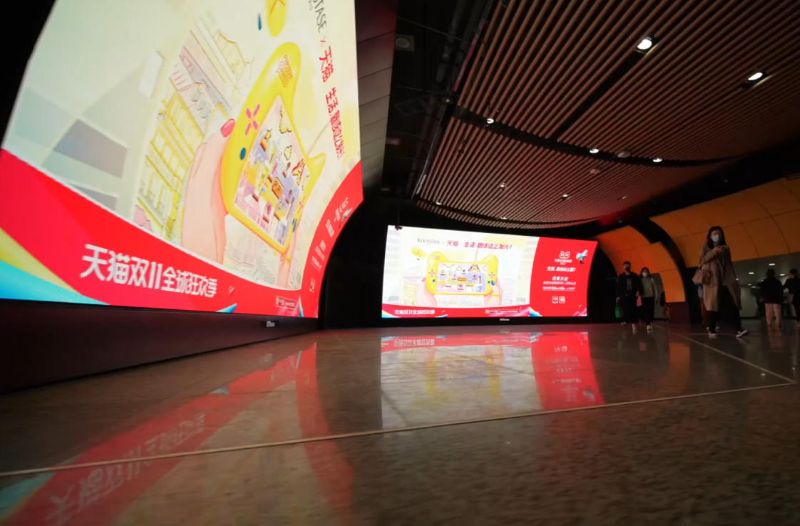
2.3 Subway lightbox advertisements (12 boxes/super lightbox)
Form characteristics: Located on the platform, concourse, and passage, with a standard size of about 3 meters by 1.5 meters, it is the most classic form of subway advertising. The advertising cycle is usually measured in 4 weeks.
Price reference: Depending on the media format, the publication price ranges from tens of thousands to hundreds of thousands. Core sites (such as People's Square, Jing'an Temple, Xujiahui, Lujiazui, Nanjing East Road, and other S-level sites) have the highest prices, reaching more than three times that of A-level sites. The price of lightboxes at Nanjing West Road subway station is approximately 800000 to 1.6 million yuan per week. The actual prices of different routes and stations need to be inquired based on specific locations.
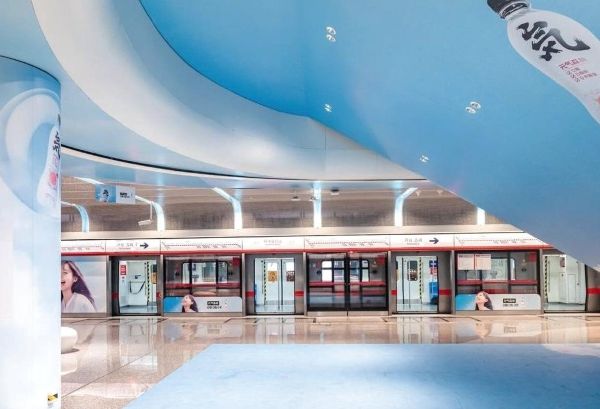
2.4 Subway charter advertising (branded trains)
Form characteristics: The entire train is fully packaged inside, covering signs, window stickers, seat side stickers, roof stickers, floor stickers, etc., forming an immersive brand space. The media release fee is usually calculated in units of 4 weeks.
Price reference: Although there is currently no publicly available data on the purchase of private cars in Shanghai, reference can be made to the price logic of other first tier cities - the published price of creative private cars for Shenzhen Metro Line 3 is 420000 yuan/train/4 weeks, and the production and installation cost is 200000 yuan/train/time; The regular price for creative internal charter of Guangzhou Metro Line 2 is 498000 yuan/train/4 weeks, and the production and installation cost is 180000 yuan/train/time. Shanghai prices are expected to be at the same level.
3、 The five core factors that affect prices
Factor 1: Media format. Brand image level media (large columns, brand corridors) have the highest prices; The mainstream exposure level (lightbox, interior car) is second; High frequency touchpoints (ladder signs, carriage posters) are relatively user-friendly.
Factor 2: Site level. Shanghai subway stations are roughly divided into S-level (top-level hubs such as People's Square, Jing'an Temple, Xujiahui), A-level (core business district/transportation hub), B-level (regional center/residential intensive station), and C-level (general station). The price of S-grade sites for the same lightbox can be more than 10 times that of C-grade sites.
Factor three: Launch cycle. Usually, the basic sales unit is "two weeks" or "four weeks", and long-term advertising (more than 3 months) can usually receive discounts.
Factor four: Procurement scale. By purchasing multiple locations and routes in a package, the unit price per point can be reduced by 20% -40%. For example, in Shenzhen, the average price of a set of 3 consecutive sealed lightboxes decreased from 72800 yuan to 47600 yuan per set, ranging from 10 to 50 sets.
Factor 5: Production and installation costs. Hard costs that are easily overlooked by beginners. The cost of producing a chartered car can easily reach tens to two hundred thousand yuan, while the cost of producing a lightbox is about 3000 yuan per piece per time.
4、 How to Get Accurate Quotations
Step 1: Clarify the target and audience. To enhance brand awareness throughout the city, or just to attract traffic to stores? The goal determines the media mix strategy.
Step 2: Preliminary selection of media combinations and route ranges. Create a landmark image by selecting S-level station pillars; High frequency commuting with multiple route light boxes and internal charter services; Select 3-5 surrounding sites for media saturation attacks to attract traffic to the store.
Step 3: Inquire through official or professional agents. The advertising resources of Shanghai Metro are mainly led by official operators such as STDecaux. Directly contacting official sales can obtain a standard quotation; Entrusting a professional advertising company (such as Tianci Media) can provide better solutions and prices.
Step 4: Analyze the core indicators of the quotation. Pay attention to whether the total coverage (GRP), cost per thousand exposures (CPM), and site list match the target customer group.
5、 The 4 easiest pitfalls for beginners to step into
Pit 1: Only ask the publication price, not the transaction price. The published price is like a hanging tag price, and the actual transaction depends on the "discount". Ask several agency companies and compare the actual transaction range.
Pit 2: Only includes media fees, not production fees. The production cost of internal charter cars can easily reach tens to two hundred thousand yuan, which may exceed the media fee itself. Before signing the contract, it is necessary to confirm that the total price includes the project.
Pit 3: The advertising cycle is too short. Trying to invest for two weeks is difficult to achieve results. Subway advertising requires time to accumulate awareness, and it is recommended to invest for at least 4 weeks (one complete release cycle).
Pit 4: The disconnect between creativity and media purchasing. The subway environment is noisy, and advertising images must adhere to the "3-second principle" - conveying core information within 3 seconds. Poor creativity can render expensive media resources worthless.
6、Conclusion
The advertising price of Shanghai Metro is the precise premium you pay for "deterministic urban mainstream passenger flow" and "forced attention in closed scenarios". It is not a fixed number, but a dynamic range determined by media format, site level, advertising cycle, and procurement scale.
According to recent market data, the cost of glass stickers for 15 entry and exit sites is 1.19 million yuan over a period of 3 months; Xujiahui Station Brand Zone+LED Screen 21 Days 656000 yuan; The published price of S-level station lightboxes can reach 800000 to 1.6 million yuan per week. The cost of chartering media in first tier cities is approximately 400000 to 500000 yuan per train per 4 weeks, with additional production costs.
For beginners, it is recommended to start with a small scope: choose 1-2 lightboxes at core stations or an internal charter for one route, place them for 4 weeks, verify the effect with data, and then gradually enlarge. If you find these analyses too complex, finding a professional advertising platform is a more efficient choice.
Tianci Media is a professional subway advertising platform that has been deeply involved in Shanghai subway media for many years. It has a database of lightboxes and internal charter resources covering core lines, as well as rich advertising experience. From demand analysis and location evaluation to price negotiation, creative execution, and effect tracking, we provide one-stop full process services to help you achieve efficient subway advertising placement with a reasonable budget. Consult now for your exclusive Shanghai subway advertising placement plan!