Analysis of Advertising Prices in Subway Stations: From Lightboxes to Station Packages, Understanding Cost Components in One Text
2026-03-12Tianci MediaViews:164
Highlights
The price of advertising in subway stations is influenced by multiple factors such as city, route, and form. This article combines real procurement cases from Tianjin, Shenyang and other places to explain in detail the price composition and budget strategy. Tianci Media is a professional subway advertising platform that provides transparent pricing and professional services for you. Search immediately.
How much does it cost to invest in a subway lightbox for a month
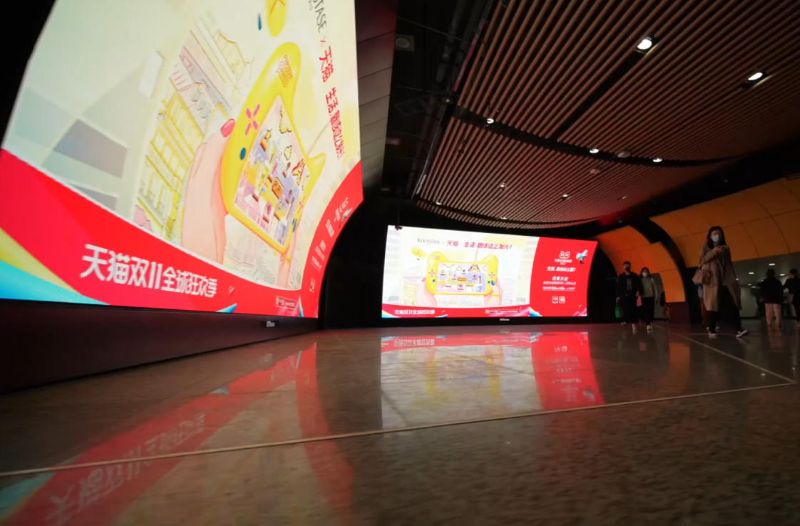
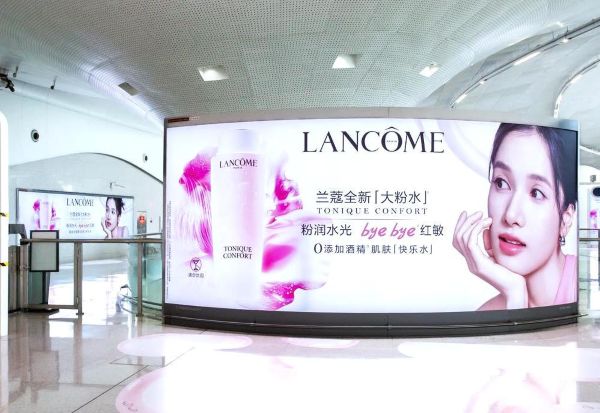
This is a question that every marketer who is new to subway advertising will ask. However, the answer is never a simple number - a 12 box lightbox at a core site in a first tier city can cost tens of thousands of yuan per month; And similar resources for suburban routes in the same city may only cost a few thousand yuan; As for special forms such as station and charter services, prices range from tens of thousands to millions.
The pricing system of subway advertising can be considered one of the most complex mazes in outdoor media. It involves the superposition of multiple variables such as urban level, route value, station level, media form, advertising cycle, and procurement volume. If you don't understand the pricing logic behind it, it's easy to get lost when you receive a quotation - either be discouraged by high prices, or be tempted by low prices and fall into a trap.
This article will systematically break down the composition logic of subway station advertising prices from an industry professional perspective, combined with the latest real procurement cases in major cities across the country in 2026, to help you make more scientific decisions in the process of budget planning, inquiry and price comparison.
1、 Why is there such a big difference in subway advertising prices?
Before delving into specific numbers, it is necessary to first understand the underlying logic of subway advertising pricing. Different from the CPM/CPC model of Internet advertising, subway advertising, as a typical scarce outdoor media, its price is mainly determined by the following fundamentals:
The physical scarcity of resources. The number of advertising spaces at core stations (such as transfer hubs and CBD stations) is fixed and cannot be infinitely expanded like online traffic. When the daily passenger flow of a station reaches hundreds of thousands or even millions, the supply-demand relationship will inevitably push up prices. The bidding announcement of Tianjin Branch clearly requires "S-level station halls with a display area of not less than 250 square meters", which naturally comes at a high price for this golden location.
Differentiation in reaching value. The scale of passenger flow, the quality of the audience (consumption power), and the duration of stay at a station directly determine the effectiveness of advertising, which in turn affects the price that advertisers are willing to pay. It is also a light box. The value of the light box passing by the Xierqi station where Internet elites gather and the ordinary site passing by the old city may be several times different. Xierqi Station of Beijing Changping Line has become a high-value point for digital and financial brands because it covers a large number of Internet practitioners.
Rigid cost constraints. The media needs to pay resource occupancy fees to the subway company, while also bearing operating costs such as station sign maintenance, screen replacement, and electricity bills, which constitute the bottom line of the price. Quotations below this bottom line are either short-term promotions or may pose resource risks.
The impact of procurement methods. Single point procurement is the most expensive, while bulk procurement can significantly lower the average price; Short term advertising has a high unit price, while long-term cooperation offers significant discounts. The 20 week lightbox placement project of Shenyang Branch, with a transaction price of 551500 yuan, reflects the price advantage of bulk procurement.
Only by understanding these underlying logic and looking at specific quotation numbers can we make clearer judgments. And professional subway advertising platforms like Tianci Media help advertisers find the optimal solution in complex pricing systems by deeply understanding these pricing logic.
2、 Panorama of Subway Advertising Prices: Reference for Real Procurement Cases
Based on government procurement announcements and publicly available transaction information from various parts of China from 2025 to 2026, we can outline the basic outline of subway advertising prices.
1. Price of lightbox advertisements
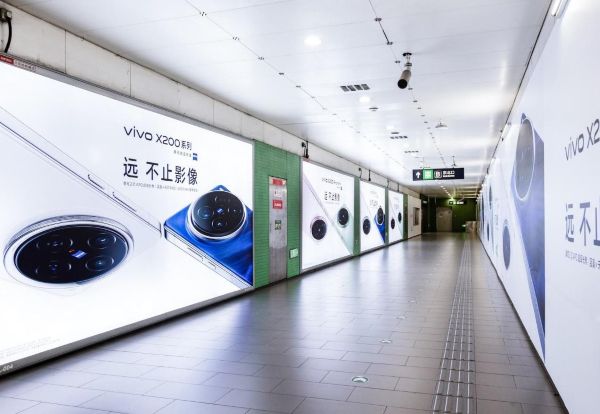
Lightbox is the most basic and common form of subway advertising, mainly distributed in platforms, concourses, and passages.
12 lightboxes on Beijing Changping Line: The published price is 158000 yuan per 4 weeks. The Changping Line, Yizhuang Line, and Fangshan Line are of the same level, with a total daily passenger flow of over 2.27 million people. The actual execution price is discounted according to the advertising volume.
Shenyang Metro 12 Light Box Set: The "Top 10 Light Box Sets" purchased by Postal Savings Bank of China in 2026 were advertised within 20 weeks with a transaction price of 551500 yuan. The lightbox has a specification of 3.27 meters by 1.4 meters and lights up 24 hours a day. Equivalent to a monthly average of approximately 11000 yuan per light box (calculated based on 10 pieces and 5 months).
Guangzhou Metro Personal Advertising: In the personal business launched by Guangzhou Metro, 12 light boxes cost 666 yuan/5 days, equivalent to an average of about 4000 yuan per month. But this is a fragmented resource aimed at individuals, different from the price logic of commercial bulk procurement.
Industry reference range: According to industry data, the price range for subway lightbox advertising is roughly as follows:
Core stations in first tier cities: 30000 to 80000 yuan/block/month
Ordinary stations in first tier cities: 10000-30000 yuan/block/month
Core stations in second tier cities: 8000 to 20000 yuan/block/month
Third tier cities and suburbs: 30000-80000 yuan/block/month
2. Advertising prices for chartered vehicles
Charter advertising covers various media forms inside the carriage, including door stickers, window stickers, posters, roof stickers, floor stickers, etc., achieving an immersive brand experience.
Tianjin Metro Panoramic Carpooling: According to the 2026 tender procurement of Postal Savings Bank of China Tianjin Branch, the advertising service price for panoramic carpooling is 22500 yuan/(per week * vehicle), and the production service fee is 160000 yuan/time. The technical requirement is that the daily average passenger flow on a single line should not be less than 250000, and the display area should include car doors, car door glass, car window glass, window lintel stickers, junctions, posters, top stickers, and floor stickers.
Based on this calculation, the 4-week deployment cost of a car is approximately 22500 x 4+160000 (one-time production)=250000 yuan. If divided over 4 weeks, the weekly average is 62500 yuan.
Beijing Subway Train Door Stickers: The advertising price for Changping Line train door stickers is 128000 yuan/train/4 weeks, and the production and installation cost is about 10000 yuan/train/time. This is a relatively simplified form of car door advertising, which is cheaper than panoramic chartering.
3. Advertising prices for package sites
Package site refers to the large-scale integration and deployment of resources in specific areas such as station halls and passages, forming a brand exclusive space.
Tianjin Metro Package Station: The package station service price purchased by Postal Savings Bank of China Tianjin Branch is 37500 yuan/(per week * station), and the production service fee is 150000 yuan/time. The technical requirement is that the average daily passenger flow at a single station should not be less than 120000, and the S-level station hall should have a display area of not less than 250 square meters.
The 4-week advertising cost for a website is approximately 37500 x 40000+150000=300000 yuan, with an average of 75000 yuan per week.
4. Advertising price for screen doors
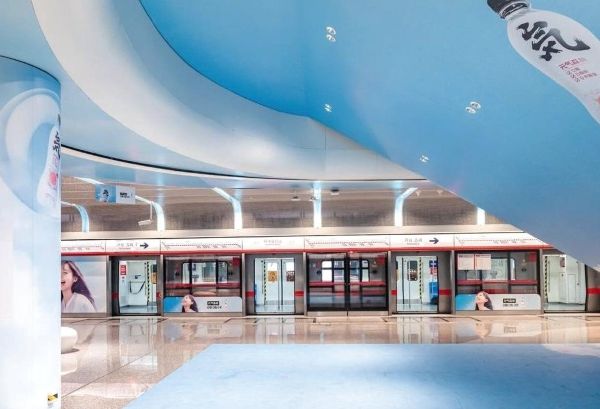
The screen door sticker is located on the screen door between the track area and the waiting area on the platform level, facing the line of sight of the queuing crowd, and the effect is intuitive.
Beijing Subway Platform Screen Door Stickers: Changping Line, Line 14, Line 15 and other lines belong to the same level, and prices are divided according to station level:
S-level site: 888000 yuan/unilateral/4 weeks
A++level site: 688000 yuan/unilateral/4 weeks
A-level site: 388000 yuan/unilateral/4 weeks
'Unilateral' usually refers to all the platform screen doors on one side, with a large coverage area and strong visual impact.
5. Subway TV advertising prices
Subway television is distributed in train carriages and platforms, and belongs to dynamic audio-visual media.
Beijing Subway Television Network: Covering 10 core lines, 16000 screens, and reaching an average of 12 million people per day. Reference price:
Specific route combination: approximately 650000 yuan/5 months (such as the Hongqi Canal cultural and tourism case)
Single line full coverage: tens of thousands to millions of yuan per month
Hainan tourism advertising project: 200000 yuan (maximum price limit)/no less than 8 weeks
6. Other special forms
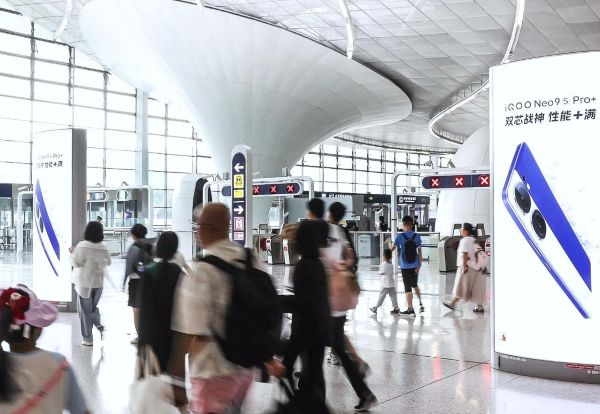
Security screening guidance media: located next to the security screening machines and gates in the station hall, it is a necessary route for passengers. The Beijing Changping Line can achieve full station coverage.
Internal charter advertising: Covering the interior floor and roof of the carriage, utilizing passengers' average travel time of nearly 30 minutes for immersive communication. The price of chartering a car on the Changping line requires specific inquiry.
3、 Six core factors affecting the price of advertising in subway stations
When interpreting a quotation, it is not enough to just look at the total price. It is necessary to conduct in-depth analysis from the following six dimensions.
1. Urban level and route value
The urban level is the primary determinant of price. The gradient of first tier cities>new first tier cities>second tier cities>third tier cities is very evident in subway advertisements. As a core site, the price of Beijing Guomao Station may be 3-5 times that of a certain site in Shenyang.
Within the same city, the price difference between different routes may also reach several times. Taking Beijing as an example, the prices of core lines such as Line 1 and Line 10 are much higher than suburban lines such as Changping Line and Fangshan Line. The bidding requirements in Tianjin clearly distinguish between "S-level sites" and ordinary sites.
2. Station level and passenger flow scale
Subway companies usually classify stations based on indicators such as daily passenger flow, transfer function, and surrounding commercial value.
The bidding requirement of Tianjin Branch is that the daily average passenger flow of a single station should not be less than 120000 as the threshold for S-level stations. The price of screen door stickers in Beijing is divided into three levels: S-level, A++level, and A-level. The highest price is 888000 yuan and the lowest price is 388000 yuan, with a difference of more than twice.
3. Media format and specifications
The technical parameters and display effects of different media forms vary significantly, and the prices naturally differ.
In the Tianjin bidding process, the panoramic car rental requires that the display area include car doors, car door glass, car window glass, window lintel stickers, junctions, posters, top stickers, and floor stickers. This form of full car coverage is much more expensive than a single car door sticker.
The specifications of the 12 lightboxes purchased in Shenyang are 3.27 meters by 1.4 meters, which is the standard size for 12 lightboxes. If the area is larger or the location is more special (such as the oversized light box in the transfer channel), the price will correspondingly increase.
4. Launch cycle and purchase quantity
The longer the advertising cycle, the lower the monthly average price. The weekly advertising unit price is the highest, followed by monthly advertising, and quarterly or annual advertising discounts are even greater. Tianjin's chartered car prices are quoted on a weekly basis, while Shenyang's lightboxes are quoted on a 20 week basis, both of which are typical cycle pricing models.
In terms of procurement volume, single block procurement is the most expensive, while bulk procurement can significantly lower the average price. The "Top 10 Lightbox Sets" in Shenyang are a typical case of bulk procurement.
5. Hidden costs such as production and installation
This is an easily overlooked implicit cost. The media release fee on the quotation usually does not include production and installation fees and needs to be calculated separately.
The production service fee for Tianjin chartered cars is 160000 yuan/time, which is nearly 18% of the 4-week media fee (calculated at an average of 22500 yuan per week). The production and installation cost of train door stickers on the Beijing Changping Line is about 10000 yuan/train/time, accounting for nearly 8% of the media fee of 128000 yuan.
6. Lighting duration and maintenance services
Light box advertising requires power support, some quotes include electricity costs, while others do not. Nighttime lighting is one of the core values of lightbox advertising, and if electricity costs are calculated separately, it is necessary to confirm the duration of lighting each day.
The project in Shenyang explicitly requires "24-hour lighting", which is more valuable than light boxes that only light up during the day. Maintenance services (replacement of damaged images, cleaning, etc.) also need to be clearly stated whether they are included in the quotation.
4、 How to scientifically evaluate subway advertising quotations
When faced with a quotation, professional buyers will not only look at the price, but also conduct multidimensional value evaluation.
Step 1: Calculate the actual cost per thousand people
A light box that costs 50000 yuan per month, with an average daily passenger flow of 500000 and a total monthly exposure of 15 million people (calculated based on 30 days), costs only 3.3 yuan per thousand people. And for a light box that costs 10000 yuan per month, if the daily passenger flow is only 50000 people, the total monthly exposure is 1.5 million people, and the cost per thousand people is as high as 6.7 yuan. The latter may seem cheap, but in reality, it has a lower cost-effectiveness.
As a public transportation, the subway generally has a large passenger flow, and the cost per thousand people is usually lower than other outdoor media. The key is to find the optimal balance between price and customer flow.
Step 2: Evaluate the matching degree of the population
Whether the passenger flow of a site meets the target audience of a brand is more important than just the price.
Internet products should give priority to sites covering science and technology parks and office buildings, such as Beijing Xierqi Station. Financial institutions can lock in stations in the CBD and Financial Street areas. Fast moving consumer goods can focus on covering stations around large residential communities. Stations around universities are suitable for educational training and campus service brands.
Step 3: Consider the competitive environment and interference level
If multiple similar brands are simultaneously displayed in the same station hall, it may dilute the advertising effect. If there are package sites or large-scale advertising of competitors within the site, it is necessary to consider whether to engage in direct competition or choose other sites to compete in a staggered manner.
Step 4: Calculate the comprehensive advertising cost
Total cost=media publishing fee x advertising cycle+production fee x number of magazine changes+electricity fee (if any)+taxes (if any)
The production cost usually ranges from 5% to 20% of the media fee, depending on the media format. The production cost of panoramic chartering is as high as 160000 yuan per trip, as it involves complex processes such as whole car film coating. If you plan to change the screen during the advertising period, you need to reserve multiple production costs.
For brands that are trying subway advertising for the first time, it is recommended to start with small-scale testing - selecting 2-3 core stations to place lightboxes, with a placement period of 4-8 weeks, and gradually scaling up after verifying the effectiveness. For brands with regional coverage needs, a combination of "platform lightboxes+train door stickers+platform screen door stickers" can be considered for placement, forming a three-dimensional reach.
5、 Five common misconceptions about advertising prices for subway stations
Misconception 1: Only looking at the price of a single unit, not the value of the line
The cheapest bus stops are often located on suburban routes with sparse passenger flow, with extremely low daily effective exposure. Although the unit price of the golden stations passing through the core business district is high, the "effective target audience reach cost" may be lower. Price comparison must be conducted on the premise of equal line value. Although the price of Changping Line is lower than that of Line 1, the Internet population covered by Changping Line may be more valuable to specific brands.
Misconception 2: Neglecting hidden costs such as production and installation
The media release fee on the quotation often gives people the illusion of "not high price", but after adding production and installation fees, the total cost may increase by 10% -30%. The production cost of renting a car in Tianjin is 160000 yuan, which is nearly 20% of the 4-week media fee. When inquiring, be sure to ask clearly: Does this price include production? Does it include installation? Does it include electricity?
Misconception 3: Thinking that prices can be infinitely squeezed
Subway advertising has a clear cost bottom line - the media needs to pay resource occupancy fees to the subway company and also bear maintenance costs. Excessive price suppression may lead to media outlets offering discounts on services (such as delayed replacement of images, failure to provide monitoring photos, reduced lighting duration, etc.), ultimately harming advertisers themselves.
Misconception 4: Short term advertising, expecting immediate results
Subway advertising requires time to accumulate effects. After one or two weeks of advertising, passengers had not yet formed a memory before the advertisement was published, and the effect was almost zero. Referring to real cases, the advertising cycle is usually measured in weeks or months - Tianjin's chartered cars are calculated on a weekly basis, Shenyang's lightboxes are calculated on a 20 week basis, and the Changping Line case in Beijing is recommended to start at least 4 weeks. It is recommended to advertise for at least 2-3 months to break the consumer's "7-time memory threshold" for high-frequency touchpoints.
Misconception 5: Underestimating the differences in population on different routes
Similarly, for subway advertisements, passenger portraits on different lines may vary greatly. Beijing Changping Line covers a large number of Internet practitioners and college teachers and students, while other suburban lines may be dominated by local residents. If the entire line is put into operation without distinction, it may result in budget waste. The most suitable combination of routes and stations should be selected based on the target audience of the brand.