Beijing Subway Advertising Strategy: A Complete Tutorial from Budget to Publication
2026-03-11Tianci MediaViews:126
Highlights
Want to advertise on the Beijing subway but don't know where to start? This article provides a detailed explanation of the entire advertising process: budget planning, site selection, and creative avoidance. From beginner's level to publication, an article on how to place subway advertisements. Tianci Media provides professional service support.
Nearly ten million people shuttle through the maze of the Beijing subway every day. The handles in the carriages, the light boxes on the platforms, and the huge posters in the passages constitute the "underground media empire" of this city. For brand owners, advertising placement in Beijing subway is not only an attractive traffic cake, but also a complex system engineering.
If you are standing at this starting point and feel at a loss on how to advertise on the Beijing subway, this article is prepared for you. Starting from scratch, gradually dismantling the entire process of advertising.
1、 Why choose Beijing subway advertising?
Before discussing how to invest specifically, let's first clarify one question: why invest in subway advertising?
The Beijing subway currently operates over 20 lines, with a stable daily passenger flow of tens of millions. What does this number mean? This means that as long as you choose the right station and form, a single launch can reach the most core commuting population in this city.
Compared with other media, subway advertising has three irreplaceable advantages:
Closed environment, mandatory viewing. Passengers wait for the train at the platform for an average of 3-5 minutes, and ride in the carriage for an average of 15-20 minutes. During this time, they have to look at the surrounding advertisements. This "attention locking" effect is incomparable to online advertising.
High frequency exposure, repeated exposure. Commuters' routes are fixed, passing through the same advertising space twice a day, resulting in over 40 exposures per month. Repetition brings memories, and memories bring trust.
Precise crowd and scene adaptation. The white-collar workers on Financial Street, the code farmers in Zhongguancun, and the young people in Xidan show significant differences in their demographic profiles across different routes and stations. By choosing the right place, you can find the right person.
2、 The main forms and price ranges of Beijing subway advertising
The first step in how to advertise on Beijing subway is to understand "what is there". According to different forms of media, it can be divided into the following categories:
2.1 Static media on site
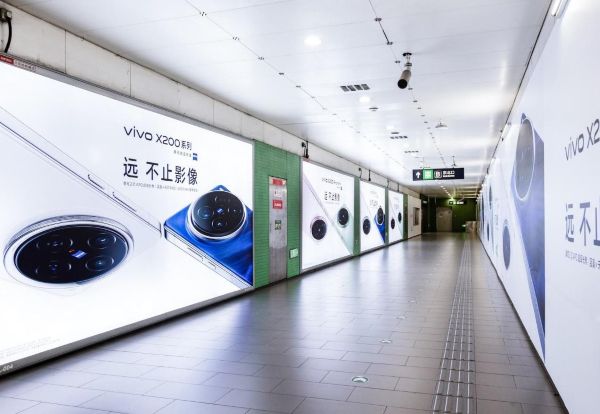
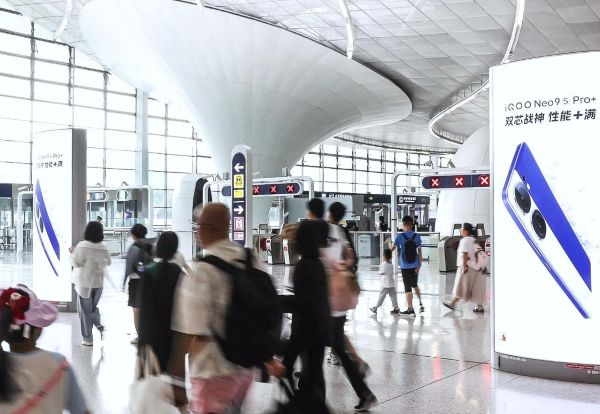
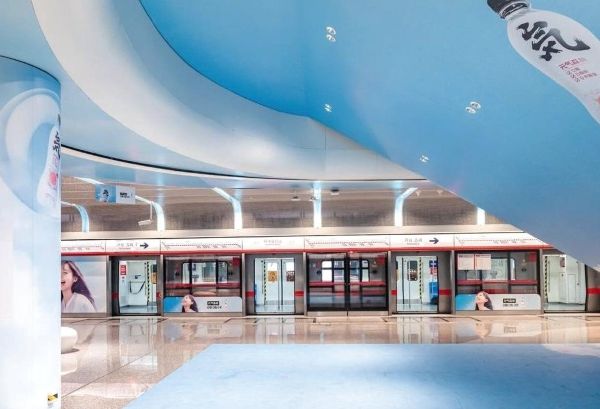
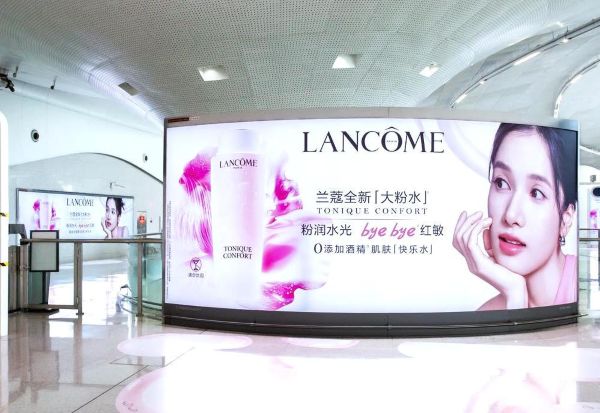
Lightbox advertising is the most common form, located on both sides of platforms, concourses, and passages. The standard twelve light boxes (approximately 3 meters by 1.5 meters) are visible 24 hours a day, with stable images and suitable for showcasing brand image. The core lightbox of S-level sites costs tens of thousands to tens of thousands of yuan per month.
The column advertisement wraps the entire column inside the station, creating a surrounding visual effect. Passengers can see from various angles during the journey, and the memory effect is excellent. The price is usually higher than that of lightboxes, with a monthly cost of tens of thousands to over 100000 yuan per column.
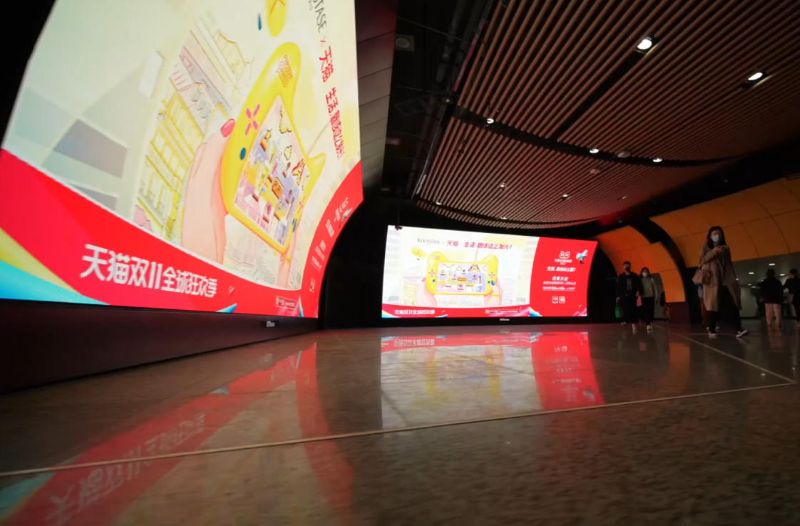
The channel wall stickers cover the walls on both sides of the transfer channel, forming an immersive visual enclosure. Passengers have ample time to watch content while walking in the aisle. These types of advertisements are usually sold in the form of "packages", with prices ranging from tens of thousands to millions of yuan.
2.2 Media inside the carriage
The carriage signs, handles, and door stickers are located inside the train to achieve close proximity. Passengers sitting in their seats or standing in the carriage are less than one meter away from the advertisement. A complete set of advertisements for a single carriage (including billboards and handles), with monthly fees starting from tens of thousands of yuan.
It is worth mentioning that by the end of 2025, the 3D three-dimensional pull tab advertisement for small square bottle wine has attracted widespread attention, turning traditional handles into touchable product models. This indicates that the media inside the carriage is moving from flat to three-dimensional, and the creative space is expanding.
2.3 Digital Media
The LED large screen and television broadcasting network are located in the station hall, platform, and carriage, playing dynamic video content. According to the placement case of Yanqing District Integrated Media Center, 16000 screens covering 10 core lines reach an average of about 12 million people per day. A certain cultural and tourism brand has been broadcasting on a television network for 5 months, with a budget of 650000 yuan and an average of 40 broadcasts per block per day, each lasting 30 seconds.
2.4 Theme Package Station/Special Train
The highest level of collaboration involves contracting the entire train or station hall for creative packaging. The cost is usually in the millions to tens of millions, suitable for major brand marketing events.

3、 Five step method for advertising placement in Beijing subway
After understanding the basic forms, let's move on to the main topic: How to advertise on the Beijing subway? The following is the standard operating procedure.
Step 1: Clarify goals and audience
Before approaching any media company, ask yourself three questions:
Why invest? Is it for brand exposure, offline event traffic, or new product release?
Who should I call to see? Is the target audience white-collar workers, students, business people, or tourists?
How much is the budget? 500000, 1 million, 3 million, different budgets correspond to different gameplay.
These issues determine all subsequent choices. For example, financial brands can focus on covering Fuxingmen and Fuchengmen around Financial Street; Tourism brands can prioritize the layout of Qianmen and Yonghe Temple; Fast moving consumer goods are suitable for universities and residential sites.
Step 2: Filter sites and locations
Beijing subway stations have clear classification:
S-level stations: Guomao, Xidan, Wangfujing, Haidian Huangzhuang, Beijing South Station, etc. Gathering core commercial, transportation, and tourism flows, with the highest prices.
A-level stations: main transfer stations such as Dongzhimen, Xizhimen, Jianguomen, Chaoyangmen, etc., with prices second.
B/C level stations: general residential areas or non core stations on the line, with the most affordable prices.
When filtering sites, it is not only necessary to consider the level, but also the specific location. The effect of the light box at the end of the platform and the light box facing the escalator is vastly different for S-level stations. It is essential to request the media company to provide real-life photos and specific locations of the locations.
In early 2026, the Chaoyang Municipal Bureau of Culture and Tourism launched a promotional campaign on the Beijing subway, selecting four stations: Dongzhimen Hub Station, Jianguomen Station, Wukesong Station, and Sihui Hub Station, with the aim of forming a complementary circle of "commercial consumption, political commuting, student groups, and business office". This kind of combination thinking is worth learning from.
Step 3: Obtain quotation and comparison
Request quotations from 2-3 media companies. When inquiring, it is necessary to clarify the media format, specific sites, number of locations, and advertising cycle.
The quotation usually includes the following parts:
Media release fee: Point rental, which is the main cost
Production cost: The cost of advertising graphic design and material printing
Installation fee: The cost of night construction and installation
Taxes and fees: usually not included in the quotation
When comparing quotes, CPM (cost per thousand impressions) can be calculated as follows: monthly fee per location ÷ (average daily foot traffic at the site x 30) x 1000. This indicator can help you scientifically evaluate cost-effectiveness.
Step 4: Creative Design and Compliance Review
This is the key link that determines the effectiveness of advertising, and it is also the most easily overlooked link for beginners.
The subway environment has two major characteristics: mobile viewing and short dwell time. Therefore, creative design needs to follow several principles:
The brand logo should be large enough to let passengers know who it is at a glance
The core information should be short and can be read within 3 seconds
Strong color contrast, jumping out in complex environments
At the same time, compliance must be highly valued. In October 2025, Jiaonai's advertisement at Wangfujing subway station caused a large-scale controversy due to its strong visual impact, which was complained of by netizens as "hot eye", and finally fell into a public opinion crisis. This case serves as a warning to us that public space advertising must consider audience perception and avoid visual intrusion. Dense repetitive text and overly exaggerated shapes may be magnified several times in enclosed spaces.
All advertising content must be reviewed by the subway operator to ensure compliance with socialist core values and technical safety standards.
Step 5: Publication Execution and Effect Tracking
After signing the contract, it enters the execution phase.
Publication stage: Due to the fact that subway construction can only be carried out after the shutdown at night, the installation time is usually in the early morning. After publication, promptly request photos or videos for verification.
Monitoring phase: Large scale advertising may require suppliers to provide mid-term data reports, including actual coverage, exposure frequency, and other information. Meanwhile, interactive effects can be tracked through exclusive QR codes, discount codes, and other means.
Maintenance phase: The contract should specify the fault response mechanism. If the screen is damaged, it needs to be repaired within the specified time.
4、 Common Misconceptions in Advertising Placement on Beijing Subway
Beginners may fall into the following five pitfalls when exploring how to place advertisements on the Beijing subway:
Misconception 1: Only focusing on site level, ignoring site quality
At the same S-level station, the "golden viewpoint" on the pedestrian flow line and the "blind spot" in the corner have several times different effects. Be sure to search for the bitmap.
Misconception 2: Underestimating the cost of production and installation
The media release fee on the quotation often does not include production and installation. The production cost of large wall stickers can be as high as tens of thousands of yuan, and the installation cost at night can also be several thousand yuan, so it is necessary to reserve it in the budget.
Misconception 3: Short term advertising expecting miracles
Subway advertising is a slow media that requires time to accumulate awareness. The effect of advertising for 1-2 weeks is limited, and it is recommended to use it at least on a monthly basis.
Misconception 4: Ignoring Contract Details
Clearly define terms such as publication time, playback frequency, fault compensation, and cost including items. Request to provide publication monitoring services.
Misconception 5: Exploring alone without collaborating with professional companies
Beijing subway advertising resources are complex, involving multiple stages such as location selection, price negotiation, and publication execution. Collaborating with Tianci Media, a professional subway advertising placement company that deeply cultivates Beijing's subway resources, often results in more competitive package prices and professional placement advice, avoiding detours.
5、 Budget planning suggestion: How to invest different budgets?
Based on the budget size, three reference options are provided:
Plan A: Small budget testing type (100000 to 300000 yuan)
Select one route with a concentrated target audience
Place a complete set of advertisements inside a single carriage (signboard+handle)
Or choose 1-2 A/B level station platform lightboxes
Delivery cycle: 1-3 months
Plan B: Regional deep cultivation type (300000 to 800000)
Select 3-5 A/B level stations along the target business district or community route
Package purchase of platform lightboxes and escalator advertisements
Realize high-frequency repeated exposure in the region
Delivery cycle: 3-6 months
Plan C: Brand explosion type (over 800000 yuan)
Select 1-2 core channel wall stickers for S-level sites
Combining multiple routes for in car advertising
Or consider television network coverage
Forming a 'landmark explosion+network coverage'
Launch cycle: quarterly/semi annual
6、 Conclusion
There is no standard answer to how to advertise on the Beijing subway, only the answer that is most suitable for you.
Starting from setting clear goals, to screening sites, comparing quotes, creative design, and tracking publication, every step needs to be taken seriously. The charm of subway advertising lies in its ability to maintain a strong influence in the digital age through the most traditional methods. When your advertisement appears in front of hundreds of thousands of people every day and is repeatedly seen by commuters, that brand presence cannot be replaced by online traffic.
If you are trying for the first time, it is recommended to start with a small or medium budget, choose one or two core sites, invest for 1-3 months, verify the effect, and then gradually scale up. In this process, choosing a reliable partner like Tianci Media, a professional subway advertising placement company, can help you avoid many pitfalls in your first placement.
The subway in Beijing runs non-stop every day, and your brand story may start from the next station.