

- Photos
- Specs
- Advantages
- Value
- Media Map
| Area:Chongqing | Type:airport | Frequency:0 |
| Address:Chongqing Jiangbei International Airport | Format:Light box | Duration:0 |
| Location:T3 Domestic Arrival Baggage Claim | Min Qty:1 | Operating Time:0-24o'clock |
| Size:2: 8.9 x 3.07 m | Min Period:month |
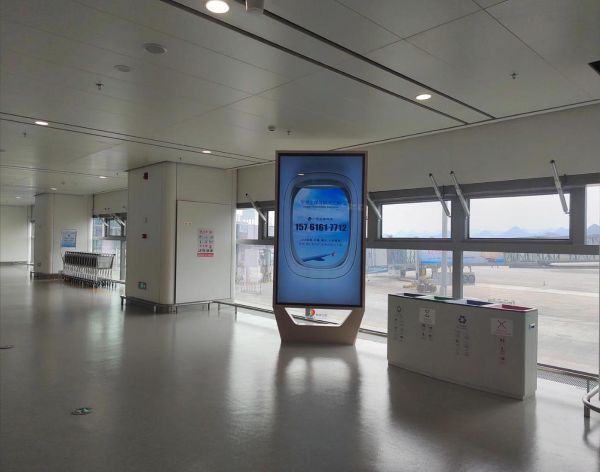
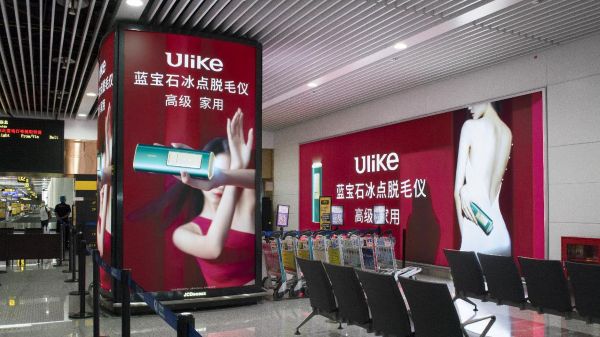
Located in the core baggage claim corridor of T3 Arrivals, this area is passed by all domestic‑arriving passengers after disembarking, with no detour routes available. It achieves full coverage of arrival passenger flow and reaches 100% of all domestic passengers arriving in Chongqing. It is a mandatory route for passengers collecting baggage. When passengers travel between baggage carousels and rest areas, they cross the light‑box radiation zone an average of 3 times, resulting in multiple visual interactions with the light‑box displays. Passengers’ willingness to receive advertisements is over 50% higher than in open‑plan spaces.
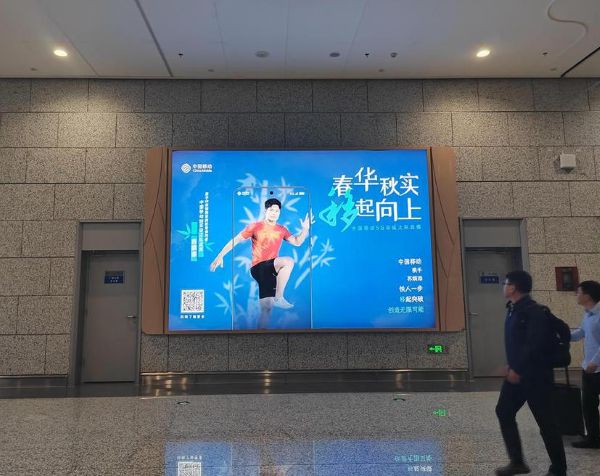
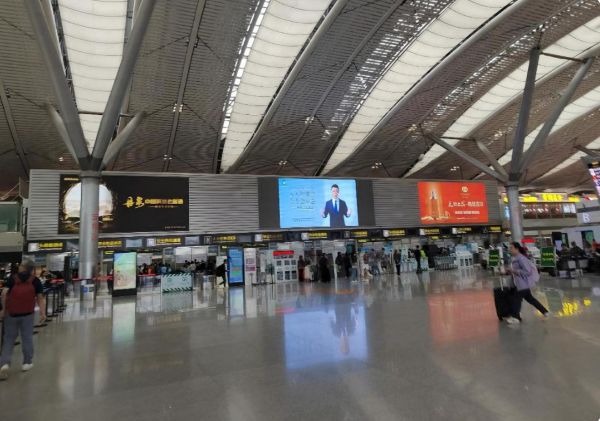
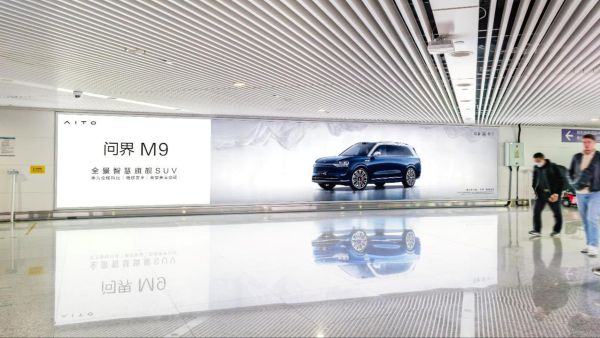
Positioned along the passages surrounding the baggage carousels in the domestic‑arrival baggage claim hall, these are core communication spots that domestic passengers arriving in Chongqing must pass through after landing, covering 100% of all domestic arrival traffic. The setup consists of 2 giant indoor fabric‑backlit light boxes, with dimensions: Unit 2: 8.9 × 3.07 m; Unit 1: 11.87 × 2.08 m. Arranged in a row, they form an extra‑long brand‑display surface. Suited for the high‑ceiling space of the terminal hall, they offer unobstructed views with no pillar blockages, allowing the advertisement visuals to be fully seen from any position.
At this airport with an annual throughput of 50 million passengers, the audience mainly consists of business elites and tourists from middle‑to‑high‑income households. Over 68% of the audience have an annual income of more than 300,000 RMB. The covered passengers generally hold decision‑making power for high‑value consumption, making them core target audiences for brands in high‑end automobiles, finance, cultural tourism and other sectors. Adjacent to airport transportation hubs and commercial districts, the advertising exposure can directly connect to offline consumption scenarios, enabling fast conversion from "exposure to store visit".
Media spots extend longitudinally along the passage to form an uninterrupted, unobstructed "light box corridor". Travellers achieve 100% forced exposure during walking, creating a dual‑end visual loop of "baggage claim‑departure" together with the cross‑mounted light boxes at exits. The enclosed passage is free of other advertising distractions, making the light boxes the sole visual focus. The memory retention rate of brand information is significantly higher than that of dynamic media.
After collecting their baggage, travellers walk along the passage towards the exit. This is a moment when they are relatively relaxed yet focused. Light box sets are sequentially arranged along this mandatory travel route, enabling continuous exposure of brand information at the "final step" of travellers’ return journey. It generates continuous and progressive visual impact, greatly boosting the exposure frequency and memory depth of brand information, and delivering a communication effect of "1+1+1>3".
The baggage claim hall of Terminal 3 features a simple, tidy and spacious overall environment. Advertisements are arranged in a well‑ordered and restrained manner without cluttered commercial visuals. The overall communication environment is clean and pure. Brand light box visuals stand out with strong exclusivity and are less susceptible to interference from other information. Audiences maintain a high level of attention, resulting in far higher information‑receiving efficiency than noisy, high‑interference outdoor scenarios such as commercial districts and main roads. This enables more precise and efficient brand communication.