- Photos
- Specs
- Advantages
- Value
- Media Map
| Area:Guangzhou | Type:airport | Frequency:120 |
| Address:Guangzhou Baiyun International Airport | Format:spam bot | Duration:15s |
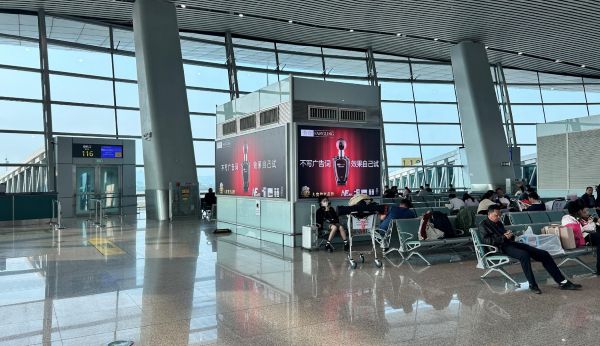
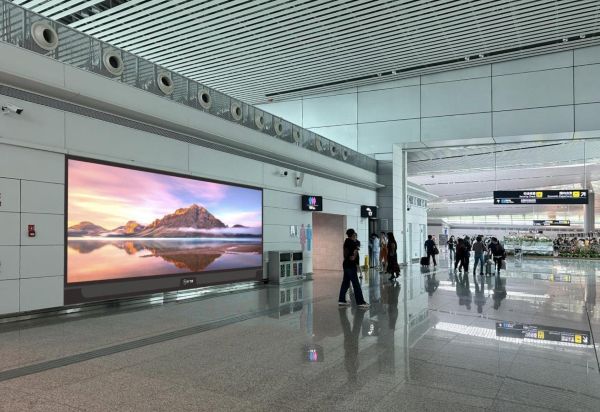
| Location:T1 three-level domestic departure | Min Qty:58 | Operating Time:0-24o'clock |
| Size:65英寸 | Min Period:4weeks |
As the core domestic terminal covers the entire departure/arrival process, it has a daily coverage of 50,000 high-net-worth passengers, with traffic scale and stability far exceeding ordinary commercial districts and transportation hubs. Passengers pass through 100% of the areas, with no detours or avoidance, forming a full-cycle exposure loop of 'departure inspiration — transfer reinforcement — arrival consolidation.' A single ad placement can achieve full journey reach, increasing advertising reach and memory by 50%.
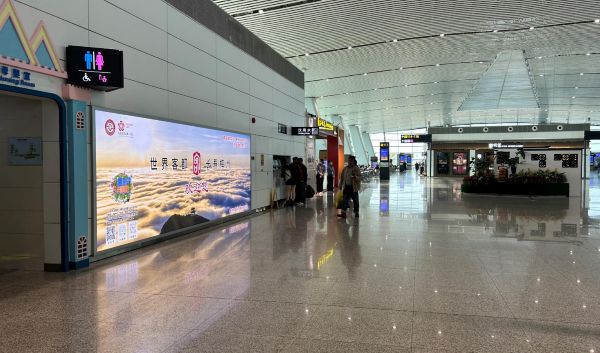
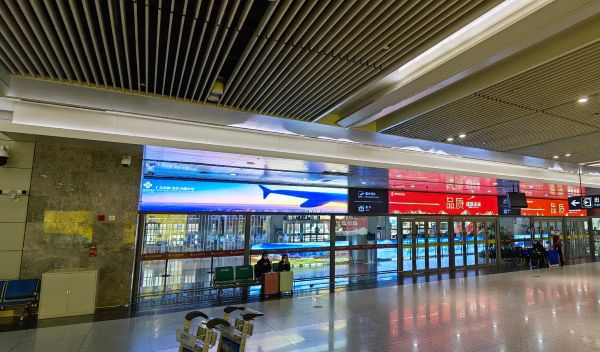
The media layout spans the core functional areas of Terminal 1, including check-in, security, waiting halls, transfers, baggage claim, and arrival exits, evenly distributed along essential pathways. This forms a full-chain closed-loop coverage of departure — waiting — transfer — arrival, stably reaching over 120,000 domestic passengers daily. The display screens have no other visual distractions, with advertising attention significantly higher than ordinary media, allowing brand information to achieve efficient penetration from 'seeing' to 'remembering.'
Passengers dwell an average of 5-15 minutes at security, waiting areas, and baggage claim, with highly focused attention. Passengers follow mandatory routes with no detours, providing unobstructed exposure without blind spots. In enclosed control areas, low advertising interference ensures high information reception efficiency. High-definition displays enable deep conduction of brand information and strong memory retention, with ad contact frequency reaching 120–360 times daily, and brand recall is 2.3 times that of ordinary media.
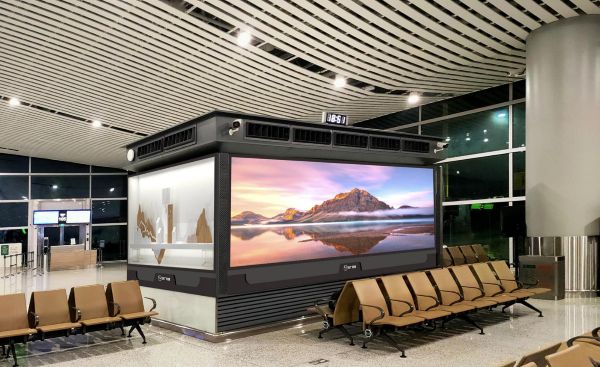
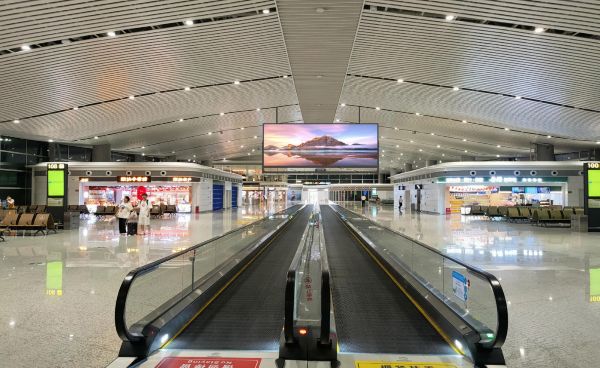
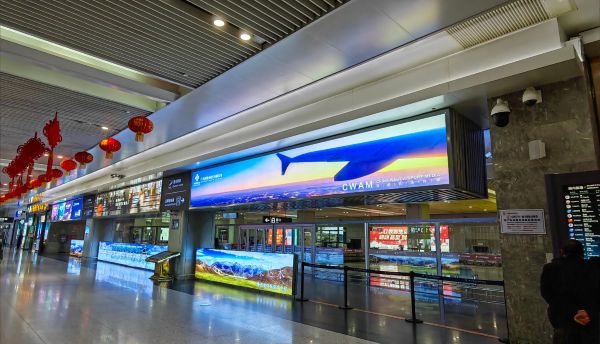
In the digital media era, static images often lack lasting impact. Leveraging high-definition LCD technology can present richly colored, smoothly flowing video content. In the spacious departure halls and main arrival terminal screens, these act like glowing windows, allowing brand awareness to increase by over 30% through video display.
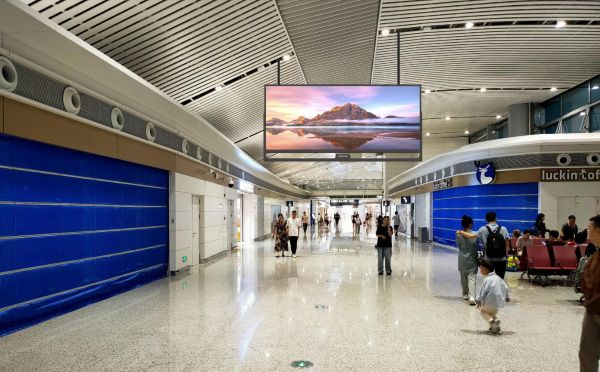
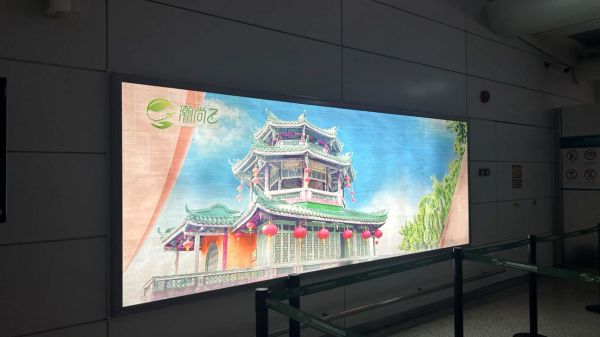
The screen machine media combination often exhibits a matrix-like characteristic. From prominent positions at security checkpoints to the inevitable paths in the baggage hall, multiple devices are networked to broadcast simultaneously, creating a sense of visual encirclement. The high-frequency repetitive exposure effectively strengthens brand memory and embeds brand information throughout the entire passenger journey, from check-in and security to transit and arrival, forming a continuous visual influence.
Screens are often placed in the prime zone of passengers’ eye level. Whether passengers are bored while queuing for security or anxiously waiting for baggage, they have plenty of time to engage deeply with the screens. By deploying media at two key vertical nodes, it seamlessly captures passengers' attention, while high-frequency dynamic visuals reinforce impressions.
The media advantages of the screen machine rely on its high-density dynamic reach, precise audience penetration, intelligent technology empowerment, and commercial conversion loop. It has established a benchmark system for digital media in domestic airports and serves as a key medium for brands to achieve the transition 'from exposure to transaction.'
This screen machine is a core media asset for the South China aviation hub, featuring high ROI, strong conversion, and long-term value growth. With super traffic, high-net-worth audiences, mandatory distraction-free scenarios, cost-effectiveness, premium endorsement, scarce resources, and long-term value accumulation, it forms a complete closed loop of traffic — reach — conversion — brand enhancement — long-term revenue, making it the essential golden media for efficient conversion.