- Photos
- Specs
- Advantages
- Value
- Media Map
| Area:Beijing | Type:airport | Frequency:0 |
| Address:Beijing Daxing Airport | Format:Booth | Duration:0 |
| Location:Before security check on the third floor departure | Min Qty:2 | Operating Time:0-24o'clock |
| Size:6×8.7×2.5 | Min Period:year |
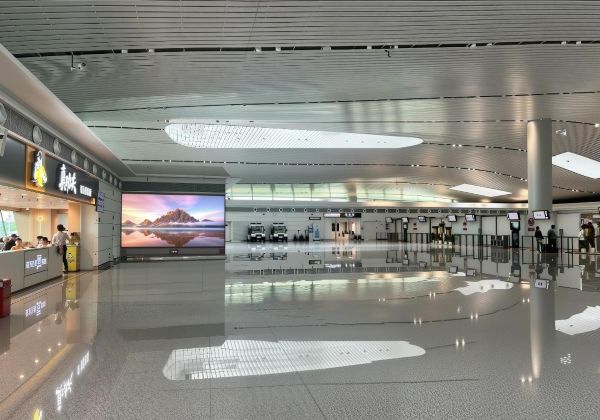
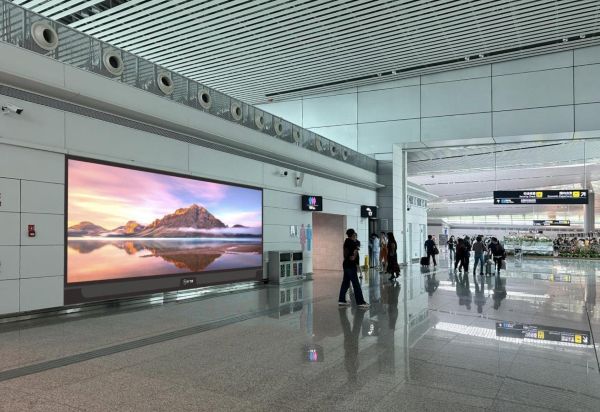
Located on the 3rd floor domestic check-in hall → the main security checkpoint, it is the only main passage with no possibility for passengers to detour, with an advertising reach rate of nearly 100%. The open area before the 3rd-floor security checkpoint is the last large public space where domestic passengers stop collectively before departure, making memory retention high. Being an enclosed airport space with no other media to divert attention allows for exclusive forced exposure to information.
This booth is situated in the pre-security area of the 3rd-floor departure hall, adjacent to the check-in counters, self-service check-in area, and security entrance. It is a mandatory choke point for passengers before boarding, covering 100% of departing passengers with no detours or visual obstructions, truly achieving forced reach. Every passing passenger can see the booth directly. The daily exposure frequency far exceeds that of ordinary advertising spots, thoroughly solving the pain points of brand communication such as 'incomplete reach and wasted traffic,' building a solid foundation for brand exposure with top-tier hub traffic.
The area before security is where passengers make their last collective stop and actively pay attention to the environment, with an average stay of 15–30 minutes, ensuring full reception of information and deep memory retention. With 360° surround/matrix layout, it creates a brand corridor offering repeated multi-angle exposure. The pre-security booth is a core and scarce resource with limited spots and intense competition. Long-term placement can create brand exclusivity, covering high-net-worth individuals, ensuring forced exposure, and conversion rates for long stays are far higher than those of mass media.
After completing check-in and baggage drop, passengers often need to queue for security checks. The 5 to 20 minutes of idle time naturally create a deep reading window. Physical exhibition booths take advantage of this period to upgrade the traditional 'one-way display' into 'two-way interaction.' The booths are like pearls scattered in a corridor of light and shadow, neither obstructing the flow of people nor disrupting the smooth passage, while naturally becoming focal points of attention, significantly enhancing brand recall and favorability.
Before the departure security check is one of the few moments in a passenger's journey where they experience extended waiting and low urgency. After checking in, passengers do not need to rush and often arrive early to queue for security, with average waiting times being ample. The surrounding environment is free of cluttered advertisements, making it a pure media environment where passengers have a higher acceptance and deeper memory of the exhibition content. Brands can fully convey their information, product highlights, and interactive content, transforming the experience from 'passively seeing an ad' to 'actively paying attention to the brand,' greatly improving information dissemination efficiency and embedding brand content into the audience's mind.
Departure security exhibition booths are premium investment targets that high-net-worth individuals must pass, ensuring mandatory exposure, immersive scene experience, strong brand endorsement, and quantifiable ROI. Their core values are reflected in five dimensions: passenger flow value, scene value, media value, brand value, and long-term return, making them strategic investment choices for brands aiming to capture the high-end market and enhance global influence.
Passengers are in a state of anticipation and focus before departure, making them highly receptive to brand information, with significantly improved brand recall. Interactive strategies can be linked with dynamic LED guidance, static lightboxes, and physical exhibition experiences to build a full-chain marketing process of 'see → remember → experience → convert.'