- Photos
- Specs
- Advantages
- Value
- Media Map
| Area:Guangzhou | Type:airport | Frequency:0 |
| Address:Guangzhou Baiyun International Airport | Format:Light box | Duration:0 |
| Location:Depart from T2 and arrive at the mixed-flow area | Min Qty:7 | Operating Time:0-24o'clock |
| Size:7.86×1.97 | Min Period:month |
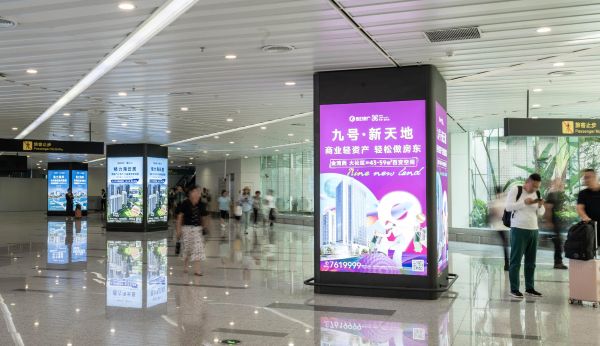
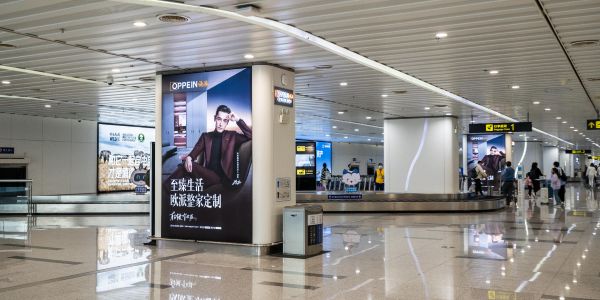
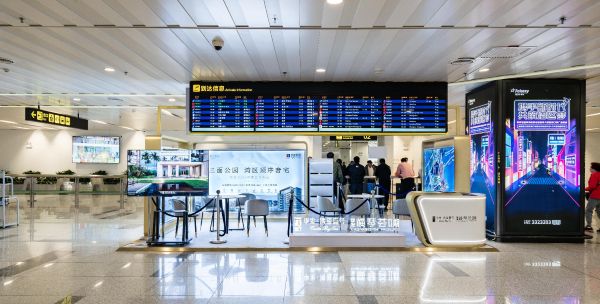
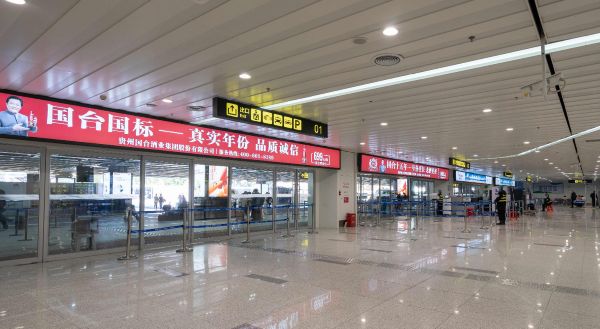
As a mandatory passage for departing passengers to go through security and reach the boarding gate, and for arriving passengers to head to the baggage claim, this corridor handles more than 76 million high-end passengers annually in both directions. Among them, business travelers account for over 60%, demonstrating strong purchasing power. Passengers typically stay in this area for 1-2 hours. With lightboxes and directional signs arranged at the same height, the space ensures mandatory visual contact, significantly enhancing brand recall.
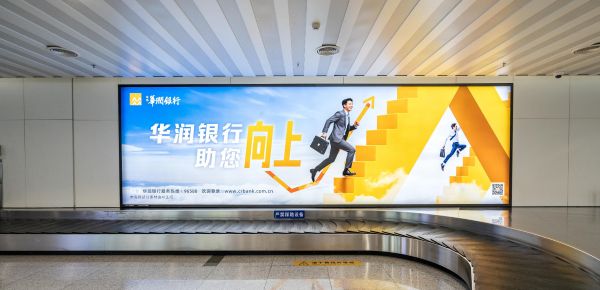
The T2 departure and arrival mixed-flow area wall lightbox sets, with their core advantages of bidirectional passenger coverage, large-scale continuous display, integration with premium surroundings, and high visibility, have become a strategic offline media resource for brands to achieve efficient exposure and deep engagement at South China's air gateway. Serving as the primary visual link between departing and arriving passengers, their unique spatial position, pedestrian flow design, and display format create a multidimensional media advantage.
The domestic departure and arrival mixed-flow area wall lightbox sets are high-end advertising media situated in key locations of South China's aviation hub, specifically designed for brands to reach high-value audiences accurately. With large visual scale, precise passenger touchpoints, and suitability for premium settings, they have become the preferred media for brands aiming to capture South China's high-end market, serving as the core communication medium to enhance brand influence and market conversion.
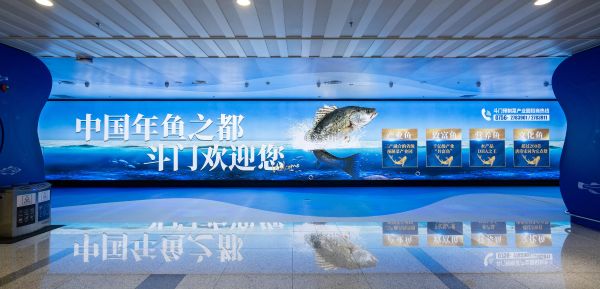
Relying on the unique characteristics of airport environments, the lightbox set enables efficient communication. Its layout design avoids luggage carts and crowd obstruction, ensuring a complete display of visuals. It naturally integrates with the design of modern terminal spaces, highlighting a high-end brand tone. It is suitable for building the image of luxury goods, automotive, and financial brands, and can also meet short-term marketing needs such as new product launches and promotional events.
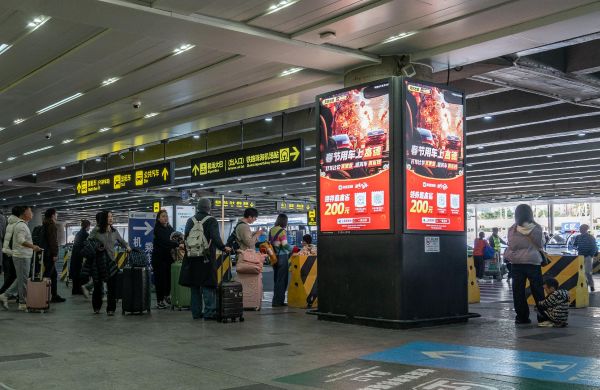
The spatial coverage advantage of airport lightboxes is particularly prominent. Lightboxes are distributed along the main corridor walls in a network layout without blind spots. This not only avoids obstruction from luggage carts or crowds but also coordinates visually with wayfinding signage, ensuring that every traveler naturally receives brand information and enabling efficient daily reach to tens of thousands of passengers.
The mixed-flow area in Terminal 2 handles over 40 million passengers annually, with a significant proportion being business and international travelers, characterized by high purchasing power and decision-making influence. Airport lightboxes are strategically placed along the main corridors on the second floor, capturing idle moments of departing passengers and reaching arriving passengers during their destination-sensitive periods, creating a dual-exposure effect. Compared to single-direction media, their coverage ensures brand messages penetrate various travel scenarios, achieving 100% passenger reach without omission, making them especially suitable for high-end brands needing cross-demographic penetration.
By combining static visuals with contextual content, it accurately matches passengers' immediate needs. This precise demand-information alignment makes airport lightboxes an effective bridge connecting brands with consumer behavior, significantly improving conversion rates compared to ordinary outdoor media.