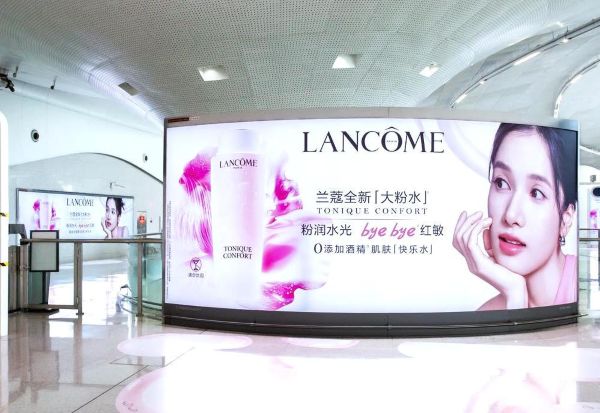
How to check the published price of subway advertisements? From lightboxes to chartered cars, understanding the price system in one article
2026-03-09Tianci MediaViews:117
Highlights
The price of subway advertising varies from tens of thousands to millions depending on the form, city, and station level. This article provides a detailed explanation of mainstream forms of pricing such as lightboxes and private cars, with real cases from Shenzhen, Fuzhou, Guangzhou, and other places attached to help you understand the pricing logic. Tianci Media is a professional subway advertising platform that helps you plan your budget scientifically!
For brand owners who are new to subway advertising, the most direct question is often: how much does subway advertising cost? Why do some quote tens of thousands, while others require millions?
To answer this question, the first thing to understand is a concept: publication price. It is the official pricing publicly announced by the media, similar to the hanging price of a product. In actual transactions, the final transaction price will be discounted to varying degrees based on factors such as advertising volume, cycle, and peak/off seasons. But understanding the publication price is the first step in understanding the quotation and planning the budget.
This article will help you thoroughly understand the pricing of subway advertising from mainstream forms of price references, core factors affecting quotes, to a guide to avoiding pitfalls.
1、 Why is there a huge price difference in subway advertising?
Subway advertising does not have a "unified price", and the price is determined by a combination of multiple variables:
1. City level and route value
The subway advertising prices in first tier cities (Beijing, Shanghai, Guangzhou, and Shenzhen) are much higher than those in other cities. The golden route that passes through the core business district and CBD within the same city is several times more expensive than the suburban route.
2. Site level
The Beijing subway divides its stations into S-level (special grade stations), A++level (core transfer stations), A-level (ordinary stations), etc. S-level sites such as Guomao and Xidan have lightbox prices that can be more than three times higher than A-level sites.
3. Advertising Forms
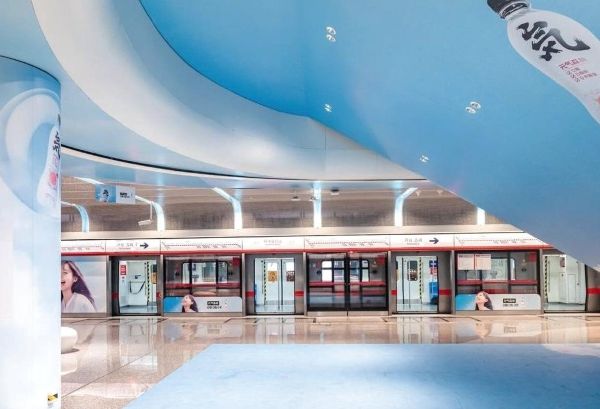
Twelve lightboxes, package columns, LED screens, screen door stickers, and internal packaging vehicles... There is a huge difference in the technical cost and dissemination value of different forms, and the price naturally varies greatly.
4. Investment scale and cycle
Packaging and purchasing multiple locations for long-term advertising (quarterly/annual) can result in significant discounts, and the unit price per location is much lower than that of short-term single advertising.

2、 Mainstream format publication price reference (latest in 2026)
1. Twelve lightbox advertisements
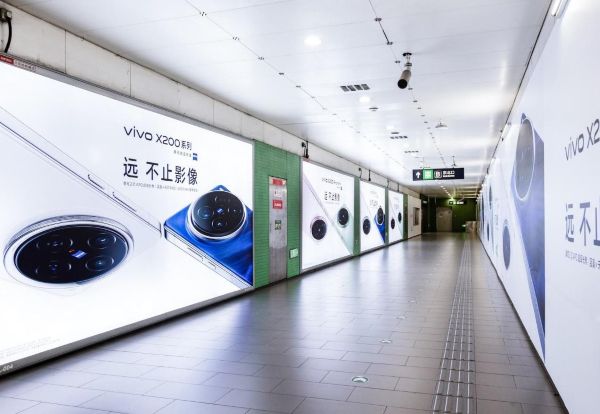
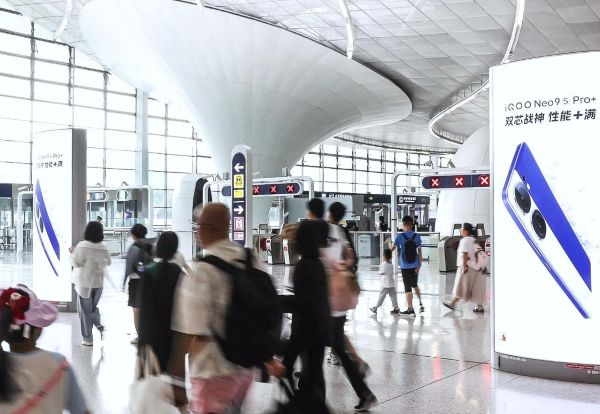
This is the most common form of subway advertising, located on the walls of platforms and concourses, with a standard size of 3 meters by 1.5 meters.
Shenzhen Metro 3-in-a-row sealed lightbox set:
10 sets of 3 consecutive seals (distributed at 2S/4A++/2A+/2A level stations): 728000 yuan/set/4 weeks
30 sets of 3 consecutive seals (6S/12A++/6A+/6A level): 1.68 million yuan/set/4 weeks
50 sets of 3 consecutive seals (10S/20A++/10A+/10A level): 2.38 million yuan/set/4 weeks
Fujian Jinshan Station Subway Light Box:
Super lightbox (654.5cm × 167.5cm): 100000 yuan/piece/4 weeks, production and installation cost 3000 yuan/piece/time
2. Brand train (internal charter)
Package the entire train in all dimensions, covering signs, window stickers, seat side stickers, roof stickers, floor stickers, etc., to create an immersive brand space.
Creative private car for Shenzhen Metro Line 3:
Publication price: 420000 yuan/train/4 weeks
Production and installation fee: 200000 yuan/train/time
Covering the three core areas of Futian, Luohu, and Longgang, with a peak daily passenger flow of 1.15 million people
Fuzhou Metro Brand Trains:
Publication price: 180000 yuan/train/4 weeks
Production and installation fee: 15000 yuan/train/time
Covering the rail transit network in six urban areas
Creative private car for Guangzhou Metro Line 2:
Publication price: 498000 yuan/train/4 weeks
Production and installation fee: 180000 yuan/train/time
Running through the north-south axis of the city, connecting core hubs such as Guangzhou South Station, Park Front, and Guangzhou Railway Station
3. Brand channel/wall sticker advertisement
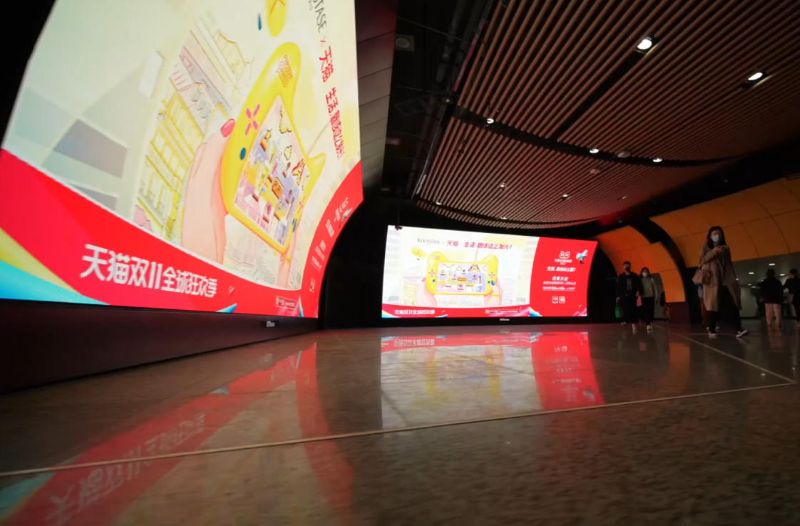
Cover the walls or pillars on both sides of the transfer passage to create a continuous visual impact. The price is usually charged based on the length or area of the channel. The full monthly fee for a core transfer channel ranges from 200000 to 800000 yuan, and some super stations can reach millions of yuan.
3、 What other fees are there besides the publication price?
Total cost=media publishing fee+production and installation fee+creative design fee+taxes and fees
1. Media publishing fees (accounting for 60% -70%)
This refers to the portion of the published price, which is the cost of purchasing media outlets and time slots.
2. Production and installation costs (accounting for 10% -20%)
Hard costs that are easily overlooked by beginners. From the above cases, it can be seen that:
The production cost of chartered cars in Shenzhen can reach up to 200000 yuan per train per trip
Fuzhou internal charter production cost 15000 yuan/train/time
The production cost for chartering a car in Guangzhou is 180000 yuan per train per trip
The production cost of the lightbox is about 3000 yuan/piece/time
3. Creative design fee (accounting for 5% -10%)
High quality creative design is priced according to the project, and immersive media such as private cars require a professional team to customize the creativity.
4. Taxes and management fees (approximately 5%)
Before signing the contract, be sure to ask: Does the quotation include tax? Does it include production and installation? Who is responsible for the damage to the screen?
4、 The three major negotiation factors that affect the transaction price
The published price is only the starting point, and the actual transaction price depends on the following factors:
1. Investment scale
By purchasing multiple locations and routes in a package, the unit price per point can be reduced by 20% -40%. The average price of a set of 3 consecutive seals in Shenzhen has decreased from 72800 yuan to 47600 yuan, with a significant scale effect, from 10 sets to 50 sets.
2. Placement cycle
Long term cooperation (quarterly/annual) can result in better unit prices. Short term advertising (2-4 weeks) has the highest price.
3. Peak and off peak seasons
May Day, National Day, and Spring Festival are peak seasons, with prices rising; At the beginning and end of the year, there are sometimes performance sprint discounts.
5、 Common Misconceptions and Avoiding Pits Guide
Misconception 1: Only ask the publication price, not the actual transaction price
The published price is like a hanging tag price, and the actual transaction depends on the "discount". Ask several agency companies and compare the actual transaction range.
Misconception 2: Only counting media fees, not production fees
The production cost of internal charter cars can easily reach tens to two hundred thousand yuan, which may exceed the media fee itself. Before signing the contract, it is necessary to confirm that the total price includes the project.
Misconception 3: Only focus on price, not quality
The prices of different sites in the same form and city may differ by several times, but the value of the audience may also differ by several times. The 'effective target audience reach cost' of S-level sites may be lower than that of A-level sites.
Misconception 4: Ignoring the Cost of Creative Adaptation
Immersive media such as private cars require professional creative design, and using TV advertising materials directly will result in half the effect. Reserve sufficient budget for high-quality creativity.
Misconception 5: Collaborating with unqualified intermediaries
It is necessary to verify the qualifications of the agent to ensure that they have legal media resource management rights. Professional platforms such as Tianci Media can provide one-stop full process services, from demand analysis and location evaluation to price negotiation, creative execution, and effect tracking, helping you achieve your advertising goals at a better cost.
6、 Conclusion: How to scientifically plan subway advertising budget?
The price of subway advertising varies from tens of thousands to millions, and the key is to choose the appropriate city, route, and form based on one's own goals, budget, and audience.
Three steps for budget planning:
Clear goal: brand exposure or promotional traffic? National impact or regional deep cultivation?
Matching format: Broad spectrum exposure selected through lightbox network, deep communication selected through internal booking, topic events selected through creative booking website
Calculate the total amount: media fees+production fees+creative fees+taxes and fees
Novice suggestion: Starting with small-scale testing, choose 1-2 lightboxes at core stations or an internal charter for one route, and place them for 4-8 weeks to verify the effect before gradually scaling up.
Tianci Media is a professional subway advertising platform that has been deeply involved in subway media in core cities across the country for many years, with rich resource databases and advertising experience. From demand analysis and location evaluation to price negotiation and creative execution, we provide one-stop full process services to help you achieve efficient subway advertising placement with a reasonable budget.