How to choose subway advertisements? Complete Guide for 2026
2026-03-04Tianci MediaViews:86
Highlights
How to choose subway advertisements? This article provides a scientific selection methodology from dimensions such as target audience, site level, advertising format, and creative design, and reveals common misconceptions. Tianci Media, a professional subway advertising platform, helps you accurately match resources and efficiently reach your target audience!
Every day, millions of urban commuters shuttle between subway stations, forming a large and high-quality audience. For brands, subway advertising is the golden medium to reach urban white-collar workers, business elites, and young consumers. But facing the subway advertising network with crisscrossing lines, dense stations, and diverse forms, beginners often feel confused: how to choose subway advertising to make the budget most worthwhile?
This article will systematically analyze the selection methodology of subway advertising from target positioning, form selection, station screening, creative execution to service provider selection, helping you avoid pitfalls and achieve direct results.
1、 Step 1: Clarify your marketing goals and audience
The first step in choosing any media is not to look at resources, but to look at oneself.
1. Different goals lead to different choices
Brand image construction: requires high exposure and high-quality media forms, such as brand channels, themed station halls, S-level station lightboxes, pursuing visual impact and authoritative endorsement.
New product release: To quickly gather popularity and topics, consider dynamic LED screens, creative interactive devices, or even a dedicated subway train.
Promotion activity: Accurate traffic diversion and instant conversion are required. Platform lightboxes and screen door stickers are combined with QR codes to guide passengers to scan the code and participate.
Deep cultivation of regional markets: It is necessary to focus on target business districts or communities and select surrounding sites for saturation coverage.
2. Audience portrait determines site selection
Are your target customers financial elites, young white-collar workers, college students, or household users? The composition of the population varies greatly across different sites:
Guomao Station and Financial Street Station: densely populated with financial practitioners and corporate executives
Xidan Station and Wangfujing Station: Young trendy consumers and tourists
Haidian Huangzhuang Station and Zhongguancun Station: IT practitioners, university teachers and students
Huilongguan Station and Tiantongyuan Station: Large community residents, mainly household users
Only by clearly depicting the audience portrait can the target station be accurately located on the city map of the subway.

2、 Step 2: Understand the common forms of subway advertising
Subway advertising is not as simple as "one screen", different forms have different values and applicable scenarios.
1. Lightbox advertising: a stable and reliable "main force"
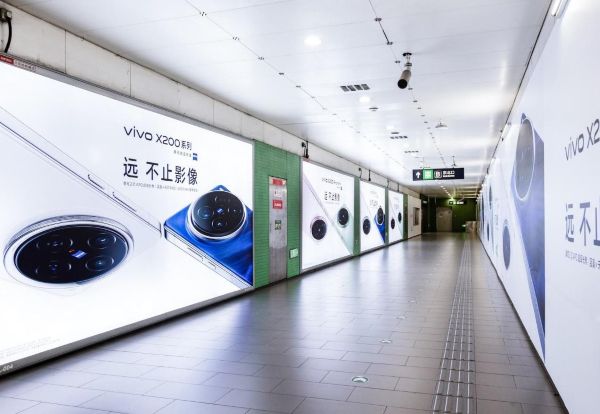
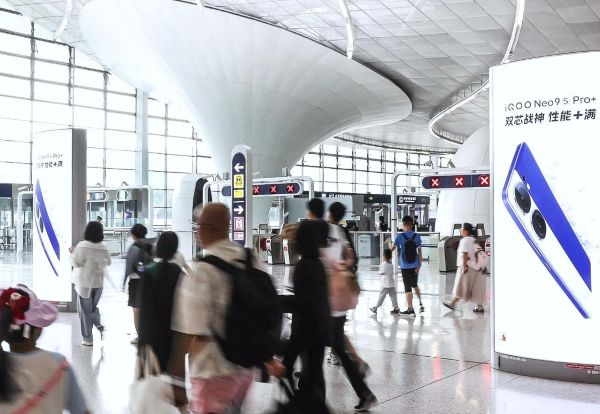
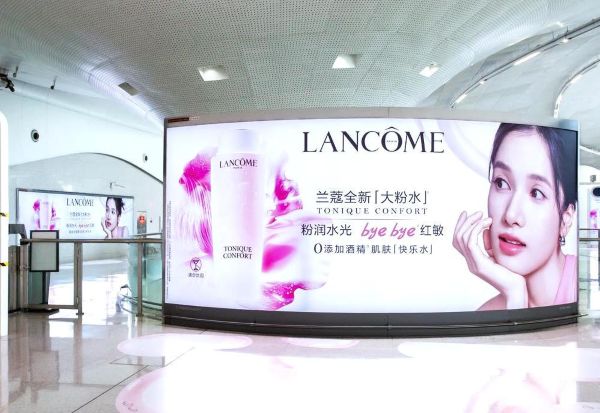
Including twelve light boxes, brand channels, column light boxes, etc. The screen is static and visible 24 hours a day, suitable for brand image display and long-term information transmission. The brand channel lightbox can be arranged continuously in multiple pieces, forming an immersive visual surround with excellent memory effect.
2. Dynamic media: the "vanguard" that catches the eye
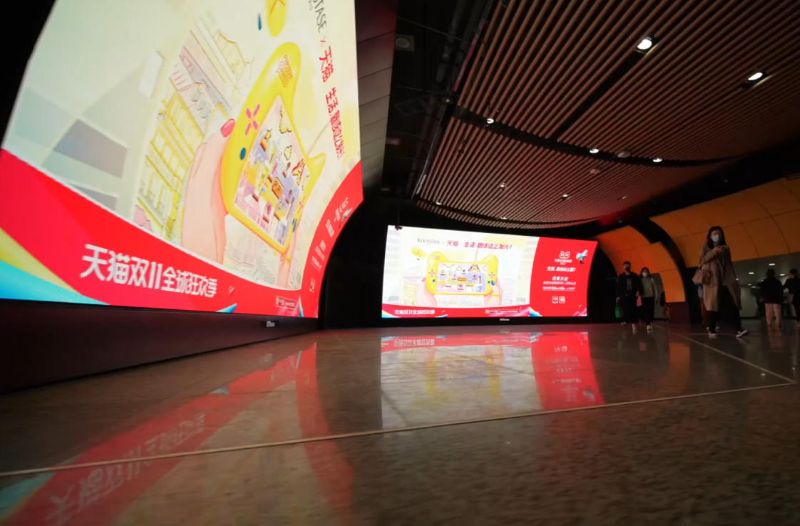
Including LED screens, screen cleaning machines, and subway television broadcasting networks. The combination of dynamic graphics, sound and art creates a strong visual impact, making it suitable for scenarios such as new product launches and promotional activities that require quick attention. The subway television broadcasting network can cover all trains and station halls, achieving large-scale high-frequency access.
3. In car advertising: a "battlefield" for deep communication
Including handle advertisements, interior signs, door stickers, etc. The average travel time for passengers exceeds 20 minutes, providing ample time for reading and memorization, making it suitable for conveying detailed information or guiding deep interaction.
4. Special Form: Creative "Stars" that Make Waves
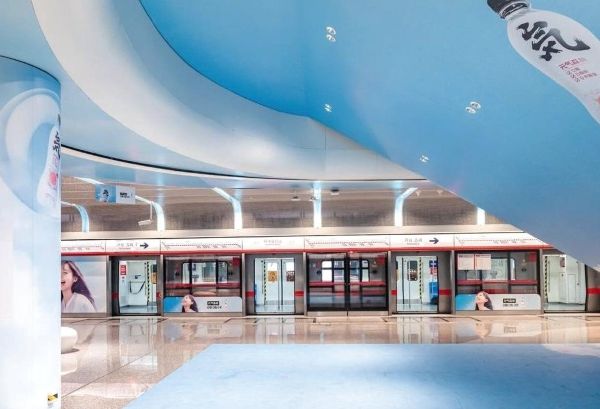
Including screen door stickers, themed station halls, subway trains, interactive devices, etc. These forms often create topics, trigger spontaneous photo sharing among passengers, and bring secondary exposure to the brand on social media.
3、 Step 3: Select stations and routes based on the audience
Subway stations have strict classification, which directly affects advertising prices and audience value.
1. Site level classification
S-level (premium stations): such as Guomao, Xidan, Wangfujing, Jianguomen, etc., with huge daily passenger flow and the highest commercial value.
A++level (core transfer stations): such as Dongzhimen, Xizhimen, Chongwenmen, etc., with concentrated transfer flow.
A-level (ordinary station): A station located in general residential areas or non core areas, with affordable prices.
2. Line value assessment
The value of a subway line depends on the areas it connects. Line 1 runs through Chang'an Avenue, covering the political and commercial core; The circular line of Line 10 connects important business districts such as CBD and Zhongguancun; Line 4 connects Gaodiocesan, Zhongguancun, and Xidan Financial Street. Choosing a route means selecting a mobile audience.
3. Practical cases
For Internet practitioners: give priority to Line 10 and Line 13, covering Shangdi, Xierqi and Zhongguancun.
Targeting high-end business professionals: Targeting Line 1 and Line 2, covering Guomao, Jianguomen, Fuxingmen, and Financial Street.
For young consumers, the surrounding stations of Xidan, Wangfujing, and Sanlitun are highly sought after.
4、 Step 4: Evaluate price and cost-effectiveness
Subway advertising is expensive, but "expensive" does not necessarily mean "worth it". Learning to calculate cost-effectiveness is key.
1. The main factors affecting prices
Site level: S-level site lightboxes may be more than three times the price of A-level sites.
Advertising format: Brand channels and LED screens are priced much higher than ordinary light boxes.
Long term advertising (quarterly/semi annual/annual) can result in significant discounts.
Purchase scale: Package and purchase multiple locations or routes, resulting in a decrease in single point prices.
How to Calculate Cost per Thousand People (CPM)
Formula: CPM=(media publishing fee x 1000) ÷ (average daily traffic at the station x advertising days x proportion of target audience)
For example, if the monthly fee for station A is 80000 yuan, the daily average passenger flow is 200000, and the target audience accounts for 30%, then the CPM is about 44 yuan. The monthly fee for Site B is 50000 yuan, with an average daily passenger flow of 100000 yuan and a target audience of 80%. Therefore, the CPM is approximately 21 yuan. Although the unit price of Site B is lower, the effective CPM may be higher. Calculating CPM can help you make rational decisions.
3. Budget allocation suggestions
Small budget (within 300000 yuan): Choose 1-2 S-level or A++level station lightboxes, or place specific lines on the subway television broadcast network.
Medium budget (300000 to 1 million): It is possible to combine light boxes and brand channels for 2-3 core sites, or try partial packaging in the theme station hall.
Large budget (over 1 million): Large projects such as full line network coverage, subway special trains, and themed station halls can be considered.
5、 Step 5: Creative Design and Execution
After selecting the location, creativity determines the final effect.
1. Three principles of creative subway advertising
The 3-second rule: In the moment when passengers take a quick glance, the core message of the brand must be conveyed. Large logo, short story design, and strong visual appeal are standard features.
Silent and friendly: The subway environment is noisy, and passengers often cannot hear the sound. Creativity must rely on visuals to tell the story clearly.
Scenario adaptation: The design of business district sites should be simple and professional, while tourist district sites can be lively and interesting, and school district sites can incorporate learning elements.
2. Interaction and Conversion Design
Subway advertising is not only for exposure, but also to guide action. Guide offline traffic to online deep communication through methods such as QR codes, search boxes, and activity codes. Pay attention to placing the QR code in a prominent position and attach a sufficiently attractive call to action.
6、 Step 6: Choose a reliable service provider
Subway advertising resources are complex, with scattered locations and opaque prices. Self exploration is not only inefficient, but also prone to pitfalls.
Why do we need a professional platform?
Authentic resources: Professional platforms have first-hand channels for core resources, avoiding fake resources and second-hand markups.
Price Transparency: We can provide authentic publication prices and discount opportunities to help you secure the best possible quote.
Execution guarantee: professional services throughout the entire process, from point scheduling and creative review to publication monitoring and effect tracking.
Experienced: able to quickly match the best point combination based on your goals, avoiding novice trial and error.
2. Recommend professional partners
Tianci Media is a professional subway advertising platform that has been deeply involved in subway media in core cities such as Beijing, Shanghai, and Guangzhou for many years, with rich resource databases and advertising experience. From demand analysis, location evaluation, price negotiation to creative production, publication execution, and effect tracking, we provide one-stop full process services to help you efficiently reach your target audience.
7、 Common Misconceptions Reminder
Misconception 1: Only focusing on foot traffic, ignoring crowd matching
A station with a daily average of one million foot traffic is certainly tempting, but if 80% of them are tourists and your target customers are local business people, the effect will be greatly reduced. The quality of the crowd is more important than the number of traffic.
Misconception 2: Creative use of traditional TVC
Placing a 30 second home scene advertisement directly in a noisy subway environment is like throwing money into the water. It is necessary to customize creativity for subway scenes, with fast pace, strong visual appeal, and silent friendliness.
Misconception 3: Short term advertising, expecting miracles
Subway advertising requires time to accumulate effects. After one or two weeks of advertising, passengers may have just left a vague impression before the advertisement is published. It is recommended to start with at least 4 weeks (1 cycle) and continuously advertise for 2-3 cycles for better results.
Misconception 4: Ignoring approval and production cycles
The content review of subway advertisements is strict, and it usually takes 2-4 weeks from creative submission to actual publication. If you want to rush into marketing, it is important to plan ahead and reserve sufficient time.
Misconception 5: Self exploration without cooperation with professional agents
Contacting subway companies or intermediaries one by one is not only time-consuming and laborious, but may also encounter problems such as insufficient resources and inflated prices. Using a professional platform is the most efficient choice.
8、 Conclusion
How to choose subway advertisements? It's not about beating the head based on intuition, but a scientific methodology: defining goals → matching forms → screening sites → calculating cost-effectiveness → creative adaptation → professional execution.
The subway is the artery of the city and also the golden scene for brand dialogue with elite people. By mastering this method, you can accurately capture your own attention amidst millions of foot traffic.
If you are still hesitating about how to choose, you may consult professional institutions. Tianci Media is a professional subway advertising platform that can provide you with free media diagnosis and solution suggestions, allowing every penny of your subway budget to be spent on the most valuable areas.