Which type of outdoor advertising is most cost-effective? Practical Guide for 2026
2026-03-04Tianci MediaViews:282
Highlights
There are so many types of outdoor advertising, which one is the most cost-effective? This article provides a scientific cost performance evaluation framework by deeply comparing mainstream forms such as buses, subways, elevators, and community barriers from dimensions such as target audience, budget, and advertising objectives. Tianci Media, a professional outdoor advertising platform, helps you accurately match the most suitable advertising types, allowing every budget to be spent on the cutting edge!
I want to invest in outdoor advertising, but my budget is limited. Which type of outdoor advertising is most cost-effective
This is the most common question asked by countless newcomers in the market. Bus bodies, subway lightboxes, elevator frames, community barriers, outdoor billboards, bus shelters... Every type of media has salespeople telling you 'our best deal'. But the truth is: there is no absolute "best value for money", only the best value for money that suits your current goals.
This article will take you out of the trap of price comparison, establish a scientific cost-effectiveness evaluation framework, and help you make the wisest choice under the limited budget in 2026.
1、 Why can't 'cost-effectiveness' be solely based on price?
Before discussing specific types, it is necessary to first understand a core concept: the cost-effectiveness of outdoor advertising is the ratio of effectiveness to cost. The effect is not simply about the number of exposures, but about the depth and quality of effectively reaching the target audience.
Spending the same amount of 100000 yuan on suburban bus routes may receive five million exposures, but only five percent of them are your target customers. Investing in the elevator of a core office building may only have 500000 exposures, but 80% of them are your potential customers. Which one is more valuable?
Therefore, evaluating cost-effectiveness must be based on three core dimensions.
The first dimension is the matching degree of the target audience. How many of the audience reached by the advertisement are your potential customers.
The second dimension is the quality of the touchable scene. In what state does the audience see the advertisement, is their attention focused, and is there a possibility of conversion.
The third dimension is cost efficiency. How much does it cost to reach an effective target customer.

2、 In depth analysis of the cost-effectiveness of mainstream outdoor advertising types
Bus body advertisement
The price range for bus advertising varies from 3000 yuan to 50000 yuan per month for single decker buses, and from 96000 yuan to 236000 yuan per month for double decker buses. It covers commuters, citizens, and tourists throughout the city. The audience is in a mobile viewing state, and their attention is easily distracted, making it suitable for the rapid transmission of strong visual symbols.
The cost-effectiveness label of this media is high exposure and low precision. Suitable scenarios include fast-moving consumer goods, local lifestyle services that require rapid establishment of city wide awareness, as well as new product launch hype, pursuing a visual coverage of "golden armor throughout the city". If combined with other media, effective combination punches can also be formed.
If your target audience is distributed in every corner of the city and the product is popular, the bus body is the king of cost-effectiveness. But if your customers are concentrated in a specific area, the wide net of buses will cause a lot of waste.
subway advertisement
The price of subway advertisements ranges from 42000 yuan to 118000 yuan per square meter per week for light boxes, while the price of branded station halls reaches millions. It covers white-collar commuters, business people, and young consumers. The audience is in a closed space, with long waiting times and focused attention, making it suitable for deep communication.
The cost-effectiveness label for this type of media is high precision and medium to high cost. Suitable scenarios include Internet products, finance, education and training and other brands for urban white-collar workers, products that need in-depth communication and display of detailed information, and store drainage around the core business circle.
For brands that focus on urban white-collar workers, the effective audience reach cost of subway advertising may be much lower than that of buses. Especially for S-level sites, although the unit price is high, the audience value is high and the conversion potential is great.
elevator advertisement
The price of elevator advertising ranges from 400 yuan to 2500 yuan per piece per month, and the price of smart screens ranges from 1500 yuan to 4000 yuan per screen per month. It covers community residents and can be accurately screened according to community level. The audience is forced to watch in a closed space and repeatedly reaches out frequently.
The cost-effectiveness label of this media is high precision, high frequency, and low to medium cost. Suitable scenarios include home building materials, decoration, home appliances, education and training, fresh e-commerce and other household consumer brands, community surrounding store traffic, as well as brands that require repeated outreach and trust building.
If you can accurately target the target community, such as high-end residential areas or school district houses, the cost-effectiveness of elevator advertising is extremely high. It achieves the effect of repeated reminders at the doorstep, with the shortest conversion path.
Community barrier advertising
The price of community barrier advertisements ranges from 300 yuan to 2500 yuan per month. It covers families with cars and people entering and leaving the community. When the vehicle decelerates, it is mandatory to observe, and when entering or exiting, attention should be highly focused.
The cost-effectiveness label of this type of media is precise and low to medium cost. Suitable scenarios include automotive aftermarket services such as car washing, maintenance, and insurance, high-end consumer goods such as alcohol, gifts, finance, and community commercial drainage.
For brands that need to reach families with cars, barrier advertising is a highly precise choice. Its price is only half to 70% of elevator advertising, but it reaches a wider audience with stronger purchasing power.
Outdoor brands and LED lights
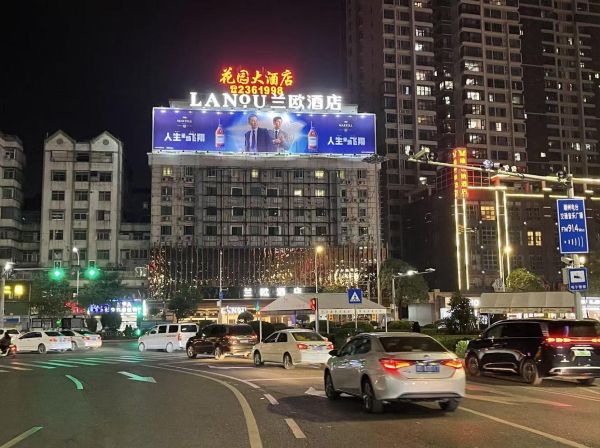
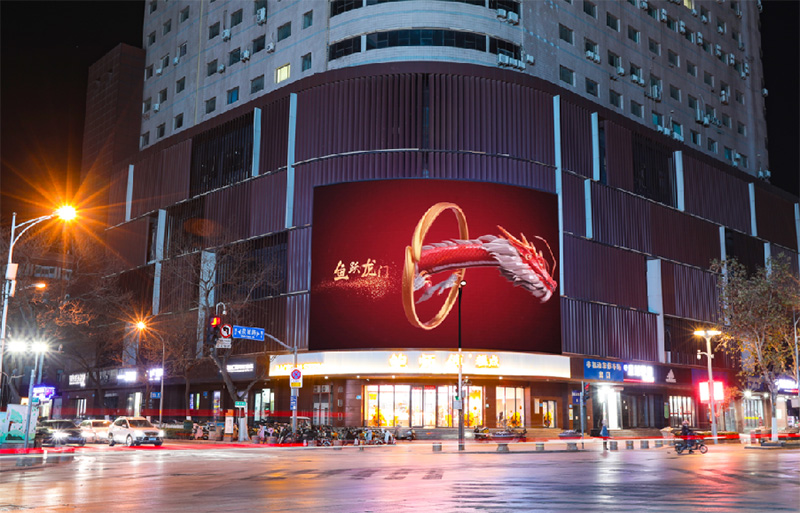
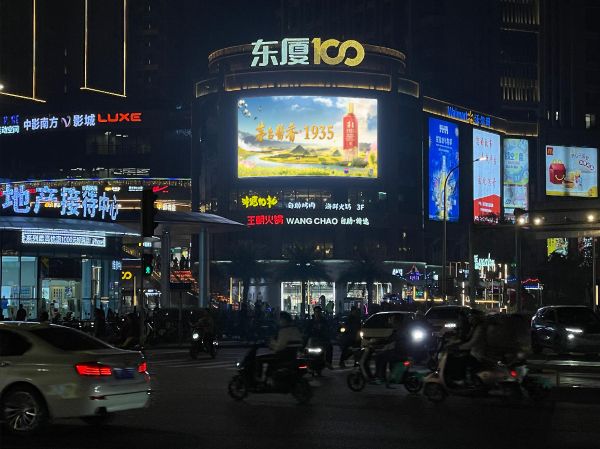
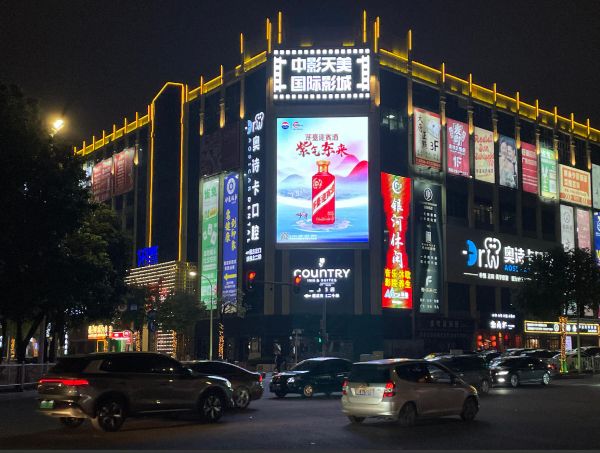
The prices of outdoor brands and LEDs range from tens of thousands to millions of yuan per week in core business districts. It covers both pedestrian and vehicular traffic in the commercial district. Visual shock, instant memory, suitable for brand image display.
The cost-effectiveness label of this media is high image, high cost, and low precision. Suitable scenarios include international brand new product launches, brand anniversary celebrations, marketing events that need to create topics, trigger social communication, and serve as a high ground for integrated marketing.
For the vast majority of small and medium-sized brands with limited budgets, the cost-effectiveness of outdoor brands is extremely low. It is more suitable as a face saving project for brand building, rather than an interior project that pursues practical results.
Bus shelter advertisement
The price of bus shelter advertisements ranges from 9800 yuan to 34000 yuan per piece per month in the core area. It covers both bus passengers and pedestrians. There is sufficient time to read while waiting for the bus, and the information reception is high.
The cost-effectiveness label of this media is medium cost and medium precision. Suitable scenarios include local lifestyle services, catering and entertainment, combined with bus advertising to form a combination of in station and on board vehicles, as well as deep cultivation of regional markets.
The price of bus shelter advertisements is lower than that of bus bodies, but the coverage of the audience is also more limited. Suitable as a supplementary media for regional markets.
3、 Three step method: Find the "King of Cost Performance" that belongs to you
The first step is to clarify your core goals. Ask yourself three questions: Who is your target audience, white-collar workers, families, car owners, or tourists. Where is your core market, city wide, specific business district, or surrounding community. What is your main purpose, brand exposure, store traffic, or new product promotion.
The second step is to match media types based on the target. If the goal is to expose the brand throughout the city, the first choice is the bus body, and the second choice is the subway light box. If the target is urban white-collar workers, subway advertising is the first choice, followed by office building elevators. If the goal is to penetrate household consumption, residential elevators are the first choice, followed by community barriers. If the target is families with cars, community barriers are the first choice, followed by garage lightboxes. If the goal is to attract traffic to local stores, the first choice is to add barriers to bus shelters, and the second choice is elevator advertising. If the goal is to build a high-end image, outdoor billboards or LEDs are preferred, followed by airport advertising.
Step three, calculate the effective cost per thousand people. Don't just look at absolute prices, calculate the cost of reaching an effective target customer. The formula is the media publishing fee multiplied by one thousand, divided by the daily average customer flow multiplied by the number of advertising days, and then multiplied by the proportion of the target audience.
For example, A Media's monthly fee is 20000 yuan, with an average daily customer flow of 100000 people and a target audience of 30%. The effective cost per thousand people is about 22 yuan. B Media's monthly fee is 30000 yuan, with an average daily customer flow of 50000 people. The target audience accounts for 80%, and the effective cost per thousand people is 25 yuan. Although B media has a higher absolute price, the effective cost per thousand people is not much different, considering that the quality of reach may be better.
4、 Real case: Cost effective combinations of different budgets
The first case is a new local restaurant with a budget of 100000 yuan. The goal is to attract families within a radius of three kilometers. The high cost performance combination involves selecting barrier advertisements for five core communities, adding ten community elevator frames, and adding three core station bus shelters, totaling approximately 84000 yuan. The logic is that the barrier gate intercepts families with cars, the elevator repeatedly touches, and the waiting shelter covers the waiting crowd, forming a community encirclement.
The second case is the promotion of Internet APP, with a budget of 300000 yuan. The goal is to download and register for young white-collar workers throughout the city. The high cost performance combination is to choose a combination of three subway lines' light boxes to be placed for three months, covering commuters and accompanied by QR code guidance for download. The logic is that the subway is a must pass for urban white-collar workers, and enclosed spaces are suitable for QR code interaction with traceable effects.
The third case is the launch of a new high-end car product with a budget of one million yuan. The goal is to enhance brand image and reach high net worth individuals. The high cost performance combination is to invest 500000 yuan in the core business district LED for two weeks, and invest 500000 yuan in the high-end community barrier and garage light box for three months, forming a combination of high-end image and precise reach. Logic is the topic and image height of LED manufacturing, and social media deeply influences potential car buyers.
5、 Common Misconceptions and Avoiding Pits Guide
The first misconception is to only compare unit price, not effective reach. The media with the lowest price may not necessarily be the most cost-effective. Although suburban bus routes are cheap, they may not reach your target customers at all. Low quality exposure is equivalent to wasting all budget.
The second misconception is to blindly believe in a single media and ignore the combination effect. The most cost-effective media has limited effectiveness when used alone, but when combined, it can produce a greater effect of one plus one than two. For example, adding bus shelters to bus bodies and adding barrier gates to elevators can all form a flow line enclosure.
The third misconception is to overlook the cost of creative production. Some media may seem low-priced, but the production cost accounts for a high proportion, such as the full body advertising production cost of 18000 yuan per time. When calculating cost-effectiveness, it is necessary to include the production and installation costs in the total cost.
The fourth misconception is that short-term advertising cannot accumulate results. Outdoor advertising requires time to accumulate cognition. Investing for one or two weeks often results in withdrawal after just getting familiar with the situation, with little effect. It is recommended to invest for at least one to three months to make the brand memory deeply ingrained in people's minds.
The fifth misconception is to explore on one's own and not cooperate with professional platforms. There are many types of outdoor advertising, and the prices are not transparent. It is easy to fall into pitfalls when asking for quotes on your own. With the help of professional platforms, one can obtain real resource prices, professional combination suggestions, and full process services.
Tianci Media is a professional outdoor advertising platform with a vast amount of outdoor media resources and rich advertising experience across the country. From audience analysis and media matching to creative production and effect tracking, we provide one-stop services to help you find truly cost-effective outdoor advertising solutions.
6、Conclusion
The answer to which type of outdoor advertising is most cost-effective is not a fixed media, but a matching logic based on your specific needs.
Pursuing city wide exposure, bus bodies are the king of cost-effectiveness. Targeting urban white-collar workers, subway advertising is the most precise and efficient. Deeply cultivating household consumption, the combination of elevator and barrier gate is unbeatable. To enhance brand image, LED in the core business district is indispensable.
The key is to first clarify the goal, then match the media, and finally validate it with data. In the case of limited budget, it is better to concentrate firepower to penetrate a core area than to cover the entire city like pepper.
If you are still confused, you may consult a professional organization. As a professional outdoor advertising platform, Tianci Media can provide you with free media diagnosis and cost-effectiveness analysis, allowing you to spend every penny of your budget on the closest to your target.