What are the types of outdoor advertising? From road signs to naked eye 3D, full analysis
2026-03-03Tianci MediaViews:118
Highlights
What are the types of outdoor advertising? This article provides a detailed explanation of 8 mainstream forms, including bus bodies, subway advertisements, airport screens, outdoor LEDs, bus shelters, barrier gates, elevators, etc., and compares their advantages, disadvantages, and applicable scenarios. Tianci Media, a professional outdoor advertising platform, helps you accurately match the most suitable advertising form!
Walking on the streets and alleys of the city, your gaze is always inadvertently captured by various outdoor advertisements: giant images on buses, lightbox corridors in subway stations, flashing LED screens above commercial districts, and slowly raised barriers at the entrance of residential areas... These various forms of advertisements spread throughout the city, together forming what we call outdoor advertising.
For brand owners and market novices, when faced with a wide variety of outdoor advertising forms, they often ask: What are the types of outdoor advertising? Which product is most suitable for me? How to choose with limited budget?
This article will systematically sort out the 8 mainstream types of outdoor advertising for you, from form, characteristics to applicable scenarios, explaining them in one go, helping you make wise choices when placing them.
1、 Why are there so many types of outdoor advertising?
The diversity of outdoor advertising stems from the complexity of urban spaces. Streets, buses, subways, airports, communities, commercial districts... each scene has a unique pattern of crowd flow and visual environment, which has given rise to targeted advertising forms. Meanwhile, technological advancements have also led to the emergence of new forms such as LED, naked eye 3D, and interactive devices.
Understanding these types is not about pursuing novelty, but about finding the one that best reaches your target customers.
2、 8 core types of outdoor advertising
1. Bus body advertising - a mobile city card
Bus body advertising is the process of covering advertising images on the surface of a bus body, utilizing the bus's movement through the city to form a mobile communication network.
Features:
Strong mobility, covering urban main roads and core business districts
24-hour mobile exposure with high frequency
Large area, strong visual impact
Suitable for mass consumer goods throughout the city
Applicable scenarios:
Fast moving consumer goods, local lifestyle services, tourism promotion
New product launch requires quick hype
Brand image advertisement covering the entire city
Advantages and disadvantages: The advantages are wide coverage and relatively controllable cost; The disadvantage is that it is limited by the route and cannot accurately target specific groups of people.
2. Subway Advertising - The Golden Media of Underground Cities
Subway advertising includes various forms such as lightboxes, screen door stickers, column wraps, wall stickers, LED screens, and interior signs, covering the entire journey of passengers from entering to exiting the station.
Features:
Closed space, mandatory viewing
Stable passenger flow, mainly composed of young white-collar workers
Diverse forms, can be combined for advertising
Some sites can be used as creative package sites
Applicable scenarios:
Internet products, finance, FMCG
Brand promotion for commuters
Products that require deep communication
Advantages and disadvantages: The advantages are precise touch and minimal environmental interference; The disadvantage is that the price is relatively high, especially for core sites.
3. Airport advertising - an exclusive channel for high-end audiences
Airport advertising includes departure hall lightboxes, LED screens above security checks, screen flashing machines in waiting areas, luggage carousel lightboxes, corridor advertisements, etc., reaching high net worth business travelers.
Features:
High population quality (business people, high-income groups)
Long dwell time, capable of deep communication
High end environment, enhancing brand image
High proportion of international travelers
Applicable scenarios:
Luxury goods, automobiles, finance, high-end tourism
International brand image construction
Business services, private banking
Advantages and disadvantages: The advantage is that the population value is high; The disadvantage is that it is expensive and resources are scarce.
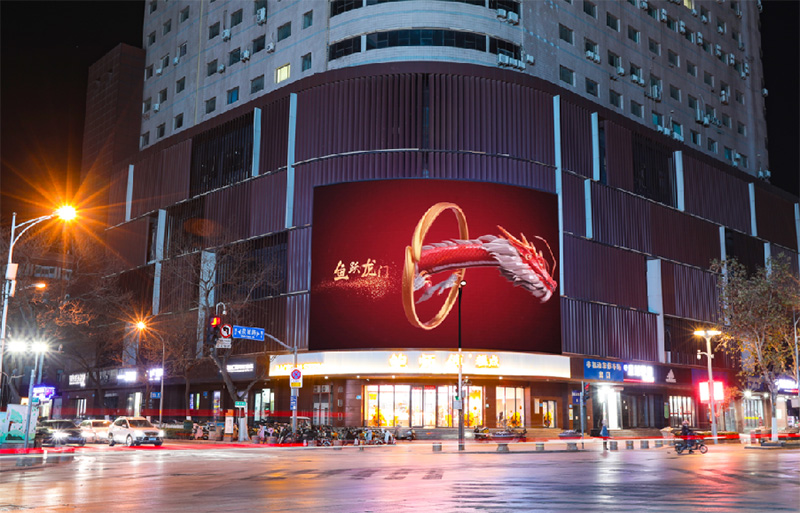
4. Outdoor LED Large Screen - Eye of the City
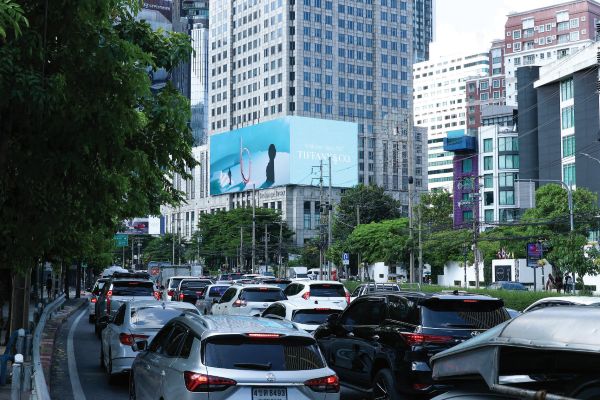
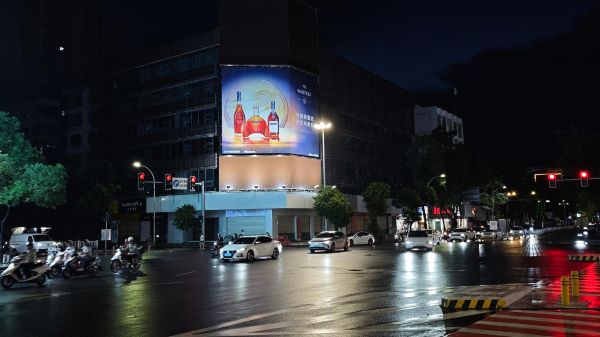
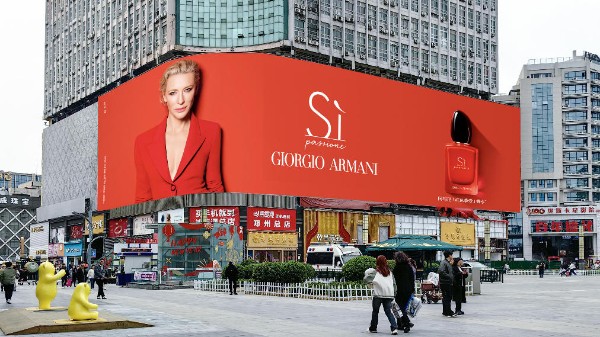
Outdoor LED screens are usually installed in prominent locations in commercial districts, city landmarks, and transportation hubs, playing advertisements in the form of dynamic videos.
Features:
Huge area, visually stunning
Dynamic videos with strong infectivity
Can be used for creative effects such as naked eye 3D
Suitable for creating topic events
Applicable scenarios:
New product launch, brand event
Fashion, automotive, and technology brands
Festival marketing, flash mob events
Advantages and disadvantages: The advantages are strong eye-catching ability and inherent dissemination attributes; The disadvantage is high cost and some locations are subject to approval restrictions.
5. Bus shelter advertisement - the scenery of waiting on the street
Bus shelter advertisements are located at bus stops, covering the waiting crowd, usually in the form of light boxes, with significant nighttime lighting effects.
Features:
Fixed location, covering the bus routes along the route
There is ample time to read while waiting for the bus
Can be combined with vehicle advertising to form a combination
24 hours visible
Applicable scenarios:
Local lifestyle services, retail promotions
Catering and entertainment venues attract traffic
Linkage with bus body advertising
Advantages and disadvantages: The advantages are affordable prices and flexible advertising; The disadvantage is that a single point has limited coverage and requires multiple point combinations.
6. Community barrier/access control advertisements - interceptors at the doorstep of homes
Community barrier advertisements are located at the entrances and exits of vehicles in the community, while access control advertisements are located at pedestrian entrances and exits, intercepting residents entering and leaving the community.
Features:
Accurately reaching community residents
Mandatory viewing during vehicle entry and exit
Suitable for household consumption products
Can lock in specific levels of communities
Applicable scenarios:
Home building materials, decoration, household appliances
Education and training, fresh food e-commerce
Automotive and community O2O services
Advantages and disadvantages: The advantages are precise targeting of the audience and minimal interference; The disadvantage is that the coverage is limited to a single community.
7. Elevator Advertising - Information Window for Closed Spaces
Elevator advertising includes forms such as frame posters, smart screens, door stickers, etc., covering elevator cars in office and residential buildings.
Features:
Closed space, mandatory viewing
High frequency repeated contact
Distinguishable between commercial and residential buildings
Suitable for deep information transmission
Applicable scenarios:
Finance, automobiles, luxury goods (office buildings)
Fast moving consumer goods, education and training, home furnishings (residential)
Local merchants attract traffic
Advantages and disadvantages: The advantages are precise targeting of the audience and high cost-effectiveness; The disadvantage is that the space is small and creativity is limited.
8. Innovative forms - naked eye 3D, projection, interactive devices
With the advancement of technology, new forms of outdoor advertising continue to emerge, such as naked eye 3D screens, wall projections, AR interactive devices, etc.
Features:
Strong sense of technology, easily triggers check-in and spread
High interactivity and profound user experience
Suitable for creating social media topics
High cost and complex execution
Applicable scenarios:
International Big Brand Marketing Campaign
Promotion of cultural and tourism attractions
Technology product release
Promotion of Art and Culture
Advantages and disadvantages: The advantage is strong dissemination effect; The disadvantage is the high technical threshold and dependence on creative quality.
3、 How to choose the appropriate type of outdoor advertising?
How to choose from 8 types? Consider from three dimensions.
Select by target audience
Reasons for recommending target audience types
Business elite airport advertising, high-end office elevator environment matching identity
Urban white-collar subway advertisements and bus body coverage of commuting routes
Family users' community barriers and residential elevators are closest to their homes and are related to decision-making
Young trendsetters outdoor LED, naked eye 3D novel and interesting, suitable for clocking in
Tourist shelters and bus bodies cover the surrounding areas of tourist attractions
Select by budget
Limited budget (10000 yuan level): Bus shelters, community barriers, bus bodies (non core routes)
Medium budget (tens of thousands to tens of thousands): subway lightboxes, bus bodies (core routes), residential elevators
Adequate budget (over 100000 yuan): Airport advertising, core business district LED, creative package station
Select according to marketing objectives
Enhance brand awareness → Outdoor LED, bus body
New Product Launch Promotion → Naked Eye 3D, Core Business District Large Screen
Local store traffic diversion → community barriers, bus shelters
High end image construction → Airport advertising, office building elevators
4、 Common Misconceptions Reminder
Misconception 1: Thinking that outdoor advertising is the same
Different types of outdoor advertising have vastly different audiences, scenes, and prices. It is unrealistic to expect the effect of the airport from the budget of the bus. It is necessary to first clarify the types of outdoor advertising and then match them according to one's own needs.
Misconception 2: Only focus on location, ignore creativity
No matter how good the location is, if the creativity is mediocre, the effect will be greatly reduced. Outdoor advertising is a 'three second art' that must capture attention in a very short amount of time. Different media require customized creativity (such as longer subways and minimalist buses).
Misconception 3: Pursuing low prices and neglecting audience matching
The cheapest may not necessarily be the most suitable. Advertising luxury goods in low-end communities or infant formula in office buildings is a waste of budget. The quality of the crowd is far more important than the unit price.
Misconception 4: Short term advertising cannot accumulate results
Outdoor advertising requires time to accumulate. Investing for one or two weeks often results in withdrawal after just getting familiar with the situation, with little effect. It is recommended to use at least monthly units, especially for brand building media.
5、Conclusion
What are the types of outdoor advertising? From mobile bus bodies to fixed bus shelters, from underground subway lightboxes to high-altitude airport screens, from community barriers to LED displays in commercial districts, each form has its unique advantages and applicable scenarios.
For beginners, it is recommended to start testing with the most basic types: local businesses can choose community barriers or bus shelters; Brands targeting the public can choose from bus bodies or subways; High end brands need to consider airports or core business districts. After verifying the effectiveness of the data, gradually try more types to form a combination punch.
Tianci Media is a professional outdoor advertising platform with a vast amount of outdoor media resources and rich advertising experience across the country. No matter which type of outdoor advertising you want to know or need professional advertising advice, Tianci Media can provide you with one-stop services from strategy to execution, helping you accurately reach your target audience.