Analysis: Is bus advertising worth advertising? A comprehensive balance from cost, audience to ROI
2026-01-28Tianci MediaViews:123
Highlights
Is bus advertising worth advertising? "This article provides you with an authoritative answer. In depth analysis of the core value, applicable industries, cost-effectiveness, and effectiveness tracking methods of bus advertising (vehicle body, station booth, mobile TV) to help you make scientific decisions. Read now to determine if it is an efficient offline channel for your brand!
When a bus wrapped in vivid advertisements passes through the main roads of a city, it is not just a means of transportation, but also a mobile and huge brand declaration. For many market decision-makers, especially local businesses or emerging brands with limited budgets, the question 'Is bus advertising worth investing in?' is both tempting and confusing.
It looks like it has a huge exposure, but it also seems a bit 'traditional'. In today's era of digital marketing, should this offline budget be spent? This article will set aside subjective impressions and conduct a thorough value audit for you from four dimensions: media nature, audience psychology, cost structure, and practical effectiveness.

1、 Core Value Review: The Three Irreplaceable Advantages of Public Transport Advertising
Before discussing whether it is worth it or not, it is necessary to first clarify what it can provide. The core advantage of bus advertising is precisely something that many digital advertisements find difficult to achieve.
(1) Mandatory exposure and city level coverage that cannot be ignored
Huge visual volume: The advertising area of the entire vehicle can reach over 30 square meters, acting as a "moving landmark" in traffic and crowds, with absolute visual dominance and forcing people to pay attention.
Dynamic route network: A bus is like a flowing advertising strip. By selecting core routes, advertisements can travel through commercial areas, residential areas, and transportation hubs, achieving dynamic and saturated coverage of a city's network, with an average daily reach of tens of thousands or even hundreds of thousands of people.
(2) Precise penetration into diverse life scenarios
The public transportation system runs deep into the capillaries of the city. This means that advertisements can seamlessly integrate into the diverse life scenarios of citizens:
Commuting scenario: reaching office workers who travel regularly every day, suitable for fast food, coffee APP、 Job seeking and other services.
Lifestyle shopping scenario: Routes passing through supermarkets and markets, suitable for retail and fast-moving consumer goods promotion.
Leisure and entertainment scenes: routes leading to scenic spots, parks, and cinemas, suitable for tourism, entertainment, and dining brands.
School district scene: The surrounding routes of the school accurately reach parents and student groups.
(3) Long term brand building with high cost-effectiveness
Compared to short-term online information flow advertising, the advertising cycle for public transportation (especially vehicle advertising) is usually measured in months. During this period, the same advertising vehicle repeatedly appeared on the same route, conducting high-frequency and repetitive visual bombardment on residents and commuters along the route. This continuous exposure is highly cost-effective for establishing a broad brand awareness and deepening brand memory, with a cost per thousand (CPM) often lower than many traditional outdoor media.
2、 The Four Step Decision Making Method: How to Determine If It's' Worth 'Your Investment?
Whether it is worth it or not depends entirely on the alignment between your marketing goals and resources. Please follow the following four steps for self-assessment.
Step 1: Clarify your core marketing objectives
Bus advertising is a typical "broad-spectrum cognitive" media, rather than a "precision conversion" media. Please take your seat accordingly:
If your goal is to quickly increase brand awareness in new markets in a short period of time; Supporting large-scale hype for the launch of new products; Consolidate the brand's leadership position in the local market; Or attract widespread traffic to offline stores.
So, bus advertising "deserves" special consideration.
If your goal is to obtain immediate online sales orders; Pursuing the cost per click for a single user; Or only targeting a very niche audience.
So, bus advertising may not be the most preferred option and should be carefully evaluated.
Step 2: Understand the main forms and cost structure
Bus advertising "is a general term that mainly determines the price and effectiveness in its form:
Whole car advertising: the highest value and most stunning effect. The price is usually the highest, charged by "vehicle/month". The monthly cost of core routes in first tier cities ranges from tens of thousands of yuan, while in second - and third tier cities it ranges from thousands to 20000 yuan.
Rear/body side advertisements: a cost-effective choice, focusing on specific angles (such as the rear of the car targeting the vehicles behind). The price is about 30% -60% of the full car advertisement.
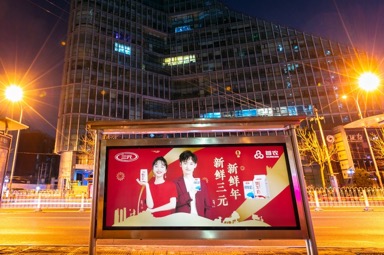
Bus stop kiosk lightbox advertisement: static, fixed location, covering waiting crowds, suitable for local life service information dissemination. The price varies greatly due to location differences.
Bus mobile TV advertisement: The screen inside the bus has sound, but is influenced by whether passengers are watching or not.
Cost considerations: Total cost=media release fee+high-precision body sticker production fee (usually requiring tens of thousands of yuan, which is a one-time investment but can be reused). Long term advertising (such as over six months) can dilute monthly costs.
Step 3: Execution Key: Route Selection and Creative Design
This is the core operation of converting budget into results.
Route selection strategy:
Surrounding strategy: Choose a circular route that passes through the core business district, transportation hub, and landmark buildings to maximize coverage of the core pedestrian flow.
Penetration strategy: Select the main routes that penetrate deep into the target community group or industrial park to achieve precise penetration.
Network strategy: Launch multiple routes to form an advertising network that covers different areas of the city. Media companies can be consulted to obtain daily passenger flow and analysis reports on the areas traversed by each route.
The Iron Law of Creative Design (for car advertising):
Super symbol: The brand logo or product image must be huge and eye-catching.
Oversized font size: Core information (such as brand name, slogan) must be clearly distinguishable from a distance of 20 meters.
Minimalist copywriting: no more than 10 words. Believe in visuals, not words.
High contrast colors: Use color blocks with strong contrast to ensure that they can be instantly captured while moving at high speeds.
Step 4: Effectiveness evaluation and tracking methods
Due to the long conversion chain, evaluation needs to combine quantitative and qualitative methods.
Brand awareness survey: Conduct simple street or online surveys in the target area before and after the launch to monitor changes in the brand's silent mention rate.
Online traffic setting: Place exclusive QR codes (such as guiding to local lifestyle pages), official social media accounts, or exclusive topics on advertisements to track online interaction data.
Offline store feedback: If it is store traffic, train the staff to proactively ask customers "Where did you learn about us?" and include "seeing bus advertisements" as an option for statistics.
Media monitoring report: Media outlets are required to provide third-party or their own pedestrian and vehicular traffic data as evidence of exposure.
3、 Common Misconceptions and Avoiding Pits Guide
Misconception 1: Pursuing the quantity of lines and neglecting the quality of lines.
Avoiding pitfalls guide: Instead of investing in 10 routes that pass through remote areas, it is better to concentrate on investing in 2-3 core routes that pass through the city's golden arteries. The value of the areas along the route is much greater than the quantity of the route itself.
Misconception 2: The design is too complicated and mistaken for a flat poster.
Avoiding pitfalls guide: The bus is moving, and the audience is also moving. Design must be done using a 'dynamic visual' mindset. Complex details, small characters, and QR codes are meaningless from 3 meters away. Adhere to the "3-second principle": the core information must be understood within 3 seconds.
Misconception 3: Short term trial investment, hoping for miraculous results.
Avoiding pitfalls guide: The brand building effect of bus advertising needs time to ferment. Placing for 1-2 months may just leave an impression on the people along the route. It is recommended to use at least quarterly as the unit of advertising cycle, otherwise the budget may be wasted in the stage of establishing initial awareness.
Misconception 4: If you can't track it, you think it's ineffective.
Avoiding pitfalls guide: Do not deny its value just because you cannot directly track sales. Its main contribution lies in the brand's "mental pre-sale" and the environment's "trust endorsement". Many consumers have already developed a sense of familiarity and trust in the brand by repeatedly seeing bus advertisements when they go to the store, but this is usually not actively mentioned.

4、 Conclusion: Is it really worth it?
Bus advertising may not be "worthwhile" for all brands and stages of marketing objectives, but it has enormous value and is difficult to replace in its areas of expertise.
For brands that need to quickly establish broad public awareness (such as new consumer brands and Internet platforms), enterprises that are committed to consolidating regional market leadership (such as local banks and supermarket chains), and businesses that need to attract customers for offline entities (such as large stores and specialized hospitals), public transportation advertising is still a cost-effective and effective strategic delivery option * *.
For brands that pursue fast conversion, heavily rely on online data optimization, or have a very narrow target audience, more precise digital channels should be given priority consideration.
The final recommendation is that if your brand's goals match the "broad-spectrum awareness" attribute of public transportation advertising, and your budget allows for at least one quarter of saturated advertising, then it is well worth including in your media mix. Please make sure to invest effort in conducting route research and creative simplification, as these are the two cornerstones that determine the return on investment. Make your brand an indispensable part of the flowing scenery of this city.