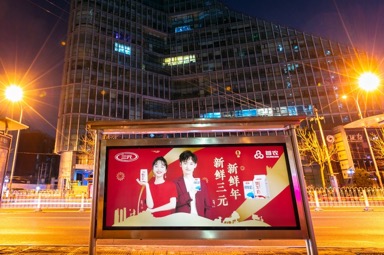
Bus stop advertising: a marketing guide for the "fixed touchpoint" of mainstream urban populations
2026-01-22Tianci MediaViews:129
Highlights
Explore the core value, cost composition, and advertising strategies of bus stop advertisements (bus shelter advertisements). This article provides a complete practical guide from point selection, creative design to effect tracking, helping you efficiently carry out local outdoor advertising marketing and accurately reach the mainstream consumer population in the city. Get professional solutions immediately.
In the digital world dominated by short videos and algorithm recommendations, a seemingly traditional medium has always been firmly rooted in the streets and alleys of every city in China - that is, bus stop advertising. For citizens who commute, shop, and pick up and drop off their children every day, bus stops are a familiar daily scene. For local merchants or brands looking to penetrate regional markets, this is a "fixed touchpoint" that can stably, frequently, and cost effectively engage with mainstream consumer groups in the city.
Unlike bus body advertisements that fly by, bus stop advertisements (usually referring to bus shelter lightbox advertisements) have a key advantage: they provide audiences with time to stop and a relatively focused reading environment. This upgrades it from a simple exposure media to a communication platform that can effectively convey information. This article will provide you with a systematic breakdown of how to scientifically plan and execute an efficient bus stop advertising campaign.

Part 1: Value Re evaluation - Why is it still the "fixed star" of offline marketing?
When evaluating any medium, the first thing to consider is its irreplaceable core values. The advantages of bus stop advertising are built on four solid dimensions:
1. Covering the "essential scenarios" of daily urban life
Public transportation is the artery of urban operation, and bus stops are key nodes on the artery. It naturally covers the entire path of citizens' work, commuting, medical treatment, and shopping, and is the physical entrance for brands to integrate into public life. It does not reach niche circles, but the widest and most mainstream consumer class of citizens.
2. Mandatory and low interference reading brought about by "waiting time"
The few minutes waiting for the bus are often the 'leisure time' for people to put down their phones and look around. The bus shelter lightbox advertisement is located in its visual focal area. This type of active or passive reading that occurs during brief boredom results in more focused attention, and the penetration and memory of advertising information are much higher than a fleeting glance.
3. Accurate positioning, capable of achieving regional deep cultivation
The bus stop network is spread throughout the city, and brands can flexibly choose point combinations like playing chess to achieve precise regional marketing:
Surrounded by commercial districts: Placed at stations around core shopping malls and pedestrian streets, directly affecting shopping and consumer groups.
Community penetration: Placed at stations around large residential areas, continuously influencing household consumption decisions.
Commuting route blockade: Placed at traffic artery stations connecting office and residential areas, accurately reaching office workers.
4. Extremely high cost-effectiveness and stable brand display
Compared to millions of LED screens, the cost of a single bus stop advertising light box is very affordable. Brands can achieve a large-scale coverage of "connecting points into lines, connecting lines into surfaces" in the target area with a reasonable budget. At the same time, as a static lightbox, it provides 24-hour display with stable images, and the built-in lighting at night makes its effect more prominent.
Part 2: Four Steps to Practical Placement - From Strategy to Publication
A successful advertising campaign requires a clear path. Here are four core steps:
Step 1: Clarify goals and strategies
Firstly, ask yourself: What is the core objective of this advertising campaign?
Brand global exposure: Select top locations on urban main roads and transportation hubs, and pursue the maximum range of brand awareness enhancement.
Regional market explosion: Targeting new store openings and real estate sales, deeply cultivating all high-quality locations within 3-5 kilometers of the store or real estate to achieve saturation attacks.
Promotion activity diversion: Place advertisements containing eye-catching promotional information, addresses, and QR codes at stations near core business districts and large communities to directly guide sales.
Step 2: Scientific selection and combination of points
This is the key to determining the success or failure of the effect. Don't blindly pursue the "golden point", but should pursue the "effective point".
Pedestrian flow data: Prioritize selecting stations with multiple bus routes intersecting and high daily passenger flow (data can be requested from media companies or observed on-site).
Audience matching degree: The audience of the technology park site is completely different from that of the old city residential area site, and it needs to match the brand's target customer profile.
Visual environment assessment: Is the point facing towards the direction of pedestrian flow? Is there any tree or building obstruction? Is the lightbox itself clean and well lit?
Combination strategy: Adopt a combination of "key detonation+network coverage". Purchase high-quality locations at core locations (such as city square stations) for brand shock, while expanding coverage to other sites in the target area to create a network effect.
Step 3: Creative Design and Visual Production
Bus stop advertising is a "three second art", and its design must conform to its media characteristics:
Headlines with less text: Core information (brand name, slogan, main product) must be clearly captured within three seconds. The main text should not exceed 3 lines.
Strong visual impact: using high contrast, bright colors, and large-sized high-definition images to stand out from complex street scenes.
QR code and call to action: Make full use of waiting time, place clear and easy to scan QR codes, guide users to scan the code to follow, claim discounts or navigate to the store, and achieve online and offline linkage.
Consider nighttime effects: When designing, it is necessary to preview the visual effects under nighttime lightbox lighting to ensure that colors and text remain prominent.
Step 4: Execution, Publication, and Effect Tracking
Clear details of the contract: specify the specific dates, location numbers, and image specifications for the publication and publication in the contract, and require the provision of monitoring photos for the publication and broadcast.
Ensure publication quality: The image installation should be flat, bubble free, and the night light box lighting should be uniform. Poor quality installation can seriously damage the brand image.
Establish an effectiveness tracking mechanism: Use independent contact numbers, exclusive discount codes, or parameterized QR codes to track direct inquiries and transactions brought by advertisements on different routes or regions, and evaluate investment returns.
Part 3: Cost Composition and Budget Planning - Where is the Money Spent?
The advertising placement at bus stops is usually priced based on "location/cycle" (such as one location for one month). The total cost mainly includes:
Media publishing fee: a fee paid to media companies (such as advertising companies under the Public Transport Group). This is the main cost, greatly influenced by the following factors:
City level and region: The prices in core commercial districts of first tier cities are much higher than those in second - and third tier cities or suburbs.
Location level: The price of downtown pedestrian hub stations may be several times higher than that of ordinary community stations.
Purchase quantity and cycle: Large quantities and long-term (quarterly/annual) purchases can receive significant discounts.
Screen production and installation costs: high-definition printing, film covering, and manual installation costs for advertising screens. It is necessary to ensure the use of high-quality outdoor materials that are UV resistant and fade resistant.
Design and service fees: If an advertising company is commissioned to plan and design the entire project, corresponding fees will be incurred.
Budget planning suggestion: For local businesses, it is strongly recommended to start with "cultivating a region deeply". For example, planning a budget and selecting 15-20 high-quality bus stops around the store for a month of centralized advertising is much more effective than scattered advertising of 5 "golden" locations throughout the city.

Part 4: Common Misconceptions and Avoiding Pits Guide
Misconception: Point selection is based on intuition, not on data. Blindly advertising the intersection as "lively" may result in a low actual number of people waiting for the bus at the station or a mismatch in the crowd. Be sure to seek or verify passenger flow data.
Misconception: Overloading design information, like product manuals. Attempted to put all the information on the official website on the billboard, but no one read it. We must adhere to the principle of "one core information" and achieve "visible from afar and clear up close".
Misconception: Neglecting image maintenance and lighting. If the lightbox does not light up and the picture is damaged and not repaired in a timely manner, the advertisement will not only be ineffective, but also damage the brand image. The maintenance responsibility and response time of the media should be clearly stated in the contract.
Misconception: Lack of online and offline linkage thinking. Consider bus stop advertising as an isolated offline behavior. Modern marketing must be integrated, with online social media preheating, offline advertising exposure, and private domain operation after scanning codes forming a closed loop.
Misconception: One time thinking, lacking sustainability. Brand building requires repetition and accumulation. Short term and low-frequency advertising is difficult to generate effective memory. We should consider a sustained deployment plan or conduct multiple waves of concentrated attacks within a year.
Conclusion
Bus stop advertising is the "basic board" and "ballast stone" for brands to communicate with the public in a city. It may not be as cool as digital media, but it is absolutely solid and reliable; It may not generate instant hits, but it can provide long-lasting and stable exposure.
In today's fragmented media environment, it represents a robust marketing wisdom that returns to the masses and scenes. It is particularly suitable for enterprises and local merchants who need to establish extensive local awareness, carry out regional marketing, or pursue long-term brand asset accumulation.
The key to success lies in shifting from the extensive thinking of "casting a wide net" to a scientific combat mode of "precise point selection, saturated penetration, and integrated tracking". By taking this classic move well, your brand can deeply root in the daily life trajectory that citizens must pass through.