Complete Guide to Advertising Placement at Guangzhou Baiyun Airport: Resources, Strategies, and Avoiding Pitfalls
2026-01-26Tianci MediaViews:149
Highlights
This article comprehensively answers the question of "What are the advertising placements at Guangzhou Baiyun Airport. In depth analysis of advertising resources in various areas of T1 and T2 terminals (LED, lightbox, screen brushing, etc.), providing location selection strategies, budget recommendations, and common misconceptions to help you efficiently reach high-end business and travel audiences. Get the advertising guide now
As one of the three major international aviation hubs in China with an annual passenger flow of over 70 million, Guangzhou Baiyun Airport has already surpassed being a simple transportation hub and transformed into the most valuable high-end brand runway and golden traffic entrance in southern China. Countless brand owners are looking forward to it, but the first practical question is: What are the options for advertising placement at Guangzhou Baiyun Airport?
Faced with intricate terminal buildings and dazzling media formats, beginners are easily confused. This article will embody your "airport advertising navigation", systematically dismantling the advertising resource map of Baiyun Airport and providing a clear path from strategy to execution.
1、 Why do brands compete for Baiyun Airport? Understand its core advertising value
Before listing specific advertising forms, it is necessary to first understand the "strategic significance" of the placement here.
The audience value is extremely high: Baiyun Airport gathers high net worth business travelers, international tourists, and elite families. They generally have high purchasing power, high educational background, and high influence, making them the ideal target customer group for luxury goods, automobiles, finance, technology, high-end cultural and tourism brands.
Strong closure and high attention: Passengers are in a state of "waiting" and "moving" during check-in, waiting, and arrival, and the environment is relatively closed. Their attention to surrounding information is significantly improved, and advertising reaches deeper.
Establishing a high-end brand image: Appearing at national level portal hubs is a strong endorsement of brand strength and high-end positioning, which can greatly enhance brand reputation and credibility.
Regional radiation effect: As the core airport of the Guangdong Hong Kong Macao Greater Bay Area, its influence radiates throughout South China and even the whole country, serving as a benchmark for brands to tackle regional market challenges.

2、 Core resource breakdown: What are the advertising placements at Baiyun Airport? (Detailed explanation by region)
The advertising resources of Baiyun Airport are mainly distributed in Terminal 1 (and satellite hall) and Terminal 2. Its design follows the logic of passenger flow, with significant differences in value and price at different points.
H2: First camp: Gold traffic "tipping point"
These locations have the highest foot traffic and the strongest visual impact, making them the first choice for brand exposure.
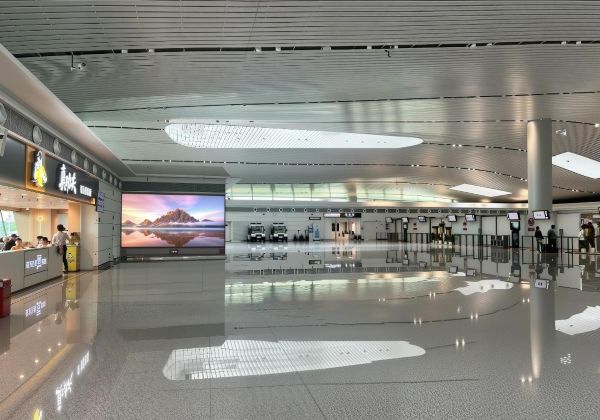
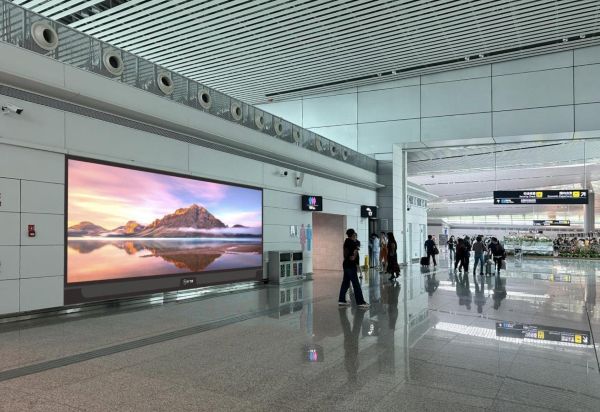
Large LED screens in departure/arrival halls
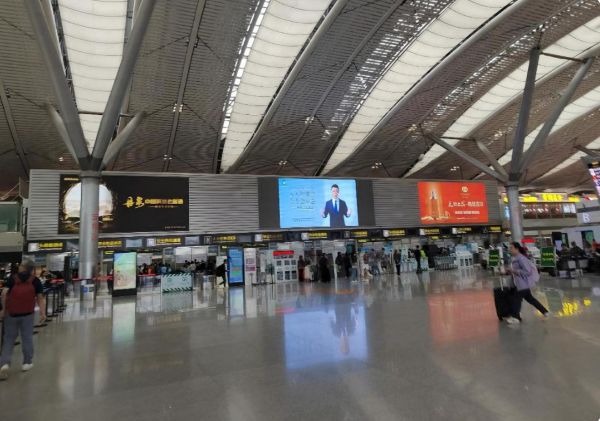
Location: Core locations such as the check-in hall in T1 and T2 terminals, and directly in front of the international arrival exit.
Form: Giant embedded or suspended LED display screen.
Characteristic: visually stunning and cannot be bypassed. Suitable for playing high-end brand image films and holiday themed blockbusters, used for brand event detonation and top-level image display.
Security check area/joint inspection area media group
Location: The necessary passage for passengers to enter the waiting area after passing through security checks.
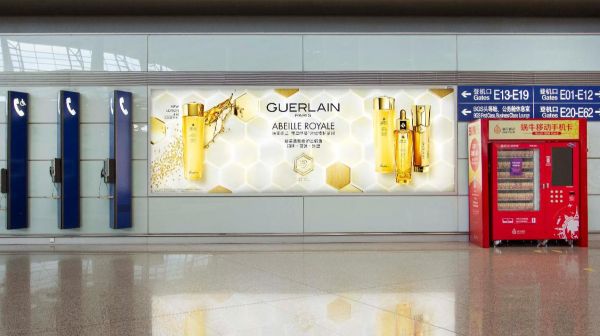
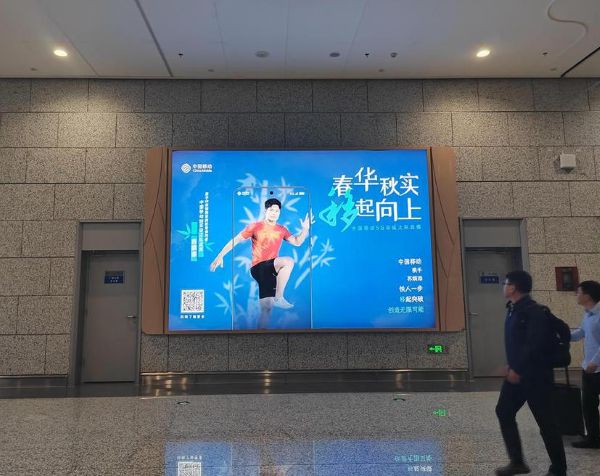
Form: Combination of lightboxes, wall stickers, and digital screens (electronic posters) on both sides of the channel.
Features: Mandatory viewing, slower walking speed for passengers, and focused attention. This area's advertising can achieve high-frequency and deep reach, making it the golden location for product advertising and promotional information release.
H2: Second camp: Precise penetration of "touchpoints"
These points delve into every aspect of the passenger's itinerary, achieving precise and immersive communication.
Boarding gate waiting area media
Location: Rest areas near each boarding gate.
Form: Fixed lightbox, digital screen display, corridor bridge advertisement (connecting the terminal building and the aircraft passage).
Characteristics: The audience has a long waiting time (usually exceeding 15 minutes), a relaxed state, and sufficient time to read the details of the advertisement. Suitable for complex products that require in-depth explanations (such as financial products, automotive technology), or local high-end services (such as luxury homes, study abroad).
Luggage claim hall media
Location: Around the luggage carousel on the arrival level.
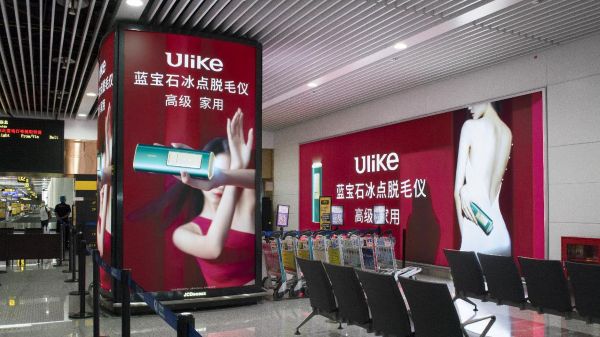
Form: luggage turntable light box, column advertisement, electronic screen.
Features: Passengers are relaxed at the first stop after arriving, and have a strong demand for local life services, transportation (car rental, hotel), and tourism information. It is a battleground for cultural and tourism brands and local high-end service providers.
Online media within the airport
Form: airport Wi Fi landing page advertisement, WeChat official account scene marketing, luggage cart screen, etc.
Features: Digital and interactive. It can achieve a closed loop from exposure to attention and diversion, and is suitable for brands with clear online transformation needs (such as APP download, official account attention, event registration).
H2: Third camp: Features and supplementary media
These forms are more creative and contextualized, and can produce unexpected effects.
Creative Package Pillars/Charter Cars
Packaging the pillars or electric scooters inside the airport as a whole to create a three-dimensional and immersive brand space with strong visual impact and memorable points.
Exclusive media for VIP Lounge
Deeply reaching the highest end business first-class passengers, with a private and luxurious environment, is an excellent scenario for precise circle marketing of top luxury brands and high-end services.
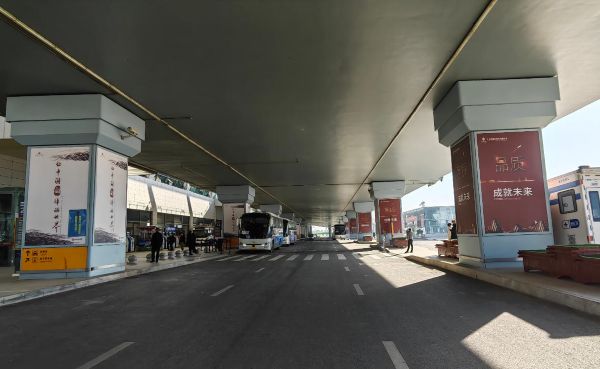
Outdoor anti-aircraft gun/Terminal exterior wall advertisement
At the entrance and exit roads of the airport or on the exterior of the terminal building, it is mainly used to inform the brand image on a large scale for the pick-up and drop off crowd and surrounding traffic.
3、 How to develop your advertising strategy for Baiyun Airport? (Four step decision-making method)
After understanding 'what's there', the next step is to determine 'how to choose'.
Step 1: Clarify the core marketing objectives
Brand image shaping: Priority should be given to the departure hall LED screen and creative column packaging.
Deep product communication: Focus on digital screen scanning of post security channels and boarding gates.
Local service/tourism conversion: Focus on the layout of luggage claim halls and arrival gates.
High end circle reach: Explore exclusive media for VIP lounges and high-end magazine pages.
Step 2: Match the target passenger's route
For departing passengers: Information can focus on themes such as "Journey Start", "Duty Free Shopping", and "Destination".
For arriving passengers: Information should focus on "Welcome Arrival", "Local Services", and "Living and Working Well".
Step 3: Plan media mix and budget
The combination of "raising high and striking high": LED large screen (explosive)+security check area media group (penetration), suitable for big brands with sufficient budget.
The combination of "precise penetration": boarding gate+baggage claim hall media, suitable for brands with medium budgets and clear goals.
"Digital interaction" combination: Wi Fi entrance advertising+social media linkage, suitable for Internet brands pursuing transformation effect.
Step 4: Integration of Creativity and Scene
Airport advertising is not simply a flat design. Creativity must consider:
Quick interpretation: Passengers are in a hurry and must convey core information within 3 seconds.
Environmental correlation: Combining emotions with scenes such as "flying", "traveling", and "arriving" to evoke resonance.
Visual prominence: Stand out in a noisy visual environment with simple composition and vivid colors.
4、 Common Misconceptions and Tips for Avoiding Pits
Misconception 1: Only focus on unit price and ignore the value of the audience.
The single exposure cost of a boarding gate lightbox may be higher than that of urban advertising, but it reaches a mid to high end passenger who is about to embark on a long-distance flight, and its value is completely different. We need to evaluate it using 'effective audience cost'.
Misconception 2: Choosing a location that deviates from the passenger flow.
Blindly choosing the entrance with the highest foot traffic, but the information does not match the current status of the passengers (such as pushing hotel advertisements in the departure hall), will greatly reduce the effectiveness. We must follow the principle of "scenario requirement" matching.
Misconception 3: Creative design does not conform to the airport environment.
Using overly complex and lengthy copy, QR codes that are too small, and using reflective materials in areas with strong lighting can all lead to ineffective advertising. It is necessary to conduct on-site inspections or seek professional agency advice.
Misconception 4: Believing that airport advertising cannot track its effectiveness.
Nowadays, effective monitoring and attribution of exposure, interaction, and conversion can be achieved through customized URLs, exclusive discount codes, Wi Fi interactive pages, social media check-in activities, and other means.
5、 Conclusion
Returning to the original question: What are the advertising placements at Guangzhou Baiyun Airport? The answer is a three-dimensional, scenarized, and highly layered media ecosystem. From the stunning LED giant screen that shakes the audience, to the deeply penetrating boarding gate screen, and to the precise interactive digital entrance, it provides a wide range of choices for brands with different budgets and goals.
For brands, the key is not to invest in everything, but to make precise combinations. Firstly, clarify whether your brand aims to "showcase," "communicate," or "transform." Then, follow the target audience's flow and select the touchpoints that can most reach and influence them for combined advertising.
The advertising space at Baiyun Airport is not only a touchstone of brand strength, but also a mouthpiece for communicating with the high-end market. Before starting the advertising campaign, it is recommended that you cooperate with an officially authorized professional advertising agency to conduct detailed on-site inspections and strategic planning, so that every budget can be well spent and win the response of your own brand in this top tier place.