Complete Guide to Airport Advertising Placement: Complete Brand Value Dialogue at Top Traffic Entrances
2026-01-23Tianci MediaViews:142
Highlights
Planning to advertise at the airport? This guide systematically analyzes its core values, detailing the complete process from international/domestic strategy, media location selection, budget allocation to effect tracking, helping you efficiently reach business elites and high consumption groups. Read now and start promoting the high-end brand.
When a brand grows to a certain stage and seeks breakthroughs and upgrades, marketing decision-makers often turn their attention to a special scenario - the airport. This is not only a transportation hub, but also a natural flow rich mine that gathers high net worth, high aspirations, and high influence people. Airport advertising placement has therefore surpassed the significance of general media purchases and become a strategic investment in brand height, strength, and landscape.
However, facing the complex airport environment, expensive media prices, and difficult to quantify effects, many brands feel confused: Is my brand suitable for airport advertising? Where should the money be spent? How to prove its value? This article will help you clear the fog and provide a practical framework from strategy formulation to effect tracking.
Step 1: Strategic Review - Why should your brand be associated with airports?
Before discussing specific implementation, it is necessary to first examine the degree of strategic alignment. Airport advertising is not a panacea, it serves specific brand goals.
1.1 The Three Core Values of Airport Media
Accurate filtering of crowd value: Airport passenger flow is not the general population. Business travelers and high-end tourists constitute the main body, and they generally have the characteristics of high income, high education, high position, and strong decision-making power. They are the ideal customer group for luxury goods, finance, automotive, technology, and high-end service industries.
Strong empowerment of scene value: Modern airports themselves represent efficiency, internationalization, and trustworthiness. Your advertisement appearing here will passively endow the brand with the same high-end and reliable attributes, which is a rare 'scene endorsement'.
Deep occupation of attention value: During the "boring time" of waiting and arriving, passengers are more sensitive to information about their surroundings, and their mentality shifts from daily busyness to relative relaxation. They are more willing to accept high-quality brand information and achieve deep communication.
1.2 Clarify your advertising goals
Clear goals are the cornerstone of budget allocation and effectiveness evaluation. Ask yourself, the main purpose of this advertising campaign is to:
Brand image leap: Upgrade from an industry brand to a public brand, establish a high-end and international image.
New Product/Service Release: Targeting business travelers, we will launch a high-end product or exclusive service with great weight.
Core market breakthrough: Concentrate efforts to influence local elites and foreign business people in first tier or new first tier cities.
B2B business expansion: directly reaching out to enterprise decision-makers, influencing their procurement and partner selection.
If your core goals align highly with the above, then airports are a battlefield worth further research.

Step 2: Tactical Decoding - How to scientifically plan your airport media mix?
Airports are a three-dimensional and dynamic ecosystem. The key to successful advertising is to act like a director and arrange the brand's "scene" on the flow of passengers.
2.1 Core Strategy Selection: International Region vs. Domestic Region
This is the primary decision that determines the fundamentals of the covered population.
International departure/arrival area: The audience has the highest degree of globalization, top-notch consumption power, and reaches the true "top tier crowd" of the brand. Suitable for brands that already have national recognition and aim to create a global high-end image. The price is usually the highest.
Domestic departure/arrival area: With a larger traffic base, covering a wider range of business people and affluent classes, it is the main battlefield for most high-end brands and high-end service industries (such as private banking and luxury cars). Relatively higher cost-effectiveness, with a focus on the domestic market.
2.2 Deploy four major "touchpoint battlefields" along the passenger flow line
Please follow in the footsteps of the passengers and understand the communication mission of different points:
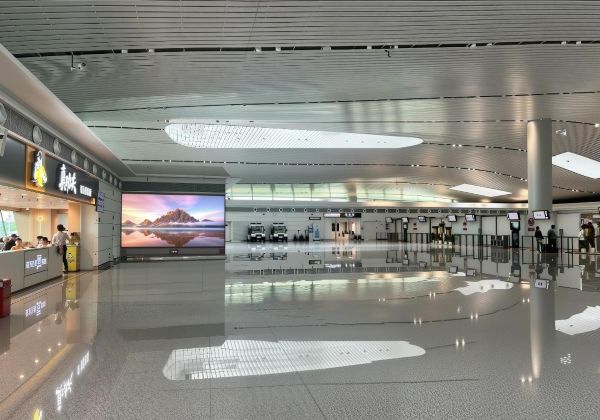
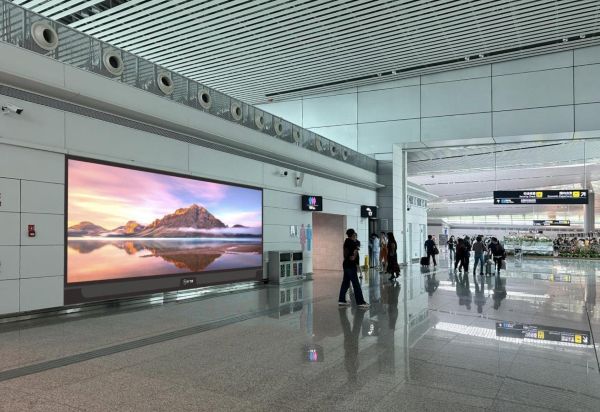
The first battlefield: check-in and departure hall - a stunning stage for the brand's "first impression"
Location features: spacious and relatively leisurely for passengers.
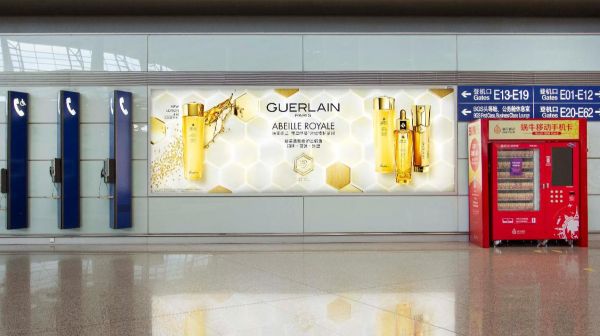
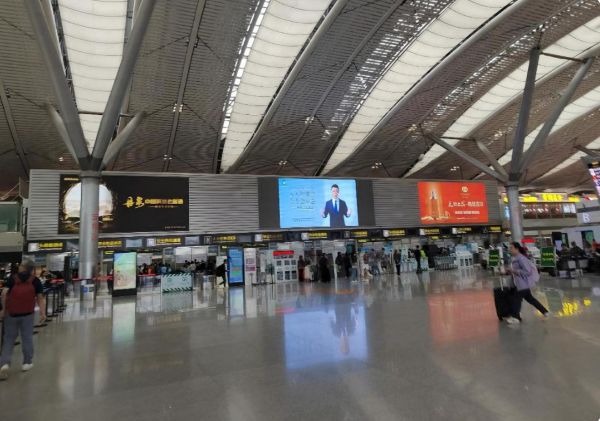
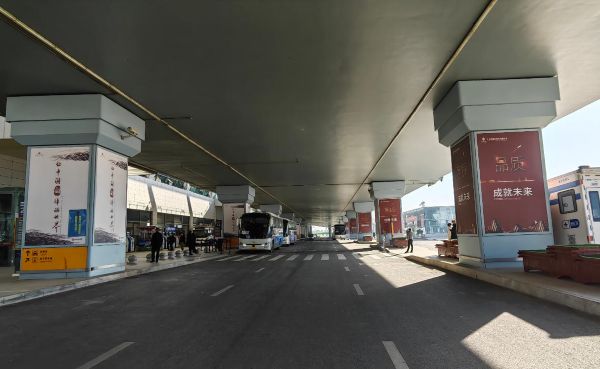
Media format: Giant LED screen, independent brand pillar, check-in island package pillar.
Communication task: Conduct a grand brand narrative, convey strength and pattern. Visually, it must be grand, simple, and impactful. Suitable for establishing a top brand image.
Second battlefield: Security check area and corridor - unavoidable "mandatory reading" channel
Location features: Passengers must pass through, wait in line, and their line of sight is limited to a narrow range.
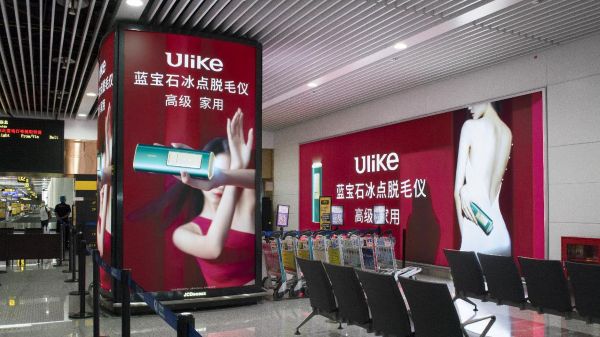
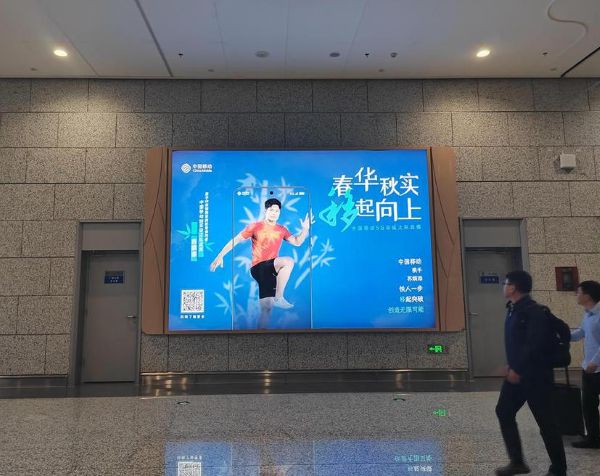
Media format: Continuous lightbox walls on both sides of the security checkpoint, and long corridor media leading to the waiting area.
Communication task: Instilling high-intensity, high-frequency brand slogans or core selling points. Information must be extremely focused and eye-catching. Suitable for categories that require quick mental capture.
Third battlefield: quarantine area for waiting - a "living room" for deep communication and emotional resonance
Location features: Passengers have undergone security checks, have a long fragmented stay time, and have a relaxed mindset.
Media forms: digital screens at boarding gates, advertisements on the backrests of waiting seats, and advertisements inside the corridors.
Communication task: Tell the brand story, showcase product details, and create an emotional atmosphere. It can convey richer and warmer information. Suitable for establishing brand preferences and loyalty.
Fourth Battlefield: Arrival Channel - Inspire Immediate Action and Perfect Closing with a 'One Step at the Door'
Location features: Passengers arrive with a relaxed mindset or local needs.
Media format: circular LED in luggage claim hall, light box in arrival channel, escalator stickers.
Communication task: Provide localized service information (such as luxury car rental, five-star hotels), or give warm brand welcome, forming a perfect communication loop. Suitable for driving instant conversion or enhancing high-end service attributes.
2.3 Golden Rule: Combination Placement and Focused Strike
Combination boxing is better than single point: The ideal strategy is to cover the complete flow of "departure (cognition) - security check (reinforcement) - waiting (resonance)", achieving multi frequency and three-dimensional communication with the same passenger.
Focusing on the core area: When budget is limited, concentrating firepower to capture a core combination of domestic departure areas (such as large screens and security checkpoints) is far more effective than dispersed deployment in multiple secondary locations both domestically and internationally.
Step 3: Execution and Risk Control - Ensuring the Effectiveness of the Huge Budget
A perfect strategy requires precise execution to be implemented, and constant vigilance against risks.
3.1 Budget Planning and Cost Insights
The pricing system for airport advertising is complex, influenced by factors such as the city level of the airport (most expensive in first tier hubs), terminal traffic, scarcity of locations, media format (digital screens>static lightboxes), and advertising cycle. The monthly fee for a high-quality location at a domestic core airport may be in the tens of thousands.
Negotiation points: Strive for long-term contract discounts, package prices, and explicitly request the provision of past customer traffic data reports for this location as evidence of value.
Cost allocation suggestion: Follow the principle of "70% main battlefield (core line combination)+20% innovative testing (such as VIP lounge)+10% mobile readiness".
3.2 Creative Content: Advanced Sense of Integration with the Environment
Airport advertisements are not street posters, they have extremely high aesthetic requirements.
Design language: must be international, simple, and have white space. Visual texture directly affects brand texture.
Copywriting information: It is recommended to have both Chinese and English translations, with a concise and poetic copy that conveys the core value proposition.
Regulatory safety: All images must pass strict content and security audits by the airport in advance, with a reserved period of 1-2 months.
3.3 Effect tracking: an evaluation system that goes beyond "exposure"
A measurable effectiveness evaluation loop must be established to respond to the initial advertising objectives.
Brand level: Conduct brand awareness and reputation research before and after advertising in the target city.
Effect level: Design exclusive tracking paths, such as unique QR codes (linked to high-end customized landing pages), exclusive discount codes, 400 phone numbers, and accurately count sales leads.
At the level of volume: Monitor the check-in and discussion content of the brand at the airport on social media, and evaluate the increase in social volume.

Step 4: Common Misconceptions and Advanced Thinking
When stepping onto the high-end stage of airports, please be sure to avoid these cognitive traps.
Misconception: Blindly pursuing international zones and neglecting target matching. If your main battlefield of business is in China, the traffic value in the domestic region is higher and more accurate.
Misconception: Directly using online materials for airports. Materials with complex information and rough design can seriously damage brand image, and high-level creativity must be customized for airport environments.
Misconception: Only focus on advertising, not on integrated communication. Airport advertising is a "tipping point" that must be amplified with social media topics, KOL visits, and public relations articles, otherwise its value will be greatly reduced.
Misconception: Ignoring subsequent traffic reception. The advertisement attracted high-end attention, but scanning the code resulted in a poorly experienced generic page, causing trust to collapse instantly.
Misconception: One time thinking, lack of long-term planning. The high-end transformation of a brand is not achieved overnight. We should consider investing in airport media on a quarterly or annual basis, in a rhythmic and sustainable manner, to continuously capture the minds of users.
Conclusion: Defining the final height of a brand at the starting line
Airport advertising placement is essentially a key investment in the future of a brand. It is not just a media exposure, but also a serious brand declaration: announcing that it has entered a broader competitive stage and is ready to engage in dialogue with the most valuable consumer groups.
It tests the brand's internal confidence and external strategic determination. Starting from a profound understanding of its strategic value, tactics are formulated through scientific analysis of the flow line and combination of points, and then implemented with top-level creativity and rigorous execution, and finally verified with data for its returns. This process itself is a compulsory course for brands to mature and become professional.
When your brand information is intertwined with the sound of airplanes taking off and landing, and the footsteps of passengers, it is no longer just a simple advertisement, but has become a part of the city portal narrative, a symbol of association in the hearts of target customers about quality, vision, and success. This is the ultimate value that airport advertising endows, surpassing the advertising itself.