A Comprehensive Guide to Advertising Placement at Shanghai Airport: In Depth Analysis of the Media Value of Pudong and Hongqiao
2026-01-16Tianci MediaViews:204
Highlights
In depth analysis of the advertising value, media matrix, and practical strategies of Shanghai Airport (Pudong/Hongqiao). This article provides a complete guide from dual hub positioning analysis, cost composition, creative design to effect tracking, helping you accurately layout the national portal and efficiently reach the global high-end customer base. Get professional advertising solutions now!
For brands that aspire to globalization, high-end or deeply cultivate the Yangtze River Delta market, Shanghai Airport is not a transportation hub, but a "super brand runway" that gathers global capital, top talents and high-end consumption power. Here, advertising goes beyond simple information dissemination and has been elevated to a strategic positioning - it concerns the brand's debut and identity on the international stage.
However, when you start considering this investment, a complex and three-dimensional media ecosystem unfolds: what are the differences between Pudong and Hongqiao? Which positions are worth competing for at a high price? How should the budget be allocated? This article will systematically review and help you master the core logic and execution tips of advertising placement at Shanghai Airport.

Part 1: Strategic Map - Decoding the Positioning and Value Differences of Shanghai's "One City, Two Markets"
The first step to success is to understand that you are entering a 'dual center' market. The positioning, passenger flow, and media value of Pudong Airport (PVG) and Hongqiao Airport (SHA) are completely different.
Shanghai Pudong International Airport: Global Hub, Ultimate Stage for Brand Internationalization
Core positioning: China's primary air gateway to the world, with a high proportion of international flights.
Passenger flow value: mainly consisting of international and regional travelers, long-distance business travelers, and high spending tourists. This is the most efficient scenario for brands to establish an international image and reach global elites.
Advertising strategy focus: International departure and arrival routes are the core of the core. Placing here emphasizes the shaping of brand height and the establishment of global trust.
Shanghai Hongqiao International Airport: the heart of domestic business and the efficiency engine of the Yangtze River Delta
Core positioning: A hub for "domestic boutique air routes", focusing on domestic business travel and the Yangtze River Delta intercity express line.
Customer flow value: It gathers a large number of corporate executives, business people, and high-frequency travelers from the East China region, with high decision-making efficiency and concentrated consumption power.
Key advertising strategies: domestic business class channels, core boarding gates, and baggage claim halls. Placing here focuses on influencing domestic business decisions and deepening the high-end market in the Yangtze River Delta.
Key conclusion: Choosing Pudong or Hongqiao is not a matter of budget, but a direct reflection of brand strategic goals. Choose Pudong for international image and Hongqiao for deep cultivation in the East China business market.
Part 2: Comprehensive Analysis of Media Matrix - Where can your brand "speak out"?
The outdoor advertising forms at Shanghai Airport are diverse, forming a three-dimensional matrix from grand to intricate.
1. Brand potential layer (shaping top-level image)
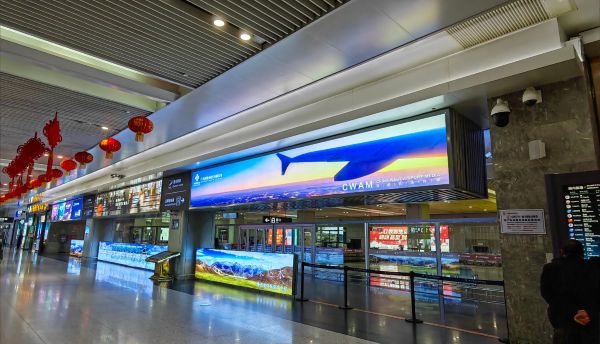
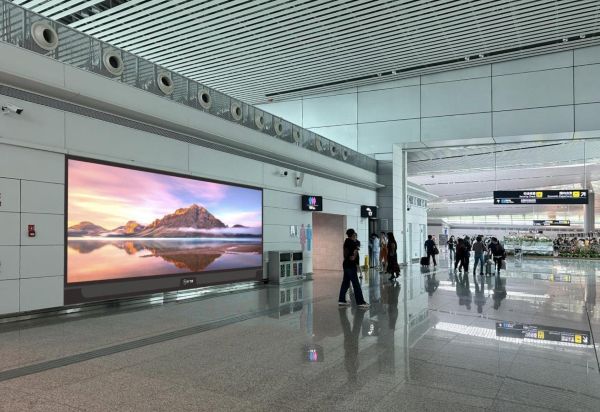
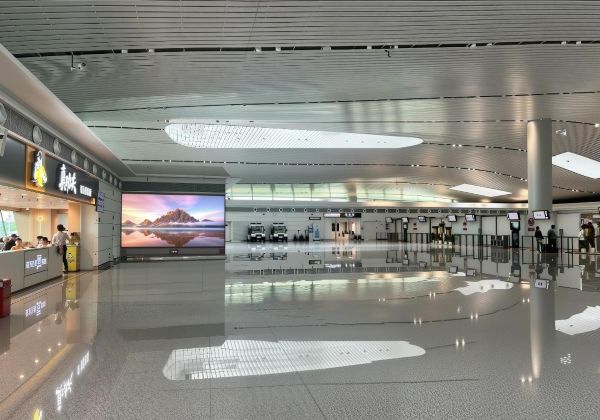
LED giant digital screen: located in core positions such as check-in hall and international arrival corridor. Loop playback in seconds, with unparalleled visual impact, is a symbol of brand strength and the most expensive price.
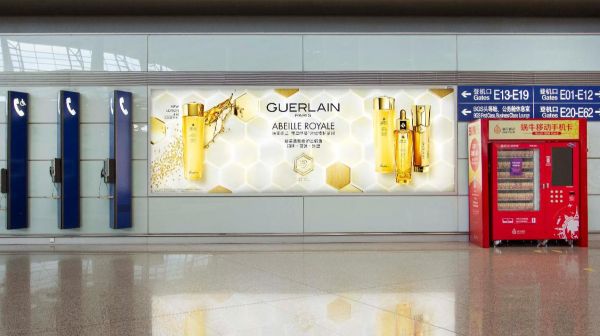
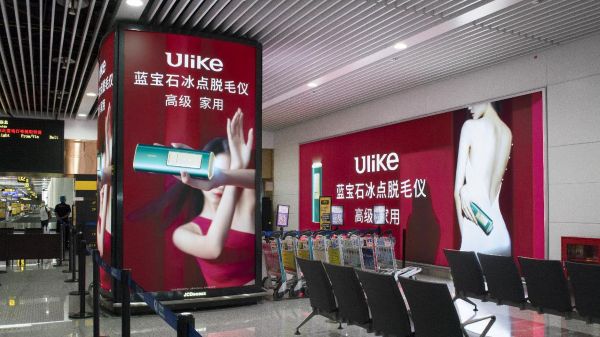
Large lightboxes and wall stickers: Large static displays with powerful visual impact and atmosphere creation capabilities in international departure channels and other locations.
2. Deep communication layer (influencing decision-making mindset)
Bridge advertising (especially the international flight bridge at Pudong Airport): The last closed section of the journey before passengers board, allowing for focused attention and in-depth communication of product selling points.
Luggage turntable light box: an area where passengers' attention is highly focused upon upon arrival, with a long waiting time, suitable for posting specific services, products, or local welcome information, and a short conversion path.
3. High frequency prompt layer (strengthens brand memory)
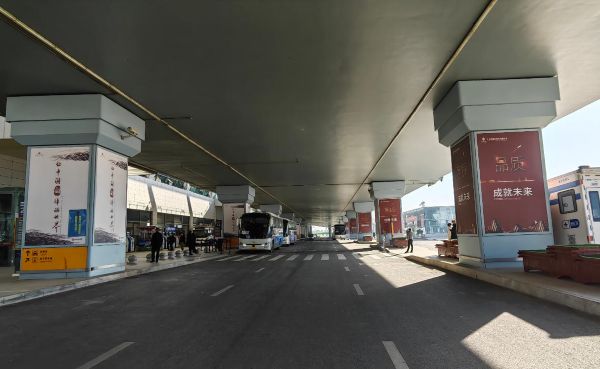
Check in Island Lightbox/Column Advertisement: Covering the process of checking in and providing brand reminders.
Screen brushing machine/digital signage network: Digital screens distributed throughout the airport can form a network for high-frequency, wide coverage carousel, with relatively high cost-effectiveness.
Part 3: Cost Logic -5 Core Dimensions Influencing the Price of "Shanghai Airport Advertising"
The price is determined by a precise 'value formula', with the main variables including:
Airport and regional dimensions (highest weight): Pudong>Hongqiao; Within the same airport, international zone>domestic zone; Departure Hall>Arrival Hall; Inside the security check>outside the security check.
Media format and location specificity: LED large screen>corridor bridge advertisement>luggage turntable light box>ordinary light box. Even though they are both lightboxes, the prices on the front and side of the main channel are different.
Time and cycle: Price increases during peak hours (such as holidays, morning and evening rush hours) and peak seasons. Long term contracts (annual frameworks) can receive significant discounts.
Creativity and production costs: High quality video or graphic creative design, customized content production for special media such as alien LEDs, are necessary investments to ensure effectiveness, accounting for approximately 10% -25% of the total budget.
Service channels: There are significant differences in price and service guarantees between airport self operated, first level strategic agents, and multi-level distributors. Professional institutions can provide integrated value of resources, strategies, and execution.
Part4: Four Step Practical Method - Planning a Successful Brand Landing Campaign
Step 1: Define Goals and Strategies (Answer "Why Invest")
Clarify the core objective: is it to launch new global products, enhance international brand awareness, attract business customers in East China, or promote the sales of duty-free goods? The goal directly drives all subsequent choices.
Step 2: Resource and Path Selection (Answer "Where to Invest")
Based on the goal, make a combination decision:
Scenario combination: For example, "Pudong International Arrival LED Large Screen (Establishing First Impression)+Corresponding Luggage Carousel Light Box (Providing Specific Information)".
Airport combination: For example, for multinational corporate clients, a combination of "Pudong International Departure (covering outbound executives)+Hongqiao Domestic Departure (covering domestic travel employees)" can be used.
Step 3: Creativity and Content Design (Answer "What to invest in")
This is a crucial leap in transforming media value into brand assets.
International Zone Content: Requires an international aesthetic, concise language, highlighting the brand logo and core values, and weakening complex Chinese information.
Domestic content: More specific and functional communication can be conducted.
Design principles: minimalist information, visually stunning, and core information recognizable within 3 seconds. Fully utilize the advantages of dynamic media and consider creating eye-catching content such as naked eye 3D.
Step 4: Effect tracking and integration amplification (answer "How effective is it?")
Set up conversion nodes: Use exclusive QR codes, appointment hotlines, and event URLs to convert offline exposure into measurable leads.
Integrate public relations communication: Use airport advertising as a public relations event, and amplify it twice with press releases and social media topics (such as # Brand Debut at Shanghai Airport #).
Evaluate brand indicators: Monitor brand keyword search index during the advertising period, changes in international traffic on the official website, etc.
Part 5: Common Misconceptions and Avoiding Pits Guide
Misconception: Treating airport advertising as ordinary outdoor advertising and pursuing low-priced locations. Low price advertising in non core areas may not be as valuable as a precise appearance in core areas.
Misconception: Creative design follows the principle of 'one draft fits all'. It is a huge waste to show international travelers advertisements filled with long Chinese texts, or to show domestic travelers foreign language advertisements that are completely incomprehensible.
Misconception: Ignoring the lengthy approval process. The content review of airport advertisements is extremely strict, requiring at least 1-2 months of approval and production time to avoid delaying marketing plans.
Misconception: Not reserving sufficient budget for creative production. Using inferior 'costumes' on top stage is a damage to brand reputation.
Misconception: Collaborating with channels with unstable resources. It is necessary to verify the qualifications of the agent to ensure that they have direct and legal resource management rights, and to ensure the safety of the contract and smooth publication.
Conclusion and Call to Action
Advertising placement at Shanghai Airport is a highly complex systematic branding project. It tests not only the budget of the enterprise, but also the clarity of its strategy, the internationalization of its creativity, and the professionalism of its execution. The success here means that the brand has successfully passed the "stress test" of China's most discerning and high-end population, and gained the trust endorsement to enter a broader market.
Now is the time to transform the strategic opportunities of the national portal into your brand assets:
Step 1: Strategic Review - Convene the core team to confirm the critical correlation between landing at Shanghai Airport and your brand's next stage of development goals.
Step 2: Obtain a professional map - immediately consult a professional advertising agency with rich experience and legitimate resources in the advertising field at Shanghai airport. Request them for a 'Shanghai Dual Airport Media Resource and Strategy Analysis Report' based on your industry and goals.
Step 3: Start the creative engine - regardless of the final budget, immediately start brainstorming creative concepts that represent the highest level of your brand and have international aesthetics.
From planning to debut, let the world see the brilliance of your brand through Shanghai.