Capital Airport Handcart Advertisement: An Underestimated High end Traffic 'Mobile Terminal'
2026-01-13Tianci MediaViews:151
Highlights
Explore the unique value of outdoor advertising on trolleys at the Capital Airport. This article elaborates on its advantages of precise contact, mandatory contact, and complete route coverage for high-end travelers, providing a full process guide from strategic planning, creative design to inquiry execution. Get professional solutions immediately and efficiently layout the national portal.
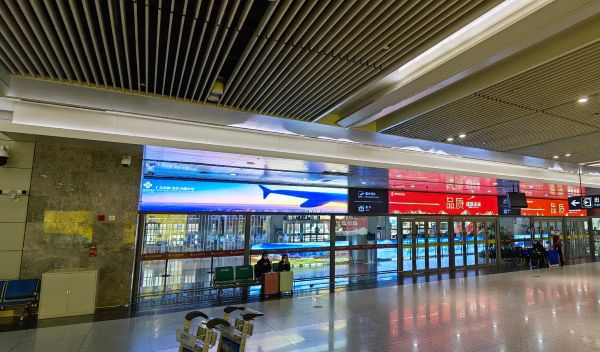
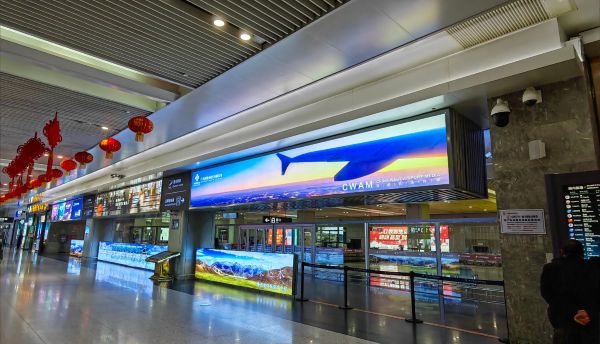
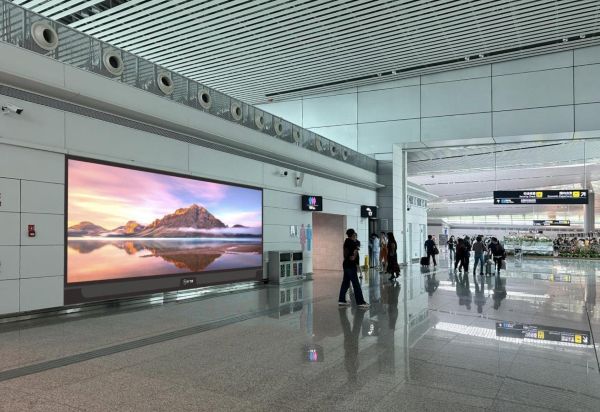
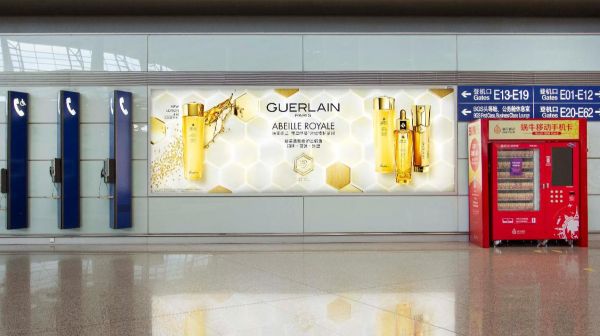
When brands target the national gateway of Capital Airport, their focus is usually on the magnificent LED screens, corridor lightboxes, or check-in island advertisements. However, there is a type of "mobile" media that provides zero distance contact with passengers, whose value is often overlooked, but may be a secret weapon for achieving efficient and deep communication - it is the outdoor advertising of the Capital Airport trolley.
Imagine an international business traveler or high net worth tourist, after a long flight, pushing a luggage cart through a massive terminal building. At this moment, his/her attention is focused, the course of action is determined, and he/she is at a critical psychological node of transitioning from "journey" to "destination". At this point, the brand information on the handcart becomes a quiet and in-depth conversation that accompanies it for at least 5-15 minutes. This article will systematically analyze the value, strategy, and implementation path of this unique media for you.

Part 1: Redefining Value - The Three Irreplaceable Advantages of Handcart Advertising
1. Zero distance, high altitude, mandatory deep contact
Unlike the large screens seen from afar, the advertising on the handcart is located at the "hands" and "eyes" of the passengers. Starting from extracting the handcart, to handling procedures, walking to the boarding gate or arriving at the exit, the advertising image is always within the passenger's field of view, forming a rare long-term, close range, low interference brand exposure. This' accompanying 'media attribute is an excellent scenario for achieving deep communication of brand information.
2. Accurately cover the most valuable high-end travel population
The Capital International Airport, especially the T2 and T3 terminals, gathers the highest proportion of official, business, and international tourist flows in China. Passengers who use handcarts usually have more luggage and longer journeys, and their spending power and decision-making level are generally higher. For brands such as finance, automotive, high-end tourism, luxury goods, study abroad immigration, and corporate services, this is the golden channel for accurately reaching target customer groups.
3. Complete coverage of core passenger routes to achieve scenario based marketing
Handcarts are the "infrastructure" for passengers to move indoors at airports, and their movement paths naturally cover key scenarios throughout the entire process, such as check-in, security check, waiting, and international arrival
Departure layer: Affects travelers who are about to embark on their journey, suitable for tourism destinations, overseas services, and high-end consumer goods advertising.
International Arrival Layer: Reaching newly arrived Chinese or foreign tourists is an ideal touchpoint for foreign brands to establish first impressions and receive high-end local services (such as real estate and education) to meet customers.
Luggage claim hall: provides clear information guidance or service commitments during the short waiting time for passengers' luggage, with high conversion efficiency.
Part 2: Strategy and Creativity - How to Design an Effective 'Mobile Communication'?
To upgrade cart advertisements from being seen to being remembered and acted upon, careful strategy and creative design are required.
Strategy Step 1: Clarify the core communication objectives
Brand image penetration: Emphasize brand texture and high-end tone, with extremely simple and atmospheric visuals.
Specific product/service promotion: Highlight core selling points and contact information, such as high-end credit card applications, international flight promotions, luxury car pick-up services, etc.
Scenario based real-time traffic diversion: For example, placing QR codes for high-end hotel reservations and duty-free shop coupons on the arrival hall trolley to achieve "place an order as soon as you see it".
Strategy Step 2: Focus on Core Areas and Crowds
International flight area priority: The international departure/arrival area of T3 terminal is the area with the highest value concentration.
Distinguishing between departure and arrival demands: departing passengers tend to have a mindset of anticipation and planning, while arriving passengers tend to have a mindset of exhaustion and immediate needs. The advertising information needs to match it.
Three principles of creative design:
Visual minimalism, one second comprehension: As it is a mobile reading, the information hierarchy must be clear. The main visual, brand identity, and core proposition (or one sentence selling point) should be highlighted, and auxiliary information should be simplified.
Strengthen the call for interaction and get through the transformation: make full use of the QR code to guide users to scan the code and pay attention to the official account, download the app and claim rights. This is the key to converting offline high-end traffic into online private domain assets.
Material and craftsmanship reflect quality: the texture of advertising film, the accuracy of printing, and the durability of the film all directly affect the brand's high-end perception. Be sure to choose high-quality printing and installation services.
Part 3: Price, Procurement, and Execution - Practical Details You Need to Know
Cost composition analysis:
Handcart advertising usually adopts a pricing model of "per vehicle per month" or "overall fleet package". The total cost depends on:
Number of covered vehicles: Should we deploy 100 or 1000 vehicles?
Advertising area: The price in the international area is higher than that in the domestic area.
Placement period: Generally measured in months, with discounts available for long-term contracts.
Production and installation costs: including film design, printing, and manual installation costs. We need to choose specialized materials that are wear-resistant and easy to replace.
Price reference range: Due to its deep value exploration, the monthly cost of bicycle advertising for hand carts at the Capital Airport is already high. A monthly project with a certain coverage usually has an overall budget in the tens of thousands to millions. Specific inquiries need to be made to the official designated operating agency or first level agent.
Standard execution process:
Requirement communication and inquiry: Clarify the target area, number of vehicles, and cycle, and obtain solutions from legitimate agents (such as professional advertising companies with airport media resources).
Creative design and review: Design the image based on the size of the advertising space and submit it to the relevant airport departments for strict content and safety review.
Publication installation and monitoring: Within the agreed time, professional personnel will standardize the installation of designated vehicles. The service provider should provide photos or reports of the publication.
Maintenance and replacement: The contract should specify daily maintenance responsibilities (such as replacing damaged images) to ensure the integrity of the images during the deployment period.
Part 4: Effect Amplification and Integration - How to Double Value?
The power of a single media is limited, and trolley advertising should be integrated into integrated communication:
Online linkage: Initiate topics such as # I am promoting XX brand at the Capital Airport on social media platforms, encourage passengers to check in, and convert offline exposure into social media buzz.
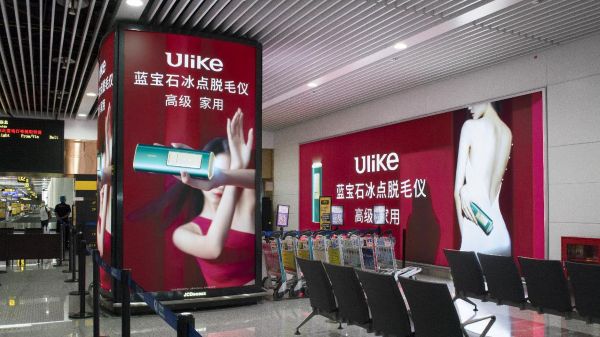
Combining with other media at the airport: forming a three-dimensional combination of "big screen (brand explosion)+handcart (deep communication)+corridor bridge/luggage turntable (one foot towards the door)" to achieve a full impact on passengers' minds.
Data empowerment: After attracting traffic through QR codes, conduct layered operations and analysis on scanning users to optimize subsequent marketing strategies.
Part 5: Common Misconceptions and Avoiding Pits Guide
Misconception: Regard as low-priced supplementary media and design arbitrarily. Treating it as a 'scrap' resource, using low resolution images and complex copy, seriously wastes its high-end scene value.
Misconception: Neglecting installation quality and maintenance. Film warping and curling can greatly damage the brand image. It is necessary to clarify the installation standards and maintenance response time of the service provider.
Misconception: Lack of clear conversion tracking design: After advertising, not paying attention to QR code scanning data, not inquiring about the source, unable to evaluate the real ROI, becoming a "confused account".
Misconception: Collaborating with non-standard channels: Capital Airport has strict management of such resources, and it is necessary to confirm the qualifications of the agent to ensure compliance with contracts, payments, and resources, and avoid legal and financial risks.
Misconception: Ignoring the content review cycle: Airport advertising review is strict and takes a long time (usually 2-4 weeks), so it must be planned in advance to avoid delaying the overall marketing rhythm.
Conclusion and Call to Action
The outdoor advertising of the Capital Airport handcart is a smart choice that seamlessly embeds brand information into the "last ground journey" of high-end passengers. It has built a precise, in-depth, and traceable communication channel in the complex airport media ecosystem with its unique mobility, intimacy, and scenography.
It tests not the budget of the brand, but the depth of insight into the behavior scenarios of high-end audiences and the ability to refine operations.
If your brand is committed to engaging with China's top travel consumers, then now is the time to reassess the strategic value of this media:
Step 1: Scene immersion - Sort out the core needs and pain points of your target customers when they depart or arrive at the capital airport.
Step 2: Creative ideation - Based on the above insights, come up with a concise advertising concept that resonates with passengers on the move.
Step 3: Professional Consultation - Immediately contact an advertising agency with professional authorization from Capital Airport Media to obtain a detailed plan, latest quotes, and successful cases regarding handcart advertising resources, and scientifically evaluate their compatibility with your overall marketing strategy.
From being seen to being accompanied, make your brand a trusted and warm memory for travelers when they step onto or leave this land.