How do airport billboards charge? Full analysis of the latest billing methods and prices in 2026
2026-03-05Tianci MediaViews:89
Highlights
How do airport billboards charge? This article deeply analyzes the price composition of airport advertising from dimensions such as point purchase, duration billing, and production costs, providing a reference and budget planning guide for real transaction cases in major airports across the country. Tianci Media, a professional airport advertising platform, helps you scientifically plan your budget and efficiently reach high net worth individuals!
When you first consider advertising at an airport, the most common question you want to ask is: "How do airport billboards charge
This question may seem simple, but it is difficult to answer directly with a single number. The price range of airport advertising is beyond the imagination of many people: a lightbox advertisement for an ordinary prefecture level airport may only cost tens of thousands of yuan per year; The rolling light boxes in the core area of Beijing Capital Airport can cost up to 1.26 million yuan per month. Why is the price difference so huge from tens of thousands to tens of millions? How should this account be calculated?
This article will combine the latest transaction data of major airports across the country in 2026 to thoroughly break down the charging logic of airport advertising, transforming you from a "novice" to an expert in precise budgeting.
1、 The two basic models of airport advertising fees
Firstly, it is necessary to establish a correct understanding that airport advertising fees are not simply calculated by area, but mainly consist of the following two models.
The point buyout system is the most common charging model, in which advertisers pay a fixed fee to obtain exclusive publishing rights for a certain advertising point for a certain period of time. Expenses are usually calculated on a monthly, quarterly, or annual basis and are the majority of the entire budget. This model has clear pricing, controllable budget, and is suitable for brands with clear advertising cycles. Whether it's lightboxes, LED screens, or booths, most of them use this billing method.
The bundled management rights system is the gameplay of the resource side. For airport operators or large agents, multiple advertising spots are often packaged into "operating rights" for overall leasing. For example, a certain airport packages and rents out 46 advertising screens, with a three-year operating license plate price of 1.2 million yuan per year. This model is suitable for professional advertising companies with long-term operational capabilities, and ordinary brands usually participate indirectly through professional agents.

2、 Real Case Study of National Airport Advertising Prices in 2026
From the latest transaction prices of major airports across the country, we can intuitively see the price spectrum of airport advertisements.
At Beijing Capital International Airport, rolling light boxes departing domestically from T3 cost six yuan per set, with a monthly average price of 1.26 million yuan per set. The LED twin star at the exit of the domestic baggage claim hall at Guangzhou Baiyun Airport T2 has a weekly price of 136000 yuan per set. The booth in the F2 commercial area of Terminal 5 at Xi'an Xianyang Airport has an annual publication price of up to six million yuan.
At Chongqing Jiangbei Airport, the transaction price for the landing light box of T3 domestic arrival at GTC corridor is 800000 yuan. The boarding pass at Lanzhou Zhongchuan Airport has added station advertising resources and is priced at 1.04 million yuan per year. The 46 advertising screens at the East Station of Lanzhou Zhongchuan Airport have a three-year operating right, with a listed price of 1.2 million yuan per year.
There are also many cases where prices are relatively affordable. The five pole outdoor billboard at Guilin Liangjiang Airport has an annual transaction price of only 233000 yuan. The advertising cooperation project at Yancheng Airport has a transaction price of one million yuan per year.
From these cases, it is clear that there is a huge price difference in airport advertising. High quality locations at first tier core airports, with monthly fees reaching millions; Ordinary locations at second and third tier airports can also have annual fees controlled within one million. The key lies in the airport level and advertising format you choose.
3、 The four core factors that affect fees
Why is there such a big price difference for airport advertisements? Mainly focus on the following four dimensions.
The airport level and passenger flow value are the primary pricing factors. First tier hub airports such as Beijing Capital, Shanghai Pudong, and Guangzhou Baiyun have huge passenger throughput and are mainly composed of high net worth business people, resulting in naturally rising prices. By 2025, the passenger throughput of Beijing Capital Airport will reach 70.76 million, mainly consisting of business people, high-end tourists, and corporate executives, with high consumption and decision-making power. The passenger flow scale and value of second and third tier airports are relatively low, and the prices are also more affordable.
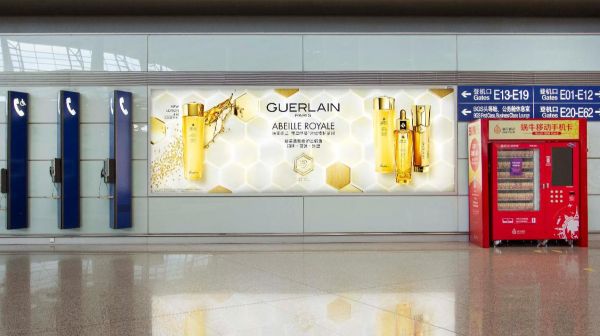
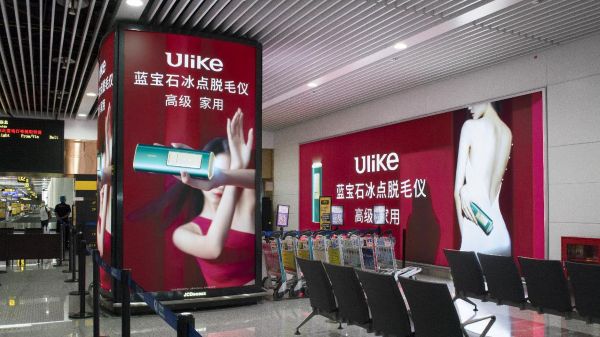
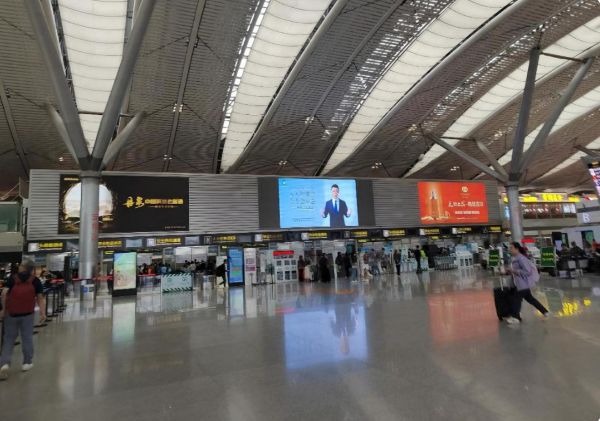
The advertising location is equally crucial as the passenger flow. The price difference of advertisements in different locations within the same airport can reach several times. The core routes such as departure security check area, baggage claim hall, waiting area, and arrival corridor have the highest prices due to the fact that passengers must pass through and stay for a long time. The LED twin star at the exit of the domestic baggage claim hall of Guangzhou Baiyun Airport T2 is located at the last indoor gateway for passengers to enter the city after picking up their luggage, providing a 100% blind spot visual surround for all arriving passengers. Therefore, the weekly price reaches 136000 yuan. Rolling light boxes for domestic departure at T3 Beijing Capital Airport are installed next to seats, passages, and shops, forming a comprehensive visual information network with a monthly fee of up to 1.26 million yuan. In contrast, the prices of outdoor billboards outside the airport are much lower.
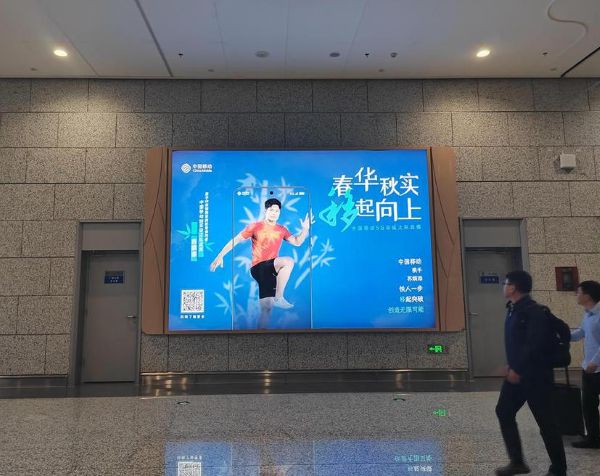
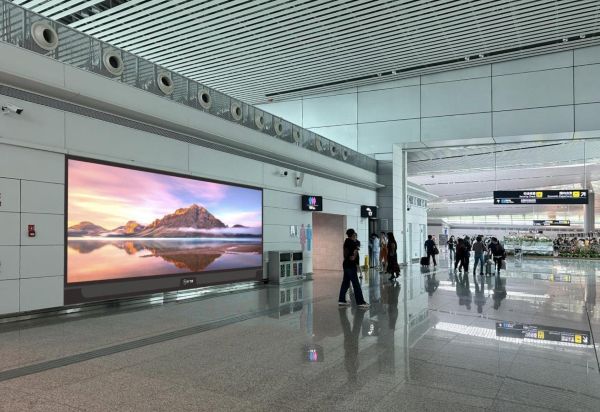
The advertising format and media specifications directly affect the price. LED large screens are usually priced higher than static light boxes due to their dynamic effects and strong visual impact. The independent exclusive booth space in Terminal 5 of Xi'an Airport can achieve physical display and brand immersive experience, with an annual publication price of up to six million yuan. Special forms such as boarding pass and stop sign advertisements, although have a short exposure time, have a high frequency of contact. The annual rent for resources such as Lanzhou Airport also reaches 1.04 million yuan.
The advertising cycle and purchase size also affect the final price. Long term cooperation can result in better unit prices, and three-year operating rights typically have lower average annual costs compared to one-year terms. Buying multiple locations in a package can also dilute costs.
4、 What are the hidden costs of airport advertising?
In addition to media release fees, there are two other costs that are easily overlooked.
The cost of image production and installation needs to be budgeted separately. The production cost of LED videos and lightbox images is not cheap, and high-quality naked eye 3D video production may cost tens of thousands to hundreds of thousands of yuan, while lightbox image production costs are also in the thousands of yuan range.
Content review and approval fees also need to be considered. The content review of airport advertisements is extremely strict and must comply with advertising laws and airport requirements. Some airports may charge audit service fees, and the audit cycle needs to be reserved for at least two to four weeks.
5、 How to plan your airport advertising budget?
The first step is to clarify the advertising target. If it is brand image construction, choose high-end locations such as departure halls, security check areas, and waiting areas at core hub airports. If it is a new product release, consider visually impactful forms such as LED screens and immersive booths. If it is local traffic diversion, choose passenger arrival areas such as arrival hall and baggage claim area.
The second step is to match the budget with the city. When the budget is in the millions, the core locations of second and third tier airports or the edge locations of first tier airports can be considered. When the budget is in the tens of millions, core resources such as Beijing Capital and Guangzhou Baiyun can be deployed for first tier hub airports. When the budget is in the tens of millions, it is possible to carry out nationwide airport matrix advertising.
The third step is to reserve time for production and approval. Airport advertising usually takes one to two months from creativity to publication, so it is important to plan ahead to avoid missing marketing opportunities.
The fourth step is to leverage professional platforms. Tianci Media is a professional airport advertising platform with a database of media resources from major airports across the country. From demand analysis and location evaluation to price negotiation, creative execution, and effect tracking, it provides one-stop full process services.
6、 Common Misconceptions and Avoiding Pits Guide
Misconception one is to only focus on price and ignore crowd matching. The cheapest airport may have sparse passenger flow and low crowd value. Although the core hub has a high unit price, the cost of reaching the effective target audience may be lower.
The second misconception is underestimating the production and approval cycle. The content review of airport advertisements is strict, and the production cycle is long. It is easy to miss the best opportunity for last-minute advertising.
Misconception three is using other media for creative purposes. Airport advertising is a high-end communication scenario that must be matched with high-quality creativity, and cannot use the mindset of street advertising.
The fourth misconception is not leaving budget flexibility. Airport advertising involves various implicit costs such as production fees, installation fees, and review fees, and it is necessary to reserve 20% to 30% of flexible space in the total budget.
Misconception five is to cooperate with unqualified channels. Airport advertising resources are scarce, and it is necessary to verify the qualifications of the agency to ensure direct and legal resource management rights.
7、Conclusion
How do airport billboards charge? There is no standard answer to this question, but it depends on the comprehensive results of multiple factors such as airport level, advertising location, media format, and advertising cycle.
From outdoor billboards priced at 230000 yuan per year at Guilin Airport, to core booths priced at 6 million yuan per year at Xi'an Airport, to rolling light boxes priced at 1.26 million yuan per month at Capital Airport, the price spectrum is broad. The key is to find the point that best matches your brand positioning, target audience, and budget size.
For beginners, it is recommended to start testing from the core points of second - and third tier airports, or obtain fragmented resources of first tier airports through professional platforms, and gradually scale them up after data verification.
Tianci Media is a professional airport advertising platform that has been deeply involved in major airport media across the country for many years, with rich resource databases and advertising experience. From requirement analysis and location evaluation to creative execution and effect tracking, we provide you with professional one-stop services to help you make a precise appearance on the "air portal".