Beijing Airport Advertising Price Decryption: Accurately Measuring Brand Investment on the National Portal
2026-01-12Tianci MediaViews:152
Highlights
In depth analysis of the advertising pricing system at Beijing Airport. This article compares the media differences between Capital Airport and Daxing Airport, breaks down the pricing methods of LED screens, bridges, light boxes, and other forms, and provides accurate budget planning methods and inquiry strategies. Efficiently showcase your brand on the national portal.
For enterprises aiming to shape a national brand image, engage with global business elites, or lead the high-end consumer market, Beijing Airport is an irreplaceable strategic media hub. However, when brand owners approach this market with great anticipation, they often find that its pricing system is like a "black box" - the price range from hundreds of thousands to tens of millions is daunting and difficult to make decisions.
The core issue is: Where does the significant difference in advertising prices at Beijing airport come from? How to choose between Capital Airport and Daxing Airport? What can you buy with your budget? This article will systematically dismantle this sophisticated value evaluation system for you, transforming you from a starting point to a wise investor with a clear understanding.

Step 1: Understand the strategic positioning and value differences of Beijing's dual hubs
Before discussing specific prices, it is necessary to first understand the different roles of Beijing's two major airports, which directly determine the underlying logic of their media value.
Beijing Capital International Airport (PEK): China's most important and busiest air gateway, with a dense network of international routes, serving as a super hub connecting the world. Among its passenger composition, the proportion of international passengers, business class passengers, and high net worth business people is extremely high. Advertising here focuses on purchasing "national image endorsement" and "global elite outreach". Therefore, the media prices in its core region are among the highest in the country.
Beijing Daxing International Airport (PKX): A new driving force for national development in the new era, it is one of the largest aviation hubs in the world. Its design is modern, passenger flow is growing rapidly, and it has attracted a large number of domestic trunk lines and emerging international routes. Advertising here focuses on purchasing 'future growth dividends' and' modern brand image '. The price system is also high-end, but compared to the capital airport, it may provide a more forward-looking value combination in certain emerging regions.
Simply put, Capital Airport represents "current authority and height", while Daxing Airport represents "future traffic and potential energy".
Step 2: Deconstruction of Price Core: The Five Dimensions That Affect Quotations
When you receive a specific quotation, the numbers are the result of the intersection of the following five dimensions:
1. Regional value level (highest weight)
This is the primary principle of price stratification. Divided by passenger routes, the value is usually:
International region>Domestic region; Departure Hall>Arrival Hall; Inside the security check (isolation zone)>outside the security check.
For example, the price difference between light boxes for international departure channels and those for domestic arrivals at luggage halls may be several times higher.
2. Media forms and technological innovation
The pricing units and prices of different forms of media vary greatly:
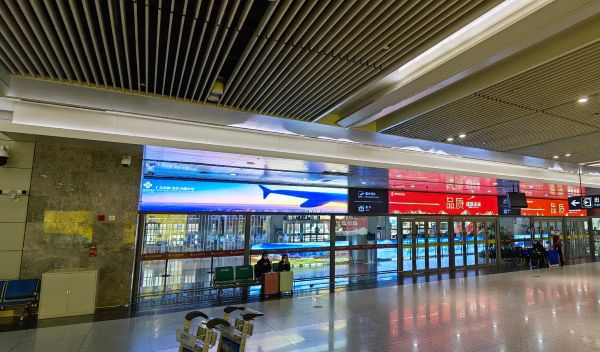
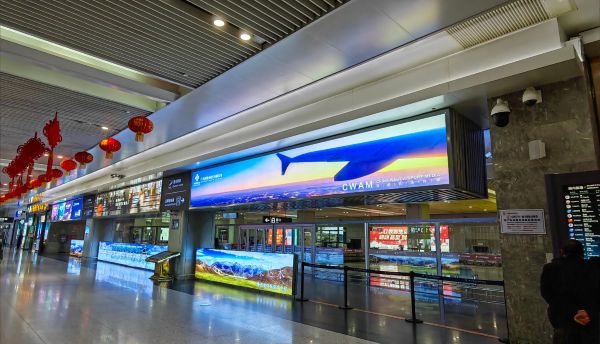
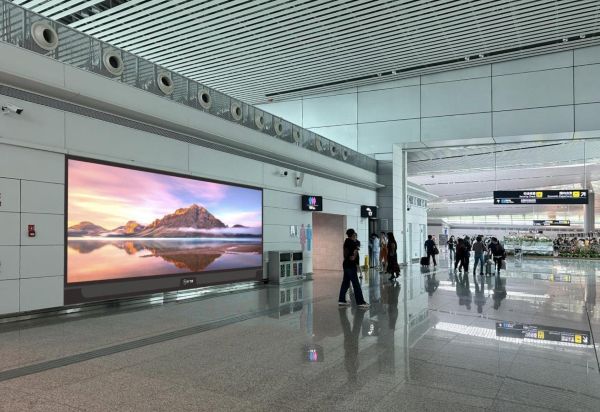
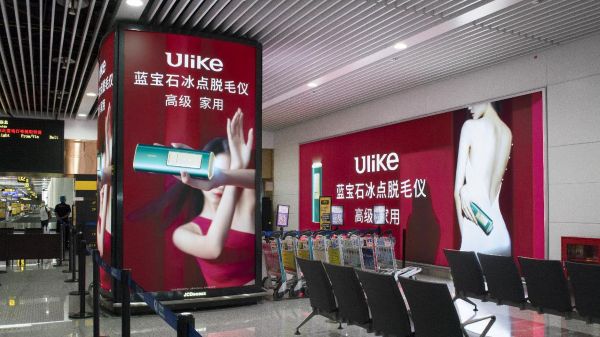
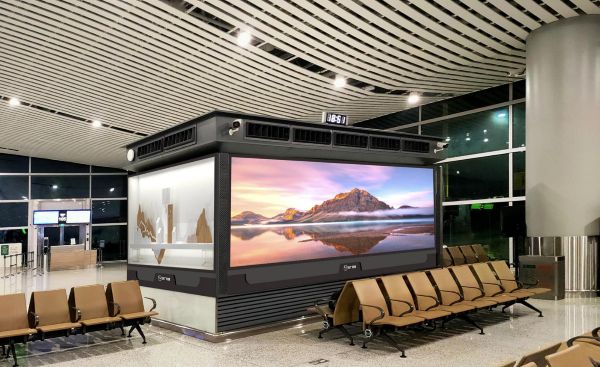
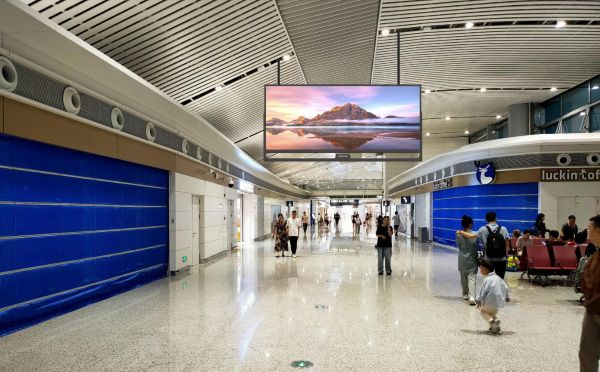
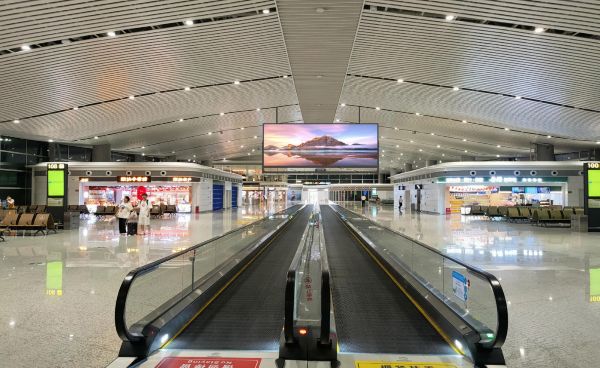
LED giant display screen: located in the core position of check-in hall and baggage claim hall. Loop playback in seconds, with weekly/monthly purchase cycles. This is the media form with the highest unit price and the strongest impact.
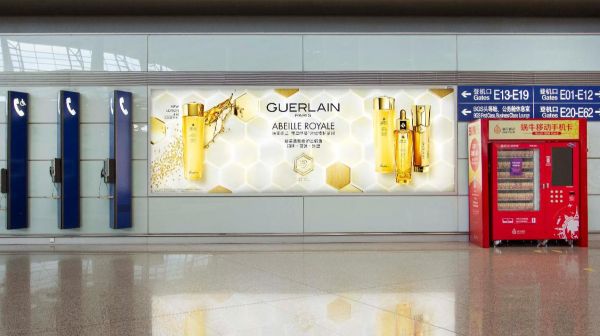
Digital screen brushing machine/lightbox matrix: It can achieve dynamic image rotation, and one point can accommodate multiple brands. Usually priced on a weekly/monthly basis, the cost-effectiveness is relatively high.
Langqiao advertisement (static lightbox/all inclusive): covering the last leg of the boarding journey, with precise audience and high exposure quality. Calculated on a monthly basis.
Luggage turntable light box: Passengers are highly focused and wait for a long time when retrieving their luggage. Pricing by "plate" is a popular resource with outstanding conversion effects.
Check in Island Lightbox/Column/Wall Stickers: Brand reminder media, priced by location/cycle.
3. The specific location of the point and the quality of passenger flow
Even in the same region and media format, the location details of points determine the final price.
Is it located in the main channel/main field of view?
Facing the direction of passenger flow or sideways?
How is the surrounding competitive brand environment?
The value of the flight passenger corresponding to this point (such as near the first-class check-in area or a specific high-end route boarding gate).
4. Placement cycle and exclusivity
Long term contract: Signing an annual or quarterly framework agreement can provide the most favorable unit price discount.
Premium during peak seasons: Prices will significantly increase during peak periods such as National Day, Spring Festival travel rush, and summer transportation.
Category exclusivity: If it is required to exclude competitors within the media area, additional exclusivity fees will be charged.
5. Production, approval, and maintenance costs
This is an implicit cost, but it must be budgeted for:
High end image production cost: Airport advertising has extremely high requirements for design aesthetics and material quality.
Strict approval cycle and cost: The screen needs to go through multiple levels of review by the airport and other parties, with a long process and possible modification costs.
Installation and maintenance: special installation techniques, nighttime construction, and daily maintenance support.
Step 3: From Goal to Budget: A Practical Planning Path
In the face of complex systems, you can follow the following path to transform goals into executable budget frameworks:
Define strategic objectives: Should we shape an international brand image (preferably in the international area of the capital airport), or focus on emerging domestic markets (with a particular emphasis on the domestic trunk area of Daxing Airport)?
Lock in core scenario: At which stage do you want to influence passengers' decisions? Is it brand awareness during check-in (choosing check-in island, LED screen), deep communication during waiting (choosing boarding gate bridge), or first impression upon arrival (choosing baggage claim hall, arrival channel)?
Conduct professional inquiries: Inquire with the official operator of airport advertising resources or their first level strategic agents (such as professional organizations that have previously cooperated with). Provide your goals, preliminary scenario ideas, and budget range, and request a specific plan that includes the five dimensions mentioned above.
Conduct value assessment and comparison:
Compare the effective cost per thousand (CPM) of different schemes.
Evaluate the compatibility between media format and brand tone.
Inquire and verify the passenger flow data and crowd portrait report of the location.

Step 4: Key Misconceptions and Avoiding Pitfalls Guide
Misconception: Only focus on the total price and ignore the value density. Placing large-scale advertisements in non core areas is better than occupying an excellent small spot in the core area.
Misconception: Creative design does not match the media environment. Publishing with low resolution designs or overly complex information can seriously lower the brand's level and waste media value. Be sure to invest sufficient budget for top-level visual creation.
Misconception: Underestimating approval and production time. From contract signing to actual publication, it usually takes 1-2 months for design, review, production, and installation. It is important to plan the marketing pace in advance.
Misconception: No effect tracking design. Although it is difficult to directly quantify brand advertising, the correlation effect can be evaluated by monitoring the brand search index, social media geographic check-in, and exclusive activity code verification during the same period.
Misconception: Collaborating with non-standard agents. It is necessary to confirm the authenticity and stability of the agent's resources, ensure that the contract parties are clear, the payment process is formal, and avoid the risk of resource failure.
Conclusion
In summary, the advertising price of Beijing airport is a precise yardstick for measuring the "national gateway attention" and "high-end audience mentality". It is not untouchable, but requires you to navigate it with clear strategy, professional vision, and careful planning.
Investing in advertising at Beijing Airport is essentially investing in the future height and market landscape of the brand. It is a strategic debut that requires careful calculation.