Guide to Monthly Bus Body Advertising Fees: A Comprehensive Analysis of Pricing Based on Bus Models, Routes, and Cities
2026-01-06Tianci MediaViews:221
Highlights
Are you wondering how much a bus body advertisement costs per month? This article provides a detailed breakdown of the monthly cost range for a single vehicle, delving into the five core factors that influence the price (such as city, route, and bus model). Additionally, it offers budget planning and inquiry guidelines. Get a transparent quotation reference now and scientifically plan your mobile marketing strategy.
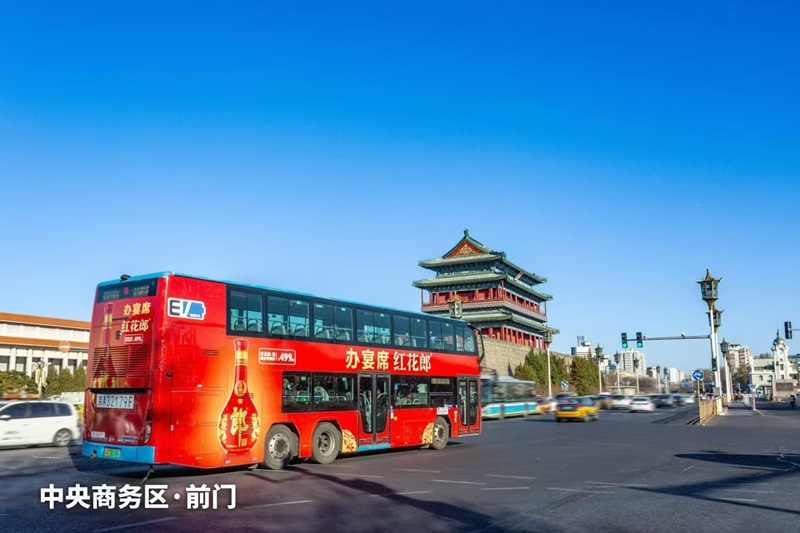
When your brand needs an advertising format that can travel through the city's streets and alleys, cover a vast number of people, and possess strong visual impact, bus body advertising is undoubtedly one of the top choices. It is like a mobile landmark, actively bringing brand information to the eyes of potential customers. However, when you start to seriously consider this medium, a very practical question immediately arises: how much does bus body advertising cost per month?
A vague answer of "several thousand" or "several tens of thousands" is meaningless, as the price difference can be over ten times higher. Directly inquiring about the unit price without understanding the pricing logic behind it can easily lead to budget misjudgment or inefficient investment. This article will thoroughly break down the monthly cost structure of bus body advertising for you, providing a clear price framework, in-depth analysis of decision-making factors, and a set of practical guidelines for deployment actions.
一、Core price range: Monthly cost reference for a car
Before delving into a deeper analysis, we provide a reference range for the monthly cost of advertising space on a single bus body based on the prevailing market conditions in 2024. Please note that this is the cost for "one bus" for one month, and actual deployment typically involves a combination of multiple buses and routes.
Full-body advertising (complete vehicle packaging)
Monthly expense range: 8,000 yuan - 30,000 yuan+/month
Segmentation reference:
Tier 3 and 4 cities/ordinary routes: 8,000-15,000 yuan/month/unit
Main routes in second-tier/provincial capitals: 15,000-25,000 yuan/month/unit
Core golden routes in first-tier cities (Beijing, Shanghai, Guangzhou, Shenzhen): starting from 25,000 yuan/month/unit, or even higher
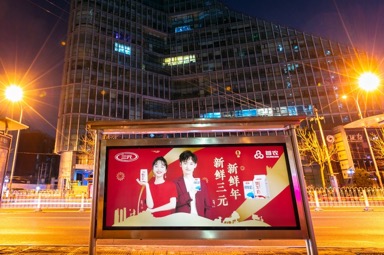
Bilateral vehicle advertising (posters on both sides of the vehicle)
Monthly expense range: 3,000 yuan - 12,000 yuan+/month
Description: This is a more common choice, covering the main panels on both sides of the car body, and offering high cost-effectiveness.
Key reminder: Actual total budget = monthly cost per vehicle × number of vehicles. For a package covering 5-10 main routes in a medium-sized city, the monthly total budget is usually between 50,000 yuan and 200,000 yuan.

二、Five core dimensions affecting prices
Why is there such a wide range of prices? Your final quotation is determined comprehensively by the following five dimensions:
First dimension: City level and economic development level
This is the cornerstone of pricing. The price of media resources in first-tier cities is much higher than that in second- and third-tier cities, which is directly linked to local GDP, business activity, and population consumption ability.
Second dimension: The "value" of bus routes
This is the most crucial factor that leads to price differences. When evaluating the value of a route, there are three points to consider:
Passenger flow intensity: The daily average passenger volume is a hard indicator. The backbone lines that run through core business districts and connect large residential areas with CBDs have the highest value.
Quality of the crowd: The consumption ability of passengers in the areas along the route. For example, routes passing through university districts and high-tech industrial parks have a young and potential audience.
Media environment: Is there fierce visual competition along the route? In busy road sections with numerous billboards, the attention value of vehicle body advertisements will be relatively diluted.
Third dimension: Advertising format and size
Full-body packaging: The strongest visual impact, no dead angle coverage, and the highest price.
Double-sided body: A mainstream choice, offering high cost-effectiveness and covering the main visible surfaces.
Tail advertisement: Small in size, primarily targeting drivers of vehicles behind, and offered at the lowest price.
Fourth dimension: Advertising scale and contract period
Scale effect: The more vehicles deployed at once and the wider the routes covered, the better the monthly average price per bike can usually be discounted.
Periodic commitment: By signing a long-term contract of 3 months, half a year, or more than 1 year, the unit price will be significantly lower than that of monthly delivery.
The fifth dimension: additional services and production costs
Screen production and installation cost: This is a one-time investment, but the cost is significant. The materials, design, and construction costs for high-precision full-vehicle painting or specialized vehicle decals need to be calculated separately.
Insurance and maintenance: Some contracts may include insurance or maintenance clauses for damages to advertising displays.
三、Four-step method for scientific inquiry and planning
To obtain an accurate quotation and plan reasonably, please follow the steps below:
Step 1: Clarify the target and scope of deployment
Goal: Is it to build a brand image or promote specific products/activities?
Scope: Which city do you hope to influence? Specifically, which areas? (For example: "Cover the commuter trunk roads from the high-tech zone to the main urban area of the city.").
Step 2: Provide clear and concise briefings to media companies
Contact local bus media agencies (usually 1-2 major operators in each city) and provide:
Target city and the area where the desired impact is expected.
Preliminary launch period (it is recommended to start with at least 3 months) and intention regarding the number of vehicles.
Brand and industry information.
Step 3: Interpret and analyze the quotation proposal
A professional quotation proposal should include:
Recommended route list: number, starting and ending points, key areas along the route, and estimated daily average passenger flow for each route.
Vehicle model and style: Specify whether it is a full-body or a two-sided design.
Expense details: monthly fee per bike, total number of bikes, total package price, production fee, additional fees.
Core action: Calculate the "cost per thousand people". Formula: Monthly cost per vehicle / (Average daily ridership × 30 days / 1000) = CPM. Use this standard to compare the cost-effectiveness of different routes.
Step 4: On-site inspection and contract confirmation
Follow-up inspection by car: Select 1-2 key routes from the quotation options, and personally ride or drive along them to experience the actual passenger flow, the condition of the vehicles, and the environment along the route.
Review the contract: Pay particular attention to clauses related to the release cycle, publication timing, responsibility for image maintenance, and provision of performance data (such as customer flow reports).

四、Common Misconceptions and "Avoiding Pitfalls" Guide
Misconception 1: Focusing solely on price without considering the value of the route
The cheapest routes may lead to suburbs, with sparse daily passenger flow. "Effective exposure" is far more important than "low price".
Misconception 2: Believing that vehicle advertising is a short-term promotional tool
It takes time for body advertisements to establish recognition. For moving vehicles, citizens need to see them multiple times to form an impression. It is recommended that the advertising period should not be less than 3 months.
Misconception 3: Creative design does not consider mobile viewing
In high-speed movement, complex copywriting and details become indistinct. Creativity must prioritize "big words, big images, big branding", ensuring that core information can be recognized within 3 seconds.
Misconception 4: Ignoring the quality of visual production
Low-quality printing will fade and blister, seriously affecting the brand image. It is essential to ensure the quality of materials and craftsmanship during the production process.
五、Conclusion
The ultimate answer to "How much does it cost to advertise on a bus body per month?" lies in the fee you pay for "capturing mobile attention across a specific area and reaching a specific size of population." It is an investment that integrates your brand into the dynamic pulse of the city.