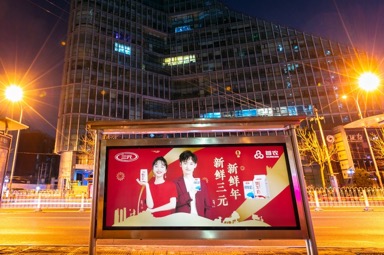
Is the advertising effect on bus bodies good? Data reveals 3 golden investment rules
2025-12-18Tianci MediaViews:237
Highlights
Do you want to know how to advertise on bus bodies? This article provides a detailed analysis of the entire process of route selection, design specifications, approval procedures, cost-effectiveness, and effectiveness evaluation. Whether you are a local merchant or a national brand, you can find professional guidance. Get the solution now and let your brand flow in the city!
一、 Introduction: Mobile City Business Card - The Unique Value of Bus Body Advertising
In the arteries of urban transportation, buses have become the most unique "mobile landmark" of a city due to their fixed routes, large numbers, and unavoidable visibility. When your brand image is fully covered on a bus, it is no longer a simple advertising carrier, but a brand parade car that shuttles through the streets and alleys, a mobile display hall that delves into community and commercial districts, and a city scenery line that meets millions of citizens every day.
Unlike static outdoor billboards, bus body advertising achieves dual coverage of space and time. A full body bus travels about 200 kilometers per day, passing through commercial areas, residential areas, transportation hubs, schools, and hospitals, and can reach the eye 80000 to 100000 times per day. This high-frequency, wide coverage, and mandatory exposure makes it a powerful tool for brands to establish public awareness, promote new products, or deepen local market penetration.
This article will provide a panoramic analysis of the complete process of bus body advertising from strategy formulation to implementation, helping you avoid common pitfalls and maximize the dissemination value of this classic outdoor media.
二、 Basic understanding: Types and technical specifications of bus body advertisements
Before starting planning, it is necessary to understand the basic form of this medium.
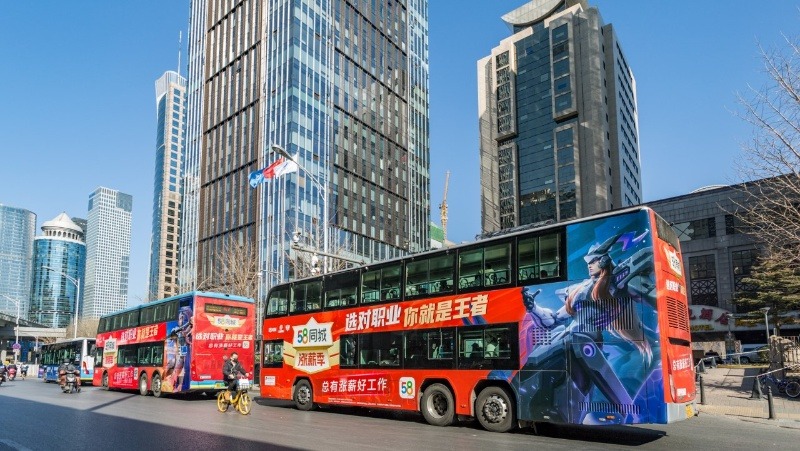
Bus body advertising is mainly achieved by pasting specialized advertising film or painting on the bus body. According to the coverage area, it is mainly divided into:
Full body advertising: Covering all exterior surfaces of the vehicle except for glass and headlights, it has the strongest visual impact and is a symbol of brand strength.
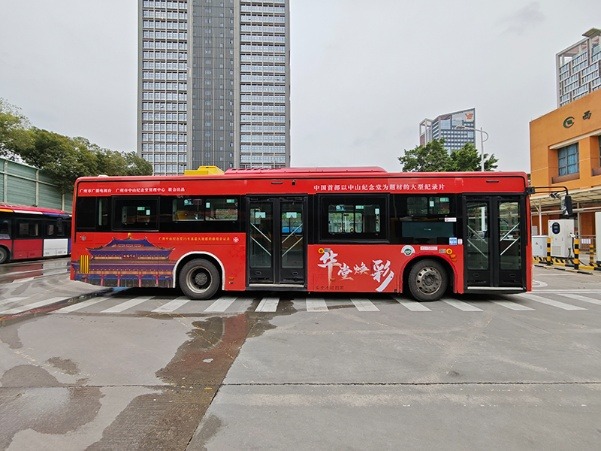
Half body advertising: usually covering the main area of the lower half or side of the vehicle, with high cost-effectiveness and the widest application.
Rear advertising: located at the rear of the vehicle, it has a long-term, close range display effect on the following vehicles.
Brand specific train: Unify the packaging of multiple or all buses along the entire route to form a powerful thematic communication formation.
Key technical parameters:
Material: High strength and weather resistant digital printing film is used to ensure that it will not fade or bubble for 3-6 months under sunlight and rain.
Craftsmanship: Professional typesetting, cutting, and pasting techniques are required to ensure smooth and flawless surfaces on complex vehicle surfaces.
Regulatory requirements: Advertising design must not obstruct car windows, doors, headlights, circuit boards, safety signs, and vehicle numbers, and must ensure driving safety.
Related LSI/long tail keywords: bus advertising price, bus advertising approval, bus advertising design, bus media placement, bus advertising production, bus route advertising, bus advertising effectiveness, bus company cooperation.
三、 Step by step explanation: Six step method for advertising placement on bus bodies
Step 1: Clarify marketing objectives and budget framework
Goal definition: To enhance brand awareness throughout the city? Or is it targeted at specific areas (such as high-tech zones and university towns) for precise promotion? Or to create hype for the launch of new products?
Budget planning: The cost structure mainly includes media release fees (by vehicle/month), advertising image design fees, film production and construction fees, and approval fees. Usually quoted on a monthly basis per vehicle basis, with the highest overall vehicle cost.
Step 2: Core Strategy - Precise Selection of Routes and Vehicles
This is the key to determining the success or failure of advertising effectiveness. Data analysis is required:
Line value assessment:
Passing through: Does it pass through core business districts, transportation hubs, upscale communities, or office parks?
Passenger flow: What is the daily average passenger volume of the route?
Population attributes: Commuting routes (mainly white-collar workers), sightseeing routes (mainly tourists), and campus routes (mainly teachers and students) each have their own emphasis.
Number of Vehicles and Scheduling: How many vehicles will be deployed? Is it concentrated on one golden route or scattered across several complementary routes? It is usually recommended to deploy at least 5-10 vehicles to form a basic visual formation and coverage network.
Placement period: At least 3 months, preferably 6-12 months, to ensure that citizens form repeated memories.
Step 3: Design advertising visuals that conform to the characteristics of mobile carriers
Buses are fast-moving and their design principles are completely different from static media:
Super symbolization: The brand logo, product image, and core slogan must be extremely prominent, concise, and easily recognizable.
Large color block contrast: Use high contrast color combinations to ensure visibility even when moving quickly or from a distance.
Extremely concise information: a car only takes a few seconds to drive by. Do not display phone numbers, complex addresses, or excessive text in the main visual area of the screen. The core information should not exceed 10 words.
Utilizing the body structure: Cleverly designing to combine advertising elements with body structures such as doors and wheels, adding fun and memorable points.
Unity and Change: If multiple vehicles are deployed, the core visual unity should be maintained, but series changes can be made in the secondary visual area.
Step 4: Complete the necessary approval and licensing processes
In China, buses are considered public resources, and advertising placement requires strict approval
Main qualifications: Advertisers and advertising companies need to have legal business qualifications.
Urban management approval: Submit an application to the urban management department where the bus operating company is located to obtain the Outdoor Advertising Setting Permit.
Registration with the transportation department: The design scheme needs to be registered with the transportation management department to ensure compliance with road traffic safety requirements.
Content review: The content of the advertisement screen must comply with the Advertising Law and social order and good customs. The entire process requires 15-30 working days to be reserved.
Step 5: High standard execution of painting and quality monitoring
Choose a professional construction party: Experienced teams must work at night or within the vehicle maintenance base, using professional tools and techniques.
Strict acceptance: Check whether the film is flat and free of bubbles, whether the splicing is accurate, whether the color is accurate, and whether it covers any safety signs.
Shooting archive: Take multi angle shots of the vehicle that has been completed as proof of execution.
Step 6: Dynamic Monitoring and Effect Evaluation
Physical monitoring: Regularly check whether the screen is damaged or faded, and arrange maintenance in a timely manner.
Effect tracking:
Exposure evaluation: Estimate the total number of exposures based on the route mileage, daily frequency, and pedestrian flow in the passing areas.
Brand research: Brand awareness street interviews can be conducted in the target area before and after the launch.
Online linkage: Add social media topics or brand exclusive QR codes (extremely concise) on the advertising screen to track online interaction data.
Sales correlation: For brands with regional stores, compare the changes in customer flow and sales data of the target regional stores during the advertising period.
四、 Five Common Misconceptions and Avoiding Pitfalls Guide
Misconception 1: Only talking about price, ignoring the extreme importance of line quality.
The same price, when placed on routes that run through the suburbs and routes that run through the city center CBD, the effect is vastly different. It is necessary to conduct in-depth research on the "gold content" of each route, rather than just comparing the unit price of each vehicle.
Misconception 2: Blindly copying graphic design can lead to ineffective dissemination due to information overload.
Move the detailed official website homepage or product brochure onto the vehicle body. In dynamic reading, all details will blur into a blur. Specialized native design must be carried out for mobile media, following the "5-second principle" (core information can be understood within 5 seconds).
Misconception 3: Underestimating approval complexity and time cycle can disrupt the overall marketing rhythm.
I plan to have an event next month, but I only started applying this month. However, the approval has not been approved yet, and I missed the schedule. Approval must be made a core part of the project and initiated at least one and a half months in advance.
Misconception 4: Short term trial investment makes it difficult to form effective memory.
Only invest for one month to 'test the waters'. Bus advertisements require continuous and repeated exposure to enter the minds of citizens. Short term advertising is like a dragonfly skimming the water, and the budget is basically wasted. The recommended starting period is 3 months.
Misconception 5: Isolated advertising and lack of integrated marketing response.
If you place a car advertisement, everything will be fine. Buses should be regarded as a huge entry point for offline traffic, and the hashtag # Capture XX Brand Bus # should be launched on social media simultaneously. Advertising vehicle photo spots should be set up in offline stores, and promotional activities should be carried out in passing commercial districts to form an integrated communication effect.
五、Conclusion
Bus body advertising is a comprehensive study that combines spatial art, urban transportation, and popular psychology. It not only provides a huge billboard, but also a valuable opportunity to showcase the brand's long-term, legal, and high-frequency presence in urban public spaces.