Guide to Airport Billboard Placement: From Selection to Effect Evaluation
2025-12-29Tianci MediaViews:243
Highlights
Deeply analyze the types, core values, and entire advertising process of airport billboards. The characteristics of media resources covering core hubs such as Capital Airport and Daxing Airport help advertisers accurately reach high-end business and travel audiences. Read now to obtain authoritative advertising strategies and pricing evaluation guidelines.
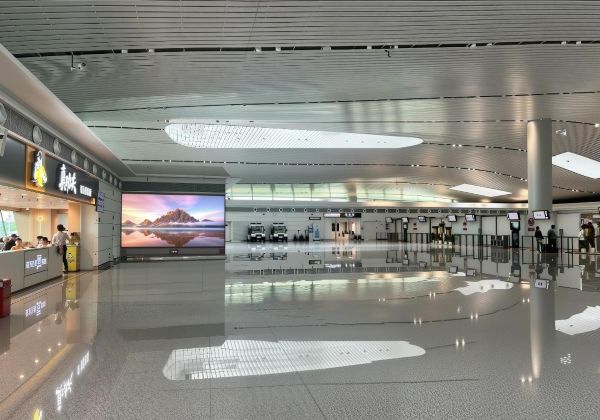
When passengers step into the airport lobby, a silent brand competition has already begun. From the check-in counter to the boarding corridor, from the baggage claim area to the VIP lounge, airport billboards are like silent lighthouses, continuously conveying the brand's high-end, trust, and quality on the route that passengers must pass through. This is not just a simple 'outdoor advertisement', but a scarce scenario of closed and deep communication targeting specific high-value groups.
If you are considering enhancing your brand image or promoting high-end products through airport billboards, this article will provide you with a complete roadmap from cognition to decision-making. We will delve into its unique value, mainstream forms, and investment strategies, and use Capital Airport and Daxing Airport as examples to help you make wise investments.
一、Why choose airport billboards? Understand its irreplaceable core values
The value of airport billboards is rooted in their unique audience and setting. Its core advantages lie in:
The audience quality is extremely high: Airport passengers are mainly business people, middle and high-income travelers, and outbound tourists, with high consumption ability, high education, and high decision-making power. They are the ideal target audience for industries such as finance, automotive, luxury goods, technology, high-end tourism, and real estate.
Forced exposure in a closed environment: Passengers have a lot of fragmented waiting time during check-in, security check, waiting, and arrival processes. In this relatively closed environment with less information interference, the reach rate and attention concentration of advertisements are much higher than those of open streets.
Shaping a high-end brand image: Brands that can be displayed in international aviation hubs are endowed with a strong, international, and trustworthy "halo effect", which is an important part of brand building.
Accurate scenario marketing: Advertisements in different locations can be deeply integrated with the real-time needs of travelers. For example, duty-free shop advertisements on international arrival channels, hotel service advertisements at baggage turntables, and travel app download advertisements next to boarding gates all have doubled effectiveness due to their high level of contextual relevance.
二、 What are the main types of airport billboards?
Understanding the specific form of advertising space is the first step in precise placement. The following are common types of billboards in airports:
Category 1: Departure Area Advertising (reaching passengers preparing to depart)
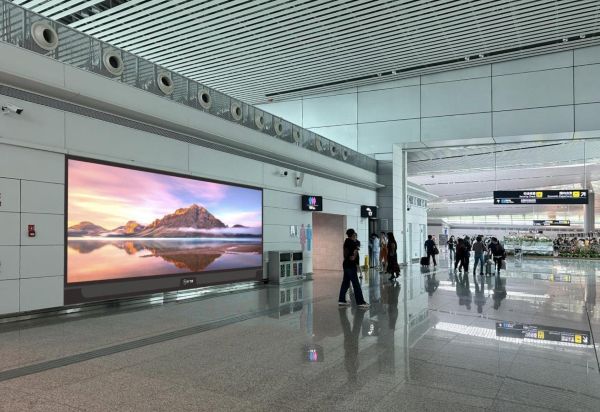
Large lightbox/LED screen in check-in hall: located at the starting point of pedestrian flow, with strong visual impact, suitable for brand image advertising.
Advertisements before and after the security check area: When passengers queue up for security checks, their attention is focused, making it a golden location for deep information transmission.
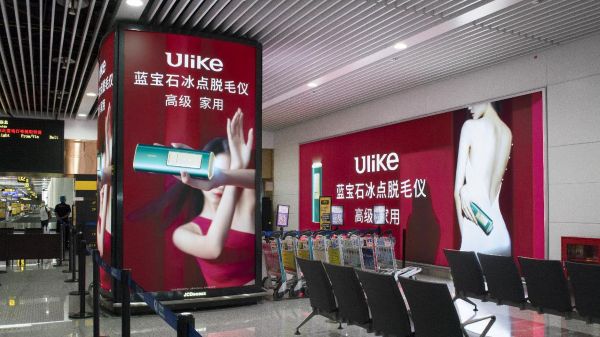
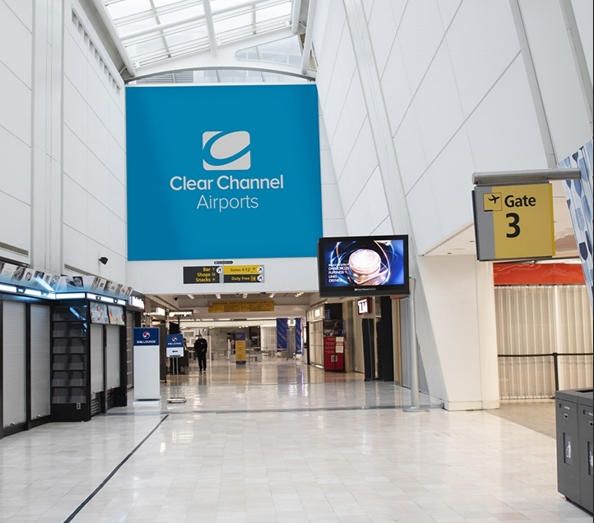
Waiting area (boarding gate) advertising: Passengers stay for the longest time (usually more than 30 minutes), and various types of advertisements can be set up, including static light boxes, digital screens, and even experiential interactive devices.
Category 2: Arrival area advertising (reaching newly arrived passengers)
Langqiao advertisement: The first thing you see when the airplane door is opened is a welcome message or a preferred choice for local services such as transportation and hotels.
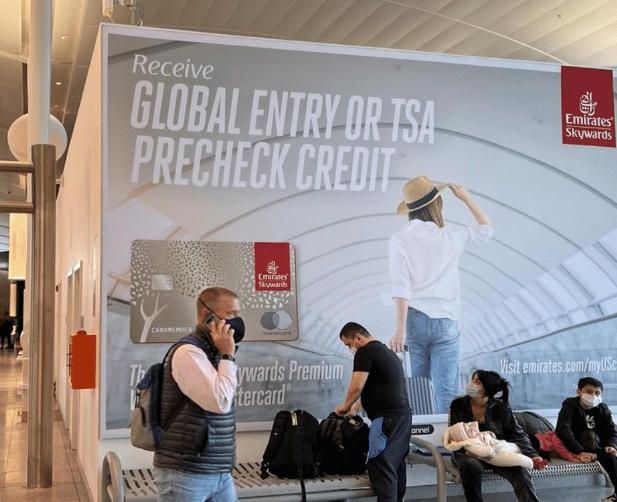
Luggage retrieval turntable advertisement: Passengers wait for their luggage at a fixed location, with a long exposure time, suitable for local life services, car rental and other advertisements.
International Arrival Channel Duty Free Shop Advertisement: Targeting travelers with clear shopping intentions, it is a must win spot for luxury goods, cosmetics, tobacco and alcohol brands.
Category 3: Advertising in Channels and Supporting Areas
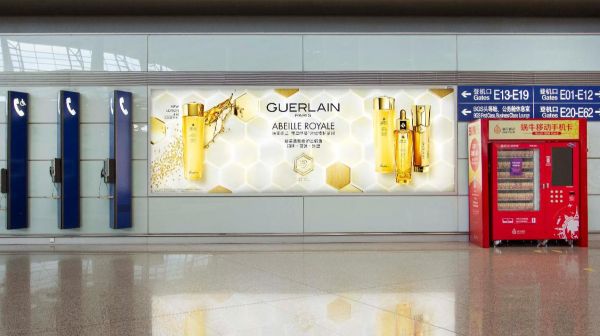
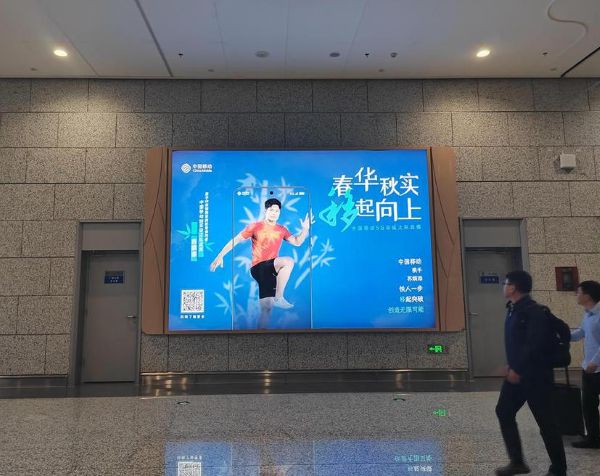
Advertisements on both sides of the escalator and wall connected advertisements on the walkway corridor: forming a coherent visual corridor, suitable for telling brand stories or displaying a series of products.
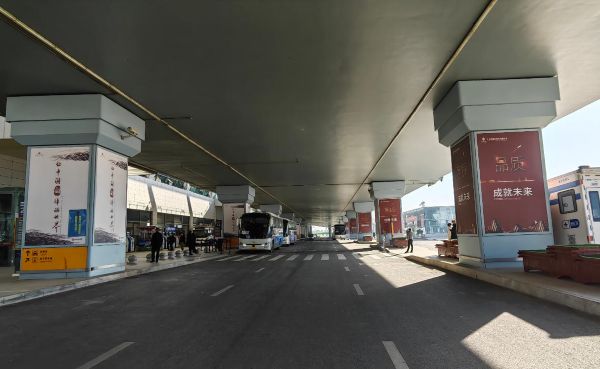
Airport dedicated lines (such as airport express tracks) station and carriage advertisements: covering the entire journey from the city to the airport, for example, the Daxing Airport express track is an independent high-quality media scene.
VIP lounge advertising: reaching the highest end business customer group, with a private and exquisite environment, and the advertising form should also match its tone.
三、 How to plan a successful airport billboard placement?
Blindly purchasing locations will inevitably lead to waste. Please follow the following systematic steps:
Step 1: Clarify marketing objectives
Are you pursuing brand awareness, product promotion, or directing traffic to offline stores? The goal determines all subsequent strategies.
Step 2: Select the target airport and terminal building
Hub type vs. regional type: International hubs such as Capital International Airport, Daxing Airport, and Shanghai Pudong Airport cover global routes, suitable for international brands; Regional key airports are more suitable for local strong brands.
Route analysis: Study the main route composition of the airport (international/domestic, business/tourism) to ensure it matches your target customer group.
Considerations for new and old airports: For example, as a newly built mega hub, Daxing Airport has new hardware facilities, richer digital media resources, and more innovative advertising possibilities in spatial design.
Step 3: Select specific advertising spaces and formats
Research on pedestrian flow: Identify key nodes that passengers must pass through and stay for a long time.
Perspective and Size: Evaluate the visual distance, angle, and size of advertising spaces to ensure that creative content is clear and readable within a specific distance.
Combining static and digital: Considering budget, static lightboxes for long-term brand image can be combined with digital screens for short-term promotional activities.
Step 4: Creative Design: Tailored for the "Airport Scene"
Information minimalism: Passengers are in a hurry, and advertisements must convey core information within 3 seconds. A big brand logo, a one sentence proposition, and a QR code are golden combinations.
Related scenarios: It is best for creative content to be related to the emotions of airports, travel, and arrival/departure, triggering emotional resonance.
Visual supremacy: Use high-definition and high-quality visual materials to maintain the brand's high-end tone.
Step 5: Budget Negotiation and Contract Execution
Airport advertising resources are usually represented by several large media companies. It is necessary to understand the publication price, package discounts, and advertising cycle (usually in weeks/months), and strive to obtain actual data on foot traffic as support.
Step 6: Effect evaluation and tracking
Establish evaluation indicators, such as customized QR codes, exclusive discount codes, and brand search index comparisons before and after advertising, to measure the effectiveness of advertising.
四、 Common misconceptions and pitfalls in advertising airport billboards
Misconception 1: Only focus on the total passenger flow without considering the composition of passengers
An airport primarily focused on low-cost airlines and tourist charter flights may have a value of tens of millions of passengers, which is completely different from an airport primarily focused on business travelers with millions of passengers.
Misconception 2: Creativity is not adapted to the local environment
Directly proportionally scaling up the design of urban bus advertisements for airports often appears crude and outdated. The aesthetic and precision requirements for airport advertising are higher.
Misconception 3: Neglecting the continuity of advertising
In the information overload environment of airports, short-term and scattered exposures are easily overwhelmed. It usually takes a certain advertising period (such as at least 1-3 months) to establish effective awareness.
Misconception 4: Lack of effectiveness tracking design
After advertising, judge whether it is useful based solely on feeling. It is necessary to design quantifiable tracking methods before advertising, even if it is just monitoring the traffic growth from specific cities on the official website during that period.
五、 Conclusion: Airport billboards - strategic high ground for brand journey
In summary, airport billboards are a strategic medium for brands to engage in centralized and in-depth communication with high-end consumer groups. It is not just a "brand", but also a systematic integrated marketing project, involving every link from airport selection, location matching, scenario based creativity to effect tracking.
For advertisers who are determined to enhance their brand image, aviation hubs represented by Capital Airport and Daxing Airport are undoubtedly top-level stages for verifying brand strength and reaching elite customer groups.