Airport advertising space analysis: the core battlefield for marketing high net worth individuals
2025-12-26Tianci MediaViews:360
Highlights
This article provides an in-depth analysis of the types, values, and placement strategies of airport advertising spaces, covering cases such as Capital Airport and Daxing Airport. Whether you are a brand owner or a marketing novice, you can master how to use this high-end scene to achieve precise exposure. Read now and upgrade your brand marketing strategy!
When passengers cross the airport's corridor bridge and step into the spacious and bright terminal building, a silent brand battle has already begun. From check-in counters to boarding gates, from baggage claim areas to VIP lounges, every corner could be a valuable airport advertising space. For brands, this is not just a place to showcase their logos, but also an excellent venue for deep communication with the most influential high net worth individuals. This article will thoroughly unravel the secrets of airport advertising spaces for you.
一、Redefine: What is an airport advertising space?
Airport advertising space refers to the general term for all forms of advertising media set up within the scope of civil airports, utilizing their physical space and passenger flow. Its core attribute lies in its "scene specificity" - a unique environment that combines closure, waiting, high-end travel, and specific moods (such as business, travel, and returning home).
Compared to regular outdoor advertising, airport advertising spaces have three irreplaceable features:
The audience quality is extremely high: covering people with strong purchasing power and decision-making power such as business travelers and high-income tourists.
Long contact time and focus: Passengers have a relatively long mandatory stay time during check-in, security check, waiting and other processes, and their attention is relatively focused.
The combination of global and regional: it is not only a window for international brands to showcase their global image, but also a gateway for local brands to radiate high-end markets in the region.
Taking Beijing's two major aviation hubs as an example, Capital International Airport, as the most important and busiest international airport in China, has advertising spaces that serve as the high ground for brand building national and even international level images; As a newly built world-class aviation hub, Daxing Airport provides brands with a more technological and interactive immersive advertising experience with its modern facilities and design.

二、 In depth analysis: The main types and application scenarios of airport advertising spaces
Understanding the specific form of advertising space is the first step in effective advertising placement. Airport advertising space is a systematic media network that can be mainly divided into the following categories:
(1) Departure area advertising space: the "golden zone" for establishing first impressions
This is an area where passengers have a relatively relaxed mindset and spend a long time staying.
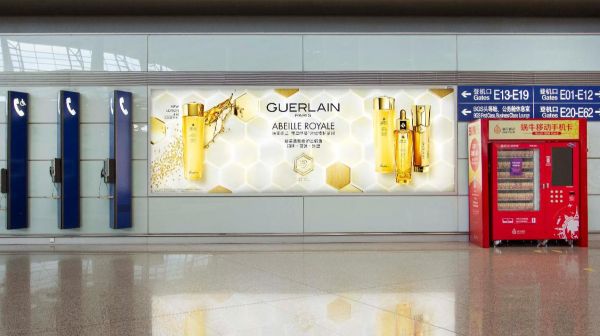
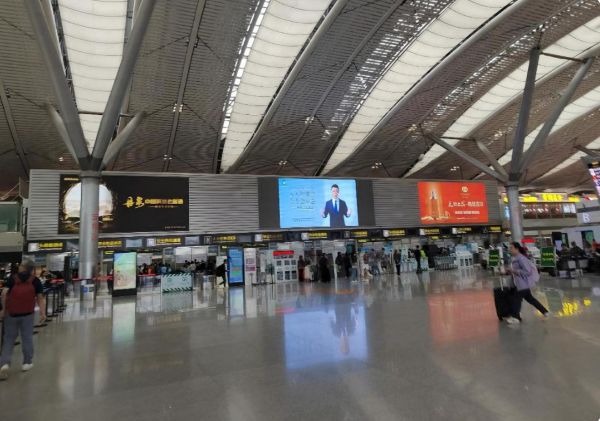
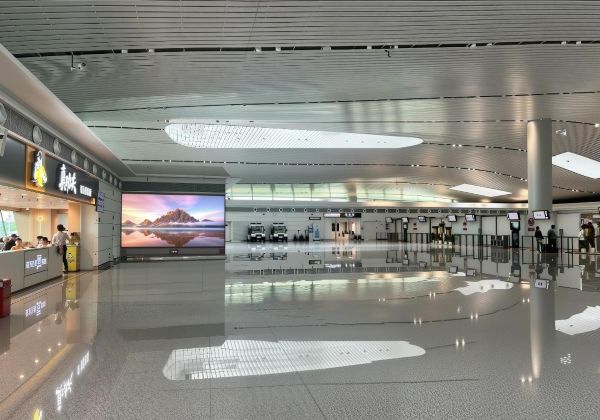
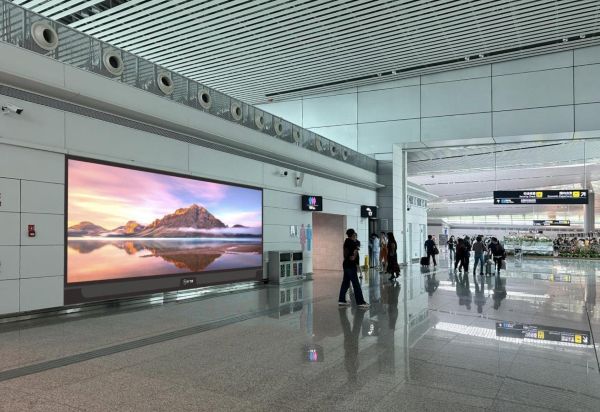
Check in hall advertising: including large LED screens, brand pillars, counter film, etc. This is the first level of building a strong visual impact for a brand, suitable for showcasing the brand's grand image.
Advertisements before and after the security check area: When passengers queue up for security check, the capture rate of advertisements on the wall or digital screen facing the field of view is extremely high. Suitable for conveying concise and core brand information.
(2) Advertising space in the waiting area and commercial area: the "core battlefield" for deep communication
The quarantine area that passengers enter after completing security checks is the best scene for brands to conduct in-depth exposure and interaction.
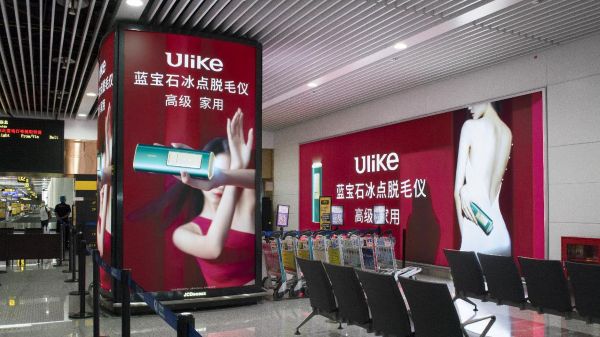
Boarding Gate Bridge Advertisement: Passengers have a definite advantage in waiting for a long time at the boarding gate, and advertisements on both sides or top of the bridge have an absolute attention monopoly.
Commercial district advertising: Utilizing the flow of people in dining and shopping areas, setting up light boxes, digital interactive screens, etc. For example, setting up art installation advertisements in the unique "C-pillar" area or commercial atrium of Daxing Airport can trigger photo dissemination.
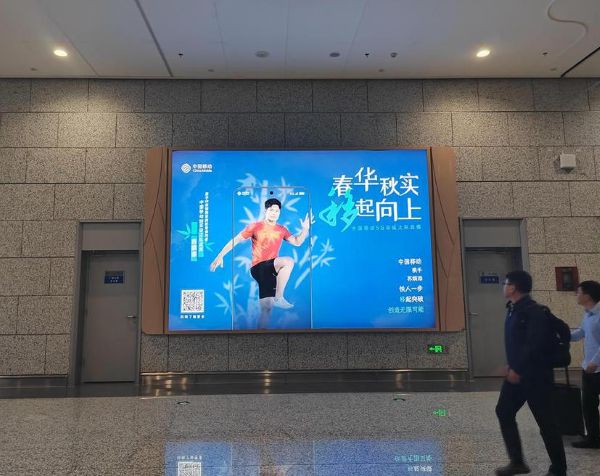
Corridor and escalator advertising: a necessary path connecting various areas, through continuous wall stickers or escalator side stickers, can tell a complete brand story.
(3) Arrival area advertising space: completing the "warm touch point" of stepping towards the door
After arriving, passengers relax both physically and mentally, and have a strong demand for local service information.
Luggage retrieval carousel advertisement: The lightboxes or surrounding LED screens on the carousel are the inevitable focus of travelers' attention, especially suitable for local high-end services (such as hotels, real estate, automobiles), financial or travel goods brands.
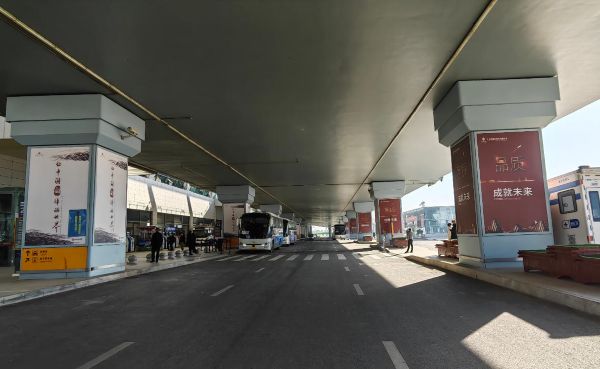
Arrival hall advertisement: The airport pick-up crowd and arriving passengers are mixed, with a huge flow of people. Large scale brand image advertisements or local welcome advertisements have significant effects.
(4) Special and Digital Advertising Spaces: The 'Future Battlefield' for Innovative Experiences
The LED giant screen on the exterior of the terminal building, such as the T3 terminal building of Capital International Airport, is a landmark level advertising media in the city, with influence radiating to the surrounding area of the airport and takeoff and landing flights.
Luggage trolley advertisement: With the mobile media accompanying passengers throughout the journey, the touchpoints are extremely deep.
AR interactive experience and Wi Fi landing page advertising: Through technological means, passengers can achieve online and offline interactive guidance by connecting to airport Wi Fi or scanning specific points with their mobile phones.
三、Core advantage: Why must airport advertising space be considered?
Choosing airport advertising space is essentially choosing a high-quality audience filter and brand endorsement.
Advantage 1: Accurately reaching high-value customer groups.
Airports naturally select the "three highs" population of high-income, high education, and high consumption ability in society. Whether it is business elites or leisure travelers, their purchasing power and influence are far higher than those of ordinary mass media audiences.
Advantage 2: Creating a high-end brand image.
Appearing in the international and modern scene of the airport itself is a strong endorsement of the brand's strength and level. It sends a strong signal that 'this is an international and trustworthy high-end brand'.
Advantage 3: Achieve deep immersive exposure.
Passengers have longer periods of boredom in the airport environment and are more receptive to high-quality advertising content. Brands can use coherent media combinations to create a complete brand story journey from check-in to boarding, leaving a deep impression on the audience.
Advantage 4: Online and offline linkage hub.
Through QR codes, mini programs, AR interactions, and other methods, airport advertising can easily guide offline traffic to the brand's online platforms (official website, e-commerce, social media), achieve traffic conversion and user data accumulation, and form a marketing loop.

四、 Common Misconceptions and Avoiding Pits Guide
When it comes to airport advertising for the first time, it is easy to fall into the following misconceptions:
Misconception 1: Only focus on foot traffic, without considering the quality and flow of passengers.
Not all crowded areas are good locations. It is necessary to analyze the composition (international/domestic? Arrival/departure?) and status (rushing or leisurely waiting) of the audience at this point. For example, international arrival channels are more suitable for luxury goods and duty-free items; Domestic waiting areas are more suitable for financial and technology products.
Misconception 2: Creative design is a one size fits all approach that ignores the uniqueness of the scene.
Directly transferring the creative ideas of subway advertisements to airports often yields poor results. The visual design of airport advertising needs to be more international, concise, atmospheric, and textured. The copy should also conform to the aesthetic and contextual preferences of high-end audiences, avoiding being too noisy and straightforward.
Misconception 3: Abandoning the idea that advertising costs are too high.
There is indeed a threshold for airport advertising space, but its long-term brand asset accumulation value and precise value in reaching the target audience should be measured. For brands with highly matched target audiences, their return on investment may far exceed some widely spread online advertisements. Consider starting with a core area (such as a key boarding gate bridge) or a single media format to test the waters.
Misconception 4: Ignoring media composition and data evaluation.
The effectiveness of a single advertising space is limited. A media mix plan should be planned to form an exposure network that covers the passenger flow. At the same time, prior to advertising, it is necessary to communicate with the media to obtain basic data such as past customer traffic and demographic profiles; After advertising, the effectiveness is evaluated by monitoring changes in online topic volume, search index, or interactive QR code scanning data.
五、 Conclusion and Call to Action
In summary, airport advertising space is a scarce resource at the top of the brand marketing pyramid. It is not a simple display board, but a strategic channel for deep and immersive communication with global high net worth individuals in specific high-end scenarios. Whether it is the capital airport with a long history and prestigious status, or the modern technology and first-class experience of Daxing Airport, they provide an irreplaceable display stage for brands.
For advertisers who aim to enhance their brand height, accurately explore high-end markets, or create phenomenal brand events, systematic research and layout of airport advertising spaces should become an indispensable part of their marketing strategy.