Analysis of Airport Advertising Placement Strategy: A Complete Plan from Goal Setting to Effect Evaluation
2025-12-30Tianci MediaViews:133
Highlights
This article provides a complete practical guide for airport advertising placement, covering the entire process of target setting, airport selection (including comparison between Capital Airport and Daxing Airport), media forms, creative strategies, and effectiveness evaluation. Help enterprises efficiently reach high-end business travelers and enhance brand value. Get professional advertising solutions now!
Imagine a top-level space that handles an average of hundreds of thousands of visitors per day, gathers business elites, travelers, and high spending consumers. Here, your brand advertisement can have multiple deep contacts with target customers within a day, lasting for several hours. This is the unique charm inherent in airport advertising placement - it is not just an advertisement, but also a display of brand strength and a dialogue with high-end scenes.
For first-time business owners or marketers, airport advertising seems high-end and full of unknowns. How to start? How to choose? What is the budget? This article will break down the fog for you and provide a systematic guide from strategic planning to implementation. Even if you are a novice, you can establish a clear and feasible cognitive framework.
一、 Why choose airport advertising? Understand its three irreplaceable values
Before planning for advertising placement, it is important to understand why airport advertising is worth investing in.
Value 1: Accurately reaching high net worth individuals
The portrait of airport passengers is clear: high-income, highly educated, and willing to spend business travelers and quality travelers. They are the coveted target audience for industries such as finance, automotive, technology, luxury goods, high-end tourism, and real estate.
Value 2: Mandatory Deep Exposure in Closed Scenarios
Passengers have a significant amount of fragmented waiting time (usually exceeding 1 hour) during check-in, security check, waiting, and arrival processes. In this relatively enclosed and less disruptive environment, the reach rate, gaze duration, and memory depth of advertisements are much higher than those in outdoor open spaces.
Value 3: Powerful empowerment of high-end brand image
Being able to conduct long-term and large-scale exhibitions at international aviation hubs is a strong endorsement of brand strength, international vision, and excellent quality. This' halo effect 'can significantly enhance brand value.

二、 Five step operational process for airport advertising placement
By following these steps, you can confidently plan and execute a professional airport advertising campaign.
Step 1: Clarify goals and budget
This is the starting point for all decisions. Ask yourself:
Marketing objective: Is it to enhance national brand awareness or promote a high-end new product? Or to attract traffic to specific airline destinations?
Target audience: Which cities do your clients often fly to? Is it international or domestic? Is it for business travel or vacation?
Budget Scope: What is the preliminary annual or project budget? This will directly determine the level, scale, and form of airport deployment.
Step 2: Select the target airport and terminal building
The choice of airport determines the breadth of coverage and the accuracy of the crowd.
International hub vs. regional trunk lines: such as Capital International Airport, Daxing Airport, Shanghai Pudong Airport, etc., covering a global network and suitable for international brands; Regional key airports (such as Chengdu Tianfu and Shenzhen Bao'an) are suitable for deepening regional markets or matching specific routes.
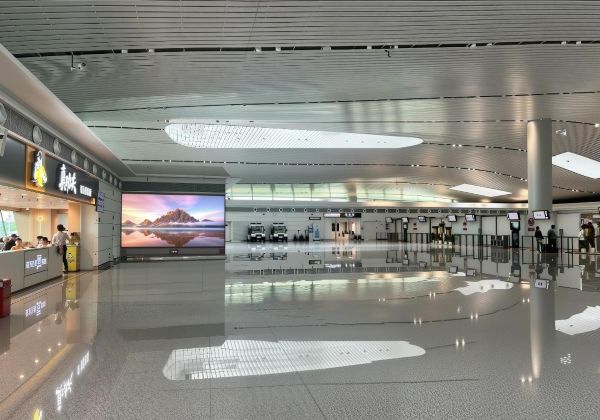
New and old airport strategy: Taking Beijing as an example, the capital airport has a long history and a mature international route network; As a newly built mega hub, Daxing Airport has modern hardware facilities, abundant digital media resources, and more innovative spatial design. The two groups have slightly different demographics and media characteristics, and can be combined for selection.
Terminal analysis: Different terminals are often dominated by different airlines, and their passenger composition (such as international/domestic, full-service/low-cost airlines) varies, requiring targeted selection.
Step 3: Filter specific advertising formats and locations
Airports are a three-dimensional advertising world that reaches passengers with different attitudes from different locations.
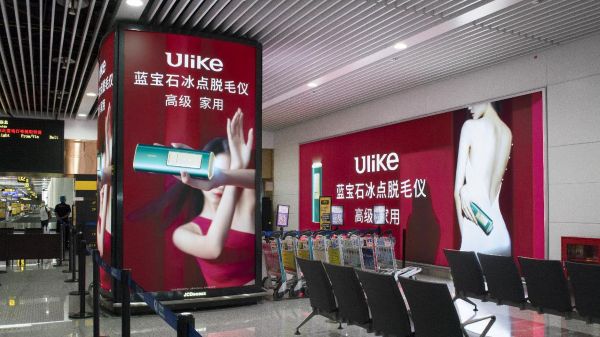
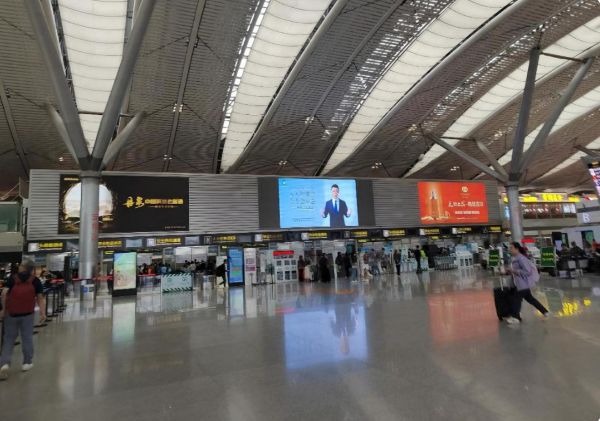
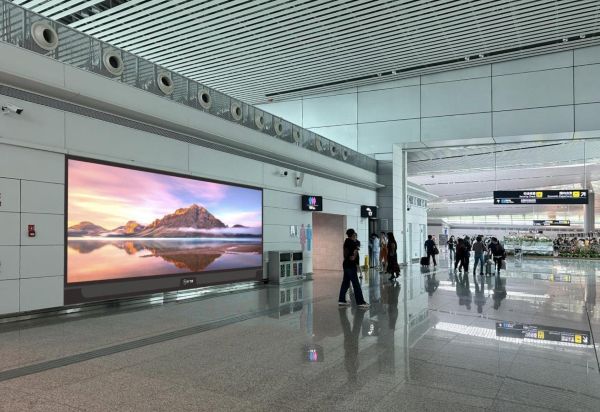
Departure process advertisement: big name signs in check-in hall (brand image), front and back of security check area (in-depth reading), boarding gate in waiting area (long stay).
Arrival process advertisement: Covered bridge (first impression), baggage claim carousel (local service demand), international arrival channel (duty-free shopping).
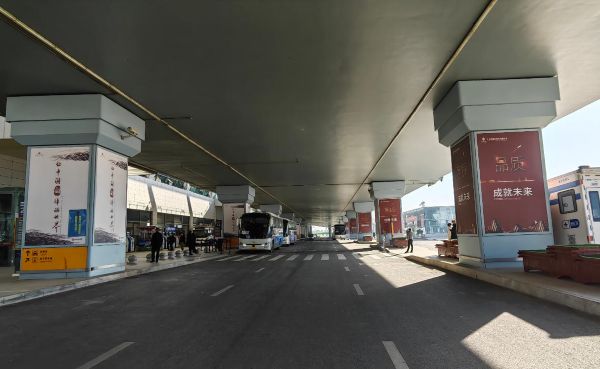
Channel and traffic advertising: both sides of escalators, pedestrian walkways (visual coherence), airport rapid transit stations and carriages (such as Daxing Airport rapid transit).
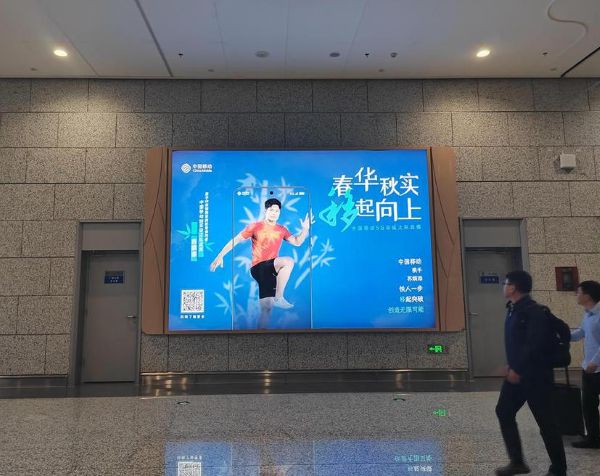
Form selection: static lightbox (classic), digital LED screen (dynamic), intelligent interactive device (experiential). Choose based on budget and creative content.
Step 4: Creative Design and Content Production
The creativity of airport advertising must be born for the scene.
Information minimalism: Following the "3-second principle", brand identity, core propositions, and key information (such as QR codes) must be clear at a glance.
Design high-end: Visual materials must be high-definition and exquisite, and the design style must conform to the high-end brand tone.
Scene association: It is best for creativity to be associated with airport emotional keywords such as "departure", "arrival", "journey", "exploration", etc., to resonate.
Step 5: Execution, Monitoring, and Effectiveness Evaluation
Choosing partners: Airport advertising resources are usually represented by professional media companies (such as DeGao, Yashiwei, etc.) or 4A advertising companies. Inquire, negotiate, and sign contracts through them.
Effect tracking: Set measurable indicators, such as using exclusive discount codes, customizing QR codes, monitoring changes in brand search index during advertising, or specific website traffic growth.
三、 Three common misconceptions in airport advertising placement
Misconception 1: Only focus on the total number of passenger traffic, without considering the quality and flow of passengers
An airport primarily focused on low-cost airlines and tourist charter flights may have a value of tens of millions of passengers, which is far less than an airport with millions of passengers but mainly business travelers. At the same time, it is necessary to choose "effective points" that passengers must pass through and will stop at, rather than simply pursuing a large area.
Misconception 2: Creative design is not adapted to the local environment
Directly applying the design of subway or bus advertisements to airports often appears crude and outdated. Airports are an environment that values aesthetics and quality, and the design, materials, and craftsmanship of advertisements need to be upgraded.
Misconception 3: Short term trial and lack of sustainability
The core value of airport advertising lies in high-frequency repeated exposure to establish brand awareness. A single month or short-term launch is like sinking into the sea, making it difficult to leave an impression in the minds of travelers. It is usually recommended to plan at least quarterly or semi annually.

四、Conclusion: Turn the airport into your brand's home ground
Airport advertising placement is a systematic integrated communication project that tests a brand's understanding of high-end audiences, grasp of scenario marketing, and determination to build a long-term brand. It is no longer the patent of large enterprises, and more and more emerging brands are successfully entering the high-end market through precise airport media combinations.
From setting clear goals to selecting specific hubs such as Beijing Capital International Airport or Daxing International Airport, to creative presentation and effect tracking, every step is crucial.