Revealing the pricing of airport advertising: How to achieve a 500,000-yuan effect with a 50,000-yuan budget?
2025-12-25Tianci MediaViews:260
Highlights
Do you want to know the real price of airport advertising? This guide provides an in-depth analysis of the advertising price composition, pricing factors, and negotiation strategies of hubs such as Capital Airport and Daxing Airport, helping you accurately plan your budget and obtain cost-effective exposure. Read now for professional quotation analysis!
When brand owners turn their attention to high-end offline scenes, airports are undoubtedly the jewel in the crown. However, when faced with "airport advertising quotes" ranging from tens of thousands to millions during inquiries, many novice marketers feel both eager and confused: why is the price difference so huge? Is my budget really enough? What are the unknown rules behind this quotation? This article will systematically break down the composition logic of airport advertising quotations, helping you transform from a "passive seeker" to an "active strategic buyer" and wisely allocate every advertising budget.
一、Why are airport advertising quotes so 'complicated'? Understand the essence of quotation
Firstly, it is necessary to establish a core understanding that there is no unified "price list" for airport advertising. The "quotation" you have obtained is a dynamic business result that comprehensively reflects the value of advertising resources, supply and demand relationships, procurement strategies, and negotiation capabilities.
This is similar to buying a plane ticket, first class, economy class, advance purchase or last-minute purchase, with vastly different prices. The same applies to airport advertising resources, whose pricing depends on:
The value of the resource itself (cabin space): the flow of people in the area where the point is located, the quality of the audience, and the duration of exposure.
Market supply and demand (flight popularity): peak season (such as holidays, air shows) vs. off-season.
Procurement methods (ticketing strategy): long-term contract, short-term investment, bundled procurement, and surplus resource procurement.
Understanding this is a prerequisite for rational analysis of all quotations.

二、 In depth analysis: Six core dimensions that affect airport advertising pricing
The first dimension: airport hierarchy and location value
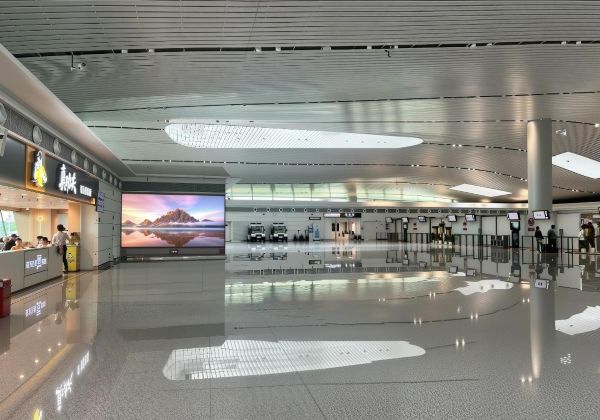
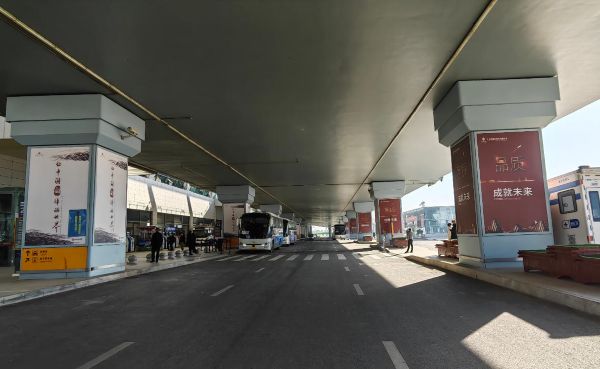
This is the primary factor determining the price baseline. Chinese airports are roughly divided into international hubs, regional hubs, and regional airports. As dual international hubs, Capital International Airport and Daxing Airport gather the highest net worth international business travelers, and their core areas naturally rank at the top of the pyramid in terms of pricing. Within the same airport, the pricing system strictly follows the "flow path": international departure/arrival area>domestic departure/arrival area>waiting hall>baggage claim area>corridor.
Second dimension: Forms and specifications of advertising media
The production cost, technological content, and display effect of different media are directly related to the quotation.
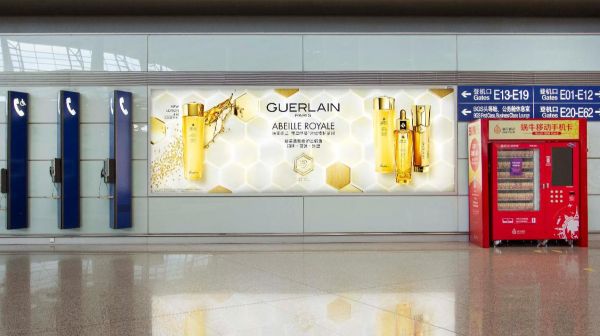
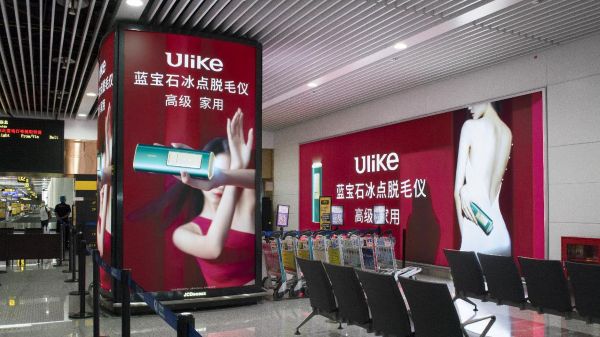
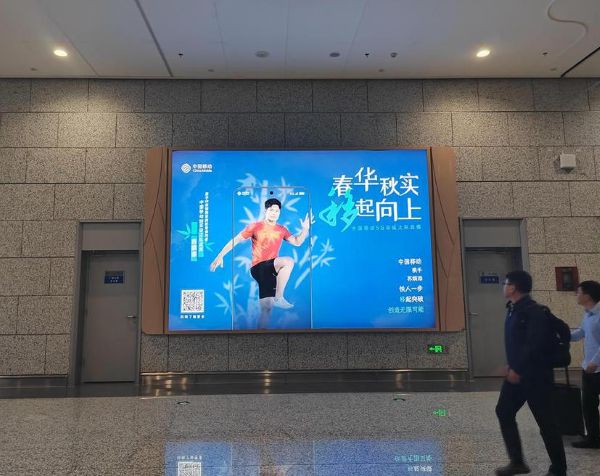
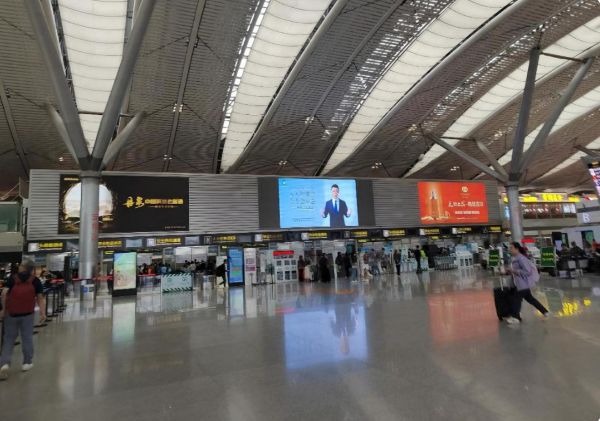
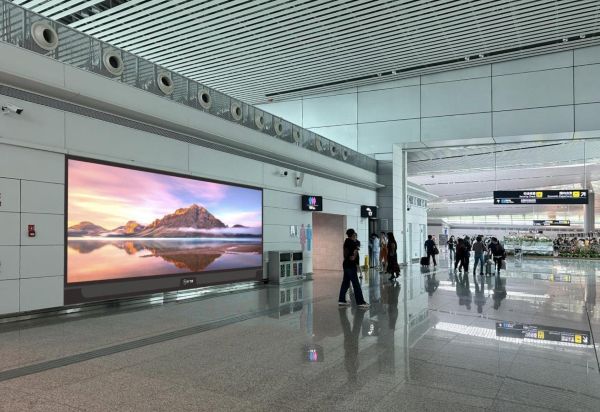
Large lightbox/digital screen: located in the core flow line, with strong visual impact and the highest unit price.
Langfang Bridge Advertisement: Surrounding passengers up close, mandatory viewing, second in value.
Luggage trolley advertisement: mobile touchpoints, wide coverage, usually priced according to fleet size.
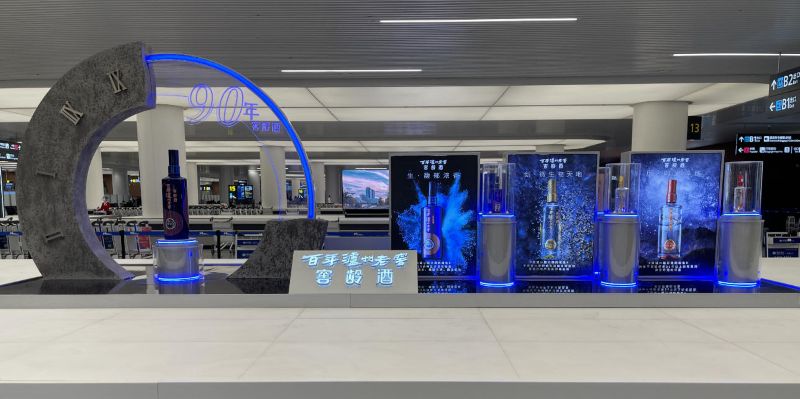
Check in Island/Boarding Pass Advertisement: Precise outreach with direct action prompts, suitable for specific promotions.
Exclusive advertisement for high-end VIP lounge: targeting ultra-high net worth individuals, with the highest premium.
Third dimension: advertising cycle and exclusivity
The phrase 'time is money' is vividly reflected here. The quotation is usually calculated on a weekly/monthly/quarterly/annual basis. Long term contracts can receive significant discounts. In addition, category exclusivity (such as being the only car brand) will increase costs, but greatly enhance communication effectiveness.
Fourth dimension: Production, installation, and maintenance costs
The quotation is usually divided into "media release fee" and "production and installation fee". The latter involves graphic design, material production, manual installation, and daily maintenance, which may be a fixed expense that cannot be ignored, especially in airports such as Daxing Airport that have modern designs and strict aesthetic requirements for installation.
Fifth dimension: Procurement timing and negotiation space
Advertising vacancies are a form of 'perishable inventory'. At the end of the quarter, year-end, or before the gap period, media agents may release more competitive prices to meet targets or reduce vacancies. Your bargaining chips, such as budget size, brand influence, and long-term cooperation intention, directly affect the final transaction price.
Sixth dimension: Agency hierarchy and service fees
Are you purchasing directly from the airport media, or through primary or secondary agents? Each additional intermediate step may result in additional service fee markups. Finding reliable and authoritative partners is crucial.
三、 Practical Steps: Five Step Process for Obtaining and Analyzing Airport Advertising Quotations
Step 1: Clarify goals and self-assessment
Before inquiring, please clarify internally whether the core KPI of this launch is brand image enhancement or promotional diversion? Is the target audience international travelers or domestic business travelers? What is the budget range? Clear goals are the only yardstick for evaluating the reasonableness of quotations.
Step 2: Preliminary research and site selection
Filter airports and regions based on objectives. For example, focusing on international luxury goods, particular attention should be paid to the T3 international departure restricted area at the Capital Airport; For the South China business market, the domestic business class channel of Daxing Airport can be studied. List 3-5 potential point combinations.
Step 3: Initiate inquiries with multiple legitimate agents
Prepare a brief brief (brand introduction, goals, intended locations, advertising cycle) and initiate inquiries with 2-3 authoritative media agencies. Request them to provide a plan that includes detailed point maps, pedestrian traffic data, historical cases, and itemized quotations (media fees, production fees, taxes).
Step 4: Key Question Inquiry and Comparative Analysis
After receiving the quotation, be sure to ask:
Does the quotation include tax and production and installation fees
What is the proportion of target audience (such as business travelers) in human traffic data
Are there any competing products being simultaneously launched in this area
What are the discounts for long-term cooperation or packaging of other locations
Compare the unit costs of various schemes horizontally (such as CPM, exposure cost per thousand people), rather than just looking at the total price.
Step 5: Strategic Negotiation and Final Confirmation
Based on analysis, choose 1-2 companies for in-depth negotiations. Possible strategies include: using budget size to negotiate discounts, exchanging off peak hours for discounts, or promising future collaborations to lower the threshold for first-time entry. Finally, all terms (publication time, screen specifications, maintenance responsibilities) will be included in the contract.
四、 Common quotation traps and misconceptions warning
Trap 1: Ask only the total price, not the composition.
A vague 'package price' may conceal unreasonable profits. Be sure to request itemized quotations and have a clear understanding of where each sum of money is spent.
Trap 2: Blindly pursuing the "lowest price".
Quotations far below market levels may correspond to problematic locations (such as exaggerated foot traffic data, outdated equipment, remote locations) or informal agents, which pose execution risks.
Trap 3: Ignoring 'hidden costs'.
Such as electricity capacity expansion fees, special construction management fees, and post construction image replacement fees. In places with strict operations such as the capital airport, these fees may suddenly appear.
Misconception 4: Measuring B-end value with C-end thinking.
I think 'a screen costing tens of thousands a day is too expensive'. It needs to be converted into CPM (Cost Per Thousand High Net Worth Travelers) and compared with the costs of other high-end media, often revealing its cost-effectiveness.
五、 Conclusion: Making quotations serve strategy rather than limiting imagination
Airport advertising pricing is not a simple arithmetic problem, but a set of resource matching questions related to brand strategy. Its significance lies not in being "expensive" or "cheap", but in being "worth" or "not worth it".
A professional quotation should clearly demonstrate how it effectively reaches your target audience and supports the achievement of your business goals. As a brand owner, your task is not to become a bargaining expert, but to become a value judgment expert.
Call to Action: Now, please re-examine your marketing plan.
Value Audit: Has your brand reached a stage where it needs to leverage airport momentum to achieve a leap forward?
Accurate planning: Based on the six dimensions of this article, preliminarily define your target airport (such as Capital Airport or Daxing Airport), media format, and budget range.
Professional link: Get in touch with and accumulate reliable media agency resources, and request them to provide customized value solutions based on your brief, rather than a simple quotation.
Investing in airport advertising is essentially investing in the height and future of the brand. A clear quotation is your first reliable map to this future. Now, it's time to set off for exploration.