Reach high-end travelers with precision! Unveiling the true cost and value of trolley advertisements at Beijing Capital Airport
2025-12-24Tianci MediaViews:224
Highlights
Are you wondering how much budget you need to invest in trolley advertisements at Beijing Capital Airport? This article provides a detailed cost analysis, deployment process, and effectiveness evaluation for 2025. It delves into the advantages of trolley advertisements, with costs ranging from tens of thousands to hundreds of thousands, helping you precisely reach high-end business travelers. Get your personalized plan now and embark on efficient airport marketing!
一、 Introduction: The overlooked golden moving point - airport handcart
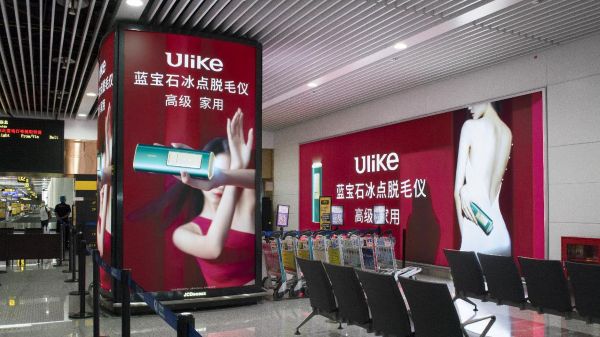
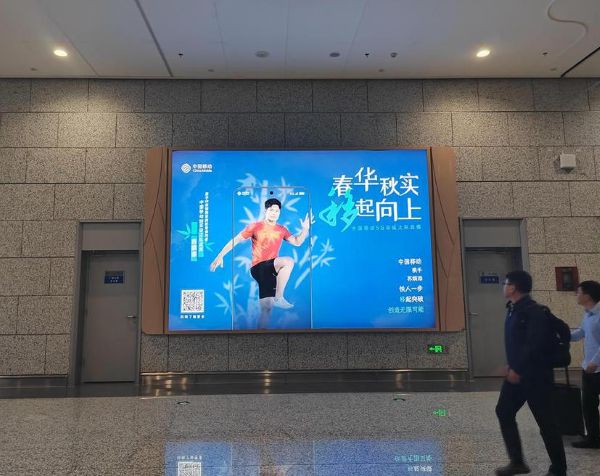
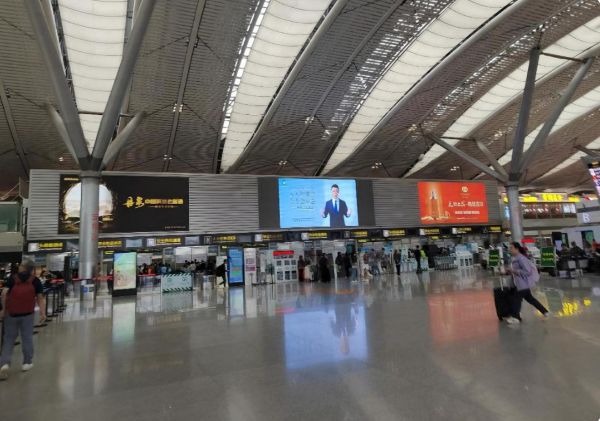
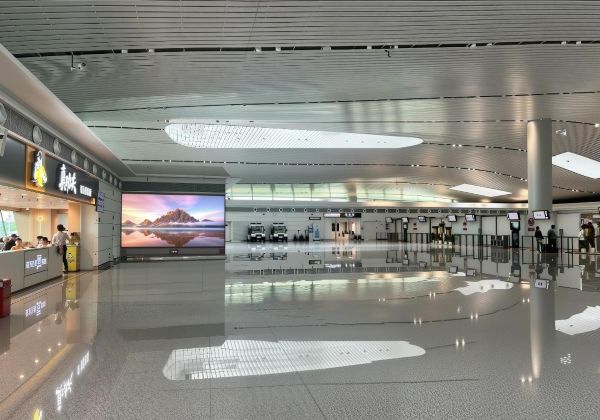
When brand owners plan airport advertisements, their attention often focuses on LED screens, corridor lightboxes, or luggage turntables. However, a high-quality medium that provides "zero distance contact" with passengers and accompanies their key routes is often underestimated - the Capital Airport trolley advertisement.
Imagine: a business traveler or traveling family, from arriving at the terminal to checking in and waiting for a break, for more than 30 minutes to several hours, a handcart is their indispensable assistant. Your brand information is actively pushed through core areas such as departure halls, check-in islands, and security check areas, achieving ultra long and immersive forced exposure. For brands that want to accurately influence high net worth individuals, the primary question is: how much does the advertising for the Capital Airport handcart cost? This article will break down the cost structure, investment value, and practical steps of the system.

二、 Analysis of Cost Depth: The Four Core Dimensions that Affect Prices
The advertising for the Capital Airport handcart is not simply priced based on "one car per day", its cost is a package based on the overall campaign. The reference range for the market in 2025 is usually tens of thousands to hundreds of thousands of RMB per cycle (such as monthly/quarterly). The specific cost is determined by the following factors:
(1) Scope and scale of advertising
This is the main variable of cost. The Capital International Airport has three major terminals, T1, T2, and T3, covering international, domestic, Hong Kong, Macao, and Taiwan flights.
Single terminal deployment: For example, only select T3 terminal where international passengers are concentrated.
Multi terminal/full network coverage: Covering T2, T3 or all terminals, maximizing passenger flow coverage, and doubling costs accordingly.
(2) Advertising Form and Production
Basic car sticker advertisement: Paste flat advertising stickers at designated positions on the body of the handcart. This is the most common form and the production cost is relatively low.
Special forms of advertising: for example, customized brand handcarts (fully packaged), placing interactive screens or physical display racks in the car basket, etc. These forms of creativity are outstanding, but the production and maintenance costs have significantly increased.
(3) Placement cycle and exclusivity
Cycle length: usually measured in months, quarters, half a year, or a whole year. Long term contracts can offer more favorable unit prices.
Category exclusivity: During the contract period, the airport undertakes not to simultaneously advertise similar products to your direct competitors. Exclusive rights are an important clause to ensure the effectiveness of communication and will also be reflected in the price.
(4) Agency service and planning fee
Like most outdoor media, brands typically procure through authorized advertising agencies. The agency fee covers services such as media planning, design review, publication monitoring, and effectiveness reporting, generally accounting for 10% -20% of the total budget.
三、 Advantages of Handcart Advertising: Why is it a cost-effective choice?
After clarifying the cost, its value must be evaluated. Compared to other airport media, handcart advertising has the following irreplaceable advantages:
Long contact time and forced exposure: The average time that passengers use a handcart exceeds the time they spend watching a static lightbox. Advertising information accompanies the entire process, and the depth of contact is unparalleled.
Accurate targeting of high-end audiences: The annual passenger flow at the Capital Airport exceeds one billion, with strong spending power among business travelers, tour groups, and family tourists. Handcart users are the core group of people who need to carry luggage.
Mobile visual focus: In the bustling airport environment, the mobile advertising body itself can attract attention. A neat and uniform convoy forms a flowing visual matrix with strong impact.
Natural scene correlation: suitable for brands strongly related to travel, shopping, and leisure such as suitcases, credit cards, duty-free goods, destination tourism, and high-end consumer goods, with intuitive conversion paths.
四、 Five step standard advertising process
Step 1: Clear requirements and budget framework
Clarify the objectives of this advertising campaign (brand exposure, new product promotion, or promotional traffic?), and preliminarily determine the budget range, expected terminal buildings, and duration of advertising.
Step 2: Scheme consultation and comparison
Contact 2-3 first tier agency companies with official resources of the Capital Airport. After providing the requirements, obtain a preliminary plan that includes media scheduling, advertising format, total price details, and estimated effectiveness.
Step 3: Creative Design and Review
Design advertising visuals based on the technical parameters provided by the agency, including size, material, and visual requirements. The screen should be concise and the theme should be prominent to ensure quick recognition while moving. Submit to relevant airport departments for content review.
Step 4: Contract signing and publication
After confirming the plan, sign the formal contract and make the payment. The agency arranges the production and completion of advertising on all agreed handcarts.
Step 5: Monitoring and Effect Evaluation
During the advertising period, the agency should provide regular photos of publication and broadcast monitoring as proof of execution. After the advertising is completed, a basic effect report based on customer flow data, such as reaching out to people, can be obtained.

五、 Common Misconceptions and Risk Avoidance
Misconception 1: Only comparing prices, ignoring the authenticity of resources
It is necessary to verify whether the agency company has formal authorization for the advertising of the Capital Airport handcart. Low prices may mean informal resources or reduced coverage.
Misconception 2: Creative information overload
Handcarts are mobile media, and passengers' gaze stays are fragmented. The screen must adhere to the "3-second principle": the brand logo, core slogan, and QR code (if any) must be clear at a glance, and avoid piling up text.
Misconception 3: Neglecting the continuity of advertising
Short term (such as two weeks) deployment is difficult to form effective memory in the complex airport environment. It is recommended to initiate at least on a monthly basis to create sustained visual penetration.
Misconception 4: Failure to integrate online linkage
Handcart advertising can serve as an offline traffic entry point. QR codes or easy to remember social media topics should be utilized reasonably to guide passengers to participate in online platforms for interaction and achieve O2O closed-loop.
六、 Conclusion: Transforming budget into efficient investment for engagement
In summary, the cost of advertising on trolleys at the Capital Airport is a precise investment targeting high-quality, high net worth mobile populations. Its value lies not in the cheapness of a single exposure, but in the depth of contact, the fit of the scene, and the precision of the audience.
For brands seeking to break through conventions and achieve close communication with target customers, handcart advertising provides a highly cost-effective strategic choice.
Now is the time to put the plan into action:
Internal inventory: Sort out your brand positioning and airport marketing goals.
Get data: Contact us to obtain the latest passenger flow data and detailed introduction of handcart media for each terminal of Capital International Airport.
Free customized quotation: Submit your preliminary requirements and we will tailor a "Capital Airport Handcart Advertising Placement Plan" that includes competitor analysis, effect estimation, and accurate quotation.
Take immediate action to connect your brand with every traveler at the hub of the world.