Airport advertising screen placement strategy: complete steps and effectiveness evaluation from scratch
2025-12-19Tianci MediaViews:249
Highlights
Do you want to know the advertising value and practical strategies of airport advertising screens? This guide provides you with a deep analysis of the definition, advantages, full process, and cost-effectiveness of airport advertising, helping you efficiently reach high-end travel audiences and enhance brand influence. Read now and develop your airport media marketing plan!
In the era of information explosion, advertisers are constantly seeking golden media that can precisely reach target audiences and leave a deep impression. Airports, as hubs connecting the world, gather business elites, high-net-worth individuals, and leisure travelers, forming a natural high-end consumption scene. And airport advertising screens are the core window that lights up this scene and engages in a silent dialogue with potential customers. This guide will systematically deconstruct airport advertising screens for you, providing actionable insights whether you are a marketing novice or a practitioner seeking deeper understanding.
一、What exactly is an airport advertising screen? It's more than just "a screen in the airport"
In simple terms, airport advertising screens refer to all electronic or static print advertising display terminals set up within the airport area. However, their connotation goes far beyond that; they are a systematic and scenario-based marketing solution.
1. Main types and point location analysis
Understanding different types of advertising screens and their locations is the first step in planning and launching an advertising campaign.
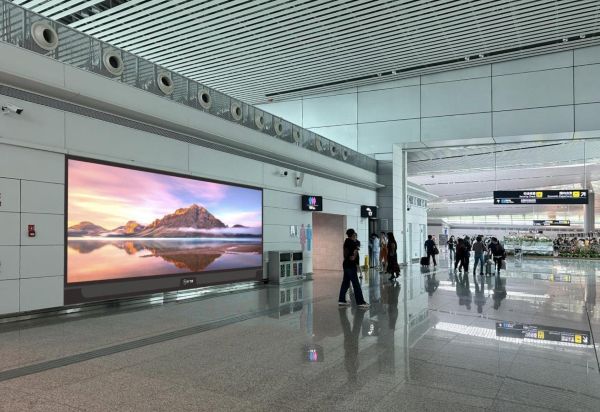
2. Check-in hall/departure hall large screen
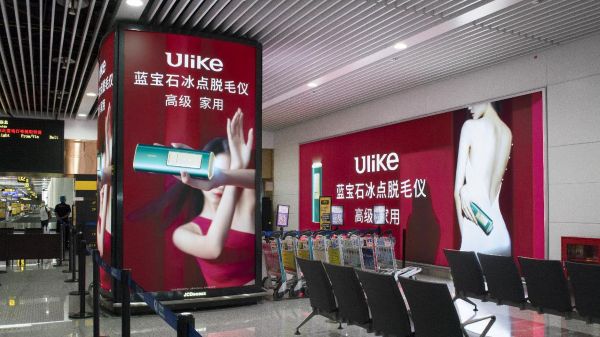
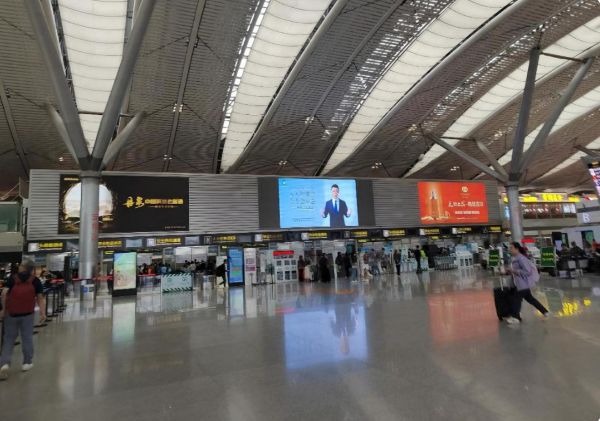
Features: Large area, strong visual impact. Passengers handle their procedures here and stay for a relatively long time, with a more relaxed mindset.
Application: Brand image advertising, high-end automobiles, finance and insurance, destination tourism promotion.
3. Screen between security check area and border inspection area
Characteristics: A must-visit place for tourists, with a high concentration of people. The environment is relatively serious, requiring focused attention.
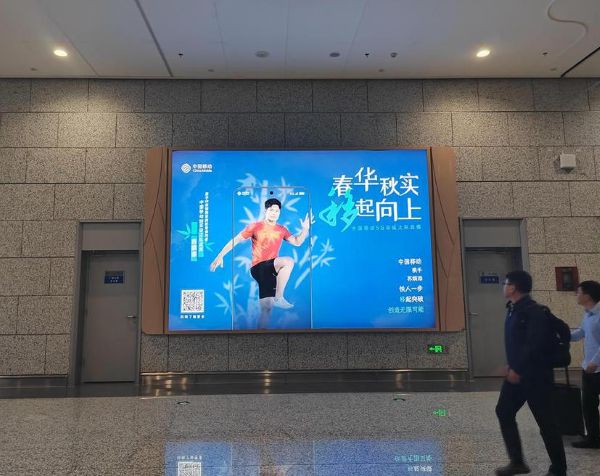
Application: Concise and powerful brand logos or core product advertisements that can form a strong memory point at this moment.
4. Waiting area/boarding bridge screen
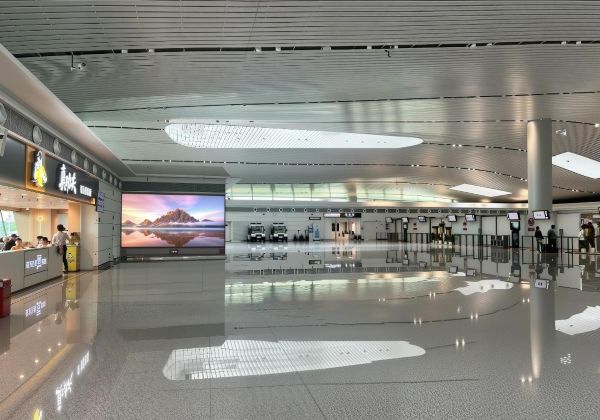
Characteristics: Passengers spend the longest duration of time (sometimes up to several hours) here, enjoying a relatively relaxed environment and a high willingness to receive information.
Application: Product advertisements with richer content, APP downloads, long narrative brand stories, and pre-purchasing of duty-free goods.
5. Baggage claim hall screen
Features: As the first touchpoint for travelers upon arrival, it is filled with anticipation and a sense of relaxation. Advertising is associated with moods such as "arrival", "beginning", and "enjoyment".
Application: Local services (hotels, car rental, high-end dining), luxury goods, and welcome advertisements.
6. Corridor/Escalator/Trolley Screen
Features: Accompanying passenger movement, it can achieve high-frequency and repetitive exposure.
Application: Fast-moving consumer goods, e-commerce promotions, and short-term event previews.
7. Core audience portrait: Who are you talking to?
The high value of airport advertising screens stems from their irreplaceable audience quality.
High income and high consumption ability: Air travelers generally possess strong economic strength.
High educational qualifications and decision-making power: Primarily comprising business professionals, enterprise managers, and experts, they are key influencers in B2B and high-end B2C decision-making.
State of Focus: Compared to the fragmented online environment, passengers in the airport scenario are less disturbed and have a higher penetration rate of advertising information.
International perspective: Especially in international hub airports, the audience is global, making it suitable for international brand communication.
二、Five-step practical guide: How to plan and execute a successful airport advertising screen deployment
1. Step 1: Clarify goals and budget
The starting point of any marketing campaign. Ask yourself:
Brand exposure or promotion and traffic diversion?
Is the goal to enhance brand reputation or product recognition?
What is the budget range? Airport media is usually priced based on the cycle (weekly/monthly/quarterly) and location, and inquiries need to be made in advance.
2. Step 2: Precisely select airports and points
Not all airports are suitable for your brand.
Matching brand tiers: For first-tier brands, the preferred choice is the international hubs of Beijing, Shanghai, Guangzhou, and Shenzhen; for regional brands, core second-tier city airports can be selected.
Analyzing airline route structure: Airports with a predominance of business routes (such as Beijing Capital) are suitable for B2B and finance; airports with a predominance of tourist routes (such as Sanya) are suitable for tourism and duty-free goods.
Point combination strategy: Adopt the combination of "big screen explosion + touch point coverage". For example, create a shock in the departure hall with a big screen, and supplement and repeat the memory in the waiting area and corridor.
3. Step 3: Customizing creative content: born for "scenes"
It is crucial not to directly transplant online advertising materials.
Simplicity is paramount: Passengers must receive core information within 3-5 seconds while on the move. Headlines, strong visuals, and clear brand logos are essential.
Scene association: Creativity can be combined with airport emotions such as "departure", "arrival", "waiting", and "exploration".
Combining static and dynamic elements: Dynamic videos are highly attractive, but static high-definition large images are equally eye-catching in complex environments. Design should be tailored according to the screen format and the surrounding environment.
Technology integration: Consider incorporating QR codes (linking to official website/mini-program/H5 special page), AR interaction, etc., to achieve the conversion of offline to online traffic.
4. Step 4: Execution and monitoring of the upper drawing
Confirm contract details: specify the drawing time, screen specifications, image file format, and quality inspection standards.
Professional material production: Ensure that design files meet the technical requirements of the screen to avoid stretching distortion.
On-site monitoring: During the initial stage of advertising, it is best to conduct on-site monitoring or entrust a third party to monitor the broadcast to ensure the quality of the deployment.
5. Step 5: Effect evaluation and optimization
The effectiveness of airport advertising needs to be measured by combining quantitative and qualitative methods.
Quantitative indicators: Indirect assessment can be conducted through brand search index during the launch period, official website traffic in the airport area, and QR code scanning numbers.
Qualitative evaluation: Conduct audience research to assess changes in advertisement recall rate and brand preference.
Long-term tracking: Brand building is not a short-term accomplishment. It requires evaluating the overall improvement of brand equity after multiple advertising cycles.
三、Common Misconceptions and Tips to Avoid Pitfalls
1. Misconception 1: Focusing solely on foot traffic volume without considering the quality of the crowd
The passenger flow value of Terminal 3 at Beijing Capital Airport and that of a small regional airport differ significantly. The core is to find the airport and region that have the highest degree of matching with the brand's target customers.
2. Misconception 2: Focusing on entertaining oneself while ignoring reading distance and environment
The design logic for a giant screen viewed from 10 meters away is completely different from that for a 10-inch screen viewed from a trolley. It is necessary to consider the average viewing distance, dwell time, and ambient light of passengers.
3. Misconception 3: Pursuing full coverage, with a scattered budget lacking focus
For brands with limited budgets, it is often more effective to focus their budget on securing a prime location in a core airport rather than buying marginal spots in multiple airports, in order to achieve phenomenal exposure.
4. Misconception 4: Ignoring the timing of deployment
During the summer vacation, Spring Festival travel rush, and major holidays, the composition and mindset of airport passengers vary. Business advertisements should avoid the Spring Festival travel rush, while travel advertisements can be primarily placed during the holiday period.
四、Conclusion
Airport advertising screens are the key to gaining control of the "last mile" in consumers' minds for brands. They are not just the leasing of advertising space, but also a deep brand communication based on high-end scenarios. Their value lies not in direct click-through conversions, but in building a high-end brand image, influencing key opinion leaders, and leaving an irreplaceable mark at key points in the consumer journey.