Capital Airport Advertising Placement: How to Efficiently Reach Millions of High end Passengers
2025-12-22Tianci MediaViews:293
Highlights
Capital Airport, airport advertising, outdoor advertising
When your brand needs to engage in dialogue with national image, international perspective, and high-end customer groups, Beijing Capital International Airport is undoubtedly one of the most strategically valuable advertising platforms in the Chinese market. As China's "first gateway", Capital International Airport not only carries passenger traffic, but also symbolizes brand status, demonstrates market confidence, and is the decisive point in high-end marketing campaigns.
However, in the face of such a vast and complex media environment, many marketers who are new to advertising placement at the Capital Airport inevitably feel at a loss: how to choose the location? How to plan the budget? How to ensure the effectiveness? This article will provide you with a system disassembly and a deep operation manual that is ready to learn and use.
一、 Deep Decoding: The Irreplaceability of Capital Airport and Its Advertising Value Core
Before formulating any strategy, it is necessary to deeply understand the unique genes of Capital Airport as a media platform.
(1) Customer Profile: A Natural Filter for High Net Worth Individuals
The annual passenger flow of the Capital Airport exceeds tens of millions of people. Its core value lies not in the absolute vastness of 'quantity', but in the extreme scarcity of 'quality'.
International hub positioning: The proportion of international and regional travelers is significant, and this group of people is the core target of cross-border consumption, luxury goods, high-end services, and B2B business.
Concentrated business flow: Beijing, as a political, economic, and cultural center, attracts business elites from all over the country and even the world, who are representatives of high purchasing power and decision-making influence.
The starting point of high-end tourism: Passengers departing from here generally have higher purchasing power and brand awareness than the average level.
(2) Scene Value: From "Passing Through" to "Immersion"
The average stay time of passengers at the capital airport far exceeds that of ordinary transportation hubs. There are multiple "attention window periods" from check-in, security check, waiting to arrival. Especially in the quarantine area after security check, passengers have a relaxed mindset and ample time to deeply engage with brand information, which elevates advertising communication from simple exposure to deep immersion.
(3) Brand endorsement effect: the authoritative support of "national borders"
Setting up advertisements at the Capital Airport is itself a brand asset. It conveys a strong, robust, and successful brand signal to customers, partners, and capital markets, a psychological level of authoritative trust that other media cannot match.
二、 Six step practical process for advertising placement at Capital Airport
Step 1: Clarify the core objectives and budget framework
This is the starting point for all decisions. Please provide a clear answer:
Brand Goal: To enhance national brand awareness? Is it to strengthen the market leadership position in the Gyeonggi region? Or promoting specific products for international travelers?
Budget range: The advertising cost gradient at Capital Airport is significant. It is necessary to define the budget range in advance (such as 500000, 1 million, 5 million or above), which will directly determine the available media formats and location levels.
Step 2: Analyze the structure of the terminal building and accurately select the area
The Capital International Airport currently operates primarily through T2 and T3 terminals. Choosing the region is more important than choosing the specific form.
Terminal 3: mainly responsible for international and domestic mainline flights, gathering the highest value international and business passenger flows. The departure hall, international waiting corridor (especially Zone E), and baggage claim hall are the golden areas.
T2 Terminal: Mainly for domestic flights, with a large and stable passenger flow, it is a cost-effective choice that covers mainstream domestic business travelers and tourists.
Key line points:
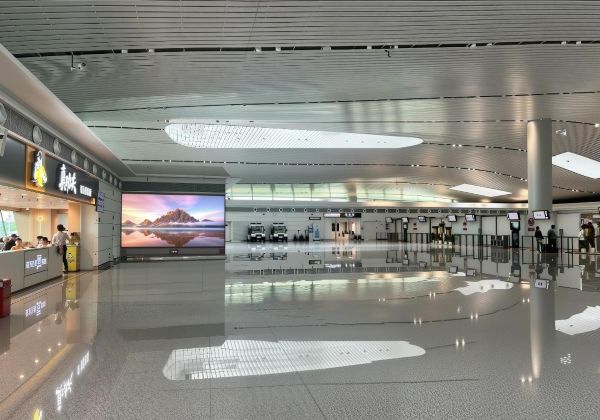
Check in Island/Departure Hall: Brand First Impression Area, suitable for showcasing large brand images (such as giant LEDs, pillars).
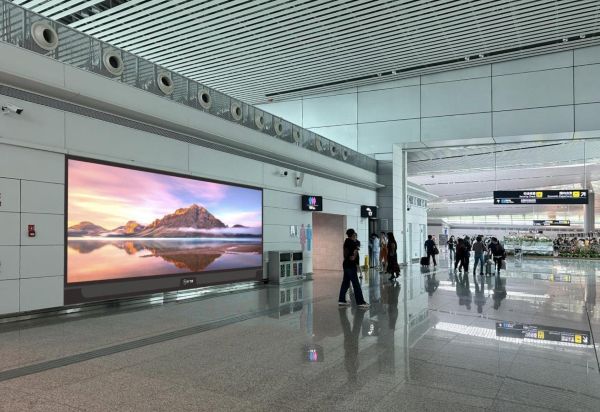
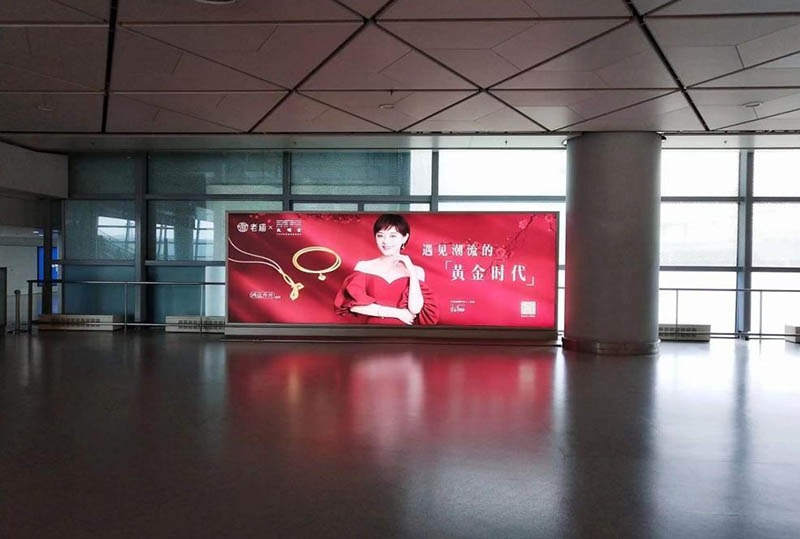
Post security waiting area: the area with the highest value, where passengers' attention is concentrated and media forms are diverse (light boxes, digital screens, experience stores).
Arrival channel/luggage carousel: Capture the "first glance" of arriving passengers, suitable for welcome advertisements such as local services, hotels, car rentals, etc.
Covered Bridge: Mandatory, zero interference exposure in enclosed spaces, with extremely high memory retention.
Step 3: Choose a matching advertising media format
The media ecosystem at Capital Airport is mature, mainly in the following forms:
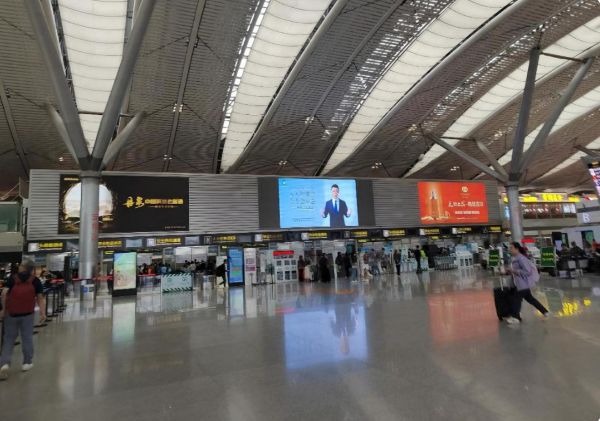
Large LED display screen: located in core areas such as check-in halls, visually stunning, suitable for large-scale brand event releases.
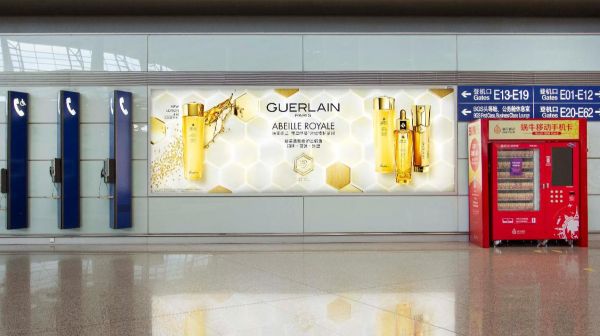
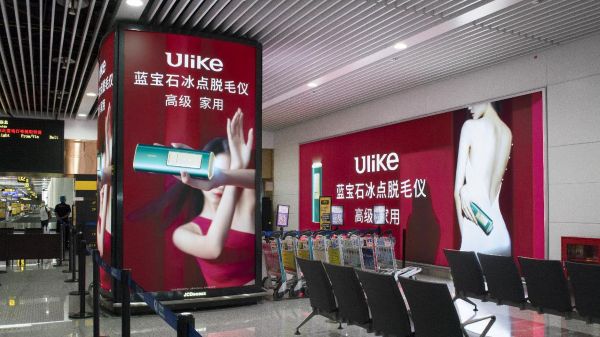
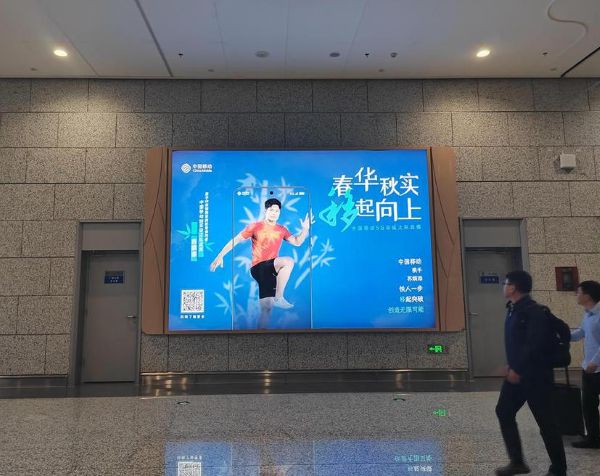
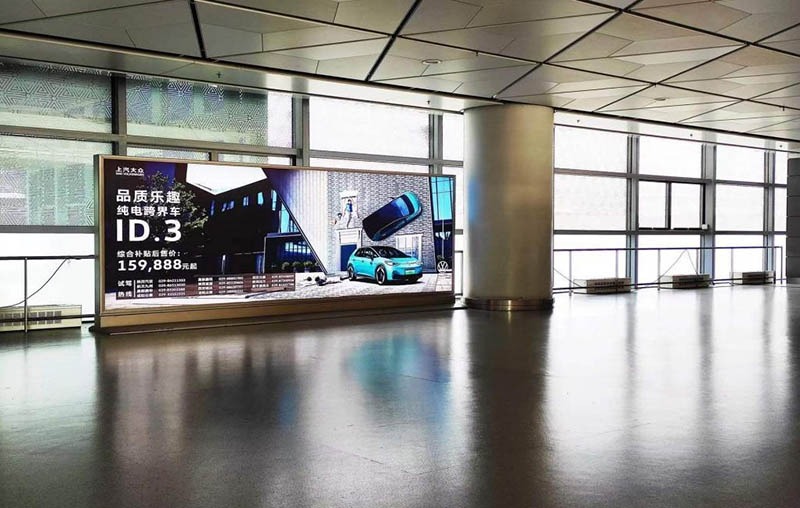
Lightbox advertising (single column, multi column, corridor lightbox): the main media, widely distributed, visually unified, suitable for medium - and long-term brand campaigns.
Digital screen refresh/electronic lightbox: dynamic carousel, flexible content, can display multiple brands or storylines at one location.
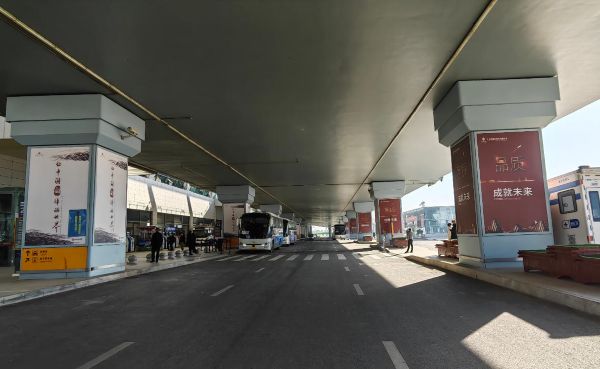
Creative Column/Art Installation: Upgrade the advertisement into a check-in point, highly topical and communicative.
Luggage trolley/seat sticker: low-cost supplementary coverage, achieving close and long-term contact.
Step 4: Engage with media and negotiate cost strategies
The advertising resources of Capital Airport are mainly operated by its professional media companies or exclusive authorized first tier agency companies.
Priority given to official channels: Through the official website or reliable industry databases, find official operating entities such as Capital Airport Media Co., Ltd. for preliminary consultation.
Clear requirements: Communicating with clear goals, budgets, and intended areas can obtain more accurate quotations and solutions.
Understanding pricing logic: Prices are usually calculated based on the "unit price per point multiplied by the publication period". The unit price for international regions, core locations, and super large areas is extremely high. You can inquire if there are any "package combinations" or "off-season discounts" available.
Strive for value appreciation: During negotiations, efforts can be made to extend the publication time, include image installation services, or combine some digital media resources.
Step 5: High standard design and production of creative content
Here, mediocre creativity is a huge waste of media resources.
International level visual quality: The design must be simple, atmospheric, and textured, and the resolution must meet the extreme requirements of large-area printing or display.
The "Three Second Principle": Ensure that core brand information (logo, slogan, main visual) can be clearly identified within 3 seconds of passenger movement.
Situational communication: Cleverly combining travel elements such as "departure", "arrival", "Beijing", "connecting the world", etc., can trigger emotional resonance.
Step 6: Closed loop of publication execution and effect tracking
Strict monitoring process: The contract specifies the publication time, location, technical standards, and arranges for third-party or self verification of the publication.
Multidimensional effect evaluation:
Basic data: Request the estimated daily passenger flow (PV) data provided by the media for this location.
Online linkage: Incorporate exclusive QR codes, Weibo topics, and brand keywords into the screen to monitor changes in relevant search index and social interaction during the advertising period.
Research Assistance: Small scale offline or online questionnaire placement can be conducted for the target audience to understand advertising awareness.
三、 Key Decision Reference: Collaborative Strategy between Capital Airport Advertising and Daxing Airport Advertising
As Beijing enters the era of "one city, two services", advertising at Daxing Airport has become another important option. Strategic comparison is necessary when making decisions:
Capital International Airport (PEK): Mature and authoritative, with an international orientation. The brand image is strong, with a high proportion of international foot traffic and a mature business atmosphere. Suitable for advertisers who have established a certain foundation, pursue stable international communication, or consolidate their top brand position.
Daxing Airport (PKX): Innovative technology, future oriented. The hardware facilities are modern, the domestic airline network is strong, and the media format has a more technological and interactive potential. Suitable for technology brands, new consumer brands, enterprises that want to shape an innovative young image, or focus on covering emerging domestic business and travel customer groups.
For large brands with sufficient budgets, the "dual airport linkage" strategy can be considered: establishing an authoritative image at the Capital Airport, showcasing innovative vitality at Daxing Airport, and achieving seamless full coverage of high-end people entering and leaving Beijing.
四、 Three common misconceptions that beginners must avoid
Misconception 1: Only focus on the total passenger flow, without considering the quality and flow of passengers.
Suggestion for avoiding pitfalls: Conduct in-depth analysis of the most frequently visited terminals, floors, and action routes of the target customers. For example, when it comes to international luxury goods, the value of the T3 international area is much higher than that of the T2 domestic arrival area.
Misconception 2: Pursuing short-term publication and neglecting the sustainability of brand campaigns.
Suggestion for avoiding pitfalls: Airport advertising is a brand building behavior, and short-term exposure (such as one month) is difficult to form effective memory. It is recommended to plan an advertising cycle of at least one quarter (3 months) or conduct high-frequency pulse advertising.
Misconception 3: Creative content is self explanatory and disconnected from airport scenes.
Suggestion for avoiding pitfalls: Avoid putting simple e-commerce promotional posters or lengthy product manuals on airport media. Creativity must undergo a 'scenario based upgrade' to fit the mindset and visual environment of passengers at the airport.
五、 Conclusion and Call to Action
Advertising placement at Capital Airport is a strategic investment. It tests not only the budget strength of the brand, but also the strategic vision of marketing decision-makers, the professional competence of media planning, and the high standards of creative execution.
The key to success lies in deeply coupling brand strategy with the unique attributes of airport media, selecting the best point and form through a scientific process, and conquering passengers' eyes and minds with creativity that transcends mediocrity.