Daxing Airport Advertising Resource Guide: How to Choose the Most Suitable Media Location for You
2025-12-16Tianci MediaViews:228
Highlights
This article provides a comprehensive analysis of advertising resources at Beijing Daxing International Airport, covering advertising forms, placement strategies, budget quotes, and effectiveness evaluations. Whether you are a market novice or a brand owner seeking breakthroughs, you can find practical guides. Read now and embark on your journey of brand enhancement and communication.
In today's era of intense competition for traffic, high-end offline traffic entrances have become the key to brand breakthrough. Beijing Daxing International Airport, as a new driving force for national development and a world-class aviation hub, has long surpassed its mere status as an "outdoor media" in terms of advertising value. It serves as a touchstone for brand image and a super interface connecting high-net-worth individuals worldwide. However, for many market practitioners or start-up brands, "Daxing Airport advertising" seems to be shrouded in mystery: What are the resources? What are the effects? Is the budget unattainable? This guide will help you unravel the complexities and provide a complete solution from cognition to execution.
Chapter 1: Understanding Value - Why Choose Daxing Airport Advertising?
Before discussing "how to do it", we must first understand "why".
1.1 Unparalleled customer flow and quality
Daxing Airport has achieved an annual passenger throughput exceeding tens of millions, and is positioned as an international aviation hub. This means:
Huge and stable traffic: covering high-frequency business travelers, high-end tourism groups, and international visitors.
High audience value: Tourists generally possess high consumption power, decision-making influence, and international vision.
High closure: Passengers are relatively focused during check-in, waiting, arrival, and other scenarios, making advertising reach extremely efficient.
1.2 Top-tier brand endorsement effect
Placing advertisements at Daxing Airport is in itself a declaration of strong brand strength and high-end image. It conveys confidence, scale, and a sense of quality to the market, partners, and consumers, and the psychological recognition value it brings far exceeds the advertisement itself.
1.3 Diverse scene reach
From departure to arrival, the passenger journey covers hundreds of touchpoints, providing a natural platform for integrated marketing communication. Precise information delivery can be tailored to the psychological states of passengers at different stages, such as anticipation before departure, leisure during waiting, and first impressions upon arrival.
Chapter 2: Four Steps to Successfully Launch Advertising at Daxing Airport
Step 1: Resource inventory and selection (analysis of core media forms)
Understanding resources is the foundation of planning. Advertisements at Daxing Airport are mainly divided into the following categories:
1. Digital media (with the loudest voice and strong technological feel)
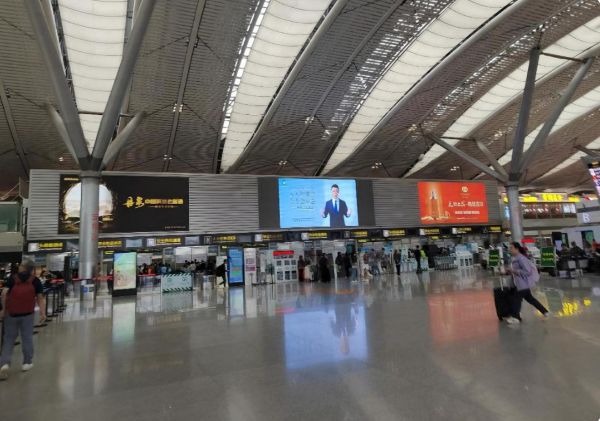
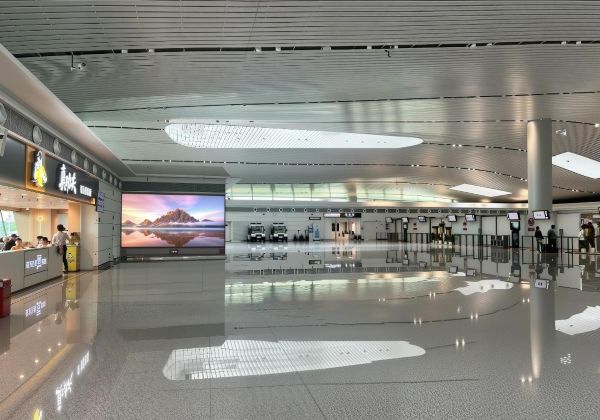
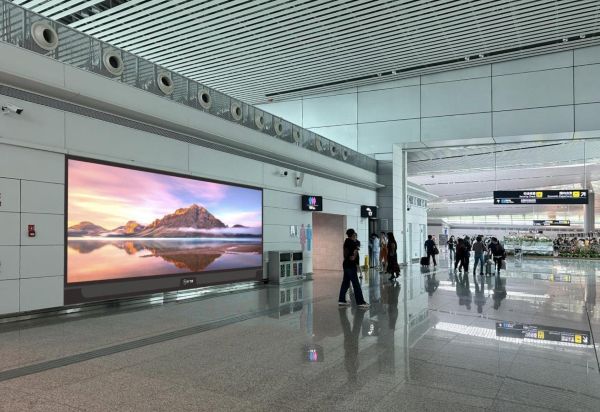
LED ultra-large screen: Located in core areas such as the check-in hall and arrival hall, it exerts an unparalleled visual impact and is ideal for brand image campaigns.
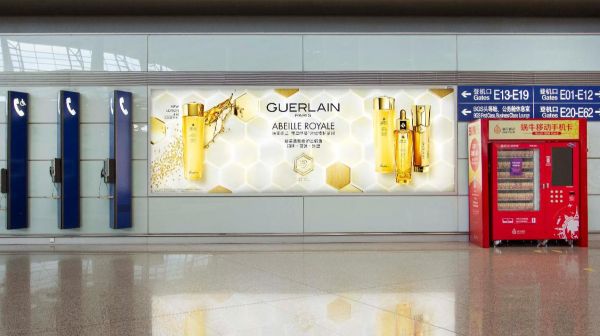
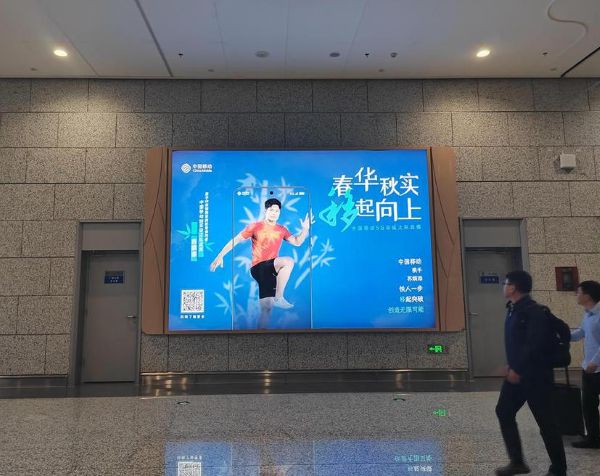
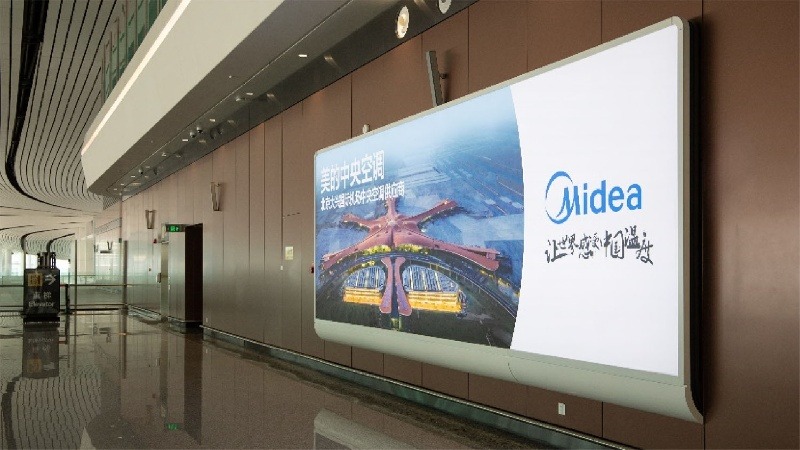
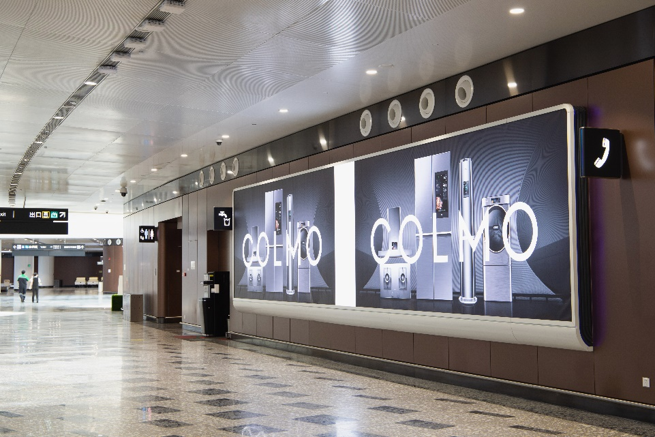
Digital displays/electronic light boxes: Located in areas such as security checkpoints and boarding gates, they enable multi-screen rotation and flexible information updates.
Baggage carousel LED screen: Mandatory viewing for passengers waiting for their baggage in a centralized manner, a key touchpoint in the arrival area.
2. Traditional static media (brand penetration, persistent display)
Airbridge advertising: Located on both the inside and outside of the aircraft airbridge, every passenger boarding or disembarking from the aircraft passes by, ensuring high-frequency exposure.
Check-in island pillar/counter signage: Located in the core area where passengers handle formalities, it accompanies their decision-making process.
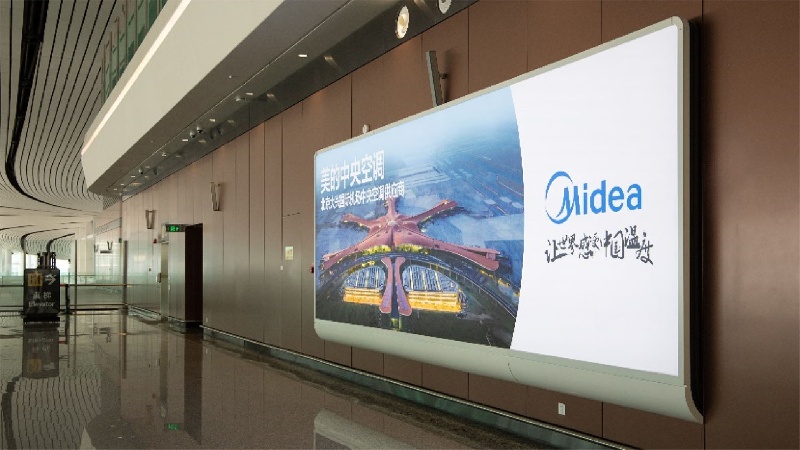
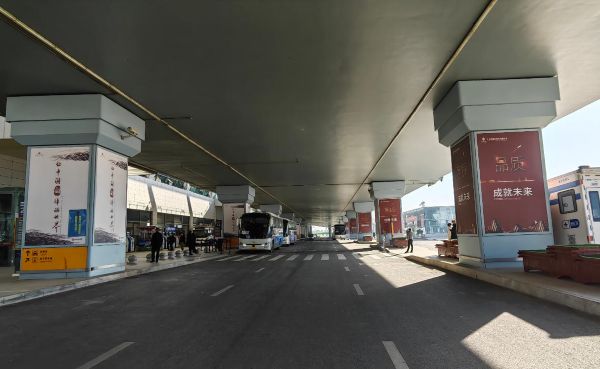
Arrival channel light boxes/wall stickers: Create a first impression upon arrival, suitable for local service, tourism, automotive, and other brands.
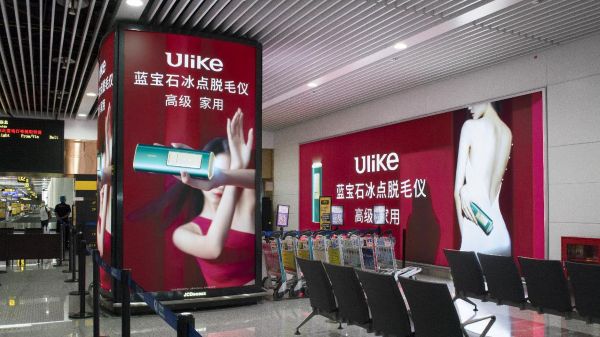
Luggage trolley advertisement: A mobile media that accompanies travelers throughout the entire process.
3. Immersive experience media (innovative interaction, deep linking)
Thematic exhibition hall/brand experience store: Set up a large interactive display space within the quarantine area to provide an in-depth brand experience.
Exclusive boarding gate naming: Fully branding a specific boarding gate to create a "brand-exclusive zone".
Step 2: Strategy formulation and creative alignment
Resources are weapons, but strategy is the soul.
Goal orientation: Is it to enhance brand awareness? Promote specific products? Or boost regional market sales? Goals determine the resource mix.
Flow thinking: Simulate the passenger journey (departure check-in -> security check -> waiting -> boarding -> arrival -> baggage claim), and place advertising information at key decision points or waiting anxiety points.
Creativity adaptation: LED screens are suitable for short-duration, visually impactful films; corridor light boxes are suitable for a powerful slogan and product close-ups; static media requires extremely concise information. Remember: avoid directly translating long Internet-friendly texts to offline scenarios.
Step 3: Budget planning and inquiry process
Budget composition: Typically includes media distribution costs (the largest component), advertising material production costs, approval and installation costs, etc.
Inquiry method: Advertising resources at Daxing Airport are primarily operated through designated advertising agents. Brands generally do not directly sign contracts with the airport. It is necessary to seek out service providers with first-level agency qualifications through formal channels.
Price factors: Location (traffic volume), area, media format, and duration of release (usually measured in weeks/months) are the main pricing factors. Prices are higher during peak seasons (such as holidays and summer vacation).
Step 4: Execution monitoring and effect evaluation
Publication verification: Agents are required to provide actual publication photos and monitoring reports to ensure that advertisements are published in accordance with contract requirements.
Effect evaluation: Conduct a comprehensive evaluation by combining online data (such as brand search index during the same period, social media mentions) with offline data (such as participation in prize-winning interactions, changes in customer flow at offline stores). A dedicated QR code or event code can be set up to track conversions.
Chapter 3: Common Misconceptions and Tips to Avoid Pitfalls
Misconception 1: Focusing solely on unit price without considering the mix. The impact of a single medium is limited. A reasonable mix of media (such as "LED screen to generate buzz + corridor advertising for continuous penetration") can maximize the effect.
Misconception 2: Creative "entertaining oneself" and neglecting the context. In a noisy, fast-moving airport environment, complex and difficult-to-understand creativity is ineffective. Information must be comprehensible within 3 seconds.
Misconception 3: Believing in quotations from non-official channels. Quotations that are significantly lower than the market price may be associated with issues such as inaccurate resources, remote locations, or excessive agency tiers. It is essential to verify the qualifications of the agent.
Misconception 4: Ignoring the approval cycle. The content of airport advertisements must undergo rigorous review, and sufficient time should be reserved for production and approval (typically 2-4 weeks) to avoid delaying marketing milestones.
Chapter 4: Conclusion
Advertising at Daxing Airport is far more than just "buying exposure". It is a brand investment that requires strategic vision, professional planning, and meticulous execution. It signifies that brands have entered a higher-dimensional competitive arena, engaging directly with the most valuable consumer groups in China and beyond.