Beijing Airport Advertising: Capital & Daxing Media Strategy
2026-06-25Tianci MediaViews:33
Highlights
Beijing‘s two airports—Capital International (PEK) and Daxing International (PKX)—form the world’s fourth-largest aviation market. In 2025, they jointly handled over 120 million passengers, a 6% year-on-year increase. Capital Airport recorded 70.76 million travelers, while Daxing reached 53.61 million. For brands targeting China‘s most influential travelers, Beijing’s airports are a strategic necessity.
Why Advertise in Beijing‘s Airports?
Unmatched Audience Quality – China‘s top ten airports, including both Beijing hubs, carry 80% of all air passengers, with 70% being business travelers. These are the decision-makers who purchase enterprise software, financial services, and premium products.
Signal Value – In China‘s business culture, airport presence signals market strength. When Alibaba Cloud launched a billion-yuan-plus airport campaign, every competitor took notice. Baidu Cloud quickly countered by securing one of Capital Airport T3’s most expensive arrival-level positions—previously held by Dior—at a reported annual rent of at least 10 million yuan.
Extended Dwell Time – Passengers spend considerable time in terminals, creating ample opportunity for brand exposure. The best positions—security checkpoints, arrival exits, and baggage claim zones—are where travelers pause with minimal distraction.
Beijing Capital Airport (PEK): The Mature International Hub
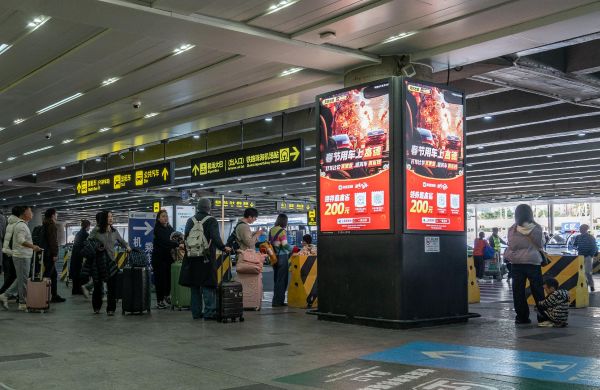
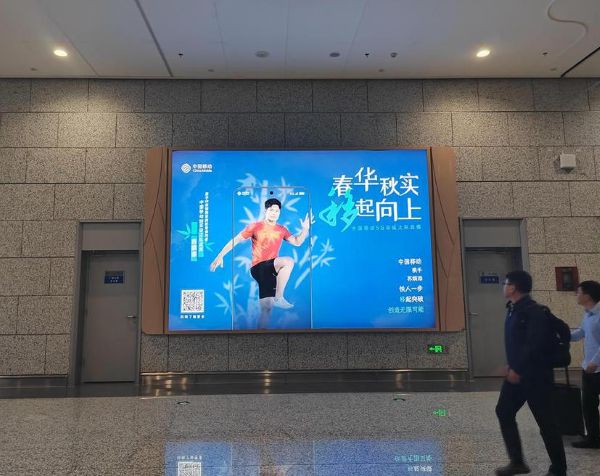
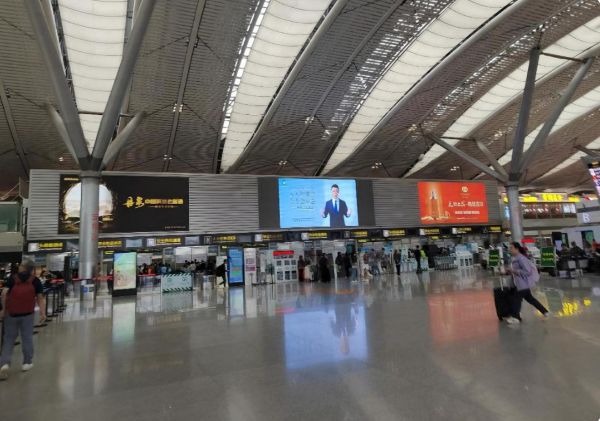
Capital Airport serves as China‘s primary international gateway. The T3 check-in hall has become a showcase for AI advertising, featuring China Mobile, China Unicom, Alibaba Cloud, Baidu Cloud, JD Cloud, Lenovo, Fourth Paradigm, and others.
Premium Formats at PEK:
Check-in Hall Mega Screens – Monumental LED displays covering 100% of departing passengers
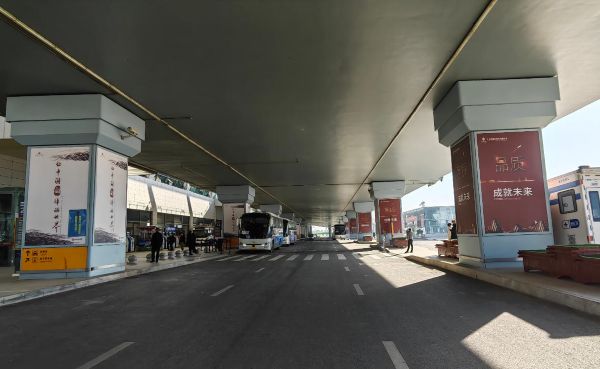
T3 Arrival Hall Premium Positions – The most expensive spots, commanding annual rates starting at 10 million yuan
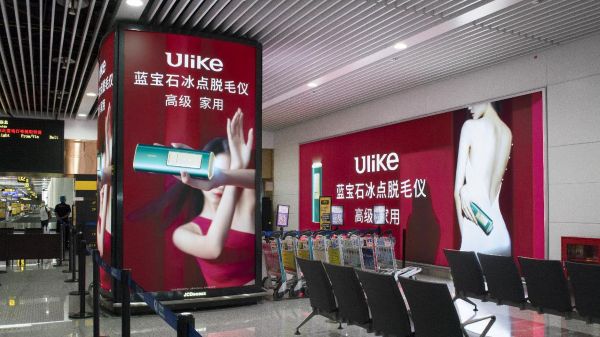
Security Checkpoint Displays – Mandatory waiting zones with 3–5 minutes of forced exposure
Boarding Gate & Jet Bridge Ads – The last enclosed space before boarding
Beijing Daxing Airport (PKX): The Modern “New National Gateway”
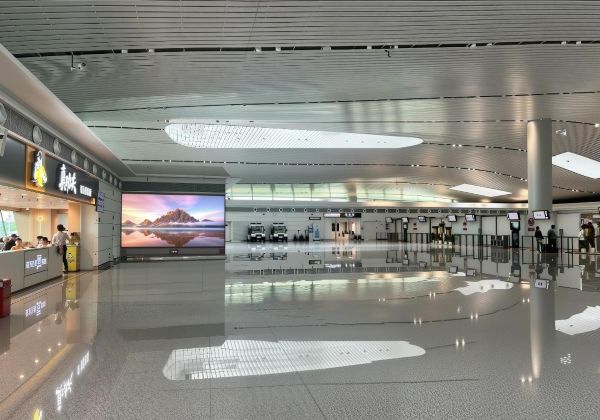
Daxing Airport offers innovative media formats designed for its iconic “no-column” architectural space.
Signature Formats at PKX:
“Starlight Avenue” Double-Sided Lightboxes – Eight oversized lightboxes suspended above passenger walkways in the domestic concourse. Each unit measures 7m wide × 4m high with dual-sided display totaling 56㎡ per unit, ensuring 360-degree unobstructed visibility. This installation transforms advertising into terminal art—media as scenery, scenery as media.
Second-Floor Mixed-Flow Zone Displays – Covering departing, arriving, and transferring passengers with extended dwell time
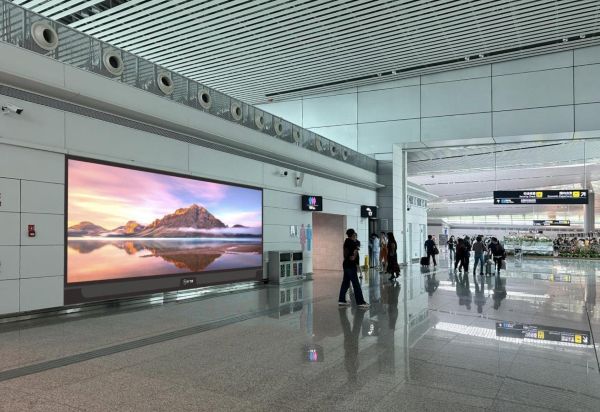
LED & Lightbox Networks – Over 40 digital screens with minimum 2.5㎡ each, playing 15-second spots at 150+ rotations per screen per day
Strategic Considerations for Beijing Airport Advertising
Plan Ahead – Prime positions are locked in long-term contracts with major advertisers. Brands new to airport media should prepare for sustained investment.
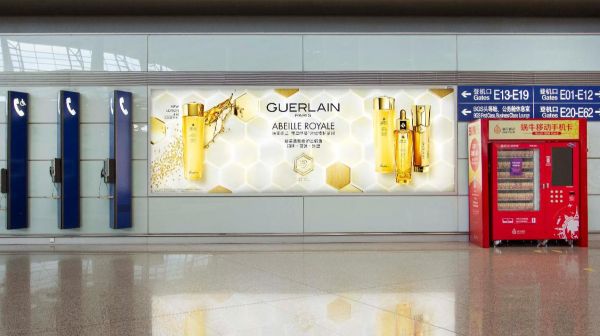
Cost Range – Premium fixed lightboxes at PEK can reach 3.88 million yuan per month. Digital rotating screens offer more accessible entry points. Tianci Media recommends a “fixed + rotating” combination strategy to lower overall CPM while maintaining brand presence.
Full Passenger Journey – Effective campaigns follow the complete traveler journey: check-in → security → boarding → arrival → baggage claim. This “full-chain” approach ensures repeated brand exposure at every touchpoint.
Measuring Effectiveness
Tianci Media leverages AI-powered audience segmentation—analyzing cabin class, flight frequency, destination preferences, and consumption behavior—to enable precise targeting. The company also deploys data Closed loop + dynamic creative technology, linking airport screen exposure to subsequent online actions (searches, visits, purchases). This creates a complete attribution chain from impression to conversion.
The Bottom Line
Beijing‘s airports are not merely transit hubs—they are China’s most concentrated environments of business decision-makers and high-net-worth travelers. For brands ready to compete at the highest level, a strategic airport presence is non-negotiable. Tianci Media provides comprehensive solutions across both Capital and Daxing airports, combining Having core resources with AI-driven optimization to deliver measurable results.