- Photos
- Specs
- Advantages
- Value
- Media Map
| Area:Chengdu | Type:Outdoors | Frequency:120 |
| Address:Intersection of Gongye Avenue and Yuying Road, Xindu District | Format:led | Duration:15s |
| Location:Xuhui Plaza | Min Qty:1 | Operating Time:0-24o'clock |
| Size:24.96m*9.6m =239.6㎡ | Min Period:month |
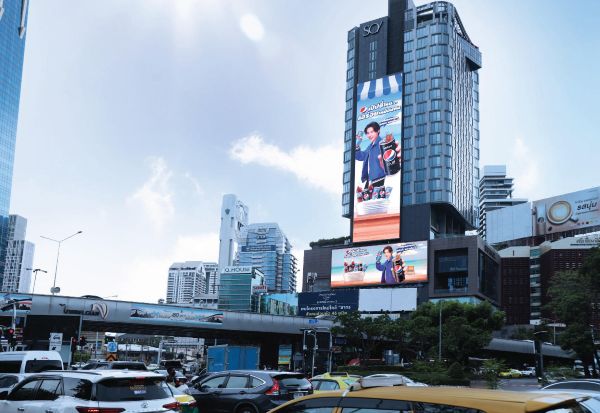
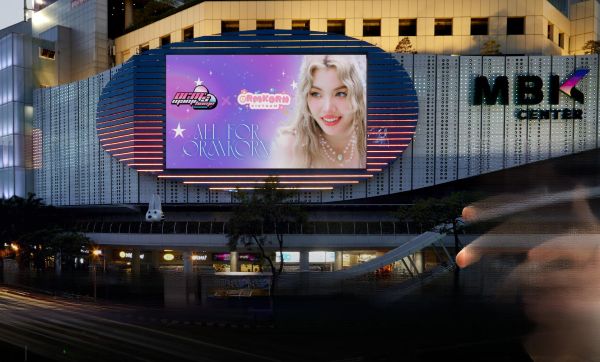
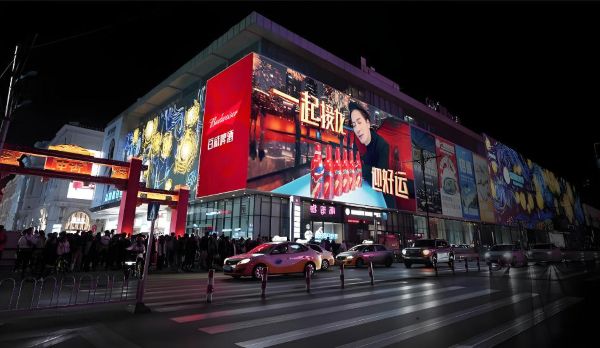
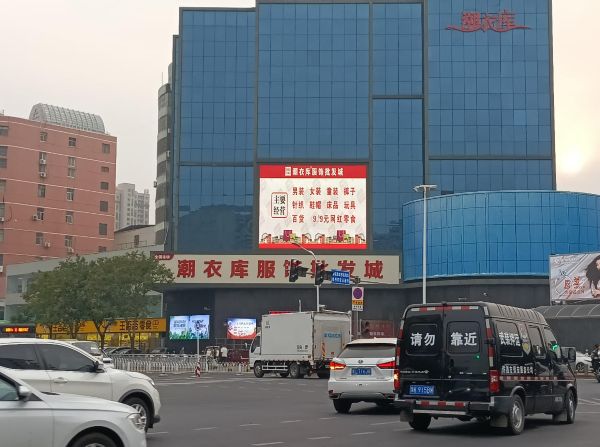
Located at the intersection of Gongye Avenue and Yuying Road, directly facing the six-lane main road in both directions, and adjacent to the exit of Zhonglou Station on Metro Line 3, the daily flow of people and vehicles exceeds 100,000. The screen is positioned in the prime visual height area on the exterior of the mall, with an unobstructed view and a visible distance of over 100 meters, ensuring that brand messages efficiently reach commuters and consumers along their routes, achieving an instant and impactful communication effect.
The exterior of Xuhui Cmall at the intersection of Gongye Avenue and Yuying Road in Xindu District serves as a key outdoor media platform in the emerging northern city business district that integrates trendy culture, community life, and digital communication. The large screen is not just an information broadcasting platform, but also a medium for expressing urban youth culture and delivering regional brand presence effectively.
Thanks to Xuhui Plaza’s advantageous seven-vertical, six-horizontal traffic network, it is close to major city thoroughfares such as the eastern section of Gongye Avenue and Yuying Road, seamlessly capturing cross-regional commuter flow between Xindu District and the Chengdu metropolitan area. Within a 3-kilometer radius, it reaches nearly 500,000 high-quality customers, and by leveraging local industrial hubs like the Chengdu Haixia Tech SME Park, it attracts 200,000 tech innovation talents, forming a high-consumption potential audience mainly comprising young families, educated youth, and tech elites. The large screen can handle massive concentrated traffic, further amplifying information reach.
The LED screen will continue to benefit from this growth, further strengthening the conversion hain between policy, foot traffic, and value. It not only serves as a preferred medium for commercial brands to deeply engage the Xindu market but also takes on social responsibilities such as promoting urban culture and public welfare information, becoming a core regional media platform with both commercial and social value.
As the first music-themed shopping center in Southwest China and a regional commercial benchmark, its central LED screen in the plaza is deeply integrated with Xindu District's 'One Core, Three Zones' development strategy and the urban integration process of the Chengdu metropolitan area. It precisely captures multiple benefits brought by business district upgrades, the opening of first stores, transportation improvements, and population quality enhancement, building core competitiveness through the synergy of policy empowerment, traffic support, and value conversion. It has become a key medium connecting regional development, commercial vitality, and residents' daily life.
The core advantage of the LED screen lies in its deep integration of regional strategic benefits, comprehensive traffic resources, first-store business ecosystems, and music-themed features. Through a closed-loop logic of policy, traffic, and value, it achieves multiple breakthroughs in media authority, precision reach, efficient conversion, and unique scenario engagement, making it the preferred media platform for brands looking to deeply cultivate the Xindu market and connect with core consumer groups.
With advantages in location barriers, technological premium, precise traffic, and scenario empowerment, it has become a highly competitive outdoor media in the regional market, especially suitable for brands focusing on the northern and western Chengdu markets. Compared to LED screens in core business districts, it increases regional precision by 40% and reduces costs by 50%. Compared to online media, its combination of forced exposure and offline experience creates irreplaceable marketing value.
The LED screen is not just an advertising medium but a new type of urban digital asset that integrates traffic entry points, community interfaces, and cultural touchpoints. Through artistic content and interactive engagement, it attracts active attention, achieving a transformative leap from being seen to being experienced.