Wangfujing Outdoor Advertising Deep Report: Traffic, Cost, Effectiveness, and Decision Guide
2026-02-13Tianci MediaViews:150
Highlights
Wangfujing Outdoor Advertising Deep Report: Traffic, Cost, Effectiveness, and Decision Guide
If you have done outdoor advertising in Beijing, you cannot avoid a name——
Wangfujing.
This commercial street, which starts from East Chang'an Avenue in the south and ends at May Fourth Avenue in the north, with a total length of less than two kilometers, attracts over 100 million domestic and foreign tourists every year. It is listed alongside Shanghai Nanjing Road, Guangzhou Beijing Road, and Chengdu Chunxi Road as the "Four Heavenly Kings" of China's commercial streets, and is the high ground for all brands to establish a high-end image in the North China market.
But precisely because it is too famous, there are two opposing voices surrounding the question of how outdoor advertising in Wangfujing works.
A faction lifted it up to the altar and said, "If you don't go to Wangfujing, you won't be counted as entering Beijing
The other faction stepped on it and said, "Wangfujing? It's all tourists, who are the locals going
Who is right? Who is wrong?
All wrong. Because this question itself cannot be answered with "good" or "bad".
This guide is not meant to tell you 'Wangfujing must be invested' or 'Wangfujing must not be invested'. On the contrary, it is designed to help you establish a calm decision-making framework that allows you to draw your own conclusions within your budget, goals, and brand stages.

Chapter 1: Let's First Understand - Whose Wangfujing is Wangfujing?
Before discussing how outdoor advertising in Wangfujing works, you must first understand a cruel fact:
Wangfujing is not one location, it is three completely different battlefields.
Battlefield 1: Pedestrian Street Main Street.
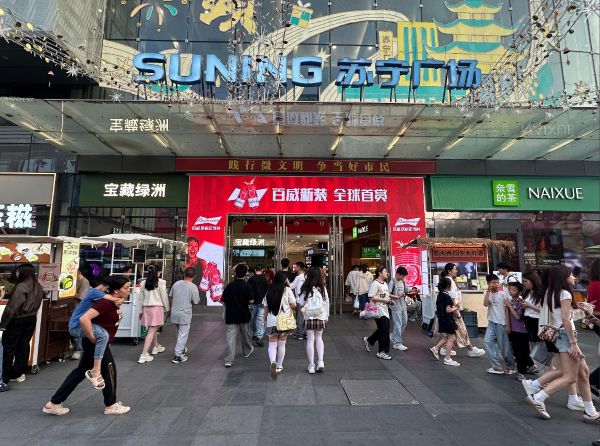
This is the Wangfujing that most people recognize. Department Store, Dong'an Market APM、 The Arts and Crafts Building... attracts hundreds of thousands of people every day, and during holidays, it's so crowded that it's hard to walk.
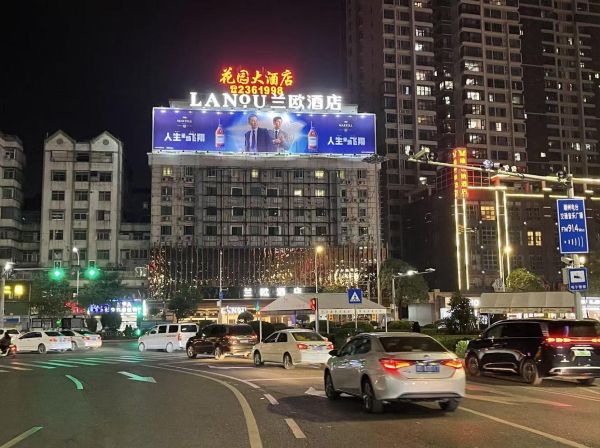
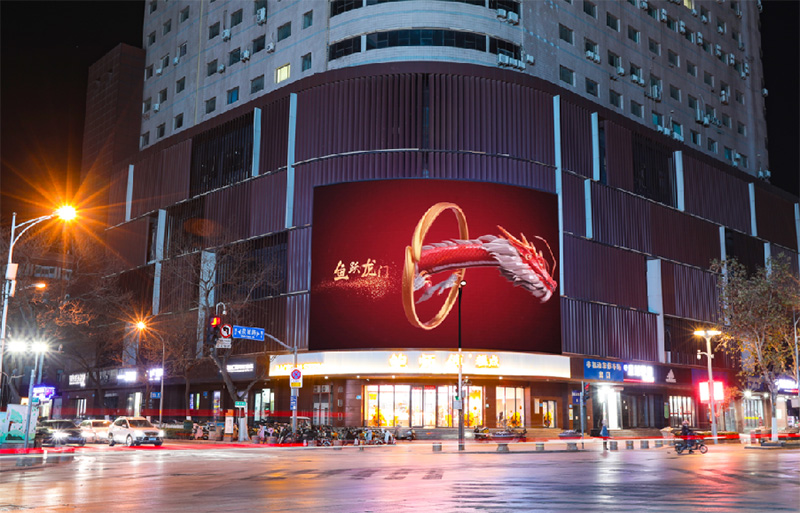
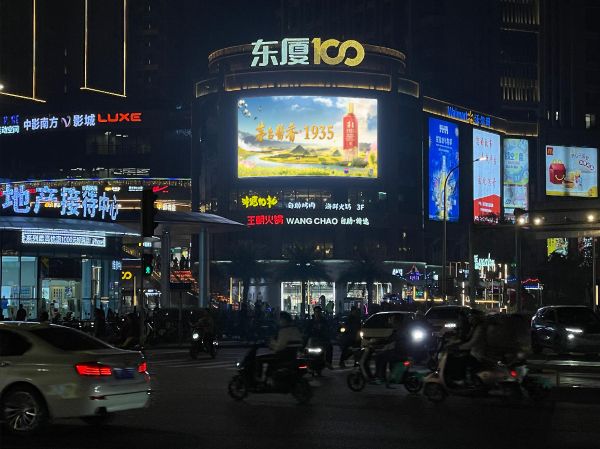
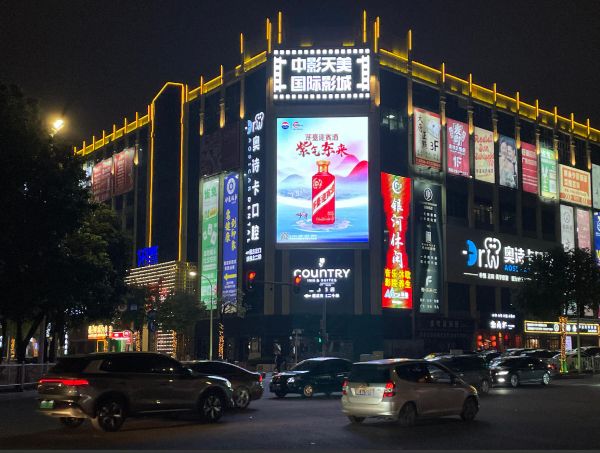
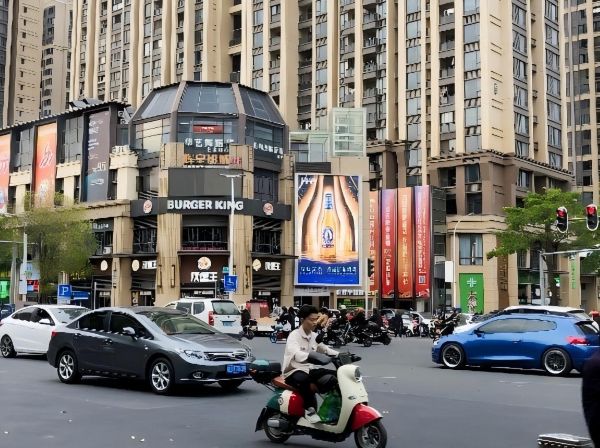
The advertising resources here mainly consist of giant LED screens, rooftop billboards, and wall light boxes. Price is the ceiling of outdoor advertising in Beijing, with regular prices often reaching millions, and transaction prices far beyond what ordinary brands can afford.
Who should vote here?
A super brand that needs to showcase its strength nationwide and even globally.
Top enterprises with significant new product releases and brand upgrade campaigns.
Strategic players who do not expect to directly calculate ROI and only come for "brand endorsement".
Who shouldn't vote here?
Beginners who have a budget of only a few hundred thousand and want to try the water.
The target is a brand for local community residents in Beijing.
Local service providers that require instant conversion and QR code scanning to store.
Battlefield 2: Extension area around Wangfujing Pedestrian Street.
Including areas such as Jinyu Hutong, the vicinity of Wangfujing Church, and the south entrance of Wangfujing. This still belongs to the Wangfujing business district, with considerable foot traffic, but the competition and price of advertising resources are much more friendly than the main street.
The value here is severely underestimated. With the same budget, it may only be enough to buy a small screen during the carousel on the main street. Here, you can secure a well positioned independent lightbox and even achieve longer periods of continuous exposure.
Battlefield 3: Wangfujing Subway Station and its connecting passage.
This is the most easily overlooked and cost-effective 'Wangfujing related asset'.
The daily average passenger flow at Wangfujing subway station exceeds 150000, and the connecting passage is a necessary route for tourists to enter the business district from the subway. The price of advertising resources here is much lower than that of the main street on the ground, but it reaches the same group of people - and just before they are about to start consuming.
For catering, entertainment, and retail brands, the value of subway passages may be higher than that of ground level screens.
So, when you're asking about outdoor advertising in Wangfujing, first ask yourself: Which Wangfujing are you asking about?
Chapter 2: The Core Value of Wangfujing Outdoor Advertising - What exactly is it selling?
The reason why Wangfujing advertising is expensive is not because its CPM is lower than elsewhere, but because it sells three things that cannot be bought elsewhere.
Firstly, the identity premium of urban landmarks.
In China, there are no more than five commercial streets that can make people across the country speak their names with their eyes closed. Wangfujing is one of them.
When your brand appears on the screen above Wangfujing Department Store, the message it conveys is not 'we have money', but 'we have been accepted by the commercial heart of this city'.
The transfer of this identity tag is a hard currency that cannot be exchanged for any online traffic.
The second approach is the "capital anchoring" of tourists' minds.
Every year, one hundred million tourists come to Wangfujing from all over the country and the world. The brands they see here will be subconsciously classified as "Beijing brands," "Chinese brands," and "mainstream brands.
When they return to their hometown and see the same brand in the local mall, the screen in Wangfujing will light up in their memory.
This is a cross regional transfer of brand assets. Its effect is not in the current week or month, but in countless consumption moments in the future.
The third type: Free UGC factories in the era of social media.
In 2026, the value of an advertising space depends not only on how many people see it with their own eyes, but also on how many people capture it on their phones.
The huge LED on Wangfujing Main Street attracts thousands of tourists holding their phones to take photos, record videos, and clock in every day. If your advertisement is the protagonist on this screen, it will automatically become the background board, topic, and even a reason for taking photos of these UGCs.
The value of this secondary dissemination is not charged by the media, it all depends on whether your creativity is worthy of this position.
Chapter 3: The Cruel Truth - Who is Wangfujing Not Suitable for?
If the previous chapter was about the "reasons why Wangfujing is valuable", this chapter must clearly explain its "time of deceiving people".
The first type is not suitable for brands with a tight budget and a hard won approach.
Wangfujing advertising has a hidden "consumption threshold" - not a price threshold, but a production threshold.
You spent one million yuan to buy a screen's carousel slot, and then used a rough design in the style of an e-commerce detail page to save money.
What was the result? The advertisement was placed, but the effect was not achieved. That screen was indeed on, but passersby looked at it for three seconds and thought it was a knockoff brand. The brand premium of Wangfujing was not borrowed, but instead exposed the mismatch between budget and strength.
Wangfujing is not a place for you to 'score from 60 to 80', it is a place for you to 'score from 90 to 100'. If you only have 60 points, it won't bring you down to 90 points here, it will only magnify 60 points for everyone to see.
The second type is not suitable: brands targeting local residents.
More than 70% of the passenger flow in Wangfujing is tourists and foreign consumers. Beijing locals, especially those who have families, cars, and tend to make steady daily consumption decisions, have few occurrences of Wangfujing in the past year.
If your business relies on local repeat purchases - community supermarkets, housekeeping services, driving school training, renovation companies - spending money on Wangfujing is far better than investing in the gates and elevators of the target community.
Wangfujing is face, community is neighborhood. First make sure the inside is not empty, then consider whether to save face.
The third type is not suitable for brands that require immediate conversion and data attribution.
The effectiveness evaluation of Wangfujing advertising still focuses on the brand side. How much has the search index increased? How much has the volume of social media increased? What changes have occurred in the brand favorability survey?
These are all 'slow variables'. It is completely different from the instant feedback of "investing 10000 today and receiving 12000 tomorrow" in the e-commerce backend.
If you are forced by your boss to report ROI every week, Wangfujing will cause you a lot of pain.
Chapter 4: Five Step Decision Making Method - Should You Invest in Wangfujing?
If you still have thoughts about Wangfujing after reading this, congratulations - it means your brand may have indeed reached a stage where it should consider this step.
Next, use these five steps to go through the decision-making process.
Step 1: Confirm your brand stage.
Wangfujing is an amplifier for mature brands, not an incubator for start-up brands.
A newly established consumer brand, which has only been established for two years, needs to establish awareness and trust among its core audience, rather than being familiar with tourists from all over the country. Your face is familiar, but they can't buy your product downstairs. What's the use?
Ask yourself: Have you established a firm foothold in the Beijing market? Have you laid out your channels properly? Can your product withstand the scrutiny of a magnifying glass?
Three 'yes''s, go down further.
Step 2: Confirm your core goals.
Want national influence? Choose the main street screen of Wangfujing.
Want the volume of the North China market? There are enough big brands in the main street or surrounding areas.
Want to attract traffic within the business district? Subway channel lightboxes are the king of cost-effectiveness.
Want to go viral on social media? Creative content must match the landmark location.
Without a clear goal, Wangfujing is the most expensive waste.
Step 3: Calculate the actual total cost.
Many beginners only ask 'how much does that screen cost per week', ignoring three implicit costs:
Creative production cost: Landmark level advertising spaces must be accompanied by landmark level creativity. This budget is usually 20% to 30% of media expenses.
Content update cost: One screen is projected around, preferably with two versions of the screen rotating. Did you keep the money for the second edition?
Cost of monitoring and verification: Is there a budget for third-party monitoring? Do you have a budget for conducting brand research before and after advertising? Without data, how can you prove that this money has not been wasted?
Step 4: Design a conversion path.
The biggest pain point of Wangfujing advertising is' visible, intangible '. Tourists were influenced by your advertisement, and then what? Where can I buy it? Where to experience it? Where can I further learn?
The Wangfujing advertisement without a conversion path is helping competitors in the education market.
QR codes, search boxes, store navigation, event times, discount codes - even just putting a brand name that is easy to remember is ten times stronger than just putting a logo.
Step 5: Find the right partner.
The resources of Wangfujing are intertwined. At the same location, there may be three levels of agents, and the quotation can differ by twice. Newcomers who enter the game for the first time are almost impossible to determine the bottom price on their own.
Tianci Media has accumulated over eight years of resources in the field of outdoor advertising in core commercial districts across the country. They may not be the cheapest, but they can tell you:
——What is the actual transaction price range for this point?
——What time period offers the best value for money?
——Which points are overvalued and which are undervalued?
——Can your creative plan be seen clearly at this distance and under this lighting condition?
These pieces of information are much more valuable than "getting a discount".
Chapter 5: Four Misunderstandings of Wangfujing that must be avoided
Misconception 1: Equating "passenger flow" with "effective outreach".
Wangfujing has a daily flow of 500000 people, it's true. But how many of them are your target customers? How many are in a state where they can be influenced by advertisements? How many people looked up at that screen?
Customer traffic is a liability of the media, not an asset. Only the part that you effectively reach is an asset.
Misconception 2: Believing that "going to Wangfujing" is the end point.
This is the most expensive mindset.
Wangfujing is not a graduation ceremony, it is a school opening ceremony. On the day the advertisement was published, it was not the end of work, but the beginning of work.
Should social media cooperate with dissemination? Should the store cooperate with the event? Should we add the brand endorsement of 'We have advertisements in Wangfujing' to our sales language?
There is no topic without going to Wangfujing, and there is no news after going to Wangfujing - this waste is even more regrettable than not investing.
Misconception 3: Underestimating the 'surrounding area' and overestimating the 'main street'.
The largest screen on the main street, of course, is the best. But its price is also three to five times that of similar locations in the surrounding area.
For the vast majority of brands, the cost performance of small and medium-sized spots on the main street, independent big brands in the surrounding area, and core light boxes in subway passages is much higher than that of the rotating broadcast period in top tier locations.
Get on the car first, then change seats. The resource gradient of Wangfujing is very complete, and there is no need to climb to the sky in one step.
Misconception 4: Only focus on location, not the environment.
At the same intersection, on the left is a luxury flagship store, and on the right is a fast food snack shop. The "environmental signal" received by your advertisement is completely different from where it is placed.
Half of the advertising space value in Wangfujing comes from location, and half comes from neighbors. Examining competitors and cross industry brands in the online perspective is as important as the focus itself.
Conclusion: How about outdoor advertising in Wangfujing?
Now, we can provide a complete and honest answer.
For brands that need to establish a national brand reputation, have sufficient budget support for high-quality creativity and continuous advertising, and have completed channel layout in the Beijing market, Wangfujing outdoor advertising remains one of the most strategically valuable media resources in North China.
For brands with tight budgets, brands in their early stages, or relying mainly on local repeat purchases, Wangfujing is not the first or even second choice. Spending money closer to the target audience yields higher returns.
Wangfujing is not a matter of usability, it is a matter of suitability.
It is a precious knife that cuts iron like mud. But if it's your first time in the kitchen, all you need may be a handy kitchen knife.
Tianci Media can help you conduct an objective "Wangfujing Fit Assessment" - without advising investment or withdrawal, only helping you figure out: based on your marketing goals and budget for this year, what role Wangfujing should play or whether it doesn't need to play any role at all.
After all, in the field of outdoor advertising, the biggest waste is not investing too much, but investing incorrectly.
Now, back to your marketing calendar. If Wangfujing is one of the options, take this guide and make your own decision.