Shenzhen Outdoor Advertising Beginner's Manual: Mastering the Entire Process of Advertising from Scratch
2026-02-09Tianci MediaViews:180
Highlights
This article is a complete guide to outdoor advertising in Shenzhen for beginners, detailing mainstream types such as LED screens, buses, subways, and community elevators, providing clear four step advertising strategies and common pitfalls avoidance guides. If you need professional services, Tianci Media, as a professional outdoor advertising platform, can provide full support throughout the process.
In Shenzhen, a super city with a population of over 20 million and neon lights, outdoor advertising in Shenzhen is like a dynamic canvas covering the city, constantly competing for people's attention. For first-time businesses or individuals, the "jungle" of this advertisement may be intimidating: from the 100 meter LED giant screen in Futian CBD, to the bus body shuttling on Shennan Avenue, to the elevator frame in your community... they come in various shapes and prices. Which one is suitable for you? How to take the first step? Don't worry, this article will simplify complexity for you, like a thoughtful guide, leading you to systematically establish a cognitive map of outdoor advertising in Shenzhen, step by step towards precise and efficient advertising.

Step 1: Get to know "family members" - a list of mainstream outdoor advertising types in Shenzhen
Firstly, we will sort out the main types of outdoor advertising in Shenzhen. You can imagine them as different branches of the military, each with their own strengths.
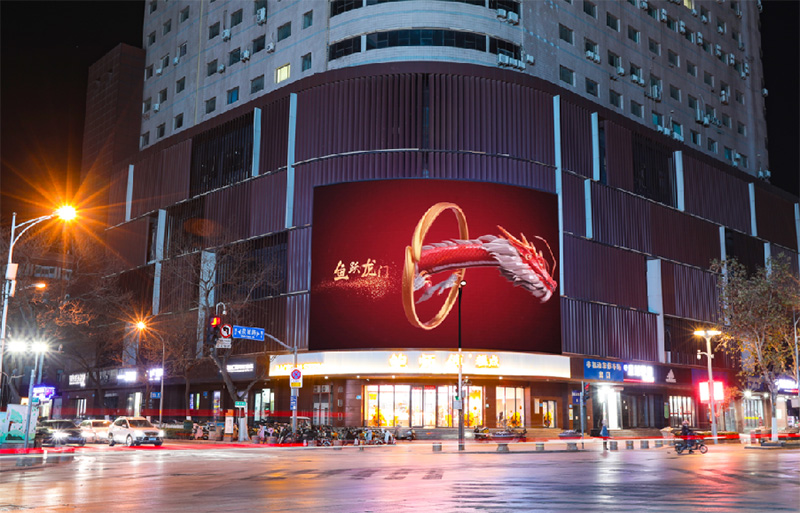
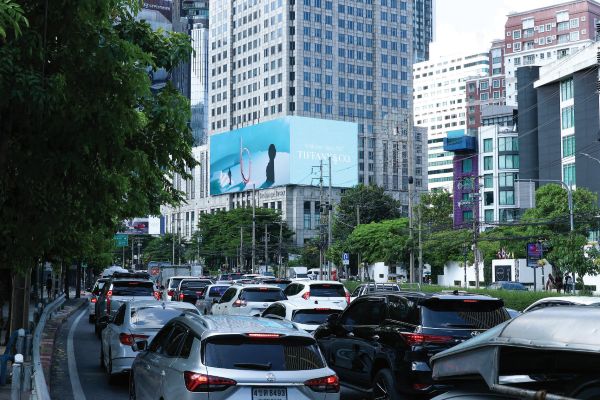
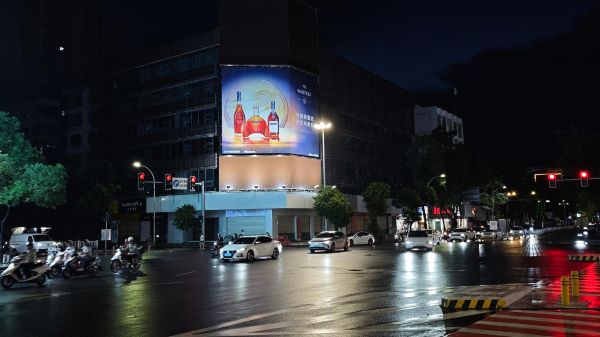
1. Landmark level "strategic weapon": LED large screen advertisement
What is it: A giant screen with a large area and dynamic playback, usually located on the exterior facade of buildings in the core business district of the city (such as near Jingji 100 and China Resources Building).
Core features: Strong visual impact, strong brand authority, and the ability to quickly create a sensational effect.
Suitable for: Large brands with sufficient budget that need to quickly increase brand awareness, create a high-end image, or be used for major event releases.
Novice note: The price is expensive and belongs to brand strategic level advertising, which requires high-level creative videos.
2. Mobile "coverage": Public transportation advertising
What is it: It mainly includes bus body advertising and subway advertising (platform lightboxes, posters inside carriages, corridor corridors, etc.).
Core features:
Bus advertising: It flows with the bus, covers a wide range of streets, and has a relatively high cost-effectiveness.
Subway advertising: Covering millions of commuters every day, with enclosed environments and focused attention, it can deeply reach office workers and young people.
Suitable for: Various enterprises that pursue wide audience coverage and establish stable brand awareness, from local brands to national brands.
Novice note: Careful selection of routes is required. Public transportation should choose routes that pass through the target area; The subway should choose the right station (such as commercial district station, office building station, residential area station).
3. The 'Reminder' Around Us: Community and Building Advertisements
What is it: mainly includes community elevator advertisements (frame posters, video screens) and office building elevator advertisements.
Core features: delving into the last "hundred meters" of people's lives and work, high-frequency and mandatory reading, able to accurately influence specific community households or office white-collar workers.
Suitable for whom:
Community elevator: suitable for household consumer products such as home decoration, education, automobiles, and fast-moving consumer goods.
Office building elevators: suitable for business services, finance, technology products, and other products aimed at enterprises or white-collar workers.
Novice note: Before advertising, it is important to understand the level, occupancy rate, and demographic profile of the community or office building to ensure that it matches the brand positioning.
4. Accurate "Sniper": Advertising for commercial districts and street facilities
What is it: such as commercial lightbox, bus stop advertising, sidewalk guardrail advertising, etc.
Core feature: Located in specific commercial districts or densely populated streets, it can accurately reach shopping and leisure crowds, creating a localized consumption atmosphere.
Suitable for local lifestyle service businesses such as catering, retail, beauty, entertainment, or brands that wish to deeply cultivate a certain regional market.
Novice note: There is a significant difference in point value, and the price of lightboxes at the entrances and exits of core commercial districts may differ several times from that of ordinary streets.
Step 2: Clarify your "combat objectives" - Step 4: Lock in the ads that are suitable for you
After understanding the 'arsenal', you need to clarify your deployment direction through the following four questions.
What is the goal? Is it to let everyone in the city know the brand name (brand exposure), or to guide customers to nearby stores for consumption (sales attraction)? Different goals lead to vastly different types of media choices.
Who is the audience? Where do your ideal customers often appear? Are you a driver (paying attention to highway signs and vehicle advertisements), a subway commuter, or a resident active in a certain commercial district or specific community? Draw their movement trajectory.
What is the budget? Budget is a constraint of reality. Clearly define the total budget, which directly determines how much "formation" you can play. You can start with small-scale and precise media testing, such as a community elevator in a certain area.
Where is the area? Where is your business or target market concentrated in Shenzhen? Is it Futian, Nanshan, or Bao'an, Longhua? Concentrating budget to penetrate a region is much more effective than covering the entire city but with insufficient effort.
Step 3: Start your first campaign - from planning to execution
Assuming you are a local chain education institution in Shenzhen, we will simulate a placement process:
Step 1: Strategy formulation
Goal: To drive traffic for summer courses and attract family customers within 3-5 kilometers of the surrounding area.
Audience: Middle class families with eligible children.
Region: A large residential area in Nanshan District where the store is located.
Budget: Medium, pursuing precise conversion.
Step 2: Media selection and combination
Preferred community elevator advertisement (framework+video): Accurately penetrate the target community and influence parents multiple times a day.
Paired with advertisements at nearby bus stops: covering the daily travel routes of community residents and enhancing their awareness.
(Adequate budget can increase) A small number of bus side advertisements in this area: expand the mobile coverage in this area.
Step 4: Creative Design
The screen highlights core interests such as "summer vacation", "score improvement", and "famous teachers".
The text goes directly: "For summer vacation hosting/training at our doorstep, come to [institution name].
It is necessary to clearly indicate the address, phone number, or QR code for easy consultation.
Step 4: Execution and Evaluation
Contact media outlets or agents (such as Tianci Media, a professional outdoor advertising platform) to inquire about prices, determine locations, and sign contracts.
Monitor the condition of advertisements.
Evaluate the effectiveness through methods such as phone call statistics and in store inquiries about "where did you see the advertisement".

Step 4: Three "pitfalls" that beginners must avoid
Greed for the bigger picture: At the beginning, I thought about casting a landmark screen, but the budget was only enough to broadcast for a few days, and the effect was like fireworks disappearing in an instant. It would be more effective to allocate the budget towards media outlets such as community elevators that can sustain exposure for 1-3 months.
Blind site selection pit: only looking at cheap media prices, without considering whether the location is accurate. For example, if your high-end product advertisement is placed on a bus near an old industrial area, the target audience is completely wrong.
Neglecting the creative pit: thinking that 'if you hang it up, someone will look'. Coarse design and confusing information in advertisements are a huge waste of high-quality placement. Outdoor advertising is a "3-second art" that must instantly attract people and clarify things.
Step 5: Make good use of professional platforms to simplify complexity
As a novice, it is extremely time-consuming and labor-intensive to independently connect with the complex outdoor advertising resources in the city (buses, subways, elevators belonging to different companies). At this point, the value of professional service platforms is reflected.
Collaborating with a professional outdoor advertising platform like Tianci Media is equivalent to having a "General Staff Department":
Worry free: You can simply provide your needs (goals, audience, budget, region), and they can plan cross media integration solutions for you based on databases and experience, without the need for you to search for them one by one.
Effortless: From scheme formulation, price negotiation, contract signing to publication and monitoring, all tedious processes are handled by the platform in one stop.
Possible cost savings: Due to the integration of a large number of purchases, the platform can sometimes obtain better prices than purchasing directly from a single enterprise.
Conclusion: Starting from cognition, take the first step towards precision
Entering the world of outdoor advertising in Shenzhen, the first step is not to rush to spend money, but to establish a clear cognitive map: understand different types of "personalities" and "strengths", clarify one's "destination" and "budget", and then choose the most suitable path.
For beginners, starting with small-scale, high-precision, and traceable media (such as community elevators) to test the waters and accumulate experience and confidence is the safest and most effective strategy. Remember, outdoor advertising is a spatial dialogue with urban crowds. By finding the right location and saying the right topic, your brand voice can be clearly heard by the right people in the hustle and bustle of Shenzhen.