Don't let advertising expenses go to waste! This outdoor advertising placement guide is recommended for collection
2026-03-24Tianci MediaViews:97
Highlights
How to effectively advertise outdoors? This article teaches you step-by-step how to avoid pitfalls from form selection, point evaluation, creative design to effect review. Tianci Media is a professional outdoor advertising platform. Consult now for exclusive solutions!
As online traffic becomes increasingly expensive and customer acquisition costs continue to rise, more and more brands are turning their attention back to offline. From commercial district LED screens to community elevator posters, from airport lightboxes to bus bodies - outdoor advertising is becoming an important battlefield for brand breakthroughs. But for beginners who are new to it, they often don't know where to start when faced with various media forms and complex advertising processes.
This article will provide you with a complete guide for outdoor advertising placement, from goal setting to effectiveness review, taking you through each step step step step by step, so that you can have a clear idea and avoid pitfalls when placing your first advertisement.
1、 Why is outdoor advertising worth investing in?
Before starting, understand the unique value of outdoor advertising. It has three irreplaceable advantages:
Compulsory exposure: Outdoor advertising is a display that cannot be skipped or closed on the essential life trajectories of consumers (commuting, waiting, leisure), with extremely high reach efficiency.
Scenario Empowerment: Combining advertising with the surrounding environment can greatly stimulate immediate consumer demand - seeing business service advertisements in office elevators and food and beverage brands in business districts has a much higher conversion rate than online.
Brand trust: Continuously appearing in core areas is a credible endorsement of brand strength, which can quickly establish consumer trust.
2、Seven Steps to Complete Outdoor Advertising Placement
Step 1: Clarify the advertising target
Before spending a penny, think carefully about three questions:
Purpose: Is it brand exposure, new product launch, event traffic or store promotion? Different goals lead to completely different media choices.
Audience: Who is the target audience? Age, occupation, consumption habits, and life trajectory?
Scope: Which city is covered? Which region? Is it the whole city or a specific commercial district?
The clearer the goal, the more precise the subsequent media selection will be.
Step 2: Understand mainstream media formats
There are various forms of outdoor advertising, each with its own characteristics:
Elevator advertising: covering communities and office buildings, mandatory viewing in enclosed spaces, high-frequency reach, suitable for brand exposure and local traffic attraction.
Bus body/shelter: a mobile scenic line covering the main roads of the city, suitable for wide exposure and regional penetration.
Subway advertising: covering commuters, with long dwell times, suitable for deep communication and youthful branding.
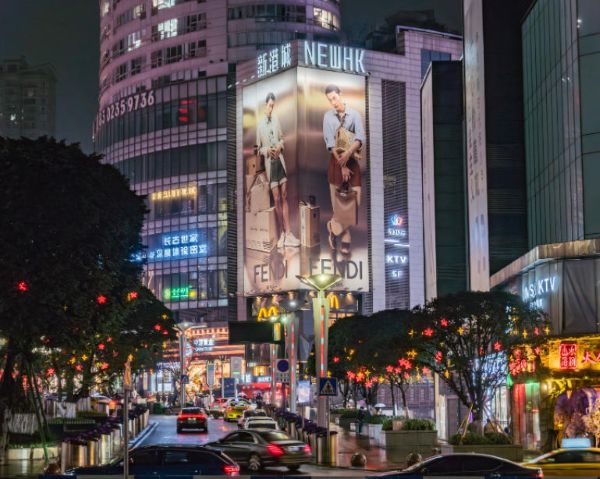
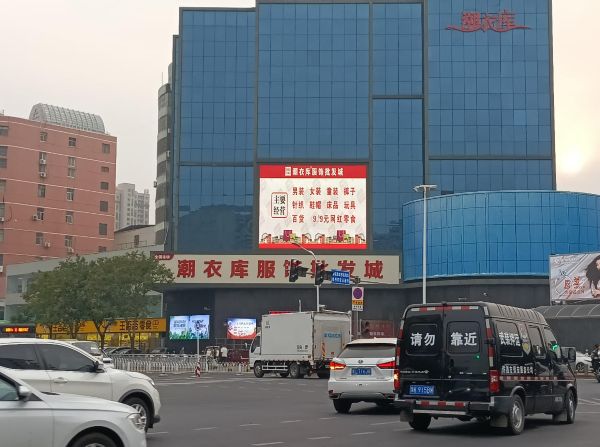
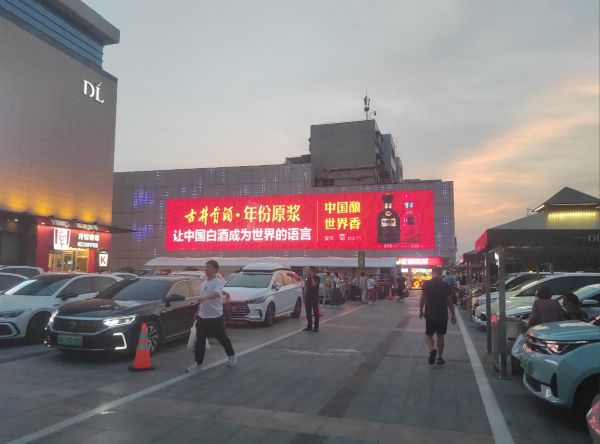
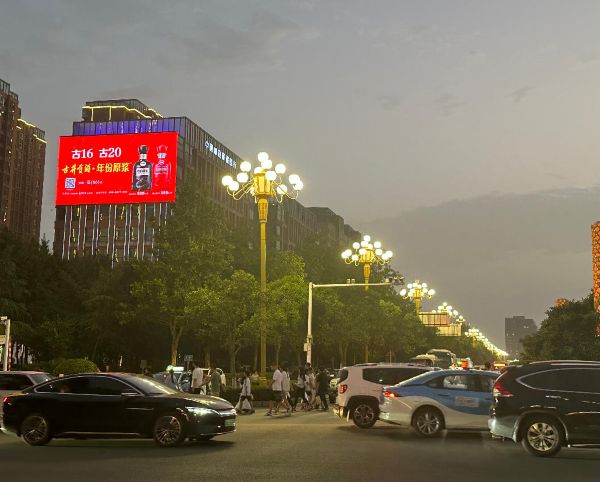
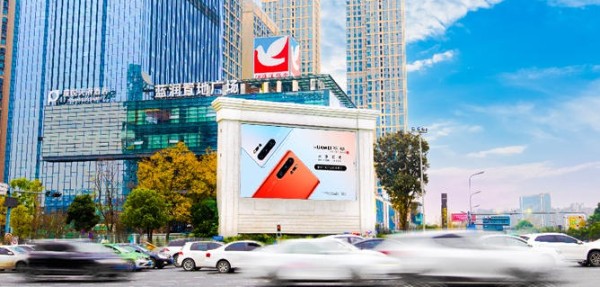
Business district LED large screen: Strong visual impact, covering high consumption groups, suitable for brand image construction and new product promotion.
Airport advertising: reaching elite business travelers, endorsed in high-end scenarios, suitable for finance, automotive, and luxury goods.
Community barriers/lightboxes: penetrate into residents' living circles, suitable for household consumption brands and local merchants.
Step 3: Scientific screening of locations
Location determines value. When evaluating the location, focus on four dimensions:
The matching degree between foot traffic and crowd: It not only depends on the number of foot traffic, but also on whether it is your target audience.
Visibility and dwell time: Is the advertising space directly in front of the line of sight? How long can pedestrians watch?
Surrounding environment: Is there any obstruction? Are there any competitors interfering?
Point compliance: Is it included in the government's outdoor advertising plan? Is there any approval risk?
Suggestion: Conduct on-site inspections before signing the contract and experience the on-site effects at different times.
Step 4: Develop budget and cycle
The cost of outdoor advertising usually consists of two parts:
Media publishing fees: quoted based on location, format, and cycle, are the main costs.
Production and installation fees: The cost of advertising image production and publication needs to be budgeted separately.
Cycle recommendation: Invest for at least 3 months. Outdoor advertising is a "slow heating" medium that requires time to accumulate effects. Short term advertising is difficult to achieve results.
Step 5: Creative Design - Customized for Outdoor Use
Outdoor advertising is a "3-second art" - complex copy cannot be seen clearly in the rushing crowd.
The 3-second rule: Three things must be conveyed within 3 seconds - the brand logo (should be large), the core message (should be short), and the action instructions (should be clear).
Design points:
The screen is concise, with one image, one text, and one action
Strong color contrast, visible from a distance
Dynamic priority (LED screen)
The QR code is eye-catching and easy to scan
Step 6: Select a service provider and execute
Delivery process:
Consultation and communication, obtaining quotations and scheduling
Sign the contract, clarify the location, cycle, and cost details (confirm the "all inclusive price")
Design materials and output them according to technical requirements
Submit for review (to ensure compliance with advertising laws and city regulations)
Produce the publication and obtain the monitoring report
Placement monitoring and fault response
Effect review and data archiving
The benefits of finding a professional agent: Professional platforms have rich media resources and location databases, providing one-stop services from demand analysis to effect tracking, helping you save time and effort, and get better prices.
Tianci Media is a professional outdoor advertising platform that has been deeply involved in outdoor media for many years. It has a nationwide media database and rich advertising experience, and can provide customers with authentic and transparent quotes and scientific advertising recommendations.
Step 7: Effect Evaluation and Review
After the placement is completed, evaluate the effectiveness from the following dimensions:
Exposure data: number of contacts GRP、CPM
Interactive data: QR code scanning volume, consultation volume, and in store visit volume
Brand data: changes in search index, popularity research
Cost data: ROI, CPL
Based on the review results, optimize the placement, cycle, and creativity for the next advertising campaign.
3、 The 4 easiest pitfalls for beginners to step into
Pit 1: Only focus on price and ignore point value. The cheapest route may have sparse pedestrian flow and mismatched crowds, which may seem cost-effective but is actually a waste. We should evaluate using 'effective cost per thousand people' instead of simply comparing prices.
Pit 2: The advertising cycle is too short. Trying to invest for a month is difficult to achieve results. Outdoor advertising requires time accumulation, with at least 3 months of investment. Due to limited budget, it is better to reduce the number of locations than to extend the cycle.
Pit 3: Directly post online materials outdoors. Directly zooming in on the phone details page and projecting it outdoors makes it difficult to read small and complex text. Exclusive creative design must be carried out for outdoor scenes.
Pit four: Neglecting compliance. Outdoor advertising must comply with government planning. Grey points that have not been included in the plan may be demolished at any time. Before signing the contract, it is necessary to confirm the legality of the location.
4、Conclusion
Outdoor advertising placement is a systematic project that involves multiple stages such as goal setting, form selection, location evaluation, creative design, execution monitoring, and effect review. For beginners, the key to success lies in: clear goals, scientific selection of points, creative adaptation, professional execution, and reserved cycles.
Suggest starting with small-scale testing: choose 1-2 media formats, target the core area, advertise for 3 months, verify the effect with data, and then gradually scale up. If you find these analyses too complex or don't have time to conduct your own research, finding a professional advertising platform is a more efficient choice.
Tianci Media is a professional outdoor advertising platform that provides one-stop professional services from demand analysis, media recommendation, location evaluation, creative execution, and effect tracking. Consult now for your exclusive outdoor advertising placement plan!