Beijing Airport Large Screen Advertising Placement Guide: A Complete Guide for Beginners from Beginner to Proficient
2026-03-23Tianci MediaViews:126
Highlights
Want to invest in Beijing airport big screen advertisements but don't know where to start? This article provides a detailed explanation of the placement, pricing, and advertising process of LED screens at Capital Airport T2/T3 and Daxing Airport, teaching you how to avoid pitfalls step by step. Tianci Media is a professional airport advertising platform. Consult now for exclusive solutions!
When your brand appears on the nearly 100 square meter giant screen in the departure hall of Terminal 3 of Beijing Capital International Airport, it is not just an advertisement, but also a silent declaration of strength. As the "number one gateway to China", Beijing's two major airports have a total annual passenger throughput of over 150 million people, mainly consisting of business elites, corporate executives, and high net worth individuals. The large screen advertisements at Beijing Airport are the most direct channel to reach this group of "three highs" people.
But for beginners who are new to it, facing dozens of large screen resources from T2, T3, and Daxing airports in the capital, with prices ranging from tens of thousands to tens of millions, they are often confused: why is the screen in front of T3 security so expensive? Is the dual screen combination in the check-in hall of Daxing Airport worth it? Who can be relied upon for investment?
This article will start from scratch and help you clarify the placement logic of Beijing Airport's large screen advertisements, so that you can understand the quotation and choose the right golden spot for your first placement.
1、 Why is the large screen advertisement at Beijing Airport worth investing in? Three core values
The quality of the crowd is unparalleled. Passengers at the Capital Airport are mainly engaged in business travel and international tourism, and generally have the "three highs" characteristics of high income, high consumption power, and high decision-making power. Taking Daxing Airport as an example, international business customers account for about 40%, and cross-border tourism accounts for 30%.
Deep communication in enclosed spaces. Passengers have a significant amount of time spent in check-in, waiting, baggage claim and other processes, which puts them in a "window period" for information reception. According to statistics, the average stay time in the check-in hall is 15-20 minutes, and the waiting time in the baggage claim hall is 10-20 minutes.
Brand endorsement for high-end scenarios. Appearing at the "First Impression of China" is a symbol of brand strength and reputation, which can greatly enhance the trust of consumers.
2、 Core Points and Price Reference of Beijing Airport Large Screen Advertising
(1) Terminal 3 of Capital International Airport (preferred for business international customers)
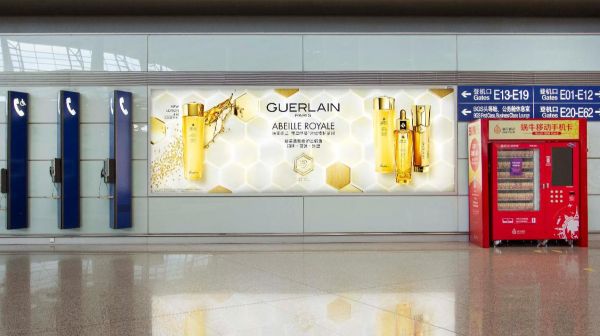
T3C domestic departure security check LED screen: located in the security check area, it is the only media in the security check area, covering 100% of domestic departing passengers. Specification 3.52 × 4.8m, published price 2.67 million yuan/month.
T3 domestic departure waiting area corridor lightbox: located on the core flow line of the waiting area, with a size of about 7 × 2.7m, a published price of 2.98 million yuan/set/month, and a production cost of about 12500 yuan/set.
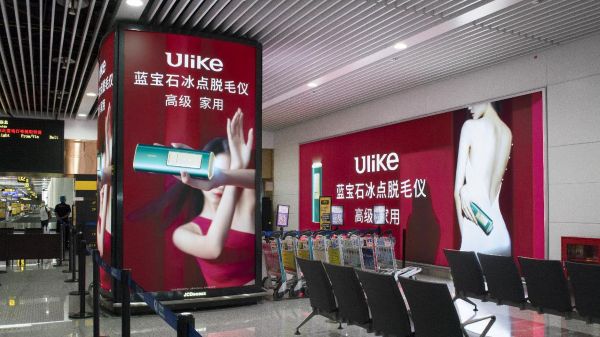
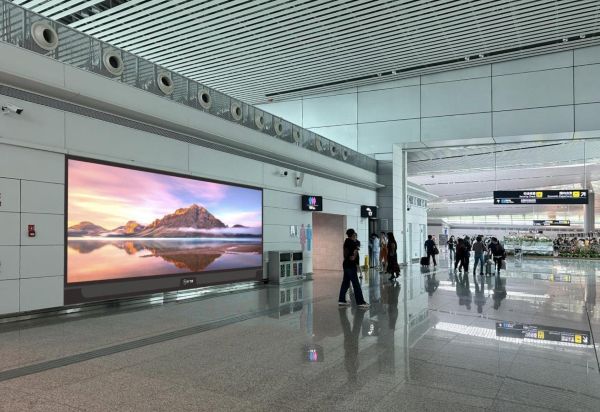
T3 domestic baggage claim hall LED set: a golden spot for passenger gathering, covering 100% of domestic arriving passengers, with a 9-panel screen set priced at 894000 yuan per week.
T3 International Luggage Claim Hall LED Set: Covering international arriving passengers, the 6-screen set is priced at 414000 yuan per week.
(2) Capital Airport T2 Terminal (cost-effective choice)
T2 front hall and domestic ticketing hall LED: including 4 LED screens, with an adjusted price of 23.33 million yuan/year in 2026.
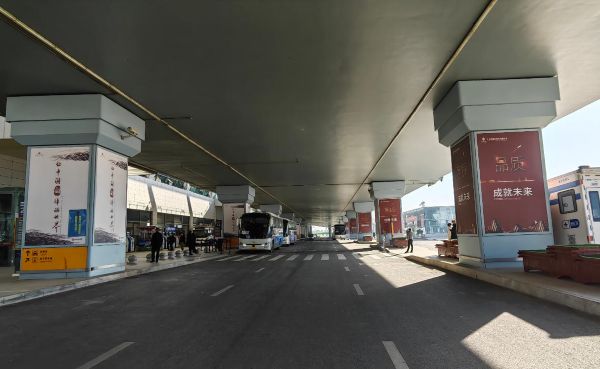
T2 first floor arrival outer lane wrapped light box: covering all arriving passengers, with 13 wrapped columns costing 3.51 million yuan per year.
T2 domestic and international LED above the export: covering 100% of arriving passengers, with a published price of 752000 yuan/4 weeks.
(3) Beijing Daxing Airport (preferred for innovative image)
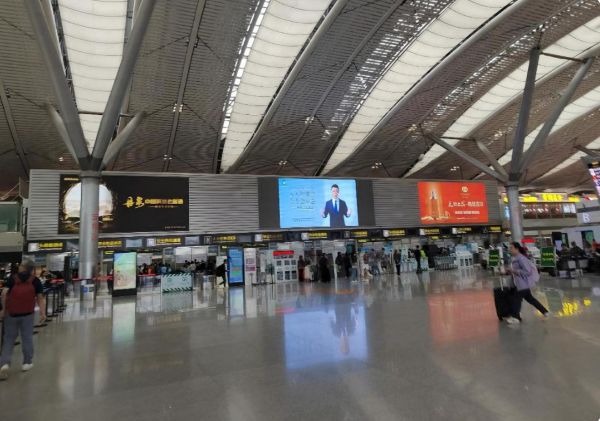
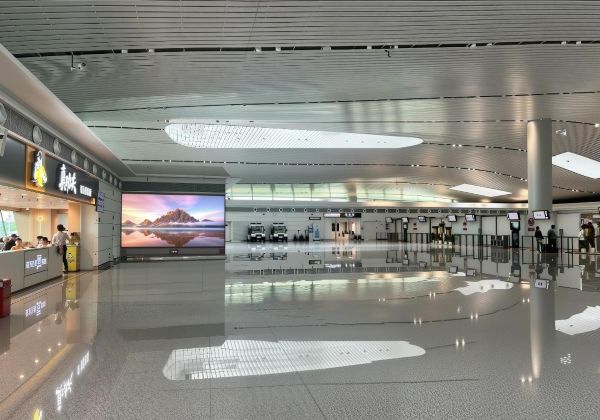
Departure check-in hall LED dual screen: located above the central floating island of check-in, with a single screen of 94.4 square meters and a dual screen combination of 188.8 square meters visual matrix, reaching over 100000 people per day. Publication price: The 15 second version costs 1.494 million yuan per set per week.
Security checkpoint screen advertising: 20 units, 88800 yuan/week/group.
Billboards inside the bridge: 120 yuan, 1.5 million yuan/month.
Important note: The above is an example price, and the actual execution price is discounted according to the advertising volume, cycle, and season. Long cycles (quarterly/semi annual/annual) can obtain better unit prices.
3、 Step by Step: Complete the advertising placement on the large screen of Beijing Airport in five steps
Step 1: Clarify goals and budget framework
First, let me ask myself three questions: is the purpose of advertising brand image building, new product launch, or event traffic? Who is the target audience? What is the budget? The large screen advertisements at Daxing Airport are usually released on a weekly/monthly basis, which is a high-end media investment that generally requires media preparation of millions or more.
Step 2: Scientific screening of terminal buildings and locations
Capital Airport T3: International routes are concentrated, with a high density of business customers, suitable for high-end brands such as finance, automobiles, luxury goods, etc.
Daxing Airport: With a strong sense of technology and diverse media formats, it is suitable for customers who showcase their brand's innovative image.
Location value ranking: Departure hall>Waiting area>Arrival hall>Passage. The security check area is the only media with exclusive premium.
Suggestion: Personally go to the target location to observe and feel the flow of people and visual visibility.
Step 3: Creative Production - Customize for Large Screen Scenes
Airport big screen advertising is a "3-second art" - complex details are simply not visible when passengers pass by in a hurry.
The 3-second rule: The brand logo should be large, the core information should be short, and the visual impact should be strong. A clear logo and a powerful slogan are worth a thousand words.
Design points:
Abandon complex copy and rely on strong visual symbols
Make full use of the advantages of video, 15 second short films are more attractive than static images
Creative content can be combined with emotional points such as "departure," "arrival," and "journey," triggering emotional resonance
Technical requirements: The resolution should not be lower than 1920 * 1080, and the output should strictly follow the technical specifications provided by the media. The production cost of LED videos is about 30000 to 100000 yuan per piece.
Step 4: Select a service provider and execute the advertising campaign
The benefits of finding a professional agent: Airport advertising resources have exclusivity and require cooperation through core channels. Professional platforms can provide one-stop services from demand analysis, point evaluation, price negotiation to creative execution and effect tracking.
Delivery process:
Consultation and communication to understand pricing and scheduling. Airport resources are tight, it is recommended to book 1-2 months in advance
Sign the contract, clarify the location, cycle, and cost details (confirm whether it is "all inclusive")
Design advertising materials and output files according to technical requirements
Submit to the airport and relevant departments for review (with 2-4 weeks reserved for approval)
Pay the fees and produce the publication
Obtain the publication monitoring report (photos/videos with time watermark)
Review of the effect after the completion of the placement
Tianci Media is a professional airport advertising platform that has been deeply involved in Beijing airport media for many years. It has core location databases for the Capital Airport and Daxing Airport, providing one-stop full process services from demand analysis, location evaluation to creative execution and effect tracking.
Step 5: Effect tracking and secondary dissemination
During the advertising period, on-site monitoring is conducted to ensure accurate execution. Large screen advertising content can be made into short videos and posters for secondary dissemination on social media, forming an integrated marketing effect of "offline explosion, online fermentation".
4、 The 4 easiest pitfalls for beginners to step into
Pit 1: Only focus on price and ignore location value. The cheapest spot may be located in a remote corner with limited exposure effect. Although the gold screen in the core area has a high unit price, the effective reach cost may be lower. Priority must be given to crowd coverage and visual visibility.
Pit 2: Creative "small screen" translation. Directly placing TV commercials or mobile phone detail pages on airport screens is a fatal mistake. Airports are outdoor environments that are "long-distance, short-term" and require exclusive creative design for airport scenes.
Pit 3: Underestimating the approval cycle. The content review of airport advertisements is strict, involving compliance with advertising laws, airport image review, etc., requiring at least 2-4 weeks of approval and production time to be reserved.
Pit 4: Collaborating with unqualified intermediaries. It is necessary to verify the qualifications of the agent to ensure that they have direct and legal resource authorization.
5. Conclusion
The large screen advertisements at Beijing Airport are essentially a series of "deep conversations" with high net worth individuals in the country's most high-end travel scenarios. It tests not only the brand's budget, but also its strategic vision and execution accuracy.
For beginners, the key to success lies in: clear goals, scientific selection of points, creative adaptation, and professional execution. Don't be greedy for perfection, start testing from 1-2 core points, validate the effect after 4 weeks of deployment, and gradually scale up.
Tianci Media is a professional airport advertising platform that provides one-stop professional services from demand analysis, location evaluation, creative execution, and effect tracking. Consult now to obtain your exclusive Beijing airport large screen advertising placement plan!