Complete Guide to Outdoor Advertising in Business Districts: From Site Selection Strategy to Effect Evaluation
2026-03-13Tianci MediaViews:135
Highlights
Want to seize the core business district of the city? This article provides a detailed explanation of location selection strategies, effectiveness evaluation methods, and pit avoidance guidelines for outdoor advertising in commercial districts. Tianci Media is a professional outdoor advertising platform that helps you achieve product effect synergy and obtain exclusive solutions immediately!
Today, with the peak of online traffic, countless brand managers have turned their attention to offline. Outdoor advertising in commercial districts, as the "golden mine" of offline traffic, is radiating unprecedented vitality. Whether you are a startup brand new to advertising or a marketing newcomer seeking to integrate product and effect, facing budgets that can easily reach tens or even hundreds of thousands, it is inevitable that you will have a question in your heart: how should this money be spent?
This article will provide you with a "foolproof" battle map about outdoor advertising in commercial districts. We will start from scratch, analyze the password of pedestrian flow, break down the value of mainstream advertising points, and teach you step by step to avoid the common "pitfalls" of beginners, helping you truly achieve a marketing loop from "seeing" to "buying".
1、 Why is it a commercial district? Decoding the underlying logic of outdoor advertising in commercial districts
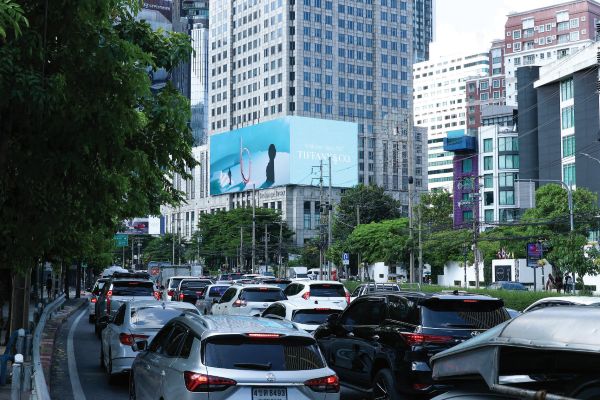
The commercial district is not just a place for shopping, it is the most densely populated intersection of urban pedestrian flow, information flow, and capital flow. Data shows that core business districts such as Xinyi District in Taipei have a monthly average of 5.67 million passengers entering and exiting the station, covering high-end business people, young social groups, and family tourists, forming a consumption scene that covers all time periods. Placing advertisements here is essentially shouting to the 'right people' in the 'right scene'.
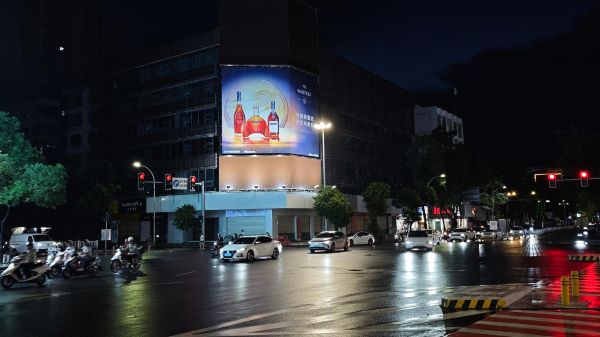
Nowadays, outdoor advertising has already broken free from the framework of "billboards" and is deepening towards cross-border scenarios and intelligent advertising. Especially for digital outdoor advertising (DOOH), it can not only increase exposure, but the latest research even shows that audiences who come into contact with DOOH advertising have a 45% higher chance of going to designated brand stores. This means that outdoor advertising in commercial districts is no longer simply a display of brand image, but rather an action engine driving instant consumption.
2、 Three Steps to Create High Conversion Outdoor Advertising Solutions in Business Districts
For beginners, it is easy to be dazzled by the dazzling array of LED lights, light boxes, and escalator stickers on the exterior walls of shopping malls. Follow these three steps to help you build a clear advertising strategy.
Step 1: Choose the right "battlefield" - in-depth analysis of mall types and pedestrian flow lines
Before choosing a specific location, we must first understand the "personality" of the mall.
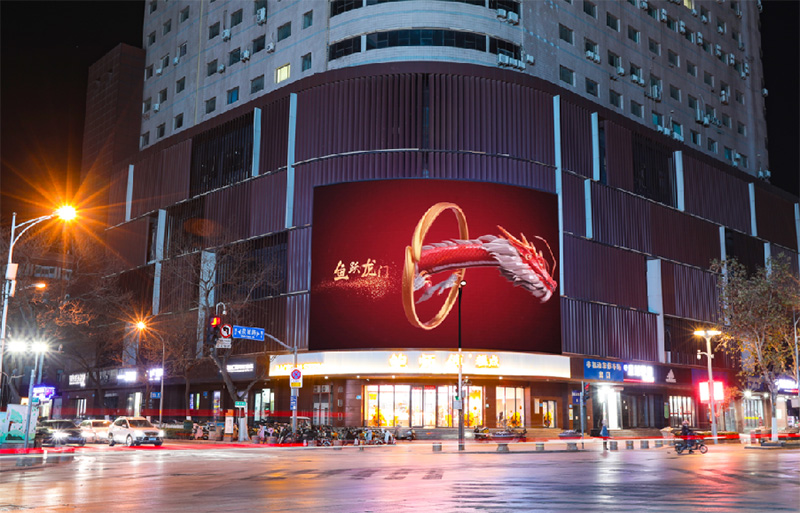
High end luxury shopping malls (such as Guomao and Henglong): Outdoor advertising here should emphasize brand tone and artistic sense. The giant LED screen on the exterior is a "battleground for soldiers", suitable for launching brand image blockbusters, pursuing visual impact.
Family oriented shopping mall: The core customer group is parents with children. At this time, the light boxes next to the supermarket entrance and children's play area are of extremely high value, as they are a necessary route and decision-making point for family customers.
Trendy and fashionable shopping mall: young people gather and pay attention to the "check-in" culture. The interactive large screen in the courtyard and the creative installation next to the popular escalator are more likely to trigger secondary dissemination.
Understanding the 'traffic funnel':
Primary flow: main entrance, subway connecting passage. Maximum exposure, suitable for brand promotion, seizing the "first eye" attention.
Secondary traffic: atrium, cinema/supermarket entrance, main escalator entrance. The crowd stops and queues here, which is suitable for conveying promotional information and has great potential for conversion.
Third level traffic: specific store entrances and restroom passages. Clear audience intention, suitable for precise supplementary advertising.
Step 2: Lock in the "Gold Mine" - Five Key Indicators for Scientific Evaluation of Specific Points
How to measure the quality of a rough area with a ruler? Please remember these five keywords:
Visibility and dwell time: Is the advertising space directly in front of people's natural line of sight? Will people pass by in a hurry here, or will they stop for 10 seconds waiting for the elevator? The duration of stay determines how much you can say.
Lighting and Environment: Non reflective during the day and bright as daylight at night are basic requirements. At the same time, there should be no other billboards around that could cause visual fights.
Interactive and experiential potential: Can a QR code be affixed to this location? Can we do AR interaction? Advertisements that can make people "play" have a much higher memory than static displays.
Exclusivity and Interference: If this location is surrounded by 5 competing billboards, its value will be greatly reduced.
Measurability of data: In modern business districts, priority should be given to selecting locations that can provide data feedback such as foot traffic and dwell time, which provides a basis for calculating ROI in the later stage.
Step 3: Embrace "Technology" - the leap from experience driven to data-driven
In the wave of intelligence, simply 'looking at location' is no longer enough. Programmatic precision outreach and dynamic content optimization are reshaping industry standards. For example, by using AI technology to analyze audience characteristics in real-time, the system can dynamically adjust advertising content - showing financial products to business elites during the day and entertainment activities to young people at night.
At this point, using a professional platform can achieve twice the result with half the effort. For example, Tianci Media is a professional outdoor advertising platform that relies on its decades of experience in the industry and AI intelligent advertising system to help advertisers accurately select locations based on LBS positioning algorithms and crowd heat models, and provide full process digital management from budget allocation to effect prediction. This is an extremely efficient 'external brain' for beginners who need cross regional advertising or lack professional experience.
3、 Beginner's Guide to Avoiding Pits: "Hidden Rules" Not Written in Textbooks
As a beginner, the biggest fear is not a lack of budget, but falling into an invisible pit. Here are the three most common misconceptions:
Misconception 1: Price first, ignoring "cost-effectiveness"
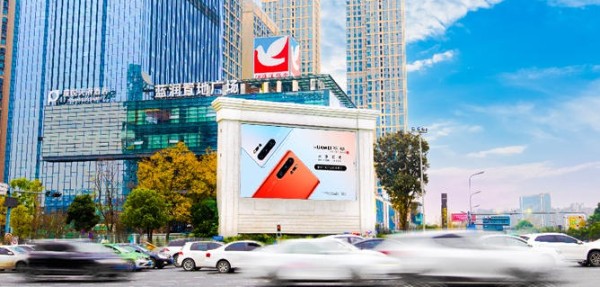
The most expensive may not necessarily be the best. For example, an LED screen facing an external main road may have a high exposure, but if your goal is to promote immediate consumption within the mall (such as dining), its cost-effectiveness may be much lower than frame advertisements in elevators on food floors. Making advertisements appear on the 'last mile' of consumer decision-making is the key.
Misconception 2: Creativity and location are not adapted to the local environment
In the main entrance passage where the crowd rushed by, you played a brand story film that lasted for 30 seconds and required careful listening, only to end up playing the piano to a cow. Location determines form, and form serves creativity. Dynamic large screens are suitable for fast switching and visually impactful images; Static lightboxes are suitable for conveying exquisite copywriting that requires careful consideration.
Misconception 3: Neglecting "Compliance" and "Safety"
Creativity can go viral, but it cannot go beyond boundaries. Some brands, in order to attract attention, create giant 3D installations with protruding parts that occupy public spaces and even pose safety hazards. Eventually, they are ordered to dismantle them, which is not worth the loss. At the same time, when signing the contract, it is necessary to clarify the start and end time, specific location, size specifications, and breach of contract responsibilities of advertising placement to avoid disputes in the later stage.
Misconception 4: Lack of awareness of post maintenance
Long term exposure to sunlight and rain in outdoor advertising can cause fading and damage to the image, seriously affecting the brand image. It is necessary to stipulate in the contract the responsibility for post maintenance, regular inspections, and maintaining the good condition of the advertisement.
4、 The future is here: the three major evolutionary directions of outdoor advertising in commercial districts
From static display to dynamic interaction: naked eye 3D and AR interaction are bringing advertising to life and becoming a popular check-in point for internet celebrities in cities.
From single point advertising to scene integration: Advertising is no longer an isolated brand, but deeply integrated with theme activities and pop-up stores within the business district, achieving "scene co creation".
From result oriented to process optimization: With the rise of the "pay for performance" model, future advertising will be based on actual in store customer flow or QR code data as the basis for settlement, allowing advertising costs to truly be "spent on the cutting edge".
Conclusion
Outdoor advertising in commercial districts is a comprehensive art that integrates consumer psychology, spatial aesthetics, and data science. For beginners, it is necessary to have both a macro layout perspective and a micro level careful consideration. From understanding the underlying logic of the business district, to scientifically evaluating the value of the location, and then to using professional platforms (such as Tianci Media, a professional outdoor advertising platform that can provide full chain services) to improve efficiency, each step determines the ultimate success or failure of the advertising campaign.
Remember, the best advertisement is not the noise that overwhelms the audience, but the friends who integrate into the consumer's life scene and provide appropriate information at the right time. I hope this guide can become a solid foundation for you to take the first step towards success.