How to advertise at Tianjin Binhai Airport? Understand the golden media resources of T1/T2 terminals in one article
2026-02-26Tianci MediaViews:122
Highlights
Tianjin Binhai Airport, as the aviation hub of Beijing Tianjin Hebei region, has a passenger throughput of over 28 million by 2025. This article provides a detailed explanation of the value of core advertising locations such as the departure check-in island, arrival luggage hall, and waiting area in Terminal 2, and offers practical steps and guidelines for avoiding pitfalls in advertising placement. Tianci Media, a professional airport advertising platform, helps you accurately reach high net worth individuals!
As a core member of the world-class airport cluster in the Beijing Tianjin Hebei region, Tianjin Binhai International Airport is not only a modern aviation hub, but also a top media platform that gathers high-value audiences and carries brand image. By 2025, the airport's passenger throughput will exceed 28 million, with international passengers accounting for 35% and business passengers accounting for 58%, higher than the national average.
For brands, a question arises: how should advertisements be placed at Tianjin Binhai Airport? What are the prime locations in T1 and T2 terminals? What is the approximate price? How can we efficiently reach our target audience?
This article will systematically analyze all aspects of advertising at Tianjin Binhai Airport, from media value, core points to practical strategies, providing a complete advertising guide.
1、 Overview and Advertising Value of Tianjin Binhai Airport
Tianjin Binhai International Airport is located in Dongli District, Tianjin, 13 kilometers away from the city center. It is positioned as a 4E level civil international airport and serves as China's international air logistics center, international scheduled flight airport, and national first-class air port.
Currently, the airport operates two terminals, T1 and T2. After the renovation and upgrade of Terminal 1 in January 2025, it will be transformed into a pure international and regional flight support function. The T2 terminal mainly guarantees domestic flights, and the two terminals are seamlessly connected through a corridor.
The core advertising value is reflected in three aspects.
Firstly, precise targeting of high net worth individuals. Air passengers are mainly business people and high-income groups, with a spending power 2.3 times that of ordinary passengers. They are ideal target customers for industries such as finance, automotive, luxury goods, and high-end tourism.
Secondly, deep communication in enclosed spaces. Passengers have a large amount of fragmented waiting time during check-in, security check, waiting, baggage claim and other processes. The average duration of stay in the pre security area of the departure floor of Terminal 2 is 42 minutes, creating a high-quality advertising exposure scene.
Thirdly, the window effect of Beijing Tianjin Hebei synergy. As the main alternate airport of Beijing Capital Airport, Tianjin Binhai Airport undertakes 12% of the overflow passenger flow of Beijing Capital Airport. After the opening of the Beijing Binhai Intercity Railway, it realizes a 45 minute direct connection with the Beijing sub center, driving the flow of business people in both Beijing and Tianjin cities.
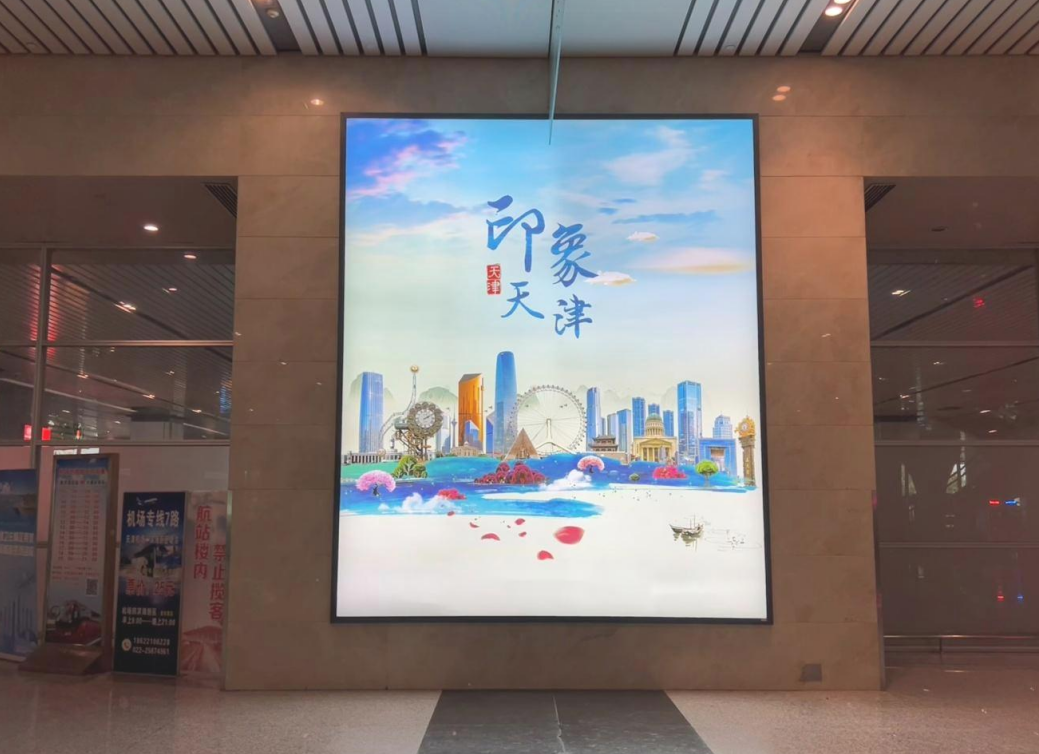
2、 Analysis of core advertising locations at Tianjin Binhai Airport
According to the official investment announcement of the airport in 2026, T2 terminal has abundant advertising media resources. Here are the most valuable golden locations based on passenger flow.
(1) Departure area: The first stop of brand image
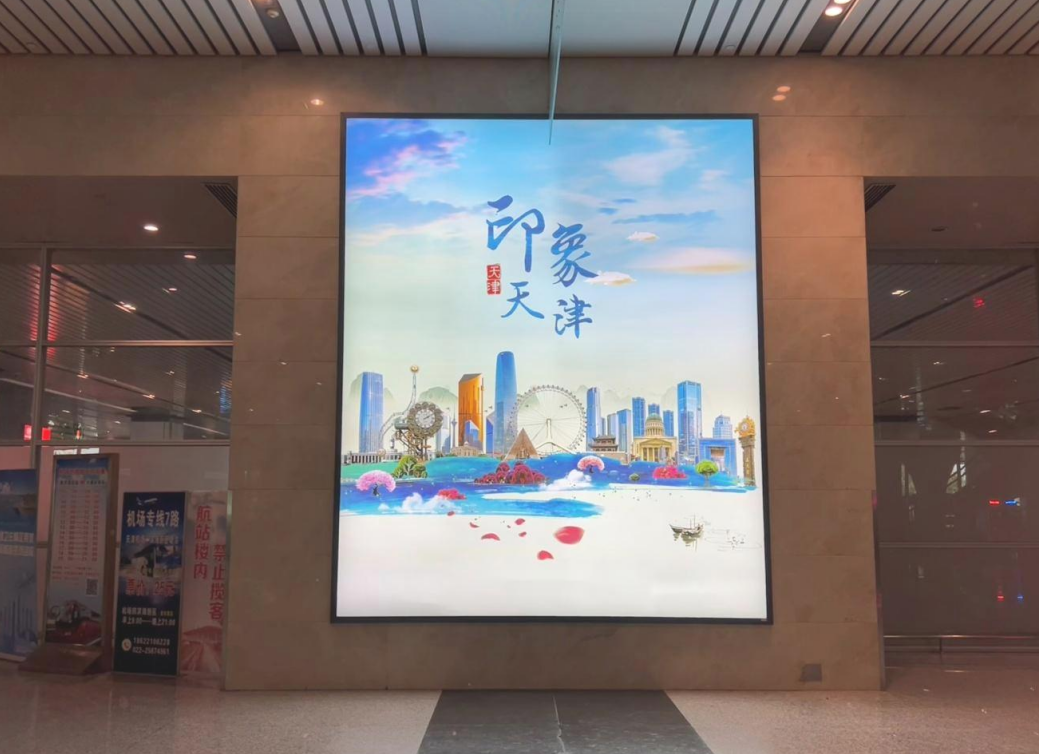
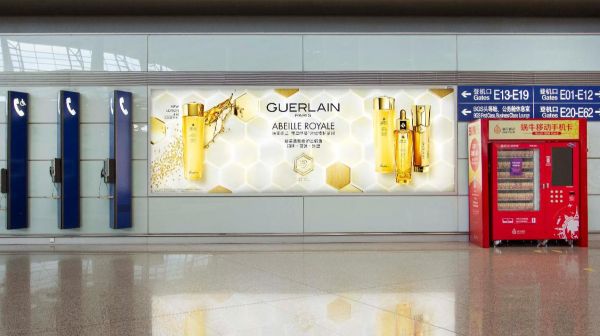
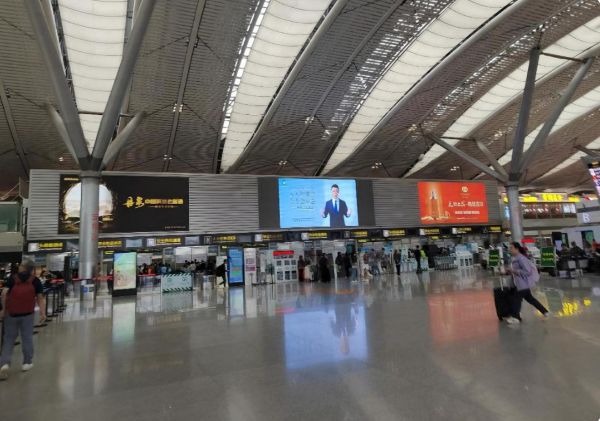
The departure check-in island lightbox is the first media that passengers come into contact with after entering the airport. Located above the check-in island in the departure hall of Terminal 2, covering 100% of domestic departing passengers. Passengers spend an average of 15-30 minutes in the check-in process and are frequently exposed to advertising content. The media ID for this area is TJTSN-23G-D010/011, suitable for showcasing the image of financial, automotive, luxury and other brands.
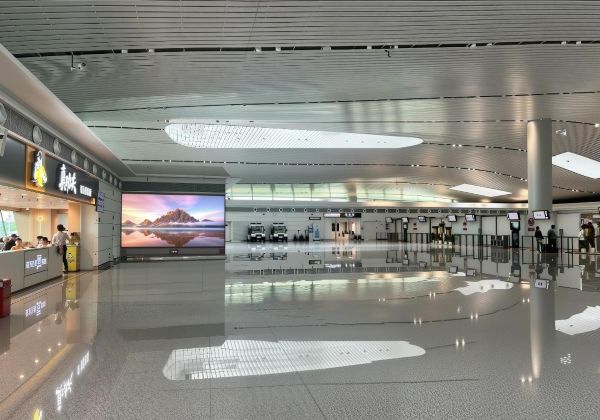
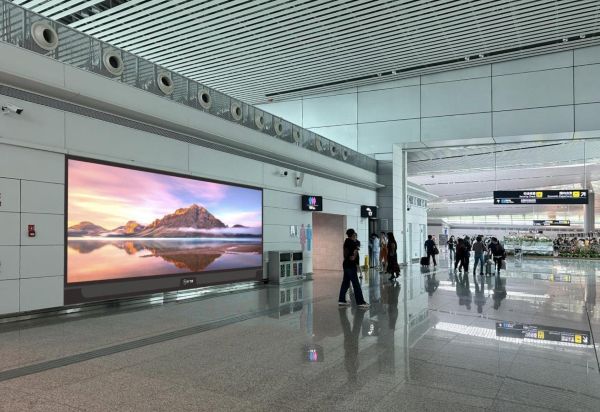
There are a total of 13 LED screens in the departure quarantine area, located on the core flow line leading to the boarding gate after security check, with media numbers TJTSN-23G-L014 to L026. Each LED screen rotates advertising content at a frequency of 15 seconds per session, with a daily cumulative playback volume of 250 times per session and an annual customer traffic of over 18.5 million. This is suitable for products or promotional information that require dynamic display.
The LED screen directly above the domestic security checkpoint has a size of 4.5 meters by 35 meters and a total area of 157.5 square meters, making it one of the most stunning visual focuses of Terminal 2. 16 hours/day operation, with a minimum advertising cycle of 4 weeks, suitable for large-scale events that pursue top-level exposure and brand endorsement.
(2) Waiting area: the golden time for deep communication
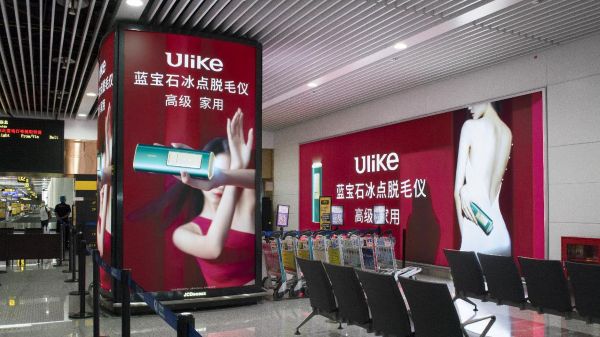
The LED columns in the domestic departure waiting area are located in the boarding gate area, with a total of 13 pieces/set, distributed at the focal point of passengers' line of sight. Passengers have ample waiting time, a relaxed mindset, and ample time to watch advertising content. The column form forms a surround visual enclosure with excellent memory effect, suitable for mid to high end brands to accurately reach target consumers.
(3) Arrival area: Last mile conversion opportunity
The baggage claim hall is one of the most densely populated areas for advertising resources at Tianjin Binhai Airport. According to the official investment announcement, the region has multiple media formats:
Above the luggage carousel, there are 10 LEDs with media numbers TJTSN-21N-L003 to L012, located at the necessary position for passengers waiting for their luggage. Passengers stay in the turntable area for an average of 2-3 minutes, creating a forced access scene due to their focus on searching for luggage. According to data from a certain media platform, the lightbox specifications in this area are 2.2 meters by 3.8 meters, with a published price of 200000 yuan per month per set.
Attached lightbox: located in the baggage claim hall, media number TJTSN-21G-D071/072, etc. The space is spacious and unobstructed, with passengers' attention focused on luggage verification and low interference in information reception.
Light box above the escalator: located above the luggage retrieval escalator, media number TJTSN-21N-D052/058. When passengers ride the escalator, their line of sight naturally rises, and the visibility of advertisements is extremely high.
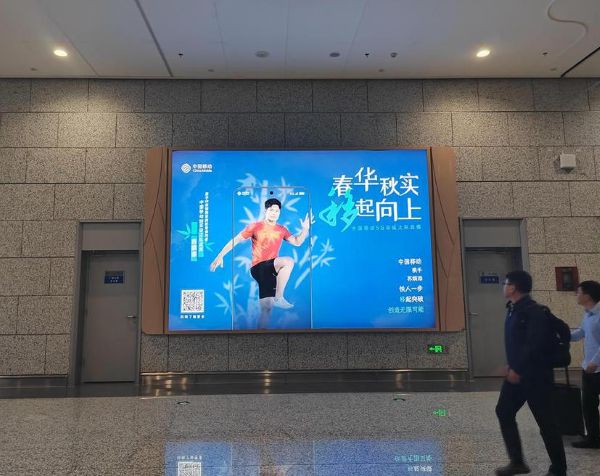
The mezzanine corridor is a necessary route for passengers to travel from the baggage claim area to the exit, with an average daily passenger flow of 100000 to 150000 people. The lightbox advertisements here come in various specifications, such as a 9.62m x 1.74m long lightbox with strong visual impact. After arriving, passengers are in the "window period" of information reception and are most sensitive to the demand information for local services (hotels, car rentals, tourism).
The large light box on the first floor, reaching the exit of the escalator, with a size of 34.83 square meters per piece, is one of the most eye-catching media in the arrival area, suitable for showcasing the brand image as the finale.
(4) TV Broadcast Network: A Flexible and Accessible Supplementary Media
The domestic departure hall of Terminal 2 is equipped with 43 55 inch airport televisions, covering areas such as check-in and waiting. It can be combined with different frequencies and durations for advertising, suitable for brands with limited budgets but hoping to reach a wide audience.
3、 Practical deployment: Five steps to complete the process
Step 1: Clarify marketing objectives and audience
Before investing in the budget, clarify the goal: to enhance brand awareness, launch new products, or attract traffic to offline stores? Who is the target audience? Business people, tourists, or international travelers? Select the matching point based on the answer.
For example, high-end brands such as finance and automobiles should prioritize coverage of departure check-in island lightboxes and waiting area LEDs; Local lifestyle services and tourist attractions can be accessed through luggage halls and mezzanine lightboxes, providing direct access to arriving passengers; International brands need to pay attention to the international area of Terminal 1.
Step 2: Filter core locations and media formats
Select 2-3 core locations from the above points based on budget and goals. Suggest adopting a "combination strategy": establish brand image in the departure area and guide conversion in the arrival area. You can refer to the media resource list in the official investment announcement of 2026 to understand the specific location and specifications of each point.
Step 3: Obtain a quotation and negotiate
The advertising prices of Tianjin Binhai Airport vary greatly due to differences in location, form, and cycle. Taking the bidding announcement of Postal Savings Bank of China in 2026 as an example, the reference price for airport sticker media advertising fees is 90000 yuan/month/block, and the production fee is 5000 yuan/time/block. The actual execution price is discounted according to the amount of advertising, and long-term cooperation can obtain better conditions.
The price of the light box above the luggage turntable is about 200000 yuan/month/set, the annual fee for the LED column is about 360000-720000 yuan, and the annual fee for the mezzanine corridor light box is about 500000-1 million yuan. Please note that the above prices do not include production costs, and the actual transaction price needs to be negotiated specifically.
Step 4: Creative Production - Tailored for Airport Scenes
Airport advertising must follow the "3-second principle": relying on strong visual symbols, concise and powerful slogans, and high-quality brand images to convey core information within 3 seconds. Different from mobile or TV advertisements, airport environments are characterized by long distance, short duration, and strong interference, and creativity must be adapted accordingly.
At the same time, it is necessary to strictly comply with the technical specifications of the airport for advertising images, such as resolution, format, security review, and other requirements.
Step 5: Execution and Effect Tracking
Sign a formal contract before advertising, specifying terms such as publication time, playback frequency, and compensation for malfunctions. After publication, it is required to provide monitoring photos or videos to ensure accurate execution. Track interactive effects through exclusive QR codes, discount codes, and other methods to accumulate data for subsequent advertising.
Tianci Media is a professional airport advertising platform that has been deeply involved in airport media for many years, with rich media resources and advertising experience at Tianjin Binhai Airport. From point analysis and price negotiation to creative suggestions and publication execution, we provide one-stop full process services to help brands efficiently achieve their advertising goals.
4、 Real advertising case reference
Case 1: Continuous investment by government agencies. In 2025, the office of the China Singapore Tianjin Eco City Management Committee will purchase advertising billboard rental services for Tianjin Binhai Airport, with a winning bid of 1.16 million yuan, covering 2 advertising booths on both sides of the domestic arrival mezzanine of Terminal 2 (for 6 months). Tianjin Economic and Technological Development Zone also purchased airport advertising projects for 1.068 million yuan. The continuous investment of these government units over the years fully proves the authoritative value of airport advertising.
Case 2: Financial institutions lock in sticker media. In January 2026, China Postal Savings Bank Tianjin Branch issued a bidding announcement to purchase airport sticker media placement services, with an advertising fee of 90000 yuan/month/block. It is expected to be placed for 11 months per year, with an estimated procurement amount of 2 million yuan for two years. The financial industry's preference for airport advertising stems from its ability to accurately reach high net worth individuals.
Case 3: Top brands advertise year-round. The list of advertising gold medal operators of Tianjin Binhai Airport in 2025 includes professional advertising companies such as Tianjin Hongdu Media, Accor Bodi Cultural Media (Beijing), Xizang Huajun Advertising, etc. These companies serve customers in luxury goods, automobile, finance and other industries.
5、 Common Misconceptions and Avoiding Pits Guide
Misconception 1: Only focusing on the total passenger flow, ignoring the quality of the crowd
A passenger flow of tens of millions does not equal effective outreach. The core advantage of airport advertising lies in the quality of the audience, not just the quantity. When evaluating, attention should be paid to indicators such as the proportion of business travelers, the proportion of international travelers, and consumption capacity.
Misconception 2: Creative "small screen" translation
It is a fatal mistake to directly display a love page or TV advertisement on the airport screen while looking at the phone. Exclusive creative design must be carried out for outdoor environments that are "distant and short-term", achieving a large brand identity, short core information, and strong color contrast.
Misconception 3: Pursuing short-term sales conversion
Airport large screen advertising is a brand building media that should focus on medium - and long-term indicators such as brand awareness enhancement and high-end image building, rather than directly pursuing short-term sales conversion. We need to cooperate with online and offline integrated marketing in order to amplify the effect.
Misconception 4: Ignoring official channels and legitimate agents
Airport advertising resources must be placed through official authorization or legitimate agency companies. You can refer to the qualification requirements in the investment announcement on the airport's official website and choose a legitimate company with a registered capital of not less than 500000 yuan and more than 2 years of advertising operation experience. Avoid using personal intermediaries or small companies with incomplete qualifications to avoid disputes.
Misconception 5: Failure to lock in the schedule in advance
Airport advertising resources are limited, especially during holidays and major events when schedules are tight. It is recommended to start negotiations 2-3 months in advance and reserve sufficient time for creative production and approval.
6、Conclusion
Tianjin Binhai Airport advertising, as the core media of the Beijing Tianjin Hebei aviation hub, has become a strategic highland for brand communication with its unique values such as reaching high net worth individuals, deep communication in enclosed spaces, and endorsement of landmark brands.
From the golden light box on the check-in island departing from T2, to the mandatory exposure media at the luggage hall, from the LED columns in the waiting area, to the ultra long light box on the mezzanine corridor, Tianjin Binhai Airport provides brands with a wide range of choices. The key lies in scientific planning: clear goals, selected locations, creative adaptation, and professional execution.
For beginners, it is recommended to start with small-scale testing, select 1-2 core points, and place them for 1-3 months to verify the effectiveness before gradually scaling up. With the assistance of professional partners such as Tianci Media, Tianci Media is a professional airport advertising platform with rich airport media resources and advertising experience. It can provide you with full process services from strategy to execution, allowing your brand to meet high-value users accurately in every takeoff and landing of the "Bohai Pearl".