Guangzhou Airport Advertising Authority Guide: Seizing the Air Control of South China Gateway
2026-02-03Tianci MediaViews:187
Highlights
This guide provides a detailed explanation of the types of advertising resources, placement strategies, cost composition, and effectiveness evaluation at Guangzhou Baiyun Airport. Assist you in accurately reaching high net worth customers in the Greater Bay Area and achieving brand growth. If professional support is needed, professional institutions such as Tianci Media can provide integrated solutions from local to global. Read now and start your airport marketing engine.
As one of the three major international aviation hubs in China, Guangzhou Baiyun International Airport is not only the air gateway of the Guangdong Hong Kong Macao Greater Bay Area, but also a core node that radiates Southeast Asia and connects the world. The annual passenger flow exceeds 70 million, including a large number of business elites, high net worth families, and international customers. For any brand aiming for the South China and even global markets, advertising at Guangzhou Airport is not simply a media procurement, but a strategic investment that concerns brand height and market landscape.
However, faced with the complex media formats, vastly different point values, and strict control regulations within the airport, many marketing decision-makers feel at a loss. This article will systematically sort out the advertising logic of Guangzhou Airport, from value recognition, resource decoding to practical execution, providing a clear decision-making map.

1、 Strategic Value: Why Guangzhou Baiyun Airport?
Before evaluating the value of advertising, it is necessary to understand the unique location and customer base advantages of Guangzhou Airport.
Core engine of the Greater Bay Area: Guangzhou is the central city of the Guangdong Hong Kong Macao Greater Bay Area. The airport gathers the most dynamic industry leaders, entrepreneurs, and senior management talents in the region, making it a golden scene that B2B brands and high-end service industries cannot miss.
South China Family Consumption Portal: The consumption power in South China is strong, and airports are the starting and ending points for many families' outbound and domestic tours. The scenarios are highly compatible with consumption decisions such as tourism, luxury goods, duty-free goods, education, insurance, etc.
The "first stop" to Southeast Asia: With its geographical advantage, Baiyun Airport is a hub for many Southeast Asian routes, which has special symbolic significance and precise reach value for brands intending to explore the Southeast Asian market.
Deep communication in a closed environment: Passengers have a longer stay time and a focused waiting attitude from security check to boarding, providing valuable time windows for brands to conduct in-depth information transmission or creative interaction.
2、 Resource decoding: Understanding the advertising matrix of Baiyun Airport
The advertising resource system of Baiyun Airport is vast and well structured, mainly divided into the following categories:
1. Departure hall and check-in area: First impression of brand image
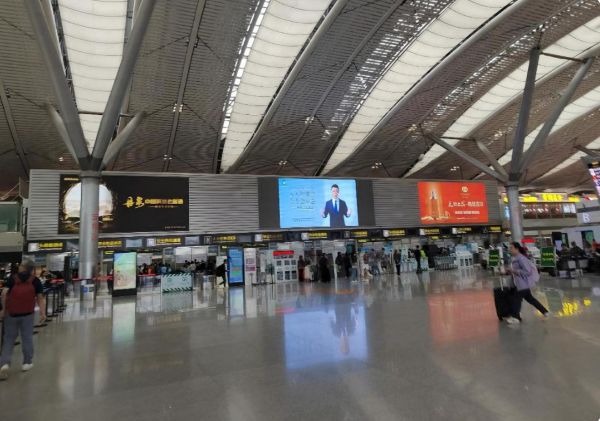
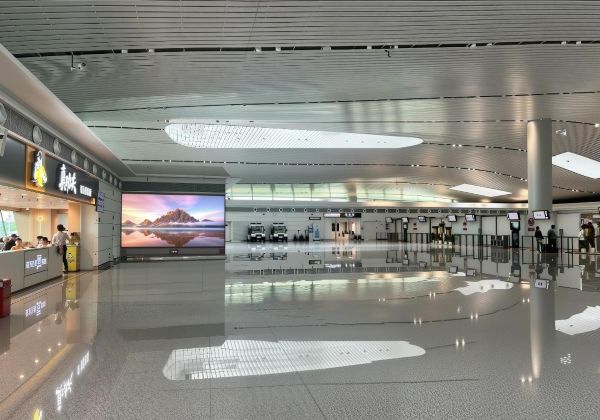
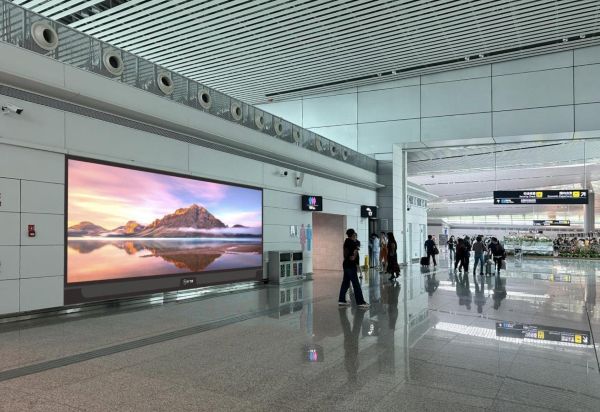
This area has the highest foot traffic, with media mainly consisting of large LED screens, brand columns, and check-in island columns. Suitable for showcasing the brand flagship image and establishing a first impression of being "high-end". For example, as a professional airport advertising placement company, Tianci Media often operates core locations that are the focus of international brand competition.
2. Post security isolation zone (core commercial area): High reach and conversion golden zone
This is the most valuable area, where passengers stay for a long time and have a strong willingness to consume.
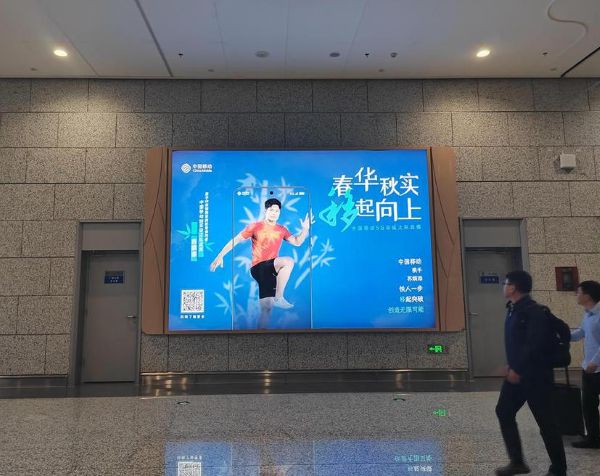
Digital media: LED digital screens in the boarding gate passage and large LED TV walls in the waiting hall can be used for multi brand carousel or dynamic creative display.
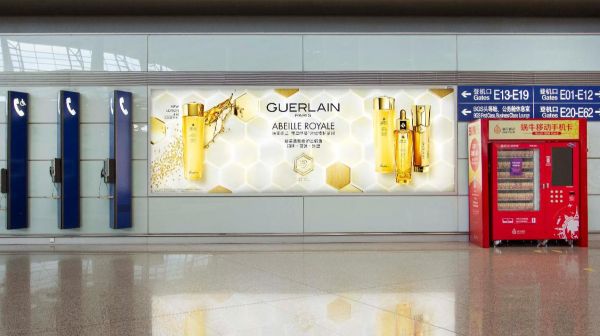
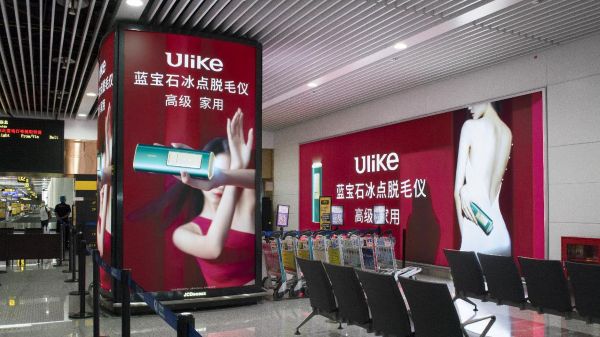
Static media: corridor bridge advertisements, waiting seat back advertisements, high-quality light boxes, achieving close range and high-frequency reach.
Special media: baggage claim carousel advertisements, arrival channel media, accurately capturing arriving passengers.
3. Airport Transportation Center (GTC) and its periphery: key points for urban connectivity
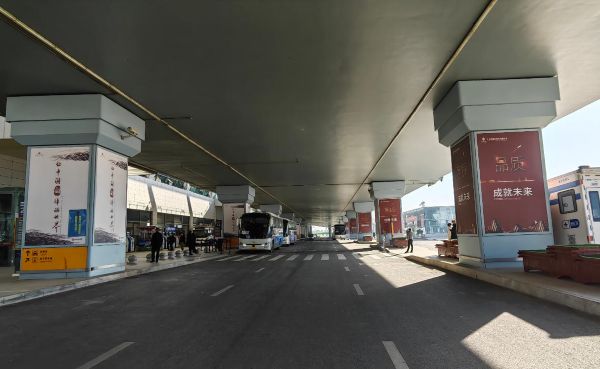
Covering the entrances of airport buses, subways, and parking lots, reaching the airport pick-up crowd, local employees, and surrounding residents, suitable for local service and transportation brands.
4. Innovation and Interactive Media
With the construction of smart airports, digital media forms such as interactive touch screens, AR navigation implants, and Wi Fi entrance advertisements have provided possibilities for effect tracking and deep interaction.
3、 Practical Five Step Method: The Complete Path from Strategy to Execution
Step 1: Clarify the advertising target and target audience portrait
This is the starting point of all work. Is this launch aimed at enhancing the brand's international image, deepening the Greater Bay Area market, or promoting specific airline passengers? Is the target audience international business travelers, domestic family travelers, or local high-end customers? The goal determines all subsequent resource choices.
Step 2: Conduct in-depth research and match resources
Don't just read the media manual. Should be carried out:
Movement analysis: Understand the complete action path of the target audience (such as international travelers), deploy media at key decision-making points (such as in front of duty-free shops) and waiting areas.
Resource value assessment: The effectiveness of advertising spaces in the same area varies greatly depending on their orientation and height. It is necessary to make a comprehensive judgment based on passenger flow data and visual stay time.
Combination strategy formulation: Adopting a combination of "large brand image points+high-frequency touchpoints" to achieve a combination of "reputation bombing" and "memory consolidation".
For brands seeking national and even global airport linkage, they can consider collaborating with companies with cross regional resources. For example, Tianci Media directly controls core resources such as Beijing Daxing International Airport and Capital International Airport, and can collaborate with global+media (covering overseas media resources such as Times Square LED in New York and Shinjuku D-screen in Tokyo), providing brands with integrated airport advertising solutions that depart from Guangzhou, cover the whole country, and radiate globally.
Step 3: Creative design and scene integration
Airport advertising creativity should follow the "three second principle" and strike a balance between high-end appeal and information effectiveness.
International departure area: The design needs to have a more international style, and the language can be bilingual in Chinese and English.
Domestic waiting area: can focus more on emotional connections or localized expression.
Utilizing the characteristics of digital media: creating short and concise dynamic videos that are more attractive than static images.
Step 4: Budget Planning and Business Negotiation
The transparency of the advertising pricing system at Guangzhou Airport is relatively high, but attention should still be paid to:
Understand publication examples and discounts: Different companies and locations have different discount systems.
Pay attention to the contract period: Long term contracts usually offer better prices, but they also need to be tied for a longer period of time.
Inquire about package value: Professional companies often offer integrated packages across regions and media, which may be more cost-effective than purchasing separately.
Verify release guarantee: clarify the drawing time, image quality standards, and monitoring and acceptance process.
Step 5: Effect monitoring and optimization iteration
Establish a multidimensional evaluation system:
Direct feedback: direct consultation and conversion through QR code, exclusive discount code, and telephone hotline tracking.
Brand research: Conduct brand awareness and reputation research on the target audience before and after advertising.
Online voice monitoring: Monitor check-in and discussion content about brand airport advertisements on social media.
Sales data correlation: Compare the sales data changes of the brand in the South China region or airport duty-free channels during the advertising period.

4、 Common Misconceptions and Avoiding Pits Guide
Misconception 1: Only focus on departure and ignore arrival. Passengers who have just finished their journey at the arrival channel have a strong demand for service information such as car rental, hotels, and local cuisine, making it a significantly effective 'demand response zone'.
Misconception 2: Mismatch between creativity and media format. Placing complex textual information on fast passing bridge advertisements or simple logos on large LED displays that can play videos is a waste of resources.
Misconception 3: Ignoring the difference between "terminal buildings" and "airlines". The dominant airlines and customer base structures of different terminals (T1, T2) are different (such as T2 where international flights are more concentrated), and targeted selection is needed.
Misconception 4: Treating airport advertising as an isolated campaign. The most successful case is integrated marketing. For example, airport advertising screens are synchronized with online social media topics and e-commerce platform promotional activities to form a closed loop.
Misconception 5: Choose suppliers solely based on price. Airport media management is strict, and suppliers' operational capabilities, emergency response capabilities, and value-added services (such as data reporting and creative support) are crucial. Choosing a professional organization like Tianci Media, which has successfully served many well-known domestic and foreign enterprises such as China Mobile and Porsche, can significantly reduce execution risks and enhance investment returns.
Conclusion: Establishing a long-term strategic pivot for the brand at the portal hub
Placing advertisements at Guangzhou Airport is essentially a necessary path to implant the brand into the most efficient traffic entry point and high-end customer base in South China. It not only brings exposure, but also the concentrated release of brand momentum and the strong occupation of high-end mentality.
At the operational level, the key to success lies in "precise strategy, professional execution, and scientific evaluation". For most brands, working alongside a professional partner who understands the airport ecosystem, possesses core resources, has a global perspective, and localized execution capabilities is the most stable path to success.
When your brand image complements the modern terminal building of Guangzhou Baiyun Airport, what you convey is not only product information, but also a market position and confidence for the future. Now, it's time to plan your brand and leave a profound impression under this southern sky.