Comprehensive Strategy for Advertising Placement at Shenzhen Airport: Resource, Strategy, and Effect Analysis
2026-01-30Tianci MediaViews:115
Highlights
This article is a must-have guide for you to start advertising placement at Shenzhen Airport. In depth analysis of various advertising resources within the terminal building, with a special focus on the unique value of core media such as welcome hall columns and lightboxes. Provide a complete process and cost analysis from goal setting, resource selection to effectiveness evaluation, to help you efficiently reach high net worth business travelers in southern China. Read now for professional advertising strategies! This article is a must-have guide for you to start advertising placement at Shenzhen Airport. In depth analysis of various advertising resources within the terminal building, with a special focus on the unique value of core media such as welcome hall columns and lightboxes. Provide a complete process and cost analysis from goal setting, resource selection to effectiveness evaluation, to help you efficiently reach high net worth business travelers in southern China. Read now for professional advertising strategies!
When a business elite steps into Shenzhen Bao'an International Airport, their attention is relatively idle and open throughout the entire process from check-in, security screening, waiting, arrival, to departure. This is the golden time for brands to engage in deep communication. Shenzhen airport advertising is the top medium for efficient and precise dialogue with high net worth travelers in this special scenario.
As the core hub of the Greater Bay Area, Shenzhen Airport has a huge annual passenger flow, with a significant proportion of business travelers and high-income individuals. Placing advertisements here is not just about "showcasing", but also a concentrated declaration of brand strength, style, and strategic vision. This guide will provide you with a systematic breakdown of how to develop a successful advertising placement plan for Shenzhen Airport from beginner to proficient.
Chapter 1: Why is Shenzhen Airport a brand battleground? ——Deep analysis of scene and audience
1.1 An irreplaceable 'mental capture' scenario
Airports are a closed and linear high-end scene. Passengers are detached from their daily environment here, in a "transitional" state of mind, and are more sensitive and focused on receiving information. This high-quality attention environment is incomparable to other noisy outdoor or fragmented online media.
1.2 Decoding high-value passenger portraits
The composition of passenger flow at Shenzhen Airport determines the value of its advertising:
High net worth and high decision-making power: It gathers entrepreneurs, multinational executives, professional technicians, etc. They are the main force in consumer upgrading and also the target decision-makers for B2B business.
Accurate regional attributes: mainly radiating to the Guangdong Hong Kong Macao Greater Bay Area, it has strategic significance for brands aiming to deeply cultivate the South China market or establish a regional headquarters image.
Clear scenario requirements: Passengers have clear transportation, business, luxury consumption, financial services and other needs within the airport, and brand advertising can achieve precise matching of "scenario is demand".

Chapter 2: Four Steps to Build Your Shenzhen Airport Advertising Campaign
Step 1: Clarify strategic objectives - brand building, product promotion, or sales diversion?
Before taking action, it is necessary to anchor the core goals, which directly determine resource selection and creative direction:
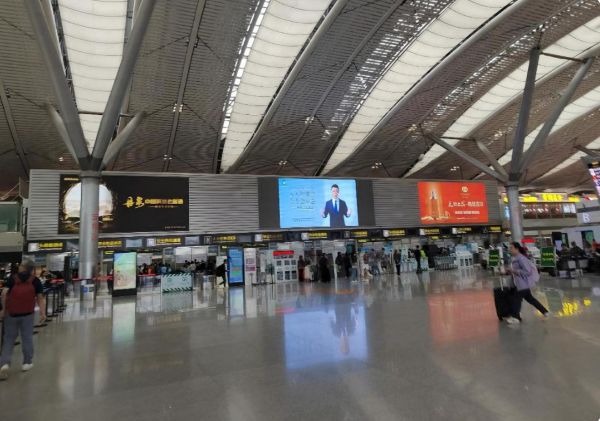
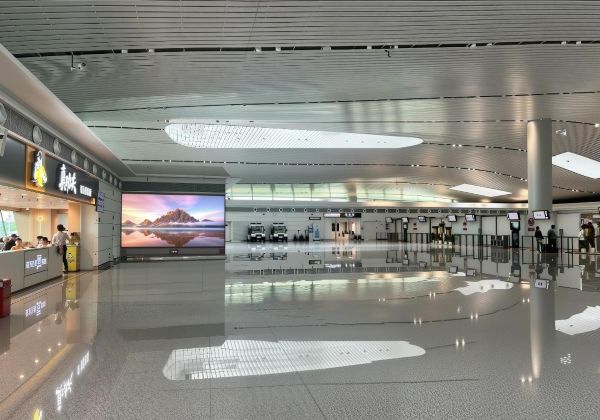
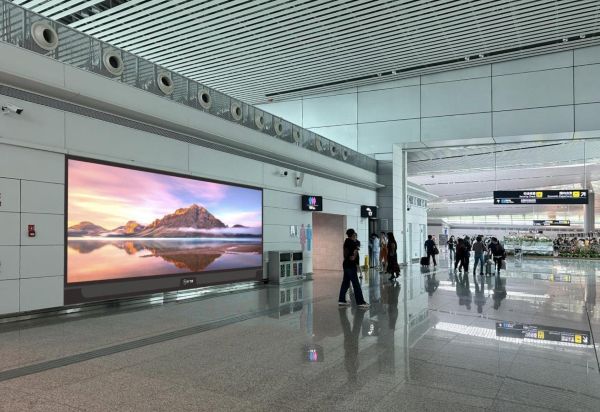
Brand height shaping: aimed at establishing or consolidating a high-end brand image. Landmark and ceremonial media should be preferred, such as giant LED screens in the departure hall and column light boxes in the welcome hall. These points are the "face engineering" of the brand, conveying strength and reputation.
Core product explosion: Focus on promoting new products or flagship services. Suitable for centralized and repetitive visual displays in areas where passengers have a stopping time, such as check-in islands and waiting areas after security checks.
Accurate sales conversion: Pursuing instant leads or customer group drainage. Highlight QR codes, mini programs, and limited time discounts in the creativity, and select points such as arrival channels and baggage claim halls where passengers have clear next steps.
Step 2: Decrypt the media resource matrix - from the "Welcome Hall Pillar Light Box" to the digital screen at the boarding gate
Understanding the media characteristics of different regions is the key to scientifically combining advertising:
Departure level (before check-in and security check): image high ground
Features: Maximum passenger flow, relaxed passenger status, and longer stay time.
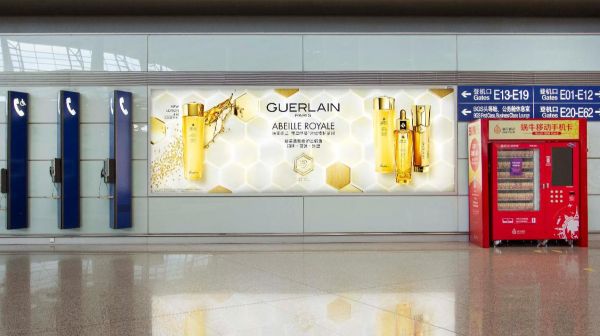
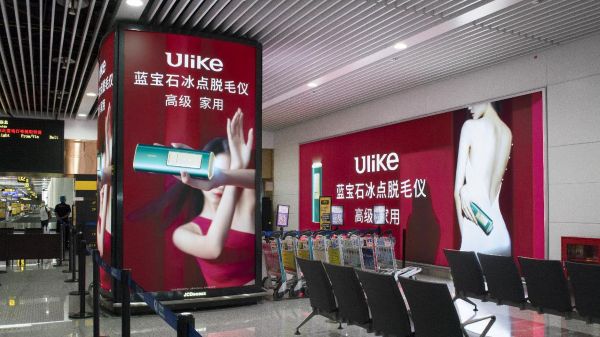
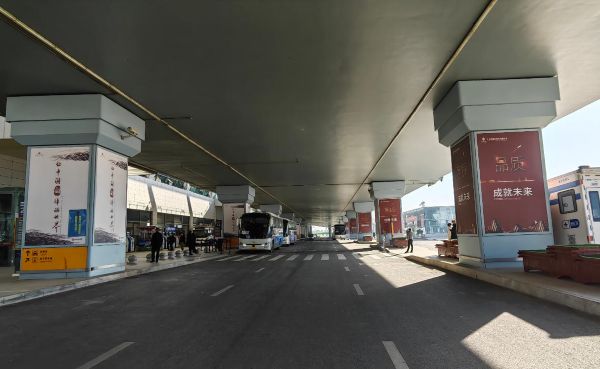
Core resources: Giant LED wall, light box above check-in island, pillar media. The advertisements here bear the mission of establishing first impressions and showcasing brand scale. For example, the welcome hall column lightbox in the domestic departure hall, with its surrounding visual wrapping, can convey a strong brand presence at the beginning of the passenger's departure.
Waiting area (after security check): Deep communication area
Characteristics: The passenger has completed the procedures, the destination is clear, and the waiting time becomes a high-quality "information vacuum period".
Core resources: digital screens at boarding gates, advertisements on the backrests of waiting seats, and continuous light boxes in corridors. It can achieve precise targeting and in-depth information transmission for specific flight populations.
Arrival level (luggage hall, exit): demand response area
Characteristics: When passengers arrive in Shenzhen, local consumption, transportation, and accommodation needs are immediately generated.
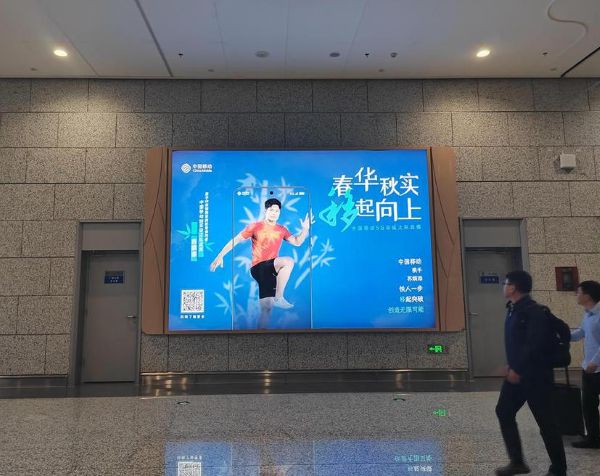
Core resources: luggage carousel lightbox, advertisements on both sides of the arrival channel, and welcome hall column lightbox (located at the domestic arrival entrance). The welcome hall column light box in this area has a unique "welcoming" attribute, which is an excellent scene for brands to express "ready for you" to target customers, especially suitable for high-end automotive, finance, real estate, and local luxury service brands.
Step 3: Planning, Creativity, and Budget Planning - Make Every Budget Smart
The Golden Rule of Creativity: The Three Second Principle. The screen must clearly convey the core brand information (who I am and what value I provide) within three seconds at a large size and distance. The design should be highly aesthetically pleasing and textured, blending seamlessly with the high-end airport environment.
Budget combination strategy: Avoid "sprinkling pepper". Adopting the strategy of "focus breakthrough+network coverage". For example, using the main budget to seize a core cycle of the welcome hall package light box to establish an image, while matching multiple boarding gate digital screens for precise traffic interception, forming a point surface combination effect.
Suggested advertising cycle: Brand building should take at least 1-3 months to cross the passenger cycle; Short term promotions can be concentrated for 2-4 weeks for saturation attacks.
Step 4: Scientific evaluation of effectiveness - beyond measuring "exposure"
The effectiveness evaluation of airport advertising needs to be multidimensional:
Basic data: Obtain professional traffic (OTS) and audience analysis reports provided by the media.
Technical tracking: Use unique QR codes, customized short links, and exclusive discount codes to directly track scan, visit, consultation, and sales conversion data brought by advertisements.
Brand research: Conduct pre - and post investment brand awareness and preference surveys in target cities to quantify brand asset enhancement.
Social volume monitoring: Encourage UGC, monitor check-in and sharing content related to advertising locations on social media, and evaluate the secondary dissemination and word-of-mouth effects it brings.
Chapter 3: Common Misconceptions and Avoiding Pits Guide - A Must Read for Beginners
Misconception 1: Creativity is self indulgent, ignoring the environment and speed. Copy the complex design of print advertising to airports. Passengers are mobile, and advertising must be a 'pop-up communication', with one main visual, one core sentence, and one brand logo being sufficient.
Misconception 2: Resource selection is based on intuition rather than data and flow. Blindly choosing the most expensive or largest location. It is necessary to analyze the complete itinerary of the target passengers: where do they come from, where do they stop, and how does their line of sight move? For example, for international arriving passengers, the media value of the international arrival channel is much higher than that of the departure hall.
Misconception 3: Fighting alone and lacking integration. Consider airport advertising as an independent campaign. The most efficient approach is to collaborate with online marketing. For example, targeting airport area crowds for previewing in WeChat Moments advertisements, using physical advertisements such as welcome hall columns and light boxes to shock and connect offline, guiding interaction on online platforms, and forming a closed loop.
Misconception 4: Neglecting the physical state and contract details of the media. Before signing the contract, it is necessary to conduct on-site inspections or obtain video materials to confirm the brightness, viewing angle, and whether there is any obstruction of the advertising space. At the same time, clarify the terms of publication acceptance, screen replacement, and handling of unexpected situations in the contract to protect one's own rights and interests.
Conclusion
Shenzhen airport advertising is a strategic communication launched in high-end physical spaces to engage the minds of high net worth individuals. Its value lies not only in the huge traffic, but also in the quality of traffic and the added value that the scene endows the brand with.
Successful advertising begins with a strategic answer to the question of 'why Shenzhen Airport', a deep understanding and clever combination of media resources (such as the iconic welcome hall light box), and a precise coordination with the overall marketing rhythm of the brand. For brands aiming to enhance their image, engage with elites, and win in the Greater Bay Area, this is not only an advertising spot, but also a key leap in brand upgrading.
Now, it's time to reassess your communication map: what strategic position should Shenzhen Airport occupy?