How to Make Your Brand Stand Out at Beijing Airport? Master These 4 Advertising Strategies
2026-01-05Tianci MediaViews:230
Highlights
This article provides you with an authoritative guide to advertising at Beijing airports (including Capital Airport and Daxing Airport), covering the entire process from strategy formulation, resource selection, creative design to performance tracking. It helps businesses effectively reach high-net-worth business travelers and enhance their international brand image. Read now to obtain professional solutions.
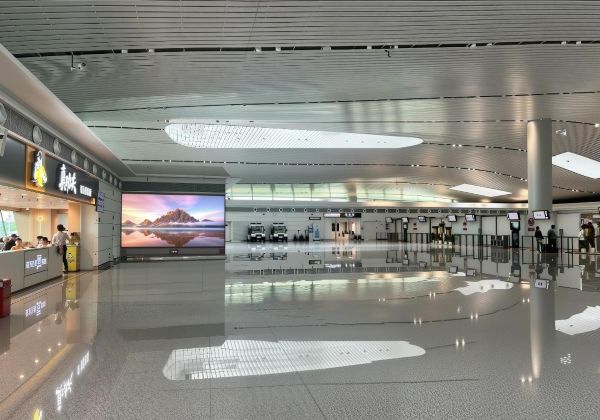
When you stand beneath the huge glass curtain wall of Terminal 3 at the Capital Airport, or walk through the grand space of Daxing Airport, which is hailed as one of the "New Seven Wonders of the World", you will deeply feel that this place is not only a transportation hub, but also a top-tier stage that attracts global attention and is full of commercial energy. For enterprises seeking brand sublimation, Beijing airport advertising represents a strategic height - it is an opportunity for deep dialogue with the most valuable consumer group at China's most important aviation gateway.
However, faced with two major super hubs, dozens of advertising formats, complex passenger flow structures, and significant investments, how can the intention to "advertise at Beijing Airport" be transformed into a precise, efficient, and potentially rewarding brand investment? This requires thinking beyond media buying and establishing a complete strategic framework. This article will systematically break it down for you, helping you to make strategic plans.
一、 Value revaluation: Why is Beijing Airport a must-win territory for brands?
Before formulating specific strategies, it is essential to deeply understand its irreplaceable core value.
1. Select top-tier audiences and target high-net-worth individuals
Beijing's two major airports naturally attract China's most valuable customer groups: multinational enterprise executives, government and business personnel, high-net-worth travelers, and families studying abroad. They possess high spending power, influence, and communication ability, making them the golden customer group for industries such as automotive, finance, technology, luxury goods, high-end cultural tourism, and real estate.
2. "Golden Attention" in a closed environment
From check-in to boarding, passengers spend an average of 60-120 minutes in a waiting state. In the isolated area after security check, the environment is relatively enclosed with less interference. At this time, high-quality airport advertisements can effectively capture passengers' "golden attention" and achieve in-depth information communication and brand impression implantation.
3. The supreme brand endorsement in the "national gate" position
The continuous appearance at national-level aviation hubs is in itself a strong certification of brand strength, industry leadership, and international vision. This "halo effect" can endow a brand with a strong sense of trust and authority, making it an intangible asset that is difficult for other media to match.
二、Strategic decision-making: differentiated choices for Beijing Capital Airport and Daxing Airport
Your primary strategic decision is to make a wise choice or combination between Capital Airport and Daxing Airport. The two airports have complementary positioning and different customer focus.
Beijing Capital Airport: A mature and robust international hub
Core Advantages: With a long history of operation, a profound and stable international route network (especially in Europe and America), it is the preferred gateway for international business travelers.
Tourist portrait: International business elites and experienced high-end tourists in the traditional sense.
The targeting strategy is geared towards brands that aim to strengthen their international brand image and deeply penetrate mature high-end markets. Emphasis can be placed on the international departure, arrival, and duty-free areas of T3 terminals.
Beijing Daxing International Airport: A Super Hub for the Future
Core Advantages: Featuring a brand-new design, it leads the world in terms of intelligence and digitalization. With robust "international-domestic" integrated transit capabilities, its hardware facilities and spatial aesthetics embody a futuristic feel.
Tourist profile: tech-savvy upstarts, young fashionable travelers, with a higher proportion of domestic transfer passengers.
The targeting strategy is directed towards: brands that are suitable for technology, Internet, and new consumer brands, aiming to shape innovative and cutting-edge brand images, or those aimed at covering emerging high-consumption groups in China.
Selection suggestion:
International brand building: Prioritize the international area of Capital Airport.
Shaping an innovative image: Daxing Airport is the first choice, as its environment itself is part of the brand story.
Maximizing coverage: With sufficient budget, a dual-airport linkage strategy can be implemented to achieve full coverage of high-end passenger flow entering and exiting Beijing.
三、 Analysis of core resources: Establishing a three-dimensional media portfolio
The advertising resources at Beijing Airport form a three-dimensional matrix, which should be scientifically combined according to the target audience.
1. Brand-shaking resources (establishing a high profile)
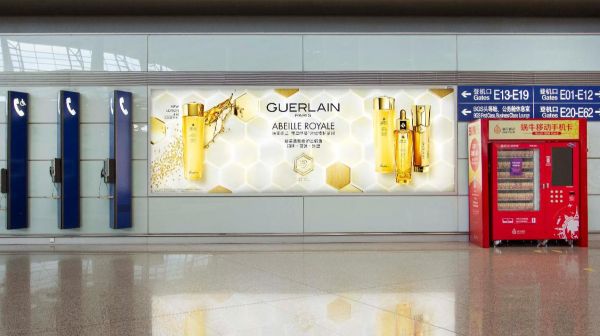
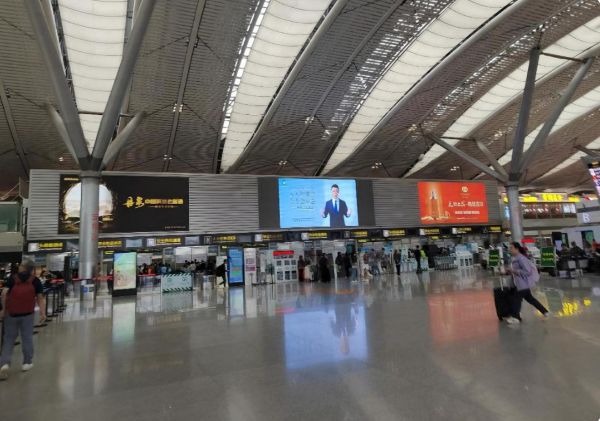
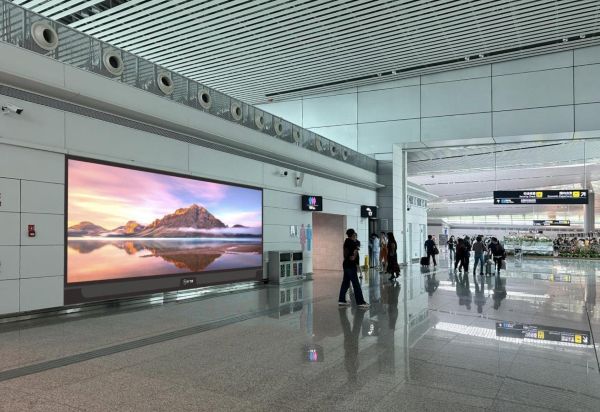
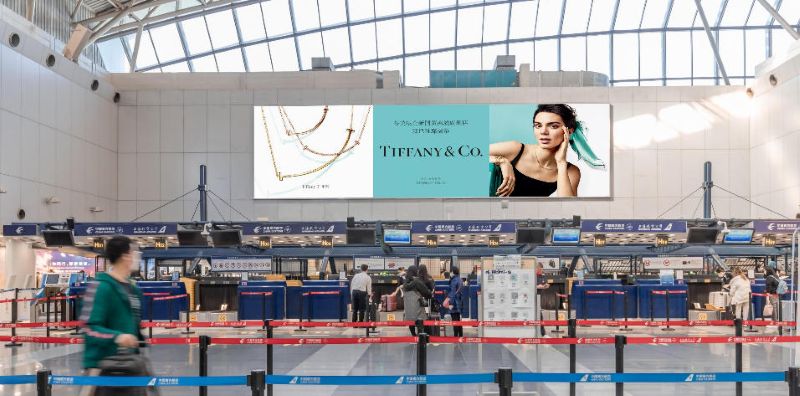
The giant LED screen in the check-in hall: the first visual focus for passengers, used to create a shocking first brand impression and establish a high brand profile.
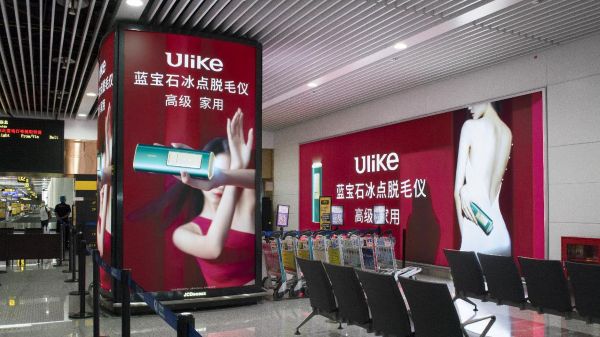
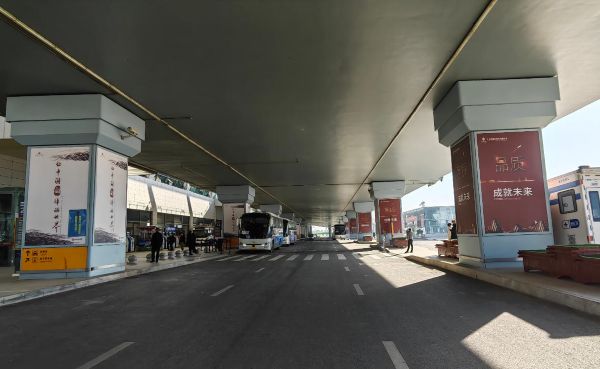
Panoramic pillar/wall-wrapped advertising in the boarding bridge: The essential passage for passengers leading to the aircraft, creating an immersive and memorable visual experience.
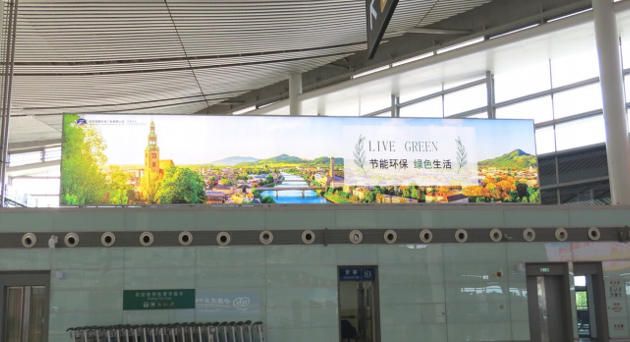
The oversized light box in the baggage claim hall serves as the first "welcome ceremony" for arriving passengers, making it ideal for local high-end service, automobile, hotel, and other brands.
2. Deep communication-level resources (information transmission)
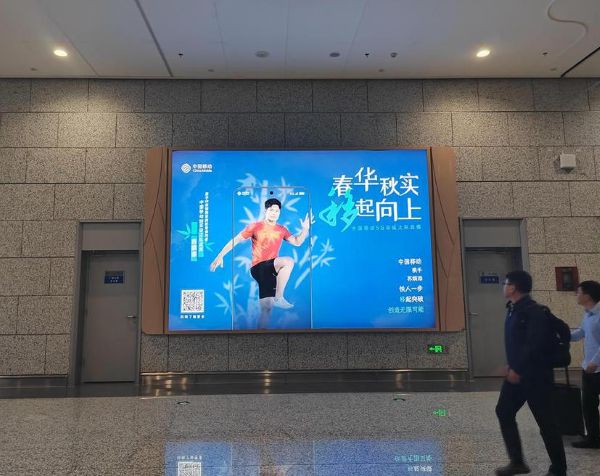
Digital screen wall in the waiting area: Located in the core waiting area after security check, where passengers stay for a long time, it is suitable for playing brand story films or in-depth product introduction videos.
Exclusive media group at boarding gates: Precisely reaching passengers of specific flights, content can be customized based on the destination (such as playing travel advertisements at boarding gates for flights to Hainan), with strong relevance.
3. Precise interactive-level resources (facilitating action)
VIP lounge media: A private and exclusive space reaching the highest net worth clientele, with a high-end media environment and optimal communication depth.
Digital interactive devices: At venues like Daxing Airport, offline attention can be converted into online data collection or sales leads through methods such as AR interaction and QR code scanning, achieving a combination of product effectiveness and efficiency.
Luggage trolley advertisement: Accompanying travelers throughout the entire arrival process, flexible and precise.
四、The Four-Step Practical Method: A Scientific Process from Planning to Evaluation
Step 1: Clarify the objectives and budget framework
First, ask yourself: Is the core objective of this campaign to "enhance international brand recognition", "promote flagship products", or "drive traffic to high-end services"? A clear objective will guide all subsequent choices. At the same time, establish a budget range, as this directly determines the scale and resource level of the media mix.
Step 2: Strategically select airports and scenarios
Based on the analysis of the two major airports mentioned earlier, combined with your target customer profile, determine the primary airport for investment and core touchpoints. For example, luxury brands may prefer the T3 international departure duty-free zone at Capital Airport; while smart car brands may value the high-tech arrival corridor at Daxing Airport.
Step 3: Creative Design and Content Customization
Airport advertising creativity must adhere to the "scene rule":
Vision first, 3-second principle: Utilize international-standard high-definition visuals, ensuring that core information (brand, product, proposition) is clearly conveyed within 3 seconds.
Minimalistic yet powerful: Abandon complex copywriting and convey core values through strong visuals and short sentences.
Emotional resonance, connecting journey: Creative content should be associated with travel emotions such as "anticipation of departure", "warmth upon arrival", and "desire to explore", to trigger emotional resonance.
Step 4: Effect tracking and optimization
Set measurable key performance indicators (KPIs):
Brand indicators: Changes in brand search index and media volume before and after launch.
Interaction indicators: Number of scans of exclusive QR codes/mini programs, and number of participants in interactive installations.
Business indicators: consumption using exclusive discount codes, or assessing the improvement of brand awareness among target customers through research.
五、Key Misconceptions and Trap Avoidance Reminders
Misconception 1: Pursuing location rather than matching with the right crowd
If the most expensive location does not align with the movement patterns of the target customer base, it is a waste. Analyze the flow and stopping points of travelers and select "effective exposure points".
Misconception 2: Simple transplantation of ideas, neglecting the context
Directly utilizing TV commercials or outdoor billboard materials for airport media often results in suboptimal performance due to mismatches in resolution, viewing distance, and atmosphere. The creativity must be "exclusively tailored for airports".
Misconception 3: Treating it as a short-term promotion without a long-term perspective
Airport advertising is an investment in brand equity, which requires patience akin to brand building. It is recommended to launch it at least on a quarterly basis to effectively embed it in the mind.
Misconception 4: Isolated deployment without integration and coordination
Airport advertising should serve as a tipping point for brand's holistic marketing. Online, it can be preheated and momentum built through social media topics; offline, it can create a shocking experience through airport exposure; subsequently, it can be channeled and accumulated through digital channels to form a closed marketing loop.
六、 Conclusion
In summary, the success of Beijing airport advertising lies in its strategic planning with a long-term perspective, precise reach achieved through scientific methods, and heartfelt dialogue achieved through exceptional creativity. It is not merely a media purchase, but also a strategic investment and enhancement of brand value.