Airport advertising screen: An intelligent visual hub for engaging with high-end travelers
2026-01-04Tianci MediaViews:259
Highlights
This article delves deeply into the types, deployment strategies, and creative principles of airport advertising screens. It covers the media characteristics of hubs such as Capital Airport and Daxing Airport, teaching you how to precisely reach high-end travelers and enhance your brand image. Get your hands on a professional deployment guide now, and make your advertisements stand out in the airport.
When you step into the magnificent T3 terminal of the Capital Airport or wander through the futuristic "Starry Sea" of Daxing Airport, your gaze will inevitably be drawn to those bright, high-definition dynamic screens. They are not mere decorations, but highly valuable airport advertising screens in modern airports - a top-tier brand communication platform that integrates technology, scenarios, and high-end audiences.
For marketers, airport advertising screens represent a qualitative leap: they transcend the display limitations of static billboards, creating an immersive communication scenario through dynamic images, sound, and real-time content during the highly focused waiting period of passengers. However, effectively utilizing this medium requires systematic understanding and strategy. This article will comprehensively dissect the logic behind the deployment of airport advertising screens, helping you grasp the core methods of engaging with high-net-worth travelers.
一、 Why airport advertising screens? Redefining core value
Before discussing "how to do it", it is essential to understand "why it matters". The core value of airport advertising screens is built upon three irreplaceable pillars:
Pillar 1: Unparalleled audience value
Airports, especially international aviation hubs, naturally attract high-net-worth individuals in society: business elites, corporate executives, middle-class families who travel frequently, and international tourists. They possess high spending power, decision-making authority, and influence, making them the core target customers for luxury goods, high-end automobiles, financial insurance, technology products, and top-tier travel services.
Pillar 2: Deep attention in closed scenarios
Unlike the fleeting glimpses on the street, passengers find themselves in a "controlled waiting state" after check-in, security check, waiting, and upon arrival at the baggage area. This period typically lasts for more than 30 minutes, and the environment is relatively enclosed with fewer distractions. The dynamic content on the high-definition screen naturally becomes the focal point to fill this attention gap, allowing for in-depth browsing and memorization of brand information.
Pillar 3: Empowering the brand's high-end image with a sense of technology
The dynamic digital screen itself symbolizes modernity, technology, and high-end quality. Brands presented on this medium can easily be associated with positive attributes such as "innovation", "cutting-edge", and "internationalization". In new hubs like Daxing Airport, which are renowned for their high-tech feel, the effect of this brand empowerment is particularly significant.

二、 Main types and scenario selection of airport advertising screens
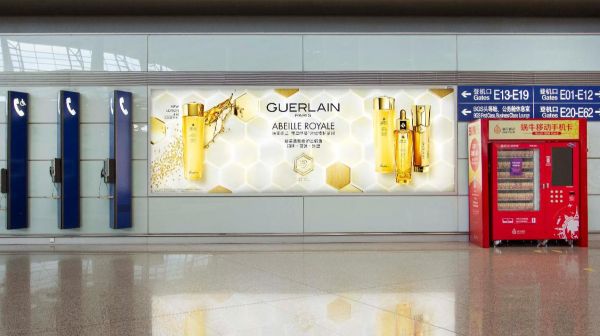
Airport advertising screens are not all the same. Based on their location, function, and size, they can be mainly divided into the following categories. The key to selection lies in matching the "scene mentality" of passengers.
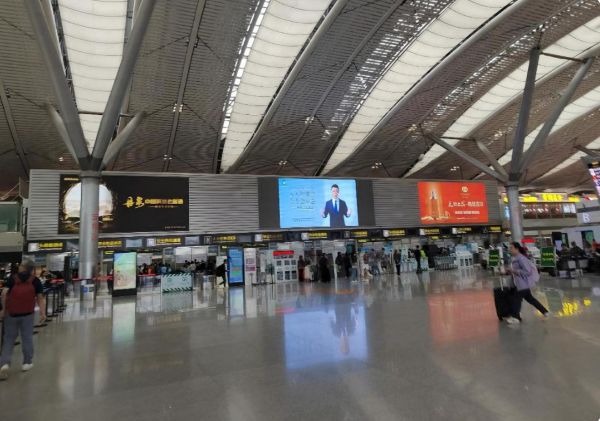
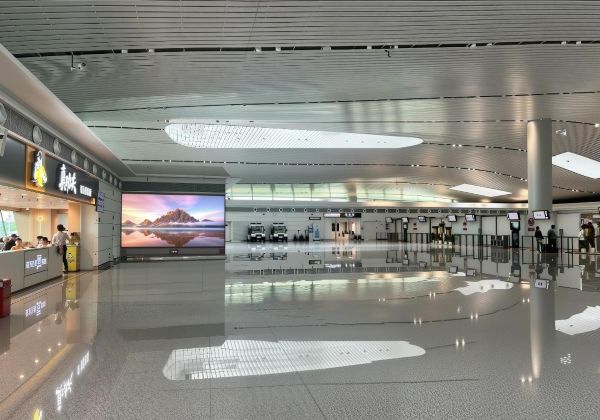
Category 1: Large LED Display Screen (Brand Highland)
Location: Central area of the check-in hall, above the international departure security checkpoint, and other core areas with high pedestrian flow.
Features and Value: With its vast size, it exerts a strong visual impact, making it an ideal stage for crafting a stunning brand premiere. It is suitable for brand image advertising and announcing major events, aiming to establish widespread brand recognition and authority.
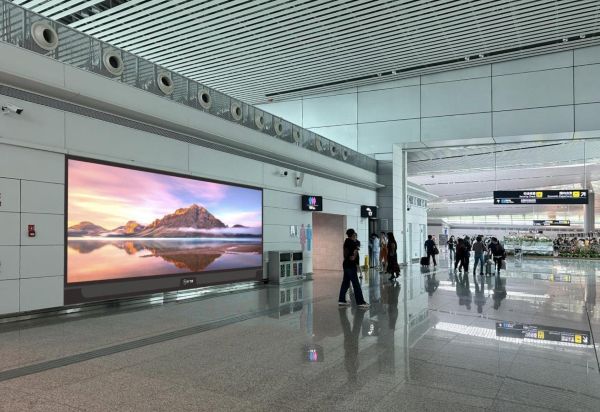
Category 2: Digital screenings in passageways and corridors (visual corridor)
Location: On both sides of the automated walkways connecting different areas, and on the walls of long corridors.
Features and value: Form a coherent visual narrative flow. As travelers move along the pathway, their eyes will linger on the screens on both sides for a long time. It is suitable for playing series of stories, displaying multiple product lines, or conducting in-depth communication through long-form videos that convey brand philosophy.
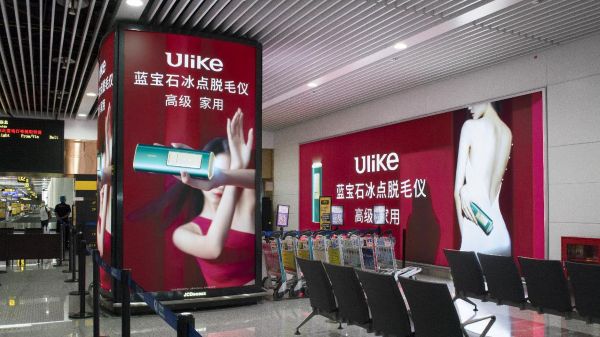
Category 3: Boarding gate lounge screen (deep communication area)
Location: The waiting seat area near each boarding gate.
Characteristics and Value: Passengers spend the longest duration of time (typically exceeding 30 minutes) in a relatively relaxed state, showing a strong willingness to receive information. This period is ideal for presenting product details, playing brand documentaries, and promoting destination tourism inspiration, among other more in-depth and impactful content.
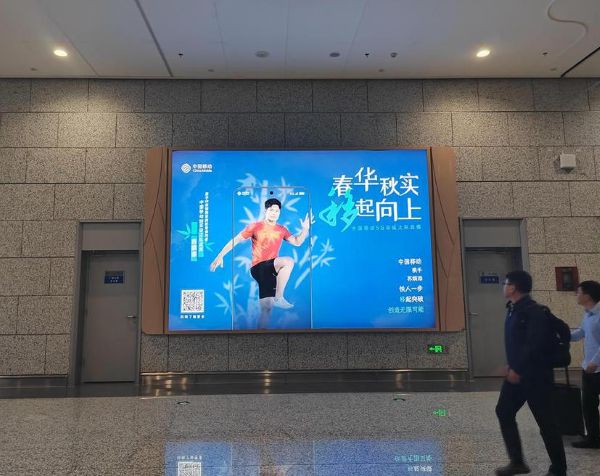
Category 4: Precise Scene Interactive Screen (Action Trigger Point)
Locations: next to the carousel at the baggage claim area, international arrival corridor, entrance to the duty-free shop, entrance to the VIP lounge.
Features and value: Highly relevant to the immediate and specific needs of travelers. For example, local hotels and car rental services are promoted at the baggage carousel; premium beauty products are promoted at the entrance of duty-free shops. Advertisements on such screens should carry clear calls to action (such as scanning QR codes for reservations or claiming discounts), with the shortest conversion path.
三、 Four-step approach to launch strategy: from target to evaluation
Step 1: Clarify the goal and pinpoint the airport and terminal
Is your goal to enhance brand awareness nationwide, or specifically target passengers on specific routes, such as the European route? The choice depends on the objective. For instance, a brand that focuses on international luxury travel should prioritize Terminal 3 at Beijing Capital Airport, which sees a high volume of international departing passengers.
Step 2: Utilize a contextualized media mix, rather than making purchases at a single point
Don't just invest in the most expensive large screen. A scientific strategy is to build a "combination punch":
"Breadth + depth" combination: Create a stunning first impression with a large LED screen in the check-in hall (breadth), and then complement it with screens in the target boarding gate area for in-depth content penetration (depth).
"Route Coverage" combination: Track the complete route of the target passengers (e.g., check-in counter -> security checkpoint -> passage to the boarding gate -> boarding gate), and deploy screens at key nodes to achieve multiple and progressive information dissemination.
Step 3: Creative content principles tailored for "screens"
The mindset of static advertising is completely inapplicable here. When designing content for dynamic screens, the following golden rules must be adhered to:
The first 3 seconds determine the outcome: The opening must possess strong visual appeal or suspense to instantly capture the wandering gaze in a noisy environment.
Minimalist copywriting, visual priority: Dynamic videos themselves convey information. The text superimposed on the screen must be refined to the extreme, and the core information (brand logo, product, slogan) needs to be presented stably and clearly in the frame.
Make good use of sound, but ensure comprehensibility even without it: Background music or narration can enhance the impact, but it must be assumed that 50% of the passengers will not turn up the volume. Therefore, pure visual narratives must be complete and smooth.
Scenario-based creativity: The best ideas can resonate with airport scenarios. For example, airline advertisements can showcase the scenery of desirable destinations, stimulating travelers' desire to travel.
Step 4: Effect evaluation and data insight
Evaluation should not be limited to "feelings". A multi-dimensional evaluation system should be established:
Basic exposure data: Request specific reports from media outlets on daily average screen views, broadcast frequencies, and total exposure impressions.
Interaction and Traffic Diversion: The core performance indicators are the visits and interaction rates directed to the exclusive QR code, mini-program, and landing page of the official website through on-screen content.
Brand research: Before and after the launch, conduct sampling questionnaire surveys among airport passengers to monitor changes in brand awareness and favorability.

四、Three major misconceptions about airport advertising screens
Misconception 1: Viewing it as an amplified TV advertisement
It is often a mistake to directly place TV commercials on airport screens. The airport environment is noisy, with varying viewing distances and angles. The complex camera language, detailed close-ups, and sound-dependent narratives in TV commercials may fail in the airport environment. The content must be optimized for viewing in a "distant, moving, and briefly stopping" manner.
Misconception 2: Focusing solely on hardware while neglecting content and context
It is commonly believed that a larger screen size and higher resolution are better. However, in reality, the fit between content and the surrounding context is far more crucial than mere hardware specifications. A small, exquisite screen located in a quiet VIP room may hold a significantly higher promotional value for a high-end watch brand than a large screen in a noisy hallway.
Misconception 3: Testing the waters in the short term, expecting immediate sales
The core value of airport advertising screens lies in brand building and capturing the minds of high-end consumers. It is a medium- to long-term investment. It is unrealistic to expect that a one-month deployment can directly lead to significant sales conversions. Its returns are reflected in the enhancement of brand premium pricing capabilities, empowerment of channels, and sustained influence on core customer groups.
五、Conclusion
In summary, airport advertising screens constitute strategic assets for brands to engage in deep, dynamic, and immersive communication with high-end consumer groups. They are not merely advertising players, but also serve as "dynamic flagship stores" and "visual landmarks" established by brands in national transportation hubs.
Its success relies on a profound understanding and clever utilization of the relationship among "high-end scenarios", "dynamic media", and "tourist mood".