

Beijing Elevator Advertising Pricing Explanation: Budget Guide from Framework to Smart Screen
2025-12-22Tianci MediaViews:322
Highlights
How much does it cost to know about elevator advertising in Beijing? This article provides a detailed breakdown of price ranges for various forms such as frames, door stickers, and smart screens, analyzing key factors such as properties, locations, and cycles that affect costs, and providing accurate budget planning recommendations. Get your exclusive quote evaluation.
How much does Beijing elevator advertising cost? "- This is the first and most practical question that every brand owner or marketer considering community marketing asks.
However, this question is like asking 'how much does it cost to buy a house in Beijing', with a wide range of answers. A simple elevator poster frame, paired with an interactive smart screen, may cost ten times more; The cost of high-end apartments in Guomao is vastly different from that of essential residential areas outside the Fifth Ring Road.
This article aims to dispel the price fog and provide you with a clear and referenceable map of advertising costs for elevators in Beijing. We will go beyond simple numerical lists and delve into the logic behind the formation of prices, so that you can not only understand how much it is, but also why it is the price, and make the wisest budget decisions.
一、 First understand the core: the billing method and price structure of elevator advertising
Elevator advertising is not charged on a per click or per click basis, and there are two mainstream billing methods:
(1) Pricing by week/month (mainstream method)
This is the most common pattern, especially suitable for traditional frame advertising and door sticker advertising. Media companies will quote weekly or monthly rental prices for each elevator car (or elevator door) as a unit.
Advantages: Clear pricing and controllable budget.
For example, in XX community, a single elevator frame costs XXX yuan per piece per month. ”
(2) CPM (cost per thousand impressions) pricing
This method is more commonly used for digital smart screens. The media company estimates the exposure cost per thousand views based on the foot traffic of the building where the screen is located.
Advantages: It is closer to the logic of performance-based payment, making it easier to compare cross media effects.
For example, the smart screen in the core business district community costs approximately XX-XX yuan in CPM. ”
The actual total cost of an elevator advertisement usually consists of the following parts:
Media rental fee: the rental fee for advertising space, which accounts for the largest proportion.
Screen production and installation costs: the expenses for design, printing (for frames), transportation, and manual installation.
Publication and monitoring fees: Some media companies may charge service fees for publication, daily maintenance, and monitoring.
Taxes and Fees: Invoices are required for formal cooperation, and taxes and fees are necessary expenses.

二、 Price core variables: 5 key factors affecting elevator advertising costs in Beijing
After understanding the billing method, let's take a look at the core variables that determine specific numbers:
Factor 1: Advertising media form (determining price benchmark)
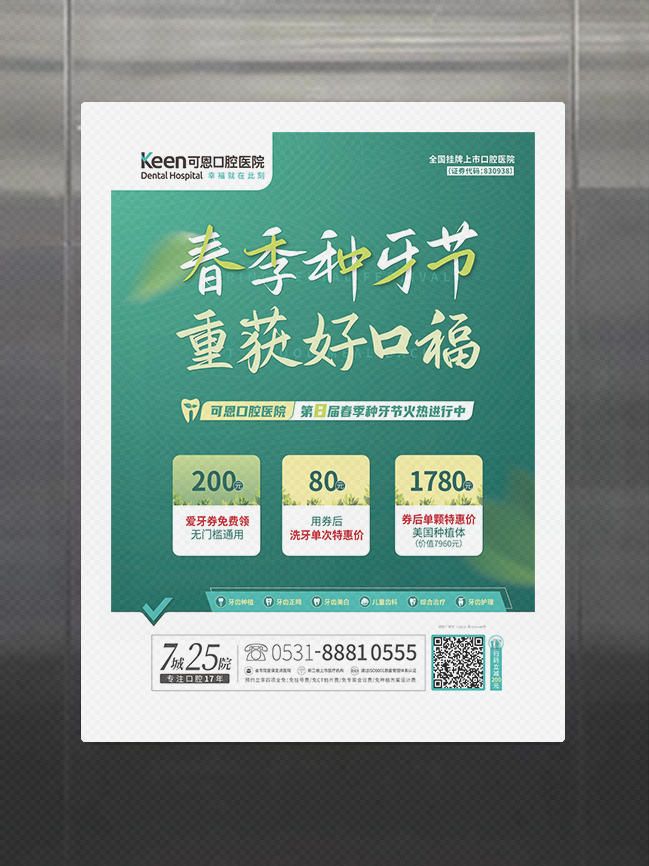
Frame poster (static): the most basic form with the lowest cost. The price usually fluctuates between 200 yuan and 800 yuan per piece per month.
Elevator door sticker (static): with a large visual area, located on the necessary path, and priced higher than the frame. The price is usually between 300 yuan and 1200 yuan per piece per month.
Elevator intelligent screen (dynamic video): can play videos for about 15 seconds, with strong visual and sound impact. This is the current mainstream and premium form. The price is usually between 800 yuan to 3000 yuan per piece per month or even higher, or priced according to CPM.
Factor 2: Property/Community Level (Determining Price Coefficient)
This is one of the most important factors causing price differences. Media companies typically categorize real estate projects into multiple tiers:
Class A+(top-level luxury homes/core commercial district apartments): such as high-end properties in Chaoyang Park, Guomao, and the core area of Wangjing. Residents have strong purchasing power and the highest advertising value, with prices ranging from 1.5 to 3 times the benchmark price.
A-class (mid to high end commodity housing community): a mainstream improved community within the Fifth Ring Road, with a concentration of white-collar and middle-class families. It is the main choice for advertising and the price is moderate.
Class B (ordinary residential/affordable housing community): dense pedestrian flow, but relatively diverse consumer levels, with the most cost-effective price.
Class C (old residential areas): The lowest price, but it needs to be evaluated for compatibility with the brand's target customer group.
Factor Three: Point Position and Density
Single city vs multi area coverage: Only targeting Chaoyang District, with a huge difference in total budget compared to covering the five core areas of "East West Sea Chaofeng" in Beijing.
Number of points: There is usually a threshold for starting operation, such as "50 elevators starting operation". The more points there are, the greater the bargaining space for a single point (to get the package price).
Package elevator/package building form: Package all advertising spaces (frame+door stickers) of the entire elevator, or package all elevators of the entire community, which can achieve better display effect and price discount.
Factor Four: Launch Cycle
Short term advertising (within 1 month): The highest unit price, usually used for promotional activities.
Standard cycle (1-3 months): The most common advertising cycle with stable prices.
Long term contracts (quarterly, semi annual, annual): The preferred way for media companies to control costs is usually to receive discounts of 20% or even lower.
Factor 5: Media companies/agency channels
Direct sales vs. agency: directly cooperate with top media direct sales departments such as New Tide and Focus, or through local advertising agencies. Agents may offer package discounts or increase service fees due to resource integration.
Top media vs small and medium-sized media: Focus media, trendy media, and others have wide network coverage and standardized pricing systems, but are relatively high; Some regional small and medium-sized media companies may have more flexible prices, but their network size and standardized services may be slightly inferior.
三、 Practical reference: 2024 Beijing elevator advertising price range simulation
In order to give you a better experience, we simulate several common scenarios (the following is an estimated market average price, the actual price depends on the specific quotation):
Scenario 1: Mid end brand, focusing on cost-effectiveness
Goal: To cover 100 mid to high end (Class A) communities in Chaoyang and Haidian, Beijing.
Form: Elevator intelligent screen (1 piece per elevator).
Cycle: 1 month.
Estimation: 100 locations * 1500 yuan/month/location ≈ 150000 yuan/month (excluding production costs).
Scenario 2: Local service providers, precise regional cultivation
Goal: Deeply cultivate the Wangjing area of Beijing, covering 30 core communities.
Form: Elevator frame+elevator door sticker combination (enclosed elevator form).
Cycle: 3 months.
Estimation: 30 elevators * (frame 500 yuan+door sticker 800 yuan)/month/elevator * 3 months * 0.9 (long-term discount) ≈ 105300 yuan (excluding production costs).
Scenario 3: High end brand, creating top-level image
Goal: Install 50 locations in top tier luxury homes (A+category) in Beijing's East West City.
Form: Elevator intelligent screen (2 pieces per elevator, covering the inside and outside of the car).
Cycle: 2 months.
Estimation: 50 locations * 2500 yuan/month/location * 2 months ≈ 250000 yuan/month (excluding production costs).
四、 How to obtain accurate quotations and control costs? 4-step practical operation method
Step 1: Clarify the list of requirements
Create a clear 'Advertising Demand Briefing' that includes: budget scope, target area (precise to commercial districts or streets), target community level, preferred media format (framework/door stickers/smart screens), ideal number of locations, planned advertising period, and description of core target audience.
Step 2: Multi channel inquiry and comparison
Contact top media direct customers: obtain official standard quotation and understand the pricing system.
Consulting local integration agents: They may act as agents for multiple media outlets and provide combination solutions and comparative recommendations.
Using online price comparison platforms: Some advertising trading platforms can query prices of certain resources online.
Step 3: Deep communication and negotiation points
Request for case and effect data: Request the media to provide past cases and estimated pedestrian flow data of similar real estate projects.
Strive for package discounts: Clearly express long-term cooperation intentions and strive for quarterly/annual discounts.
Negotiation added value: Strive for free design fees, extended publication time, and complimentary value-added services such as data reports.
Clarify all expenses: Clearly list all details such as media fees, production fees, installation fees, service fees, etc. in the contract to avoid future additions.
Step 4: Small scale testing and scaling up again
If the budget allows, the safest strategy is to first select 1-2 typical communities for a one month advertising test to evaluate the actual effect (such as tracking conversions through QR codes and exclusive discount codes), and then roll it out on a large scale based on data feedback. This can effectively avoid the risk of blind investment.
五、Common Price Traps and Misconceptions Reminder
Misconception 1: Blindly pursuing low price points.
Trap: Extremely low prices may correspond to fake locations, old neighborhoods, or elevators with extremely poor traffic. Need to verify the real estate scene and pedestrian flow report.
Misconception 2: Only look at the unit price, not the total exposure cost.
Trap: A framework priced at 500 yuan but viewed by only 50 people per day may have a much higher cost per thousand people than a smart screen priced at 800 yuan but viewed by 200 people per day. To calculate and compare CPM (cost per thousand exposures).
Misconception 3: Ignoring the "hidden costs" in contract details.
Trap: The contract does not specify "including installation fee" or "including tax", or there is a limit on the number of screen changes, resulting in additional fees during execution. Be sure to read all the terms in the contract attachment.
Misconception 4: Believing that smart screens are always better than frames.
Trap: For advertisements that require silent and deep reading of information (such as education and training, real estate details), static frames may be more effective than fleeting videos. The form selection needs to match the advertising target.
六、Conclusion
The answer to 'How much does Beijing elevator advertising cost' ultimately depends on the precise combination of your brand goals, audience profile, and resource selection. There is no cheapest price, only the most suitable cost-effectiveness.
In today's highly transparent information world, simply comparing prices can no longer bring competitive advantages. The real key is to use scientific planning to allocate every advertising budget to elevator spaces that can effectively reach target customers.


