

Complete manual of standard dimensions and installation specifications for elevator advertising frames
2025-12-18Tianci MediaViews:256
Highlights
This article comprehensively analyzes the entire process of elevator advertising frame placement, covering frame types, size standards, community selection, design points, cost-effectiveness, and effectiveness evaluation methods. Whether you are a market novice or seeking optimization, this guide can help you accurately reach the community audience. Get professional advertising solutions now!
一、 Introduction: The undervalued golden advertising space - the re evaluation of the value of elevator advertising frames
On average, urban residents in China take elevators 4-6 times a day, with a "closed time" of about 30-90 seconds each time inside the elevator. In this brief, boring, and attention grabbing moment, a well-designed elevator advertising frame has become an excellent window for brands to engage in "forced but friendly" communication with consumers.
Unlike the grand narratives of outdoor billboards and TV commercials, elevator advertising frames play the roles of "community partners" and "life reminders". It delves deep into the last mile of residents' daily lives, frequently and up close during the fragmented time waiting for elevators or going up and down stairs, influencing consumption decisions. For industries such as local services, education and training, home decoration, and fast-moving consumer goods that require precise outreach to community households, elevator advertising frames are an extremely cost-effective and indispensable marketing channel.
This article will systematically break down every step of elevator advertising box placement, allowing you to not only know "how to do it", but also understand "why it is done", so as to make scientific decisions and improve the return on investment of every advertising budget.
二、 Basic understanding: What is an elevator advertising frame? Core types and standards
Before formulating a strategy, it is necessary to have a clear understanding of the specific situation of the delivery medium.
Elevator advertising frame usually refers to a standardized advertising display frame installed on the inner wall of the elevator car, used to place printed posters. It is the most classic and common form of elevator media.
1. Main types and size standards:
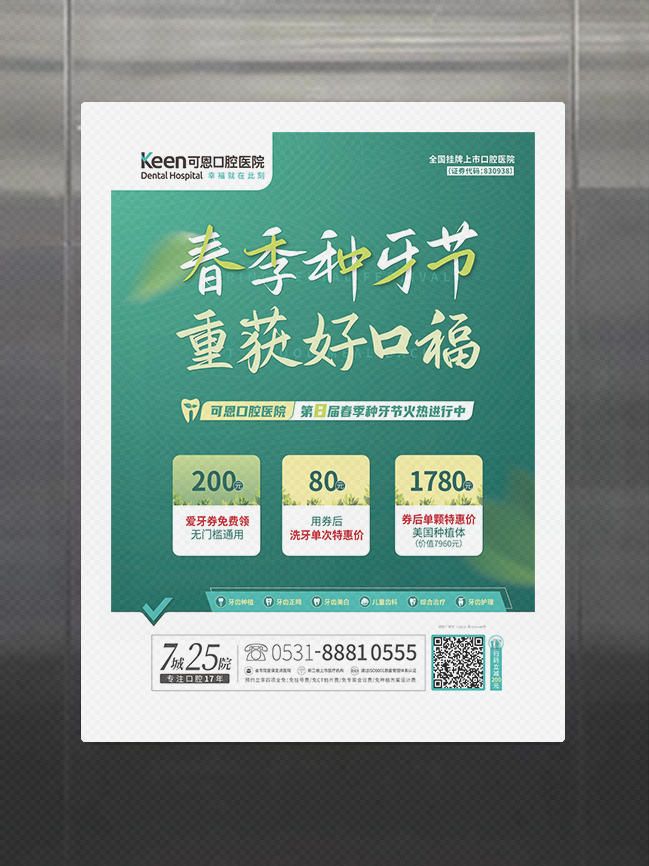
Standard horizontal frame: The most common, typically measuring 570mm x 420mm (outer frame size), suitable for the vast majority of elevator cars.
Standard vertical frame: The size is usually 420mm × 570mm, and it is often used in narrow or specific positions of the elevator car.
Elevator door sticker: It is attached to the inside of the elevator door, with strong visual impact, but the loss of opening and closing doors needs to be considered.
Intelligent digital frame: Emerging in recent years, it has an LCD screen and can rotate multiple images for dynamic display, but the cost is relatively high.
2. The "explicit rules" and "implicit rules" of installation:
Safety first: The installation must be firm and must not affect the normal operation of the elevator, safety monitoring, and emergency rescue equipment.
Location selection: Usually located above or on the opposite side wall of the elevator button panel, parallel to the line of sight height, to ensure comfortable reading.
Property relations: All installations must obtain formal permission from the community property or property management committee and comply with their management regulations.
Related LSI/long tail keywords: elevator advertising frame size, elevator advertising frame installation, elevator poster advertising, elevator frame advertising price, community elevator advertising, elevator advertising placement company, elevator interior advertising space.
三、 Step by Step Explanation: Seven Steps for Efficient Placement of Elevator Advertising Boxes
Step 1: Clarify goals and budget planning
Goal setting: To enhance the brand's visibility within a 3-kilometer radius? Or to drive traffic for weekend store promotions? The more specific the goal, the clearer the subsequent evaluation.
Budget formulation: The expenses mainly include media release fees (calculated on a weekly/monthly basis), advertising image design and production fees, installation and maintenance fees. Preliminary estimates can be made on a per community/monthly basis.
Step 2: Accurately screen target communities
This is the core that determines the effect. Comprehensive evaluation is required:
Community level and resident profile: housing prices, layout, and number of private cars reflect consumption ability.
The ratio of community size to elevator households: the number of buildings, units, and the number of elevators per unit determine the reach flow.
Population mobility: New residential areas (with high demand for decoration), school district housing (with strong demand for education), and high-end communities (with high demand for quality services) each have their own focus.
Competitive situation: Check if there are similar advertisements inside the elevator and evaluate the competitive environment.
Step 3: Negotiate with the property management and sign the contract
Find the right contact person: usually the property manager or market development department.
Provide standardized solutions: bring company qualifications, successful cases, standard installation renderings, and safety commitments for negotiation.
Clarify contract details: Clearly specify the placement location, quantity, cycle, cost, payment method, screen replacement process, and rights and responsibilities of both parties in the contract.
Step 4: Design advertising visuals with high conversion rates
Elevator advertising is a 'myopic media', with design principles opposite to outdoor billboards:
Large headline, clear at a glance: Core information (brand, product, points of interest) must be read within 3 seconds.
Interest driven, direct and powerful: highlighting direct benefits such as promotional discounts, free experiences, and solutions. Such as "free room measurement", "0-yuan trial", and "200 yuan discount".
Strong visual symbols: use concrete elements such as product images, smiling faces of people, and currency symbols.
Localized information highlights: Contact phone number, address, and QR code must be clear and prominent. Suggest using a 'building specific QR code' to track different community effects.
Screen material: It is recommended to use high-quality laminated posters that are wear-resistant and stain resistant to ensure a clean display during the exhibition period.
Step 5: Professional installation and publication
Professional team: Hire experienced installers and use professional tools to ensure smooth, secure, and aesthetically pleasing installation.
Installation acceptance: After installation, take photos and keep them as proof of execution, and send them to the property management for reporting.
Step 6: Maintenance and monitoring during the advertising period
Regular inspection: Check the screen once a week or every two weeks to see if it has been torn, covered, or stained, and replace it in a timely manner.
Effect sampling: A simple questionnaire survey can be conducted in the community during the mid to late stage of advertising, or the effect can be tracked through store consultation sources.
Step 7: Effect evaluation and data analysis
Establish a simple effectiveness evaluation system:
Direct effect: measured by the number of QR code scans, reservation phone numbers, and foot traffic to the store (asking if it was learned from elevator advertisements).
Communication effect: Compare the changes in search index and social media mentions of the brand in the surrounding area before and after advertising.
Cost assessment: Calculate the cost of obtaining a single lead, the cost of a single visit to the store, and evaluate the overall return on investment (ROI).

四、 Five Common Misconceptions and Avoiding Pitfalls Guide
Misconception 1: The "pepper noodle" style of coverage lacks precise community screening.
Blindly pursuing the number of coverage areas while neglecting the matching degree between the community and the target customer group. Investing in 10 mismatched ordinary communities is better than cultivating 3 high-end boutique communities.
Misconception 2: Self interested design, information overload or excessive abstraction.
Insert the company profile and complex product parameters into the picture. During the brief stop in the elevator, consumers only care about 'what does it have to do with me'? A picture that clearly states one thing, a core selling point.
Misconception 3: Neglecting image maintenance and the "broken window effect" damages brand image.
If the screen is stained or curled and not replaced in a timely manner, it leaves a negative impression on the audience as "unprofessional," "low-end," or "outdated. Maintaining an image is equally important as establishing one.
Misconception 4: Treating elevator advertising as an isolated channel, lacking integration and drainage.
After placing the advertisement, wait for the customer to come to your door. Elevator advertising should be used as a traffic entry point to unify visual and slogan elements in offline activities, social media, and store promotions, forming a linkage and transforming exposure into action.
Misconception 5: Pursuing short-term advertising makes it difficult to form effective memory.
Only invest for one month, expect immediate results. Community marketing requires continuous infiltration. It is usually recommended to invest at least one quarter (3 months) to establish brand familiarity and trust in high-frequency outreach.
五、 Conclusion
The essence of elevator advertising frames is to establish a continuous and friendly brand reminder in the private space that consumers must pass through every day, where information is relatively scarce. It is not a stage for showing off skills, but a practical friend.


