Is airport advertising really effective? Explain in one go from cost, traffic to audience value
2025-12-11Tianci MediaViews:240
Highlights
Master the practical process of airport advertising from point selection, media type to creativity and effect tracking, including budget estimation and landing list.
Airports are high-value offline touchpoints: passengers stay for a long time, the audience tends to have high spending power, and their attention is relatively focused. For brands and local businesses, choosing airport advertising locations reasonably and coordinating with traceable landing paths is the key to converting high exposure into actual revenue. The following guide is aimed at beginners, gradually breaking down the executable methods of "how to select airport advertising points to maximize benefits".
Why is advertising at airports worth considering?
High audience quality - travelers who frequently travel or travel are more likely to have higher disposable income and willingness to consume.
Strong Attention of Passengers - Research shows that a high proportion of passengers pay attention and develop memories and actions towards airport advertisements (such as online searches or QR code scanning).
Multi touchpoints can be stacked - static, digital, interactive, and scene based experiential media can be used simultaneously within the airport to achieve comprehensive brand coverage.
Core concept: point selection=crowd flow x stay x audience matching x visibility
When making a judgment on how to select airport advertising points to maximize benefits, grasp four quantitative elements: crowd flow (people/hour), duration of crowd stay, audience portrait matching, and visual/device visibility and accessibility. These factors determine the quality of exposure and the efficiency of creative communication. To achieve this, it is necessary to combine the passenger flow data provided by the airport with the on-site traffic flow to calculate the playback frequency and reach ratio.
How to choose a location and maximize benefits (replicable process)
Step 1: Set goals first (brand awareness/regional traffic attraction/high-value passenger conversion)
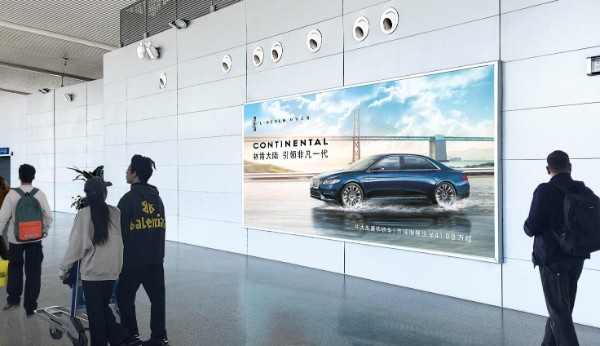
Brand awareness: Priority should be given to the waiting hall, large digital screens (Digital Spectacular), and arrival/baggage claim area.
Regional traffic diversion (to store/event): Priority should be given to light boxes/signs located near airport entrances, rental counters, or transportation transfer points.
Conversion (high priced goods/financial/tourism products): Consider VIP lounges, high exposure areas at boarding gates, and waiting areas before security checks.
The goal determines the location and budget split.
Step 2: Obtain traffic and crowd data (using data provided by airports or media providers for quantitative evaluation)
Obtain: daily/hourly passenger in and out data, flight schedules and peak hours, target audience (business/leisure/international/domestic) ratio.
Calculation: Use "number of arrivals x average duration of stay" to estimate the frequency at which each passenger can see advertisements (which can be used for CPM estimation).
Step 3: Match media form and creativity (static vs digital vs experience)
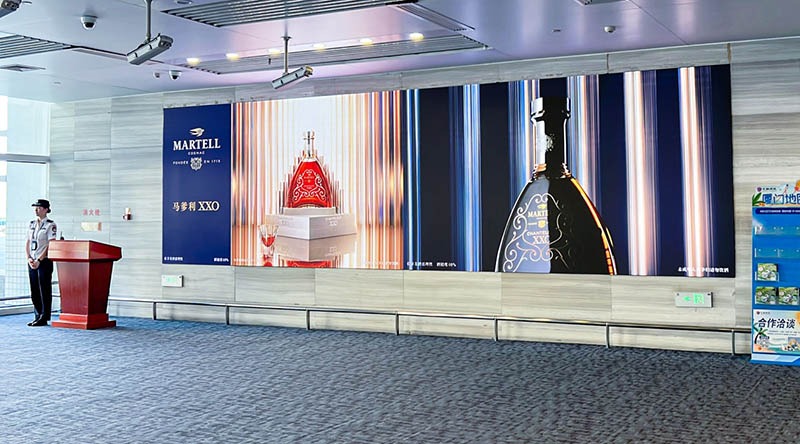
Large digital screen: suitable for storytelling, creative series, and short-term high-frequency exposure.
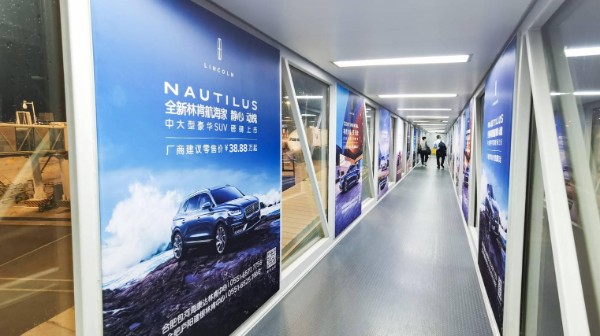
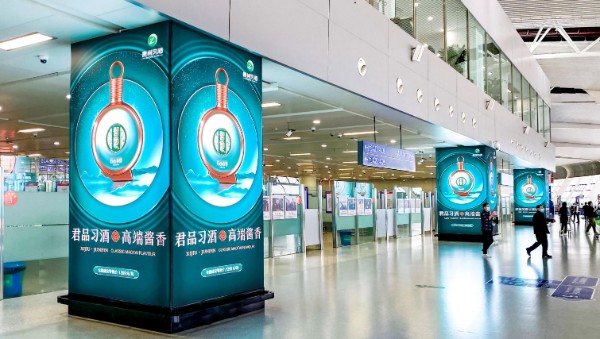
Static backlight lightbox: suitable for continuous brand display and store/event information.
Interactive screen/QR code wall: suitable for guiding directly to the landing page or receiving coupons.
Creativity must match location attributes: the waiting hall is suitable for long displays and brand stories, and luggage straps are suitable for promotions and QR code scanning.
Step 4: Evaluate budget and cost-effectiveness (compare using standardized indicators)
Obtain media quotes and convert them into CPM/CPV (or single exposure cost divided by number of arrivals). Airport media usually provide quotes on a weekly or monthly basis. The price difference between large airports and core locations is significant, so it is necessary to convert the "location value" into a comparable CPM. (Example price range reference: The weekly/monthly quotes for different media in large airports vary greatly, please compare them according to CPM standardization in the budget table).
Step 5: Design a traceable landing path (ensuring online measurability)
Place short links/QR codes, exclusive discount codes, and dedicated hotlines in the screen; The landing page needs to support UTM/short chain statistics and integrate with sales/store data.
Use A/B testing of different CTAs (such as "scan code to receive coupons" vs "search keywords") to measure actual conversion.
Step 6: Contract, Play Log, and Compensation Terms (Reduce Execution Risk)
The contract specifies the location, playback frequency, delivery cycle, supplementary broadcasting and fault compensation mechanism, as well as the installation/removal and compliance review schedule.
Request the media to provide playback logs or third-party traffic verification reports.
Key points of creativity and copywriting (executable rules for airport scenes)
Capture attention in the first three seconds: Passengers move quickly, and the main visual and brand identity must be clear at a glance.
Minimalist wording: The main label should not exceed 6-8 words, and the secondary label should be an action guide (such as "scan code to receive coupons").
Visual safety zone: The digital screen should center key content to avoid being obstructed by device borders or on-site facilities.
Multilingualism and symbol optimization: International airports recommend at least bilingual Chinese and English or using common symbols.
Strong CTA and tracking: QR codes, short links, and exclusive phone calls are essential, and should have optimized loading speed for landing pages.
Budget Sense (Brief Reference and Decision Suggestions)
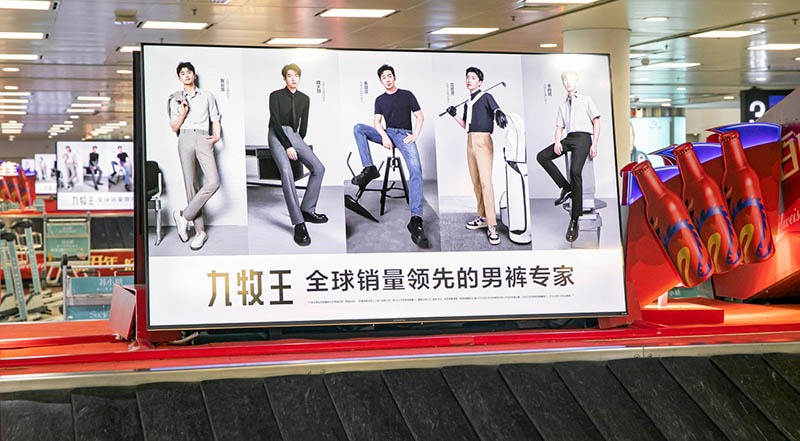
The price of airport advertising is greatly influenced by the size, location, and media form of the airport: in large hubs, the prices of core display spaces (such as baggage claim areas/main corridors) and digital billboards are usually significantly higher than those of secondary positions. Make sure to compare horizontally based on CPM or 'target touchdown cost', rather than just looking at unit price.
Common misconceptions (and how to avoid them)
Misconception: Only focus on exposure, not audience quality
Solution: First, use crowd portraits to screen airports and flight schedules, ensuring that the target audience is reached.
Misconception: Creativity not adapted to the scene (too much information)
Solution: Simplify information, highlight brand+one action. Conduct daytime/nighttime visual tests.
Misconception: No tracking mechanism
Solution: Deploy short chains, exclusive coupon codes, and landing pages in advance to ensure quantifiable effects.
Misconception: Neglecting compliance and approval cycles
Solution: Leave sufficient approval time of 2-6 weeks (different airports and media companies have different requirements), and clearly state the review period in the contract.
Practical small-scale pilot template (7-day rapid verification method)
Choose a suitable airport with a secondary high traffic position (lower cost than the core position, but still with a stable pass rate).
Design two versions of the main visual (A/B): focusing on "scan code to receive coupons" vs "search keywords".
Deploy 7-day deployment, monitor short chain/QR code clicks and in store verification (or hotline consultation).
Review on the 7th day: If the conversion rate reaches the preset threshold (such as scan code visit rate ≥ 1-2%), expand the budget and switch to a higher level position; Otherwise, optimize the creativity and try again with CTA.
Conclusion
To convert the high exposure of airport advertisements into actual benefits, the key is to use data to select points (crowd flow+stay+audience matching) → present creativity in appropriate media forms → quantify the effect with traceable landing paths. Reasonable CPM comparison, contract guarantee, and creative iteration are the three tools to turn exposure into ROI.