Introduction to Bus Advertising Placement: Covering Budget, Creativity, Media Selection, and Measurement Methods
2025-12-08Tianci MediaViews:227
Highlights
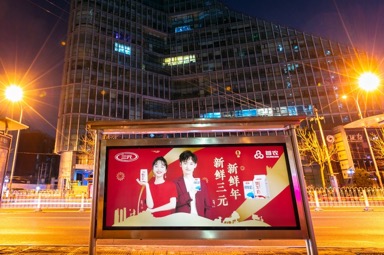
Bus advertising is a high-frequency medium that covers daily urban travel scenes: touchpoints such as the body, interior, bus stop signs, and bus shelters can generate a large amount of exposure during peak commuting hours and urban life scenes. For small and medium-sized enterprises with limited budgets but hoping to establish brand awareness, drive offline traffic, or do regional promotion, bus advertising still has the advantages of high cost-effectiveness and precise reach.
Bus advertising is a high-frequency medium that covers daily urban travel scenes: touchpoints such as the body, interior, bus stop signs, and bus shelters can generate a large amount of exposure during peak commuting hours and urban life scenes. For small and medium-sized enterprises with limited budgets but hoping to establish brand awareness, drive offline traffic, or do regional promotion, bus advertising still has the advantages of high cost-effectiveness and precise reach.
一、 First understand: the basic types of bus advertising
Before starting the advertising campaign, familiarize yourself with common forms and terminology to facilitate subsequent discussions and price comparisons. Common LSI/long tail keywords (for SEO coverage) include: bus body advertising, car care, in car lightboxes, bus stop advertising, bus shelter advertising, bus advertising placement prices, and bus advertising effectiveness evaluation.
Common forms
Vehicle advertising (whole car/half car/partial stickers)
Vehicle side sticker (high visibility, suitable for brand exposure)
In car advertising (overhead, window stickers, seat back advertising)
Station signs and bus shelter advertisements (fixed location, suitable for store customer gathering)
Mobile LED/smart screen (dynamic creativity, video or real-time content placement)

二、 The public transportation advertising placement process that even novices can complete
1. Clear goals (most importantly)
Brand exposure: Enhance awareness, suitable for big picture and strong visual design.
Store to store/Promotion: Creativity with clear address/QR code/short chain is more suitable.
Brand activity preheating: Choose routes with earlier time periods and higher frequency.
Tip: Goals determine the form of advertising and measurement indicators (KPIs).
2. Target audience and region
Determine the target customer group (age, occupation, work route).
Select routes/stations: covering the necessary commuting routes, commercial districts, or school areas for the target audience.
Using LBS (Location Based) approach: prioritize routes that are close to the store or event venue.
3. Budget and media quotation evaluation
The budget should include: production costs (materials+printing), media rental (by day/month/year), installation and audit fees.
Obtain quotes from at least 3 media/agents for comparison.
Pay attention to seasonal and time period differences (price increases during holidays or event seasons).
4. Key points of creativity and design
Emphasize single sentence proposition+large readable font (people only have a very short time to read at high speeds).
Strong visual contrast and clear hierarchy; Avoid information overload.
Include clear CTA (scan code, short link, store address, phone number).
For in car advertising: Use more icon based information and large fonts.
5. Materials and Printing Specifications
Make the manuscript according to the material size and material requirements provided by the media (resolution, bleeding, color mode CMYK).
Using weather resistant materials and waterproof layers to extend the lifespan of advertisements.
Prepare a replaceable version in advance for quick iteration.
6. Contract and Compliance Review
The contract should specify the advertising period, start and end dates, breach of contract, and removal clauses.
Check material compliance: Restrictions related to advertising laws (special approval is required for industries such as pharmaceuticals, finance, and education).
Retain the other party's qualifications and proof of placement (photos or media receipts).
7. Installation and deployment monitoring
Take photos for certification on the day of installation (with complete materials and compliant location).
Record the delivery route and frequency of shifts for subsequent exposure estimation.
If displaying dynamic screens, check the playback logs and content scheduling.
8. Effect tracking and optimization
Exposure estimation: Media usually provide theoretical daily passenger flow/route number, which can be used for rough estimation.
Conversion tracking: Use exclusive short links, discount codes, or in store vouchers to measure effectiveness.
A/B testing: Comparative advertising of different ideas can be used to optimize materials.
After the launch, make a summary report (CPM, in store rate, number of inquiries, etc.).

三、 Investment budget and ROI
Example formula: Cost per thousand exposures CPM=Total advertising expenses/(Total exposures/1000)
ROI estimation: ROI=(newly generated revenue from advertising - advertising cost)/advertising cost
Small businesses are advised to conduct small-scale trial investments (1-2 routes) for data validation before expanding their scale.
四、 Common Misconceptions and Avoidance Methods
Misconception 1: Only focus on a single exposure, not on the frequency of reach
Avoidance method: Pay attention to line coverage and frequency, as frequency can improve memory points and brand impression.
Misconception 2: Creative stacking of information leads to information dilution
Avoidance method: An advertisement should only convey 1-2 core messages, and the CTA should be eye-catching.
Misconception 3: Without conversion tracking, it is impossible to determine the effectiveness
Avoidance method: Always use traceable landing methods (short links, dedicated phone calls, activity codes).
Misconception 4: Neglecting compliance and approval, resulting in delisting or fines
Avoidance method: Consult media review requirements and reserve review time before advertising.
Misconception 5: Treating bus advertising as the only channel
Avoidance method: Use bus advertising as part of OOH (offline outreach) and collaborate with online platforms (SEM, social media) to enhance conversion.
Conclusion and Call to Action
Bus advertising remains a powerful medium for promoting urban brands and stores, especially suitable for activities that require high-frequency exposure and regional coverage. For beginners, it is recommended to adopt an iterative approach of "pilot measurement amplification": first validate the route and ideas with a small budget, and then gradually increase investment. Now prepare for the first round of trial investment according to the advertising list in this article - clarify goals, select routes, create materials, sign contracts, monitor data, 7 steps to help you get started with the system.