Southeast Asia Out-of-Home Advertising in 2026: Market Trends, Growth Drivers, and Brand Strategies
2026-07-04Tianci MediaViews:120
Highlights
Southeast Asia’s out-of-home (OOH) advertising landscape is undergoing a remarkable transformation. As one of the fastest-growing advertising regions globally, Southeast Asia presents a dynamic and increasingly sophisticated OOH market that brands cannot afford to overlook. In 2026, the region’s OOH sector is being reshaped by rapid urbanization, government smart-city investments, the proliferation of digital screens, and the rise of programmatic buying. This article provides a comprehensive overview of the Southeast Asia OOH advertising market in 2026, examining key trends, country-specific dynamics, and actionable strategies for brands looking to maximize their impact.
Market Overview: A Region on the Rise
The Southeast Asia advertising market was valued at approximately USD 28.34 billion in 2025 and is projected to grow to USD 32.46 billion in 2026, reaching an estimated USD 63.89 billion by 2031 at a compound annual growth rate (CAGR) of 14.52%. Within this broader advertising ecosystem, the digital out-of-home (DOOH) segment is emerging as a particularly powerful growth engine.
The Southeast Asia Digital Out-of-Home market is expected to grow from USD 684.93 million in 2025 to USD 720.42 million in 2026, with forecasts reaching USD 927.46 million by 2031 at a CAGR of 5.18%. This growth reflects a steady migration from static displays toward data-driven, programmatic inventory as rapid urbanization, government smart-city budgets, and super-app advertising ecosystems converge across the region.
Key Drivers of OOH Growth in Southeast Asia
Urbanization and Transit-Hub Expansion
Continued migration from rural areas to metropolitan corridors is raising daily ridership on mass-transit systems, creating concentrated, high-value screen real estate. Commuters in the region spend an average of 42.9 minutes per day onboard public transport—a captive interval that supports premium CPMs. Singapore’s MRT and Kuala Lumpur’s rail hubs already price digital panels above USD 15,000 per month, validating the monetization upside.
Government Smart-City Investments
National digitization plans across Southeast Asia are embedding advertising-ready screens into transport, healthcare, and municipal facilities, providing long-term concession contracts for media owners. Thailand’s 105-city initiative has allocated THB 180 billion (USD 5.1 billion) through 2030 to digitize transport terminals. Indonesia’s Nusantara project—the new capital city—includes USD 32 billion in smart infrastructure spending that favors open, programmatic interfaces. Malaysia has committed MYR 2.3 billion (USD 506 million) through 2027 for integrated wayfinding and revenue-share ad networks.
Digital Transformation and LED Adoption
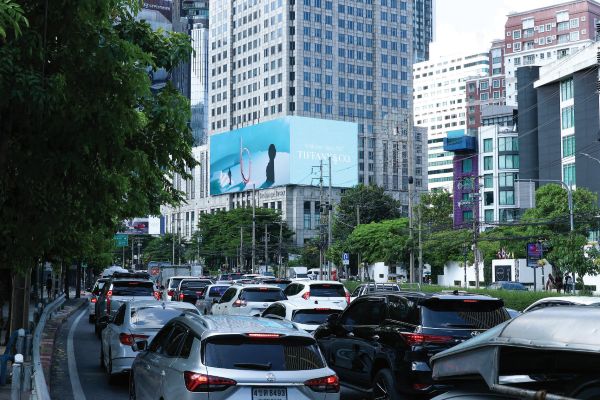
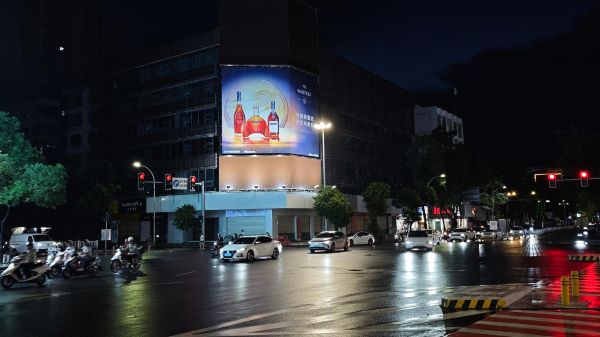
LED screen advertising has become one of the most effective channels for brands seeking high-impact visibility in Southeast Asia. Digital out-of-home advertising continues to grow faster than traditional static formats across Asia Pacific, driven largely by LED screen adoption in urban centers. The Southeast Asian LED display advertising screen market reached approximately USD 4.72 billion in 2025, growing 18.6% from USD 3.98 billion in 2024, and is projected to exceed USD 9.25 billion by 2030.
Country-by-Country Market Analysis
Thailand
Thailand represents the largest individual OOH market in Southeast Asia, with an LED display market size of approximately USD 1.25 billion, accounting for 26.5% of the regional total. The Thai OOH sector is expected to account for 17% of total ad spending in 2026. Government policies, including the 20-baht flat fare for all electric train lines in Bangkok, are expected to boost passenger numbers and media exposure.
In the first half of 2025, spending on out-of-home media reached 7 billion baht, an increase of 11%, with growth largely driven by digital screens and transit media, particularly on skytrain and MRT systems. Thailand’s FMCG OOH market grew significantly in 2024, with value sales increasing 13%—more than triple the previous year’s rise of 4%.
Indonesia
Indonesia, with an LED display market of approximately USD 1.13 billion, holds 26.5% of the regional market. The country’s outdoor LED display market is estimated at USD 145–175 million in 2026, driven by a rapid shift from static billboards to DOOH advertising.
Static displays still accounted for 61.40% of Indonesia’s OOH advertising market share in 2025, anchoring revenue with nationwide billboard stock. However, programmatic DOOH is forecast to post the fastest growth at an 11.1% CAGR through 2031. The Indonesia immersive display entertainment market is projected to grow from approximately USD 380–420 million in 2026 to USD 1.1–1.4 billion by 2035.
Major brands are increasingly adopting programmatic DOOH in Indonesia. HP launched its first programmatic DOOH campaign across 100 point-of-sale screens in the country, while Broadsign partnered with City Vision to expand programmatic DOOH inventory by integrating screens into programmatic supply-side platforms.
Vietnam
Vietnam is one of the fastest-growing OOH markets in the region, with a 2025 year-on-year growth rate of 24.1%. The Vietnam digital OOH advertising market reached USD 118.4 million in 2025 and is projected to reach USD 289.5 million by 2034, at a CAGR of 10.03%. This growth is being fueled by rising adoption of smart cities, advanced display technologies, and increased spending on brand visibility.
Singapore
Singapore, while smaller in overall volume (USD 410 million in LED display market), commands premium pricing—single-screen averages are approximately 35% higher than other Southeast Asian markets. Singapore’s OOH advertising market is expected to grow by 10% to reach USD 164 million in 2025.
Malaysia
Malaysia’s LED display market stands at approximately USD 870 million. The Malaysia OOH and DOOH market is projected to climb from USD 76.7 million in 2025 to USD 141.6 million by 2031.
Philippines
The Philippines is experiencing rapid OOH market expansion, with a 2025 year-on-year growth rate of 22.4%. The Philippine OOH advertising market is projected to reach USD 316.47 million in 2025, with traditional formats such as transit ads and billboards accounting for the largest share at USD 198.29 million. Billboard media led with 49.08% of revenue in 2025, while transportation-based placements are projected to grow at a 6.45% CAGR through 2031.
Technology Trends Shaping DOOH in 2026
3D LED and Large-Format Displays
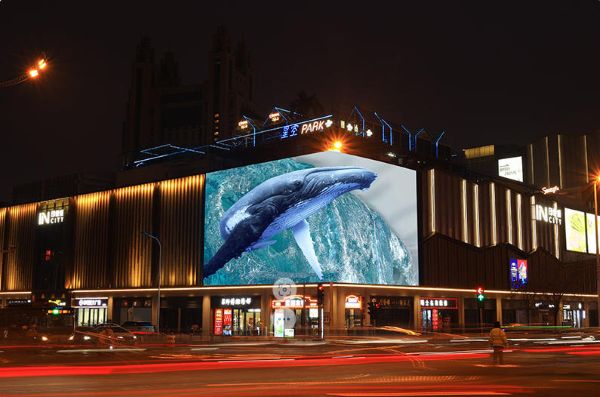
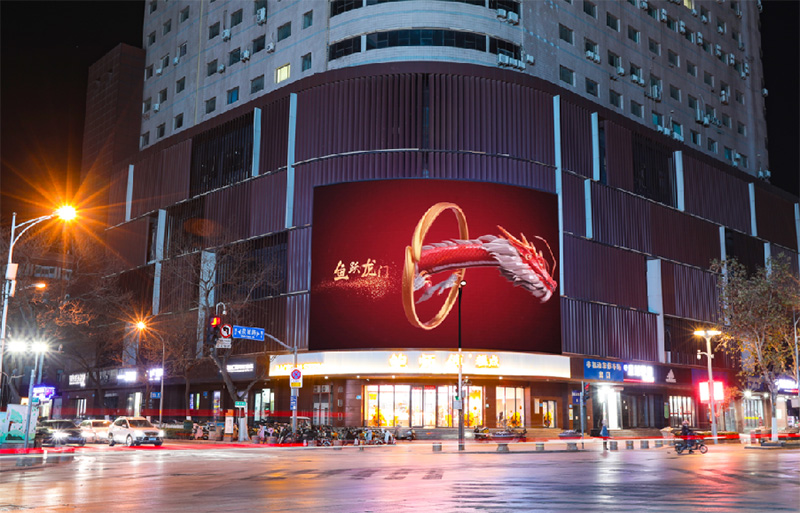
One of the most impactful innovations within LED screen advertising is 3D LED screen advertising. This format uses advanced visual techniques to create the illusion of depth, making objects appear to extend beyond the screen. These immersive physical experiences create stronger emotional connections and improve long-term brand memory, particularly in urban Asia-Pacific markets.
Programmatic DOOH
The explosion of programmatic DOOH buying platforms is transforming how brands purchase and measure OOH inventory. Programmatic capabilities enable real-time optimization, audience targeting, and integration with omnichannel campaigns.
Motion-Based Content
Motion-based OOH formats significantly outperform static formats in attention and recall metrics, particularly in high-traffic city environments. Brands increasingly look beyond impressions to evaluate effectiveness, with metrics such as brand lift becoming standard.
Festive Season Marketing: A Critical Opportunity
Festive outdoor advertising has become one of the most effective ways for brands to capture attention during peak consumer moments in Southeast Asia. Festive periods such as Chinese New Year, Ramadan, Hari Raya, and year-end holidays fundamentally change how people move, shop, and engage with their surroundings.
OOH advertising consistently delivers high reach and strong message retention, especially when audiences are highly mobile and socially active—conditions that define festive seasons in Southeast Asia. During these periods, foot traffic increases, commuting patterns shift, and public spaces fill with cultural visuals and celebratory energy.
Ramadan and Hari Raya represent a critical window for festive outdoor advertising, particularly in Muslim-majority markets across Southeast Asia. In districts such as Singapore’s Geylang Serai, consumer movement shifts strongly toward the evening, with significant footfall concentrated around retail clusters and food destinations.
Chinese New Year drives spikes in shopping, gifting, dining, and travel across multiple markets. Locations such as culturally concentrated districts, traditional commercial hubs, and key transit gateways are particularly well-suited for sustained brand visibility.
Strategic Recommendations for Brands
1. Prioritize High-Traffic Transit Locations
Mass-transit corridors and transport hubs offer captive audiences with extended dwell times. Singapore’s MRT and Kuala Lumpur’s rail hubs already demonstrate premium CPM potential.
2. Leverage Festive Seasons
Align campaigns with culturally significant periods such as Chinese New Year, Ramadan, and year-end holidays. Festive OOH campaigns deliver stronger results than standard campaigns by aligning brand messaging with moments when consumer attention and emotional receptiveness are at their highest.
3. Embrace Programmatic DOOH
Programmatic buying enables real-time optimization, audience targeting, and seamless integration with digital campaigns. As programmatic infrastructure expands across the region, brands that adopt early will gain competitive advantage.
4. Invest in Motion and 3D Content
Motion-based and 3D LED formats significantly outperform static displays in attention and recall. Brands should invest in creative content designed specifically for dynamic digital displays.
5. Navigate Regulatory Complexity
Work with local partners who understand country-specific regulations on brightness, installation standards, and environmental compliance. Partnering with established local operators can reduce integration costs and accelerate market entry.
Conclusion
Southeast Asia’s out-of-home advertising market in 2026 presents an extraordinary opportunity for brands seeking high-impact visibility in one of the world’s most dynamic regions. Driven by urbanization, government investment, technological innovation, and shifting consumer behaviors, OOH—and particularly DOOH—is emerging as a cornerstone of modern marketing strategies across Indonesia, Thailand, Vietnam, Singapore, Malaysia, and the Philippines.
Brands that understand the nuances of each market, invest in programmatic capabilities, leverage festive season opportunities, and embrace cutting-edge display technologies will be best positioned to capture attention and drive measurable results in this rapidly evolving landscape.