How to Launch an Outdoor Advertising Campaign in China: A Strategic Guide for Global Brands
2026-07-03Tianci MediaViews:62
Highlights
China’s outdoor advertising market is undergoing a profound transformation. As digital out-of-home (DOOH) reshapes the landscape and programmatic buying brings precision to offline media, global brands entering China have more opportunities than ever to connect with consumers through impactful outdoor campaigns. This guide provides a practical framework for navigating the market — from strategy and screen selection to compliance and measurement.
1. Understanding China’s Outdoor Advertising Market
China’s outdoor advertising market continues to expand steadily. In 2025, the market reached approximately 258.7 billion RMB in Launch Published Rate Spend, growing 7% year-over-year. By 2026, the market is expected to approach 98.7 billion RMB in net Market size.
More importantly, the market is digitizing rapidly. Outdoor video advertising accounted for 56.7% of the total outdoor market in 2024 and is projected to reach 58.8% by 2026. Digital out-of-home (DOOH) has become the dominant force, offering brands dynamic content capabilities, real-time optimization, and measurable engagement.
Programmatic DOOH (pDOOH) is gaining significant traction. In 2025, 30% of Chinese advertisers had adopted pDOOH, up from 24% in 2023. 42% of advertisers now plan to allocate dedicated budgets to pDOOH. The top driver? Return on investment, cited by 52% of advertisers.
2. Defining Your Campaign Strategy
Start with Clear Objectives
Before selecting any screen, define what you want to achieve:
Brand awareness – reaching the broadest possible audience
Product launch – generating buzz and visibility
Foot traffic – driving consumers to physical stores or events
Omnichannel integration – complementing digital and social campaigns
Understand Your Audience
Chinese consumers are not a monolith. Different cities, districts, and even neighborhoods attract different demographics. Use available data sources — mobile location data, consumer insights, and audience profiling — to identify where your target consumers live, work, shop, and travel.
Brands today expect outdoor advertising to deliver clear, measurable conversion pathways. The era of “spray and pray” is over — precision targeting is now the standard.
3. Selecting the Right Screen and Location
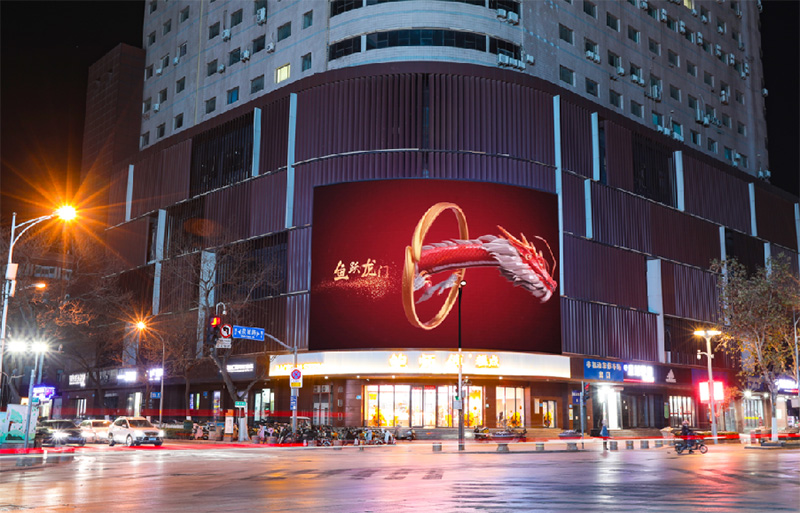
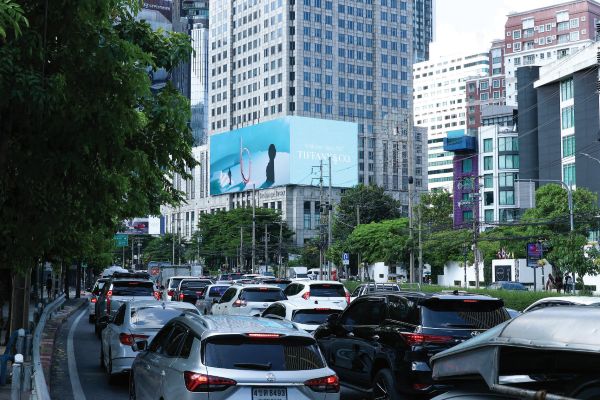
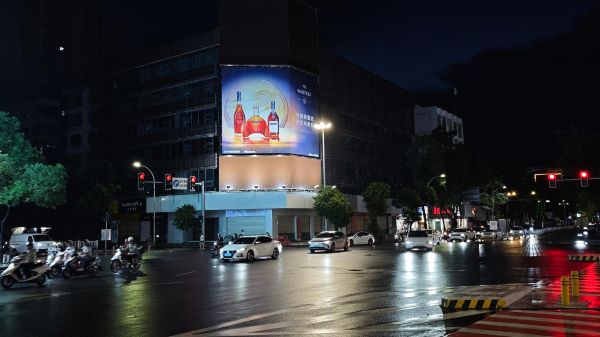
China offers a diverse range of outdoor screens, each serving different strategic purposes:
| Screen Type | Best For | Key Characteristics |
|---|---|---|
| Landmark mega-screens | Global prestige, mass awareness | High visibility, iconic locations, premium CPM |
| Commercial district screens | Retail audiences, foot traffic | High-density shopping areas, young consumers |
| Transit screens | Commuters, travelers | Airports, subway stations, train stations |
| Naked-eye 3D screens | Viral social impact, immersive experiences | Cutting-edge visual technology, high shareability |
Top Locations by City
Beijing:
Jingxin Building (759㎡) – East Third Ring Road, over 3.5 million daily pedestrian passes
Wangfujing Pedestrian Street – China’s “First Golden Street,” featuring 653㎡ naked-eye 3D screens
Hopson One (378㎡) – Chaoyang CBD core, over 800,000 daily visitors
Shanghai:
Aurora International Building (3,591㎡) – Lujiazui, Guinness World Record holder for largest color electronic screen
Nanjing Road Pedestrian Street – 4K naked-eye 3D screens on China’s “No.1 Commercial Street”
Guangzhou:
Renfeng Tower (1,404㎡) – Tianhe Road Commercial Circle, largest display in the area
Zhengjia Plaza “Tianhe Heart” (805㎡) – Over 1.8 million daily impressions
Shenzhen:
“Bay of Greater Bay Area” Window (4,501㎡) – Futian CBD, largest outdoor 4K LED in the Greater Bay Area
“Zongheng Window” (1,057㎡) – L-shaped corner-wrapping naked-eye 3D screen
Emerging markets including Chengdu, Chongqing, Zhengzhou, Changsha, and Nanning are also seeing rapid expansion of premium digital screens, offering brands access to growing consumer bases beyond first-tier cities.
4. Navigating Regulatory Requirements
Compliance is non-negotiable in China’s outdoor advertising landscape.
Legal Framework
Outdoor advertising in China is governed by multiple layers of regulation:
The Advertising Law of the People’s Republic of China – the foundational law governing all advertising activities
Urban Appearance and Environmental Sanitation Management Regulations – requires大型户外广告 set-up to obtain approval from the local urban management authorities
Local regulations – each city has its own detailed rules, including specific outdoor advertising facility management measures
Approval Process
For large-format outdoor screens, the approval process typically involves:
Application submission – Submit materials including advertising design plans, location maps, and safety commitment letters to the local urban management department
Review and inspection – Authorities review the application against local outdoor advertising facility planning and technical standards
Permit issuance – If approved, an outdoor advertising set-up permit is issued
Content registration – Depending on the category, content may also need registration with the local Administration for Industry and Commerce
Important: The application must be submitted at least 15 working days before the intended set-up date. Plan your campaign timeline accordingly.
Key Compliance Points
Content must be lawful – no false, misleading, or harmful content
Tobacco advertising is prohibited in all outdoor formats
Location must comply with local urban planning and outdoor advertising facility regulations
Safety certification is required for all large-format LED installations
Protected areas – no outdoor advertising is permitted on国家机关, schools, scenic spots, or文物保护单位的 building premises
5. Creative Best Practices for Chinese Outdoor Screens
Designing for outdoor screens in China requires a different approach than digital or TV advertising:
Keep It Simple
Viewers typically have only 3–10 seconds to absorb your message. Use 5–7 words maximum plus your logo. Every extra word reduces impact.
Resolution Matters
Premium screens in China support 4K or 8K resolution. Standard HD assets will appear pixelated and damage brand perception. Invest in native-resolution creative.
Leverage Naked-Eye 3D
Where supported, naked-eye 3D creative generates significant organic social sharing. Tourists and passersby routinely photograph and share impressive 3D content on platforms like Xiaohongshu, Douyin, and Weibo, amplifying your campaign’s reach far beyond the physical screen.
Include QR Codes
QR codes are widely used and trusted in China. WeChat mini-program codes or short URLs bridge offline exposure to measurable online engagement, enabling you to track direct response.
Optimize for Day and Night
Ensure your creative works in all lighting conditions — high brightness for daylight, adjusted color balance for nighttime viewing.
6. Measuring Campaign Performance
Modern outdoor advertising in China is measurable, not just an exercise in brand-building.
Key Metrics
Impressions and reach – standardized exposure measurement through proof-of-play reports
Brand lift – monitor Baidu Index for brand and product search volume changes
Social engagement – track shares, mentions, and user-generated content on Xiaohongshu, Douyin, and Weibo
Foot traffic – use geofencing data to measure whether exposed audiences visited nearby stores
Direct response – QR code scans, URL visits, and conversions
Earned media value – organic social shares and press mentions generated by the campaign
Programmatic Measurement
With pDOOH adoption accelerating, brands can now access real-time performance data and adjust campaigns on the fly — similar to digital advertising.
7. Common Pitfalls to Avoid
Ignoring Local Regulations
Skipping the approval process or using unverified screens risks fines, campaign cancellation, and reputational damage. Always verify that the screen operator holds valid permits.
Assuming One Size Fits All
What works in Beijing may not work in Shanghai or Guangzhou. Each city has distinct consumer demographics, regulatory nuances, and screen inventory.
Underestimating Lead Time
Between regulatory approvals and screen availability, campaigns can require 4–8 weeks of lead time. Plan ahead.
Neglecting Localization
Content that resonates in Western markets may not translate effectively in China — in language, cultural references, or visual aesthetics.
Conclusion
China’s outdoor advertising market offers global brands an unprecedented opportunity to reach millions of consumers through impactful, measurable, and increasingly digital channels. Success requires a strategic approach: clear objectives, the right screen selection, rigorous compliance, creative that respects the medium, and robust measurement.
By understanding the market dynamics, navigating the regulatory landscape, and partnering with experienced local media operators, brands can turn China’s iconic outdoor screens into powerful drivers of awareness, engagement, and growth.