
- Photos
- Specs
- Advantages
- Value
- Media Map
| Area:Guiyang | Type:high-speed railway | Frequency:240 |
| Address:Jiaxiu North Road, Guanshanhu District | Format:led | Duration:10s |
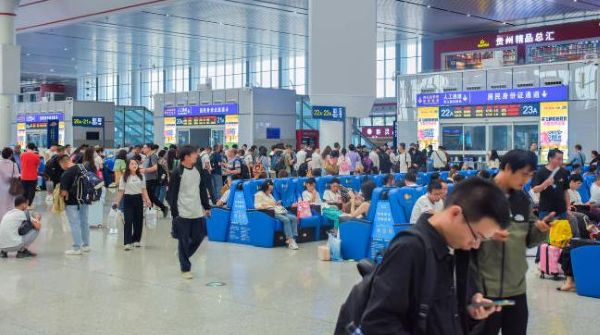
| Location:Ticket Gates in the Entrance Hall of Guiyang North Station | Min Qty:52 | Operating Time:6-24o'clock |
| Size:114寸 | Min Period:week |
The LED screens are placed along the only mandatory route for passengers traveling from the waiting area to the ticket gates, with an average dwell time of over 3 minutes, delivering 100% forced exposure. Ad recall rates for advertisements at ticket checking entrances are 42% higher than those at other locations within the station. During morning and evening rush hours, passenger gaze and dwell duration are 2.3 times longer than off-peak periods. Each set of ticket checking entrances features a symmetrical A/B dual-gate layout, creating a visual matrix of "dual passages plus dual screens" that improves information recognizability and passenger flow guidance efficiency.
Ticket checking entrances constitute a core zone where passengers’ visual focus repeatedly lingers while waiting, as well as an essential passage for passengers entering the waiting hall. This layout guarantees an extremely high forced reach rate for advertisements. Furthermore, 52 large screens operate in a row to broadcast content, generating a strong matrix presentation effect and immersive surround visual experience within the spacious waiting area with striking visual impact, enabling full coverage of all queuing passengers at ticket checking points.
Ticket gate entrances are the focal point of passengers’ sightlines during waiting. Passengers will actively and repeatedly check information screens to verify train numbers, ticket gate statuses and the start time of ticket checking. These LED media are precisely installed beside information that passengers have to view repeatedly, integrated into passengers’ active visual search process. This achieves a fundamental shift from "possible viewing" to "inevitable viewing" and delivers an exceptionally high forced reach rate.
Fifty-two vertical screens are symmetrically arranged on both sides of all ticket check-in gates to create a continuous matrix visual enclosure effect. No matter which train passengers wait for or which ticket checking area they stay in, they will be reached by multiple screens simultaneously. This full advertising placement achieves 100% coverage of all waiting passengers in the waiting hall with zero exposure blind spots. Passengers spend an average of 30 to 60 minutes waiting before ticket inspection, leading to far higher active acceptance of advertisements compared with rooftop outdoor large screens, and the complete information reading rate greatly exceeds that of conventional outdoor media.
Guiyang North Station stands as one of the largest comprehensive railway transportation hubs in Southwest China with a huge daily passenger flow. The high-speed rail crowds covered by this media are mainly business and official travelers aged 25 to 44, who feature three high attributes: high education, high income and high consumption. Concentrated coverage of such high-net-worth groups makes it ideal for various mid-to-high-end brands to launch precise advertising campaigns and build brand images.
The LED media is more than a single advertising spot; it serves as a core communication gateway for brands to deepen their presence in Southwest China and expand influence nationwide. Relying on massive interprovincial floating passenger flows, it can simultaneously reach local existing markets and new national customer groups, enabling full-range brand exposure at low costs. As a national-level high-speed rail hub, the venue inherently carries authoritative and high-end credibility, which can rapidly elevate brand class and regional popularity while eliminating the cheap impression brought by traditional outdoor advertisements.