

- Photos
- Specs
- Advantages
- Value
- Media Map
| Area:Beijing | Type:high-speed railway | Frequency:0 |
| Address:No. 12 Chezhan Road, Yongdingmen Outer Street, Fengtai District | Format:Light box | Duration:0 |
| Location:East side of the waiting hall of Beijing South Railway Station | Min Qty:4 | Operating Time:0-24o'clock |
| Size:12*3 | Min Period:month |
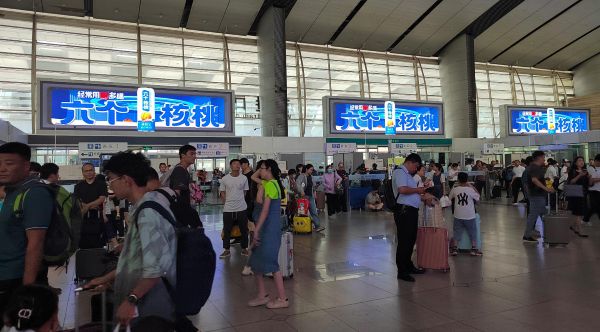
The media is situated in the east and west arrival halls, occupying the starting point of passengers' journeys. Its vertically extended design makes full use of the height of light boxes to create a strong visual impact. This location covers passenger flows in the hall's entry, waiting and catering areas, serving as an unmissable media spot once passengers enter the South Railway Station. The close-range display makes colors, texts and other elements on advertising visuals more distinct, allowing passengers to learn about product details and brand information in depth.
This advertising spot sits at the optimal eye level within the waiting hall, unobstructed by columns, shops or signage with an open and unblocked full view. Passengers going through security checks, waiting for ticket validation and resting on their way can see the screens in full without any blind spots. Adopting an integrated and standardized large screen matrix layout, it supports independent content playback on single screens as well as synchronized creative joint broadcasting across four screens to form a continuous, immersive ultra-long brand visual scroll. It is a landmark premium advertising spot in the eastern section of the waiting hall.
Passengers spend an average of 1 to 2 hours waiting for trains in a relaxed and idle state. They actively look around to check train schedules and kill time during breaks, showing far higher acceptance of dynamic content on digital light boxes compared with media in transit corridors. Passengers pass by this spot repeatedly when taking seats, walking around and queuing for ticket checks, resulting in 3 to 6 repeated viewings per person per day. Such high-frequency exposure continuously imprints the brand in audiences' minds, delivering far better advertising memory retention than short-duration outdoor and station-entry media spots.
The matrix light box on the east side of the waiting hall, a flagship core digital media spot on the departure waiting hall floor 2, features a rare four-panel matrix combination exclusive to the station. It occupies the core visual traffic corridor on the east side of the waiting hall, covering all east-side ticket gate clusters and main waiting areas. It serves as a high-end core communication platform for brand display and image promotion, and also represents one of the premium media resources on the South Railway Station’s waiting floor capable of creative multi-screen linkage playback.
The complete media setup consists of an integrated matrix suite with four high-definition large screens. The screens deliver sharp, delicate images with a wide color gamut and high brightness, suited to the strong indoor lighting conditions of the waiting hall. They maintain clear, vivid visuals and accurate color reproduction day and night, perfectly showcasing brand promotional videos, product details and brand visual blockbusters. Multiple playback modes are supported, including synchronized four-screen broadcasting and creative split-screen linkage. The screens can be spliced to form an extra-long immersive visual scroll, delivering stable and high-frequency exposure.
Leveraging the passenger flow foundation of Beijing South Railway Station, a national-level transportation hub, the station records an annual passenger volume of over 140 million, with a daily average of 377,000 passengers on regular days and a peak of 453,000 during holidays. The second-floor waiting hall accommodates all passengers departing by high-speed and intercity trains. The east-side matrix light box fully covers incoming waiting passengers, reaching more than 200,000 people on a daily basis. Its audience primarily comprises business travelers and cross-provincial commuters aged 25 to 50, with business travelers accounting for over 43% of the total audience, making it ideal for communication of all categories of mid-to-high-end brands.