How to choose outdoor advertising? 6 Core Decision Steps That Newcomers Must See in 2026
2026-04-20Tianci MediaViews:122
Highlights
How to choose outdoor advertising? From analyzing the flow of people to comparing media types, this article breaks down six decision-making steps for beginners, covering core aspects such as budget evaluation, location screening, and effectiveness tracking. Whether you are a brand owner or an individual merchant, you can find suitable advertising strategies. Click to view the complete guide.
How many billboards do you pass by every day while walking on the street? Outdoor advertising is everywhere, including bus stops, elevator screens, shopping mall screens, and highway billboards. But when you have to choose outdoor advertising for your brand or business, many people will find that the money is spent but the effect is not seen.
Why? Because the "selection" of outdoor advertising itself is a systematic project. This article does not pile up terminology or show off professionalism. It uses language that beginners can understand to take you through the complete process from requirement analysis to final implementation.
Step 1: Answer three questions first, then talk about "what to choose"
Before opening any media quotation, please ask yourself three questions first. This is the most easily overlooked but crucial step.
Question 1: Which path does your target audience take every day?
The core of outdoor advertising is' scene outreach '. Wherever your customers appear, advertisements should appear there.
If the target is white-collar workers in office buildings → elevator advertisements, subway commuting routes
If the target is community households → community barriers, express cabinet screens, and supermarket peripherals
If the target is drivers and car owners → gas station media, highway billboards
Don't judge based on intuition, open the map and look at the heat map, or walk around in person.
Question 2: Do you want them to "remember" or "take action"?
Brand exposure type (memorable name/logo) → Choose big brands and LED screens with strong visual impact, suitable for long-term advertising
Instant conversion type (allowing people to scan/enter the store) → Select bus stop, elevator posters, longer stay time, suitable for carrying QR codes or discount information
Question 3: Is your budget for "testing the waters" or "stocking up"?
The budget determines the media level and advertising cycle. For amounts below 50000 yuan, it is recommended to focus on a single scenario (such as investing only in platforms in a certain commercial district); More than 200000 yuan is suitable for "combination advertising".
Step 2: How to choose the six mainstream types of outdoor advertising?
Different types of outdoor advertising have significant differences in their applicable scenarios and costs. Here are the six categories that beginners need to know the most:
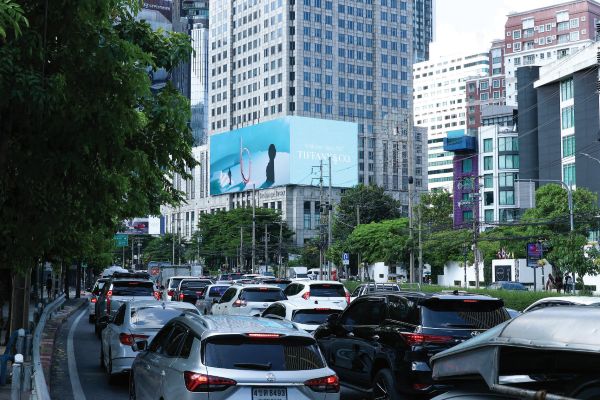
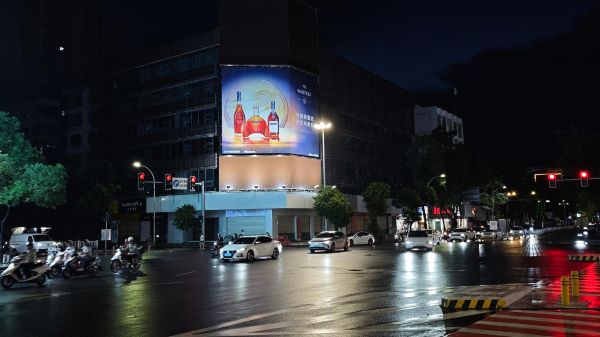
1. Large outdoor billboards (anti-aircraft guns/rooftop billboards)
Suitable for: brand promotion, coverage of urban landmarks, long-term advertising
Not suitable for: short-term activities, limited budget
Attention: The approval cycle is long, usually signed annually
2. Bus/subway advertisements
Suitable for: Commuter population, urban core line coverage
Advantages: High frequency of contact, platform signage+in car signage can be combined
Attention: Although there is a large flow of people inside the subway station, the attention is limited when rushing
3. Elevator advertising (frame/smart screen)
Suitable for: office buildings, residential buildings, closed scenes, mandatory viewing
Advantages: CPM (Cost Per Thousand People) is relatively controllable, allowing for precise selection of buildings by location
Attention: The competition for location in first and second tier cities is fierce, and it is necessary to lock in in advance
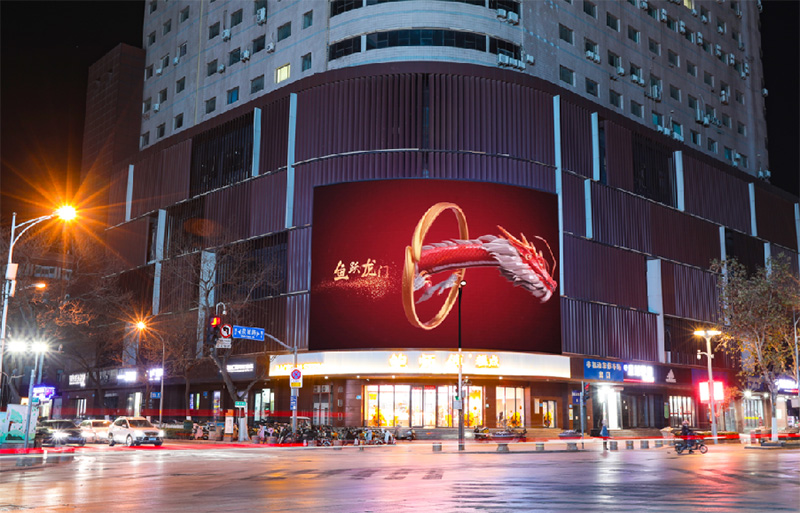
4. Business district LED large screen
Suitable for: young customers, weekend festival promotions, brand image films
Advantages: visually stunning, able to rotate multiple customers
Attention: The exposure time of 15 seconds per time is extremely short, and the information must be concise
5. Community media (barrier gate/access control/express locker)
Suitable for: local living services, home furnishings, education, medical care
Advantage: The last 100 meters away from home, the decision-making scene is close to
Attention: Property management and control measures vary in different residential areas, and it is necessary to confirm the actual publication rate
6. Transportation hub media (airports/high-speed railway stations)
Suitable for: high-end brands, tourism, business services
Advantage: Clear demographic profile (high-income/high decision-making power)
Attention: The price is expensive and the minimum investment threshold is high
Step 3: Use the "Four Step Screening Method" to identify the optimal position
When you have a basic judgment on the type of media, the next step is to make specific point selections. Here is a validated method - the four step screening method.
Step 1: Define the scope
Draw 3-5 core areas on the map based on the target audience flow in the first step. For example, the street within 3 kilometers of the company and the most densely populated residential area for the target customers.
Step 2: Conduct on-site inspections
Data can be falsified, but on-site experience does not. Choose a working day and a weekend to observe on-site:
Is there a large flow of people? Is the duration of stay long?
Is there any obstruction in front of the billboard? (Trees, utility poles, construction fences)
Is the height of the line of sight comfortable? (Either too high or too low will be ignored)
Step 3: Inquiry Comparison
At this point, it is necessary to engage with professional advertising platforms. For example, Tianci Media is a professional outdoor advertising platform with direct procurement resources in multiple cities across the country, which can help beginners quickly complete the entire process from inquiry to publication. Platforms like Tianci Media usually provide media photos, flow data reports, and past cooperation cases, greatly reducing your screening costs.
Step 4: Small budget trial investment
For the first collaboration, don't throw all the budget into it at once. It is recommended to set aside 20% -30% for the "testing period", such as investing for 2 weeks first, observing changes in exposure data and store consultation volume, and adding more when the effect meets the standard.
Step 4: Effect Tracking - Is it really impossible to quantify outdoor advertising?
Many people believe that outdoor advertising can only rely on intuition, but this is not the case. Although there is no real-time click data of Internet advertising, the following methods can be effectively evaluated:
Method A: Set up a dedicated conversion path
Place a 'unique short link' or 'exclusive QR code' on outdoor advertising
Use different discount codes for different locations (such as "Bus Station A Coupon" and "Elevator B Coupon")
Compare the scanning/verification data of each point
Method B: Reverse inference of offline traffic
If you are a physical store merchant, you can record during the advertising period:
How much has the daily number of people entering the store increased compared to before the launch
New customer source research ("How did you know about us?")
Method C: Search index monitoring
Pay attention to the changes in Baidu/WeChat search index of brand keywords during the advertising period. If the search volume significantly increases after the advertisement goes online, it indicates that exposure has led to "secondary search" behavior.
Common Misconceptions: The 4 easiest pitfalls for beginners to step into
Misconception 1: Only focus on foot traffic, not on 'effective traffic'
The train station has a high flow of people, but those who are dragging their luggage on their way will not look up at advertisements. Choosing a 'stopping scene' is far more important than a 'passing scene'.
Misconception 2: The design is visually appealing, but in reality, it is difficult to see clearly
Outdoor advertising design must follow the "3-second rule": an advertisement that cannot see the core information clearly within 3 seconds is considered a failure. Font, color scheme, and white space are all more important than fancy.
Misconception 3: Not reading the 'actual publication effect' before signing the contract
Some media outlets provide renderings that are in P. Before signing the contract, it is necessary to request historical photos of the same location or personally confirm on-site.
Misconception 4: Ignoring "Surrounding Environmental Interference"
A perfect billboard with a brighter and more dazzling competitor screen next to it will greatly reduce its effectiveness. When observing, focus on the "relative environment" rather than isolated advertising spaces.
Conclusion: The core of outdoor advertising selection is one sentence
Returning to the original question: How to choose outdoor advertising? The answer can be summarized in one sentence——
First determine the audience and scene, then select the media type, and gradually zoom in using a "testing+tracking" approach.
Don't be intimidated by various professional terms. The essence of outdoor advertising has not changed: in the right place, in the right form, to make the right people see it. If this is your first time advertising, you can start with a scenario, a location, and a two-week testing period.
Tianci Media is a professional outdoor advertising platform. If you want to save yourself the trouble of asking for quotes and checking locations one by one, you can use the one-stop service of this platform - from demand diagnosis to location recommendation to publication monitoring, there are dedicated personnel to connect. For beginners, this is often the most efficient way to start.
I hope this guide can help you avoid detours. If you are ready to start your first advertising campaign, you can start by identifying three candidate locations and conducting on-site inspections. Action is always more important than perfection.